Charging-system testing
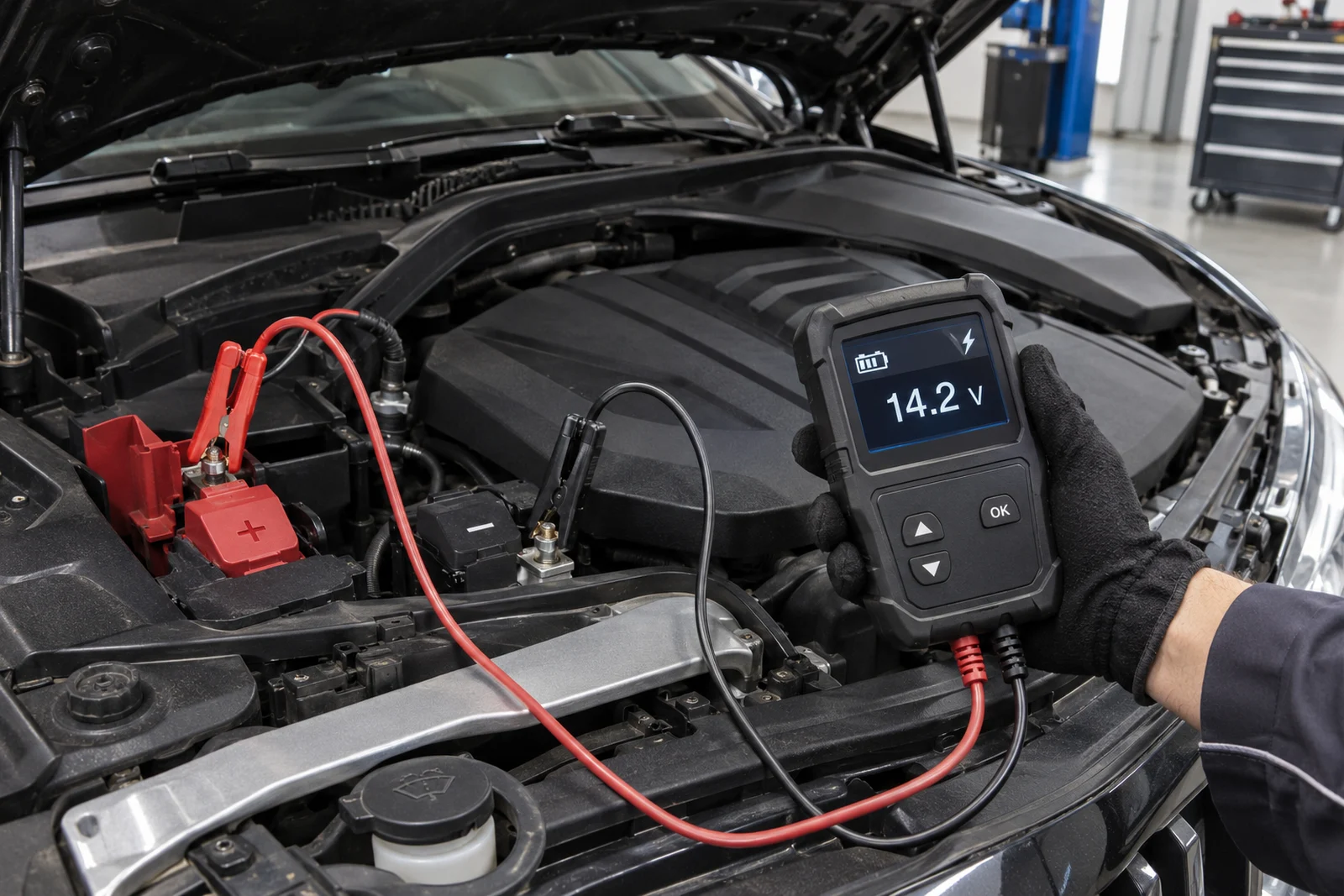
Battery condition, sensor data, connections and charging output are checked as appropriate to the fitted system. Confirm the test allowance and charge before inspection.
12 volt charging system and plug in hybrid charging
A charging malfunction warning, a battery that keeps going flat or a plug in hybrid that will not charge? We first work out which charging system has the fault, then test the battery, sensors, wiring and charger to find the part that has actually failed.
Fault-code scan and report from AED 150
Further electrical testing and repairs quoted separately before approval
Warning says stop or the car is losing power? Stop safely and call to discuss assistance. Do not rely on a short remaining driving distance.
Know what you are approving
This is the workshop’s published starting price for a diagnostic scan. It is not a complete charging investigation, battery replacement or repair package.
Battery condition, sensor data, connections and charging output are checked as appropriate to the fitted system. Confirm the test allowance and charge before inspection.
Sleep-current monitoring can require an overnight stay or extended testing. Agree the initial investigation and any additional time before it is carried out.
A connection repair, battery, IBS sensor, alternator or charging component has a different fitted cost. Your quote identifies the diagnosed fault, part specification, labour and required registration or coding.
Vehicle-side tests depend on model, AC or DC charging and the recorded fault. Building wiring and wallbox installation work are separate from a vehicle repair quotation.
Before approval, confirm the total, diagnostic charges, parts, fitting, any additional testing and applicable warranty terms. Repair prices and completion times depend on findings and parts availability. Sending an inquiry does not confirm an appointment.
Start here
The word charging means two different things on a BMW. Knowing which one your warning refers to tells us where to start, and it is often the first question we ask when you call. The repairs, the parts and the tools are different for each.
The low-voltage battery powers control units and essential electrical functions. Conventional models usually use an alternator. Applicable hybrid and electric BMWs use DC/DC conversion; some newer combustion models also have a 48V starter-generator. We identify your fitted system before testing.
The charging socket, cable, onboard charger and high voltage battery that charge the car from a wallbox or public charger. A fault here stops the car charging when plugged in.
Plug in hybrids and electric BMWs have low-voltage and high-voltage systems, so either side can need investigation. If you are not sure which message you have, send us a photo and we will tell you which side to look at.
On your dashboard
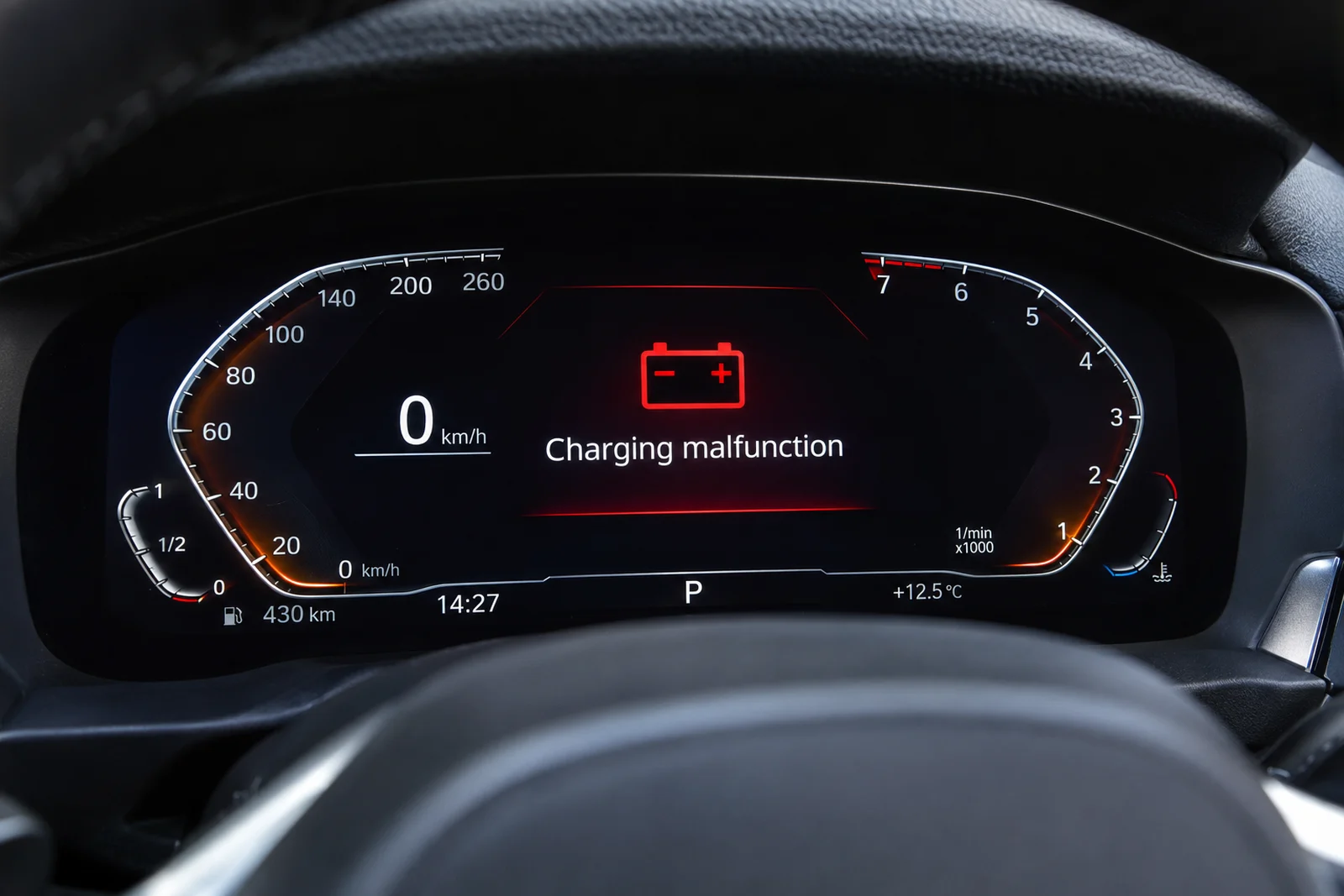
BMW shows charging faults as a red or yellow symbol with a message on the iDrive or instrument screen. The wording varies by model and software, but the messages fall into a few groups. A red symbol usually needs attention sooner than a yellow one.
When safely parked, photograph the exact message. A warning may disappear after a restart while useful fault records remain stored; do not clear codes before diagnosis.
12 volt system
The alternator gets the blame first, but it is only one of several parts that can set a charging fault. Testing them in order is what keeps the repair cost down, because the cheaper causes are ruled out before an expensive part is ordered.
A discharged or deteriorated battery can cause low-voltage symptoms. State of charge and battery health are different and must be assessed separately.
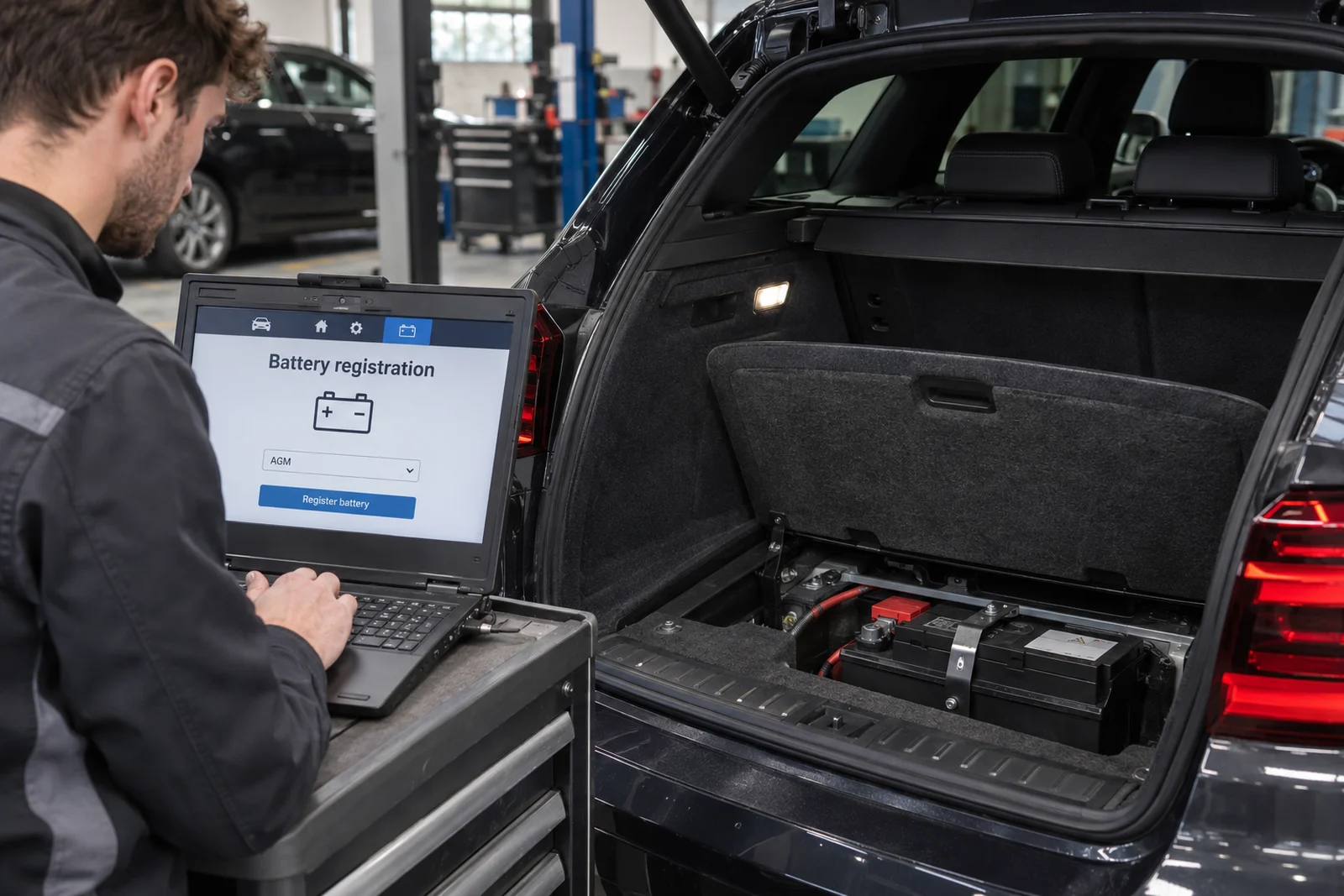
On models requiring registration, the replacement history must be updated. This check alone does not prove the cause of a charging warning.
The intelligent battery sensor on the negative terminal tells the car how the battery is doing. If it fails, the readings are wrong.
The alternator itself or its built in regulator stops giving the right output.
A slipping or damaged belt cannot turn the alternator properly.
A corroded main cable or loose earth point cuts the charge before it reaches the battery.
Alternator confirmed as the fault? See our BMW alternator replacement page. Battery at the end of its life? See BMW battery replacement.
Often overlooked
On BMW models with battery registration, the replacement must be recorded so energy management can account for the new battery. We check the fitted type, capacity and replacement history against the vehicle requirements.
If a warning returns after replacement, check the battery specification, installation, registration and charging system. Registration does not repair a defective alternator, damaged cable or excessive parked current draw.
Flat after parking
A flat battery after parking can result from poor battery health, low initial charge, repeated short journeys or excessive current after the car should be asleep. The warning alone does not identify a failed module.
A head unit or control module stays awake after locking.
Dash cameras, trackers and chargers wired to a permanent supply.
A boot, door or glovebox switch that keeps a light or module on.
A battery that loses charge on its own, even with nothing switched on.
Investigation starts with battery condition and charging history, then model-appropriate sleep-current monitoring. Circuit isolation is performed carefully because disturbing the car can wake modules and change the reading. Common causes include a head unit or module that never shuts down, an aftermarket dash camera or tracker wired to a permanent feed, and a faulty boot or door switch that keeps the lights on.
Find where charging stops
When a plug in hybrid such as a 330e, 530e or X5 hybrid, or an electric BMW, will not charge, the fault can be anywhere from the wall socket to the high voltage battery. Many are outside the car altogether.

Outside the car
A damaged or overheated cable, or a faulty control box on the portable charger.
An earth fault, tripping breaker or wrong setting at the charging point.
At the vehicle
The actuator that locks the cable in place fails, so charging never starts.
Burnt or bent pins in the car charging socket.
For AC charging, the onboard charger converts incoming AC to DC. A DC rapid-charging fault follows a different path and does not automatically condemn this unit.
Conditions to check
Even electric BMWs need a healthy 12 volt battery to start charging.
Battery temperature, state of charge and thermal management can limit charging power without a failed charger.
A timer or charge limit left on in the iDrive settings.
If the cable and socket are undamaged and it is safe to do so, note whether another compatible charging point works. Do not use burnt, damaged or overheating equipment, force a locked connector or repeatedly reset a tripping breaker. A qualified electrician should assess building-supply faults.
Ask us to confirm support for your exact model and requested work before arranging transport. High-voltage repairs require appropriately qualified personnel, vehicle-specific isolation and verification of a safe state. Do not open high-voltage components or touch orange cables.
Local conditions
Dubai heat, electrical demand and journey patterns are relevant to diagnosis. Tell us whether the warning appears in traffic with the AC on, after a short journey or after several days parked. These conditions guide testing; heat alone does not prove a component has failed.
For plug-in hybrids and electric BMWs, compare the charging point’s available power, battery temperature and charge level, iDrive limits and any scheduled charging. A slower session near the charge target may be normal. Record whether AC, DC or both are affected on models supporting them.
Right now
Follow the exact warning displayed by your BMW and the vehicle handbook. There is no reliable safe driving distance after charging fails. If instructed to stop, or the car loses power, develops heavy steering, overheats or smells of burning, pull over safely and arrange assistance.
Switch off seat heating, the rear demister and anything you do not need.
Do not continue a journey just to keep the engine running. A discharged battery may prevent restarting.
Once safely parked, photograph the exact wording. Do not take photos while driving.
Only use an undamaged compatible cable and charging point. Stop using equipment that is hot, damaged or trips protection.
Tell us whether the car starts and where it is. Confirm a suitable collection or recovery arrangement before moving it.
Our process
Charging faults can be intermittent, so we choose the test sequence from the vehicle architecture, warning and recorded data. If a fault only appears after the car has been parked overnight, we may keep the car to measure the drain while it sleeps.
Your findings and repair decision
Ask for the fault records, battery condition and relevant charging measurements, including the conditions under which they were taken. An intermittent fault may need more time to reproduce.
Confirm the part brand and specification, labour, registration or coding where required and any related work. Compare genuine and suitable OEM options where available rather than choosing by price alone.
Confirm the repeat-test result, any remaining advisories and written parts and labour warranty terms. Duration and exclusions depend on the agreed repair and selected parts; do not assume one policy covers every component.
Visit 39 Al Quoz 4, Dubai during Monday to Saturday, 9am to 7pm. Free pickup and delivery are offered across Dubai. If your BMW cannot be driven, confirm the appropriate transport arrangement, availability and any applicable conditions before collection.
By model
The charging system depends on what powers the car. Low-voltage battery health matters on combustion, hybrid and electric BMWs, but the way that battery is charged differs. We confirm the exact setup from your chassis number before testing.
Related work
FAQ
Short answers to the questions owners ask before booking a charging fault check, for petrol, diesel and plug in hybrid BMWs.
It indicates a problem with the charging system identified by the exact warning and fitted vehicle architecture. The checks differ between conventional alternator systems, DC/DC low-voltage supply and plug-in charging.
There is no reliable safe distance after charging fails. Follow the exact vehicle warning. Stop safely if instructed or if power, steering assistance or temperature changes, and contact us about assistance.
No. Battery condition, wiring, sensor data and the fitted charging architecture must be checked. Applicable hybrid and electric models use DC/DC conversion, so an alternator diagnosis does not apply universally.
On models requiring registration, it records the replacement for energy management. An approved change in type or capacity may also require coding. Registration alone does not cure an unrelated charging fault.
Possible causes include charging settings, the charging point, cable, socket lock or vehicle electronics. Recorded faults and tests help distinguish a vehicle problem from external charging equipment.
Not always. A hot high voltage battery charges slower to protect itself. We check the data before replacing anything.
Yes. The car needs a healthy 12 volt battery to wake up and manage charging, even though it drives on electric power.
The initial fault-code scan and report starts from AED 150. Further electrical tests, overnight drain monitoring, parts and repairs are quoted separately. Confirm the total and agreed scope before approval.
Low initial charge, battery deterioration, short journeys or excessive current after shutdown can cause this. The agreed investigation checks battery condition and, where needed, sleep-current behaviour.
Yes. We offer free pickup in Dubai, and the work is done at our Al Quoz workshop, open Monday to Saturday, 9am to 7pm.
An initial scan and a full electrical investigation are different jobs. Timing depends on fault reproduction, access and the tests needed. Parked-current problems may need overnight monitoring; parts availability affects repair completion.
This inquiry is for the vehicle’s charging fault. Building supply, breaker and wallbox installation work need the appropriate electrical provider. Tell us if the car charges elsewhere so the investigation starts in the right place.
Check fitment, connections and registration where required, then investigate charging output and parked current. Another new battery should not be fitted without evidence that the existing battery is faulty.
Book a charging check
Send your model and year, warning photo, whether the car starts, when the fault occurs and your Dubai location. For plug-in charging, tell us whether AC or DC fails and whether another charging point works. We confirm the next checks, charges and appointment arrangements before you commit.