
Understand the findings
Ask for the relevant fault report and an explanation of RPM, signal or circuit checks. A code by itself is not a reason to buy a sensor.
Crankshaft position sensor and pulse wheel
BMW cranking without starting, taking longer to start or cutting out when hot? At our Al Quoz workshop, we check the crankshaft position signal, wiring and related starting faults before recommending replacement. Get the findings and a fitted quote before approving the repair.
Costs before commitment
The fitted cost depends on the confirmed fault, engine access and compatible sensor. A part-only price cannot tell you the total. Send your model, year and symptoms so we can explain the next step.
Sensor manufacturer and part number, fitting labour, required seals or fasteners, applicable adaptation work, testing and parts/labour warranty terms.
Additional wiring repair, mechanical timing work, software work or recovery charges if required. Ask whether diagnostic charges are included or separate; no automatic deduction is promised.
We match parts by VIN and engine specification, including approved supersessions. Cylinder count alone does not establish compatibility. Confirm stock and the expected completion time when accepting the quote.
Diagnostic scan price published on our BMW Repair Dubai homepage. It is not a complete sensor replacement price. Tell us if the vehicle cannot start or has stalled so collection or recovery arrangements can be confirmed.
How it works
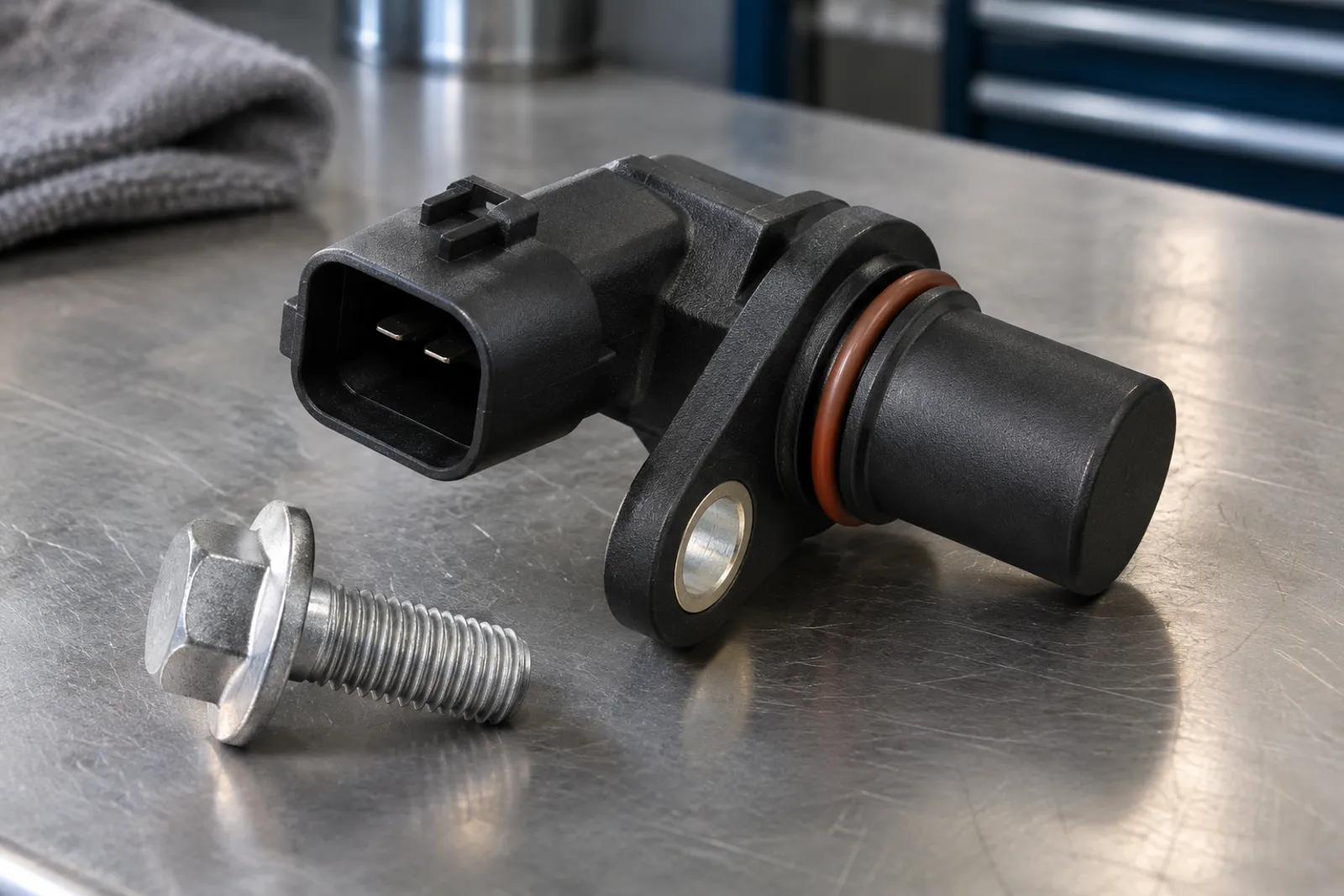
The crankshaft position sensor, also called the CKP sensor, reads a rotating reference wheel. Its signal tells the engine controller the crankshaft speed and angular position. Together with camshaft position information, it helps the controller synchronise injection and, on petrol engines, ignition.
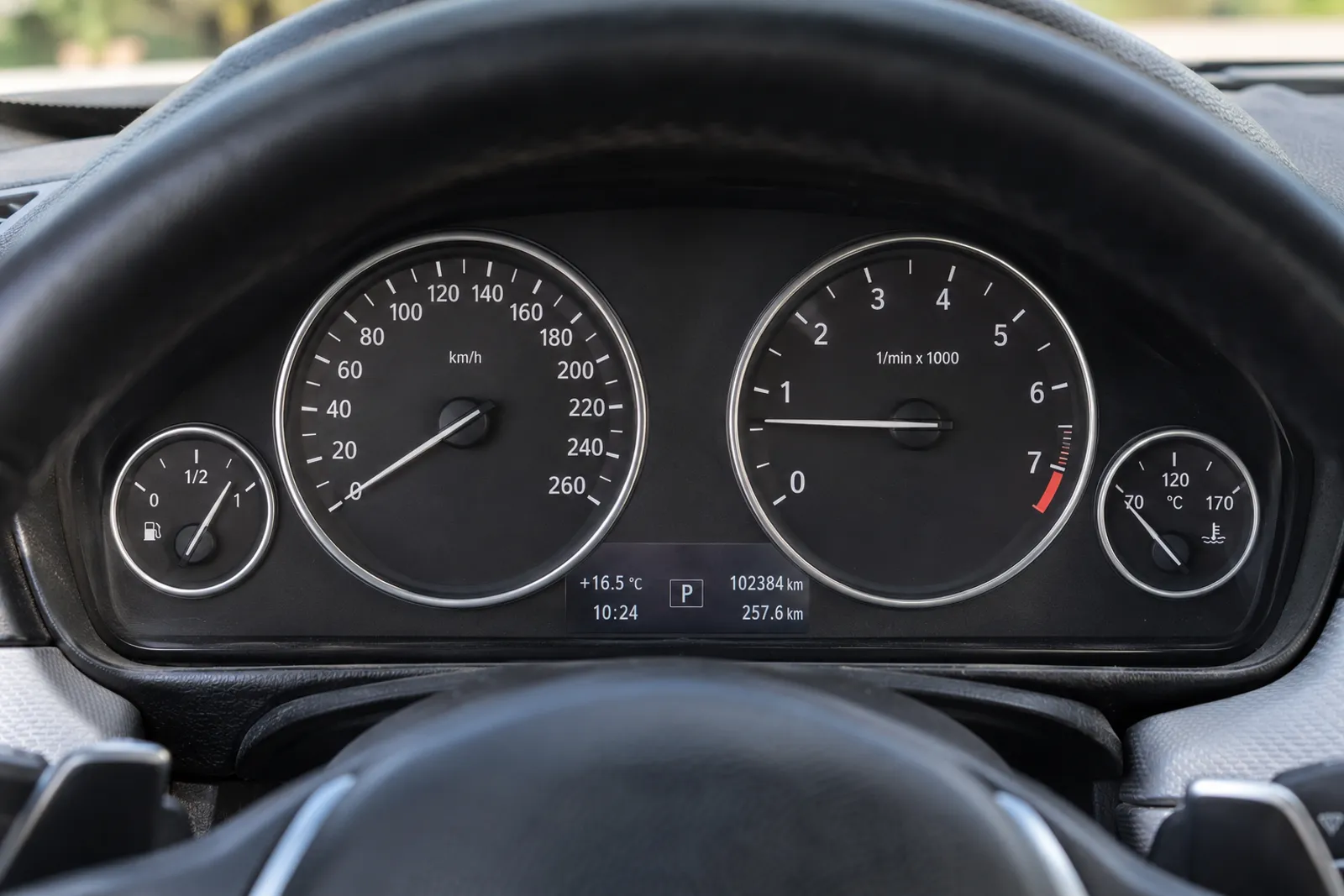
A missing or implausible signal can cause difficult starting, a no-start or stalling. Backup strategies vary by engine, so symptoms alone cannot confirm the failed part. A stationary rev counter is only a clue; scan-tool engine RPM and, where needed, a waveform test provide better evidence. Sensor type and manufacturer specifications determine the test method.
Warning signs
These symptoms can justify checking the crankshaft signal. Several of them are shared with fuel, ignition and battery faults, which is why the signal is tested before a part is ordered.
Cranks but will not startA missing crankshaft signal is one possibility; fuel supply, start authorisation and other faults can cause the same symptom.
Cuts out when hotThe engine stops after a drive or in traffic, then restarts once it has cooled for a while.
Rough running or misfiresSignal or synchronisation faults are possible, but ignition, fuel and mechanical causes must also be considered.
Rev counter drops or jumpsThe needle falls to zero or flickers while the engine is still running.
Long cranking timeThe engine takes several seconds of cranking before it catches.
Check engine lightA crankshaft signal fault is stored, sometimes with reduced power.
Intermittent starting faults
A BMW that stops when warm and starts again after cooling may have a temperature-sensitive sensor or circuit fault. The same pattern can occur with other electrical or fuel-system problems. Restarting later does not prove the sensor has recovered or that the car is safe to drive.
Tell us when it happens, whether the starter still turns and which warnings appear. Stored faults and freeze-frame information can help preserve evidence after the symptom disappears. We assess safe, controlled testing before considering a road test.
Two different sensors
BMW engines use both, and owners often mix them up. They work together, so a fault in one can set a code that mentions the other, and both need to be checked before deciding which part has failed.
If testing points to the camshaft side instead, see our BMW camshaft sensor replacement page.
Fault codes
A generic code reader shows standard codes like these. A BMW level tool shows the manufacturer code and more detail, including whether the signal is missing, implausible or out of step with the camshaft.
P0335Signal circuit faultNo signal or a circuit problem, from the sensor, wiring or connector.P0336Range or performanceA signal is present but does not look right, such as missing pulses.P0016Crank and cam correlationThe two signals disagree, which can be a sensor or a timing problem.P0300Random misfireA nonspecific misfire code, not proof of crankshaft sensor failure.A code tells us which circuit to test, not which part to buy. A P0016, for example, can also point to a stretched timing chain or a VANOS fault, so the live signals are compared before anything is replaced.
Causes
The sensor, its circuit and the reference wheel must be considered together. Hall-effect and inductive sensors operate differently, so there is no single internal failure explanation or universal resistance test.
Temperature and vibration can expose internal electronic or connection faults. Testing must demonstrate the fault rather than assuming a cracked coil.
Leaks may contaminate connectors or damage wiring. Normal oil exposure depends on the sensor installation; oil near a sensor does not establish failure.
The harness runs near hot and moving parts. Brittle insulation or a rubbing clip can break the circuit.
Gearbox, clutch or engine work nearby can disturb the sensor or its plug if it is not refitted carefully.
Rule these out
A new sensor will not fix every starting fault. Circuit, reference-wheel and mechanical problems can affect the signal; battery and fuel faults can produce similar symptoms without the same codes.
The findings determine whether sensor replacement, circuit repair or a different repair is appropriate. Additional work is quoted separately for approval.
Access
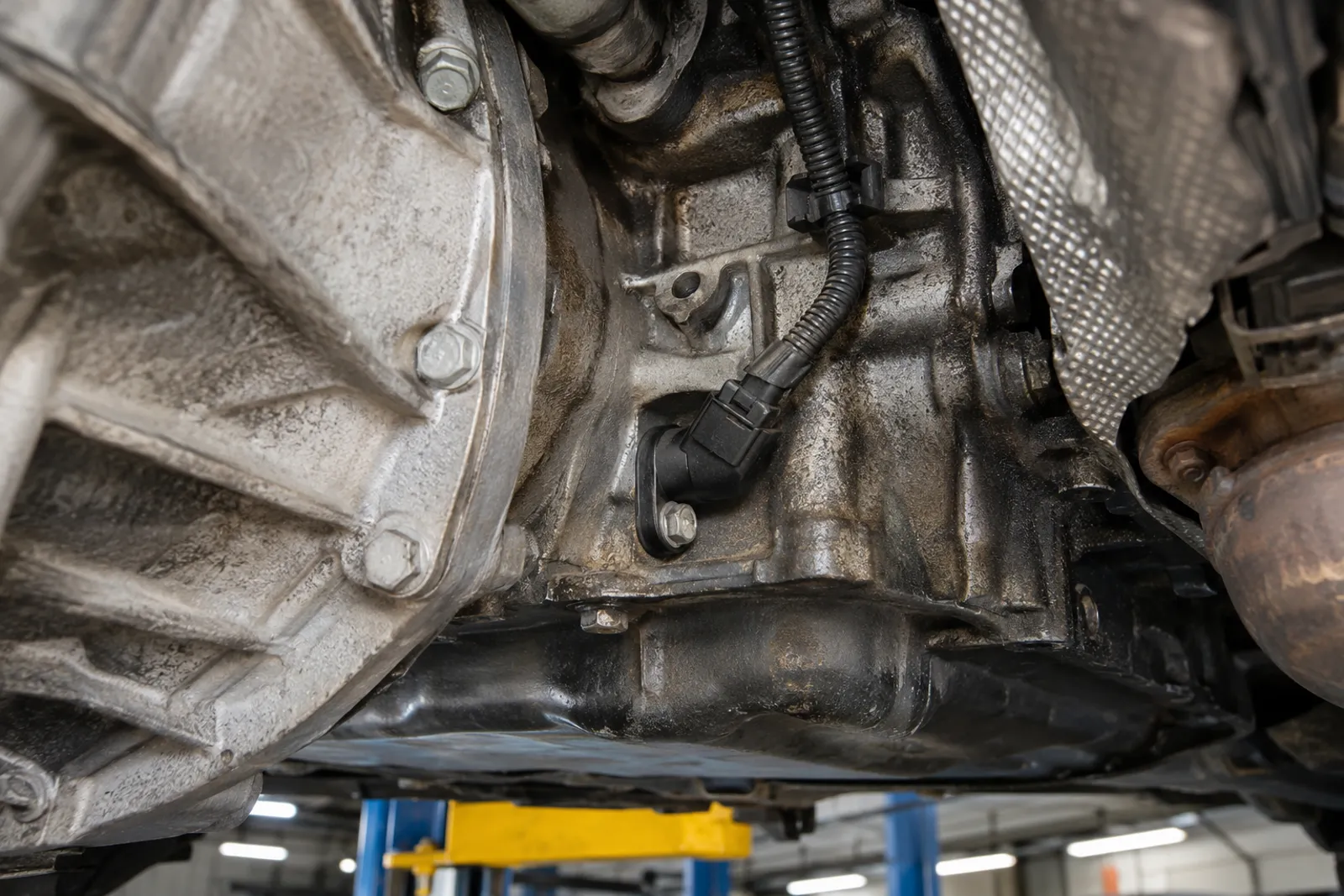
The sensor is positioned to read the engine’s crankshaft reference wheel. Its location and access route depend on the engine code and generation; a model badge alone is not enough to specify the job. We check the applicable repair information before estimating labour.
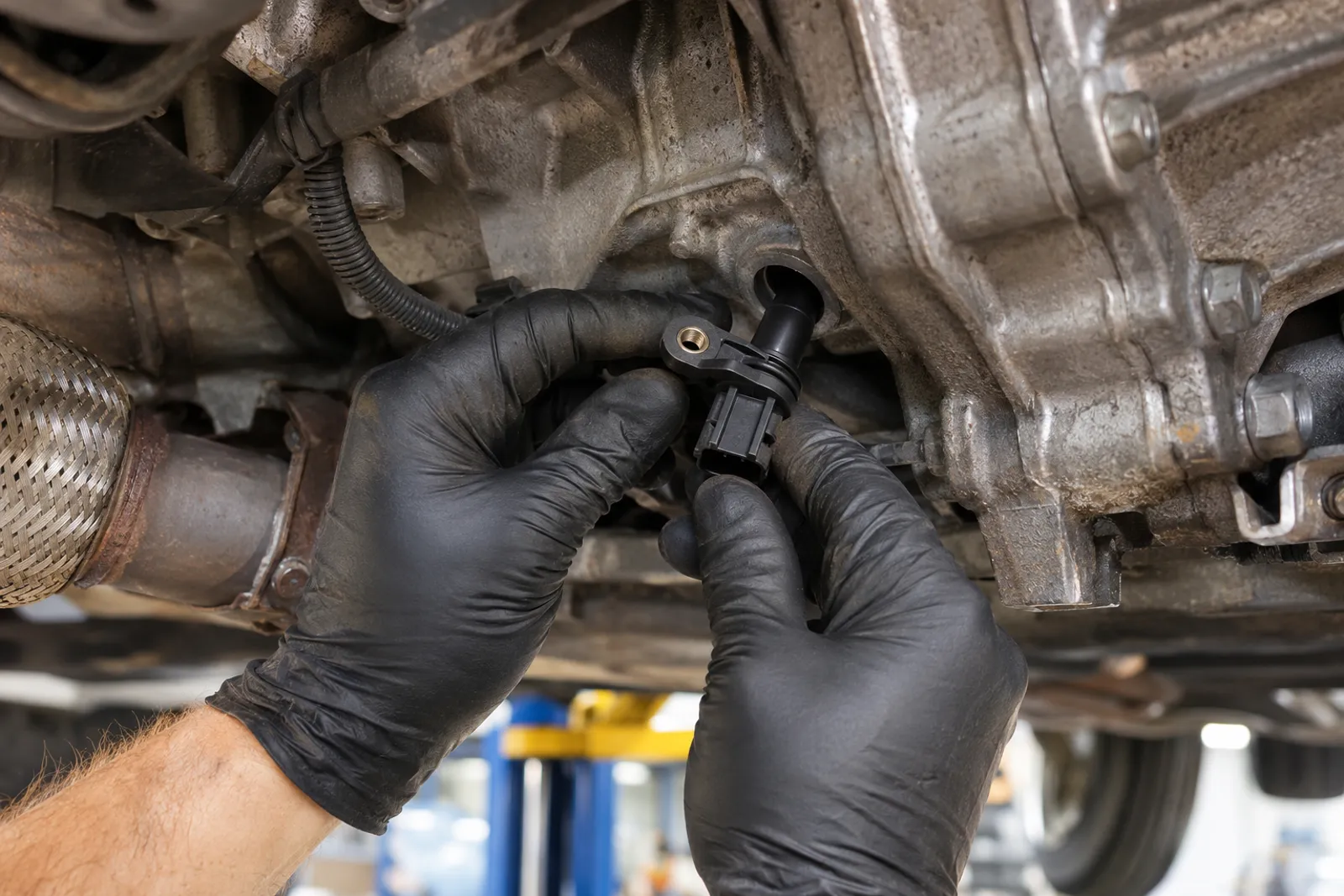
On some engines it can be reached from underneath with the car on a lift. On others, parts such as the intake manifold, heat shields or the starter area need to be cleared first. We confirm the access for your engine before quoting, so the labour time is known in advance.
Our process
The diagnosis decides the repair. We only replace the sensor once the signal and wiring tests point to it, and we test again before the car goes back to you.
For an intermittent fault, controlled testing is planned around the reported conditions. A vehicle with uncontrolled stalling is not routinely driven simply to reproduce the symptom.
Sensor replacement does not automatically mean coding is required. Adaptation reset, teach-in or software requirements depend on the engine and software version. We follow the applicable BMW procedure rather than assuming normal driving completes every required step.
Parts
A crankshaft sensor has to read the pulse wheel with very fine accuracy, so the quality of the part matters more than its price. These are the options we discuss with you before ordering.
A BMW-branded replacement selected for the VIN, including approved superseded part numbers. Confirm availability and warranty in the quote.
Check the named manufacturer and exact application. A supplier’s involvement with BMW does not prove every part in its range has the same specification.
Compare verified fitment, manufacturer, traceability and warranty. Price alone does not establish suitability or reliability.
Whichever part you choose, it must have verified compatibility with your VIN and engine, including any approved supersession. A sensor that fits the hole but has a different tip depth or connector will not give a clean signal. If you already have a part, tell us the number and we will check it against your chassis before fitting.
On the road
An unresolved stalling fault can interrupt propulsion and may affect steering or brake assistance, depending on the vehicle. Move to a safe place if possible, follow the vehicle’s warnings and arrange assistance rather than continuing a journey after repeated cut-outs.
If your BMW has stalled unexpectedly or will not restart, call before travelling to us. Explain its location and condition so suitable collection or recovery and any charges can be confirmed.
Engine stops without warningOften in traffic, after the engine is fully warm.
Car may not restartCooling down does not guarantee it will restart.
Heavier steering and brakesAssistance may change depending on the vehicle system.
Repeated crankingDrains the battery and wears the starter.
Your decision before the repair
Know what failed, what the proposed work includes and how the result will be checked. Ask us to explain any uncertainty before you agree to parts or labour.
Ask for the relevant fault report and an explanation of RPM, signal or circuit checks. A code by itself is not a reason to buy a sensor.
Confirm the compatible part, fitting cost, any extra diagnostic work and written warranty terms. Approve additional repairs separately.
Ask which starting and running checks were completed, whether adaptations were required and whether any symptoms or faults remain. Keep the invoice and contact us if the original symptom returns.
BMW Repair Dubai is an independent workshop at 39 Al Quoz 4, Dubai. Call 056 464 6081 during Monday to Saturday, 9am to 7pm to discuss your BMW and transport needs.
General sensor test principles are described by HELLA Tech World. BMW bulletin SI B11 02 15 documents adaptation requirements for its specified engines and production periods; it is not a procedure for every BMW. Current vehicle-specific instructions determine the work. Page images provide visual context and are not records of a particular completed customer repair.
Related work
Faults that share symptoms with the crankshaft sensor.
FAQ
Quick answers to what owners ask before booking a crankshaft sensor check or replacement.
Yes, a missing or implausible crankshaft signal can prevent starting. A no-start is not proof of sensor failure; battery condition, fuel delivery, start authorisation and other relevant faults must also be checked.
A temperature-sensitive sensor or circuit fault is one possibility. Fuel supply and other electrical faults can produce a similar pattern. Tell us the conditions and share any stored codes; do not assume cooling down makes the car safe to drive.
We provide a fitted quote for your engine and confirmed fault. Our published diagnostic scan price is AED 150, not a replacement price. Ask about any additional signal-testing charge, the sensor, access labour, adaptation work and warranty before approval.
Timing depends on whether the fault is present, sensor access, parts availability and any required adaptation or software work. An intermittent fault may need longer testing than a straightforward replacement. We confirm an estimate after identifying the engine and work required.
Coding, adaptation reset and teach-in are different procedures. The requirements depend on your engine and software version. Some BMW applications require an adaptation reset, and particular software conditions may require programming. Do not assume driving alone completes the work.
Not necessarily. P0016 concerns crankshaft/camshaft correlation and can involve mechanical timing, VANOS or signal faults. P0300 is a nonspecific misfire code. The diagnostic findings must justify the repair.
Send the model, year and VIN privately so the engine and compatible part can be checked. This service concerns combustion engines, including the engine in applicable hybrids. A battery-electric BMW has no combustion-engine crankshaft sensor.
Request the findings, recommended repair, part manufacturer and number, total quote treatment, estimated completion time and parts/labour warranty terms. Agree additional work separately and retain the invoice and test results.
We advertise free Dubai pickup and delivery. Tell us if the car cannot start, has stalled or is difficult to access so the appropriate transport method, availability and any recovery charges can be confirmed before collection. Our Al Quoz workshop is open Monday to Saturday, 9am to 7pm.
Book a crankshaft sensor check
Tell us your model, year and what the car is doing. We read the signal, find the fault and give you a clear price before any part is fitted.