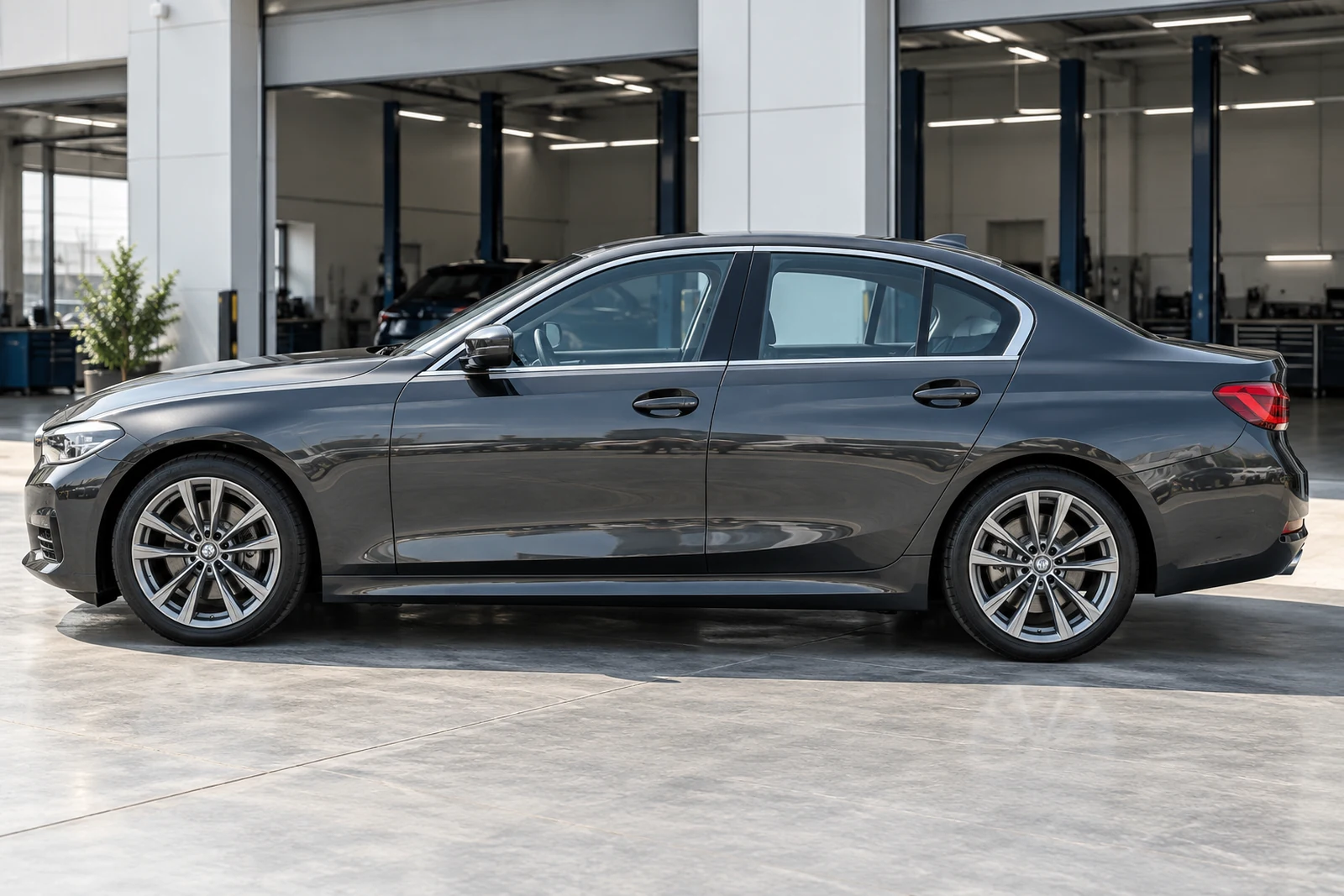
Dents and paint
Confirm paintless or conventional panel repair, refinishing, blending and trim removal. Damage depth and location affect the work.
Dented panel, faulty lock, water leak or a door that sits unevenly? Our independent Al Quoz workshop assesses the fault and explains repair or replacement options before you approve the work. Send photos and your model details for an initial estimate. The fitted price depends on the damage, parts and finish.
Do not drive with an unsecured door or try to hold it shut. Contact us to discuss appropriate recovery. For cosmetic damage with secure closure, send photos so we can plan an assessment.
Call about an unsafe doorPlan your repair
A dent repair, lock replacement and complete door replacement are different jobs. Compare what is included before choosing the work.
Door map
The first six numbers match the door picture above. Most door complaints come from one of these areas, and some have their own dedicated pages if you want more detail on a particular fault.
Dents, creases, scratches and paint damage on the door skin.
2Exterior handles, carriers, cables and Comfort Access sensors.
3Actuators, central locking faults and doors that will not close.
4Regulators, motors and glass that drops or stops halfway.
5Broken glass, housings, folding motors and indicators.
6Sagging doors, clicks when opening and doors that will not hold open.
7Wind noise, water leaks and dust coming in at the edges.
8Inside trim, armrests, leather, clips, speakers and lights.
Door dents
Car parks in Dubai malls and residential towers are tight, so door dings are one of the most common jobs we see. Paint condition is one factor in choosing the repair. Dent depth and shape, stretched metal, access, panel material and previous repairs also affect suitability.
Where suitable, specialist tools reshape the dent while retaining the existing paint. Access and the condition of both the metal and finish determine whether this approach is practical.
Where repair is permitted, the panel is reshaped and prepared for refinishing. The quote should explain paint work and any adjacent-panel blending required.
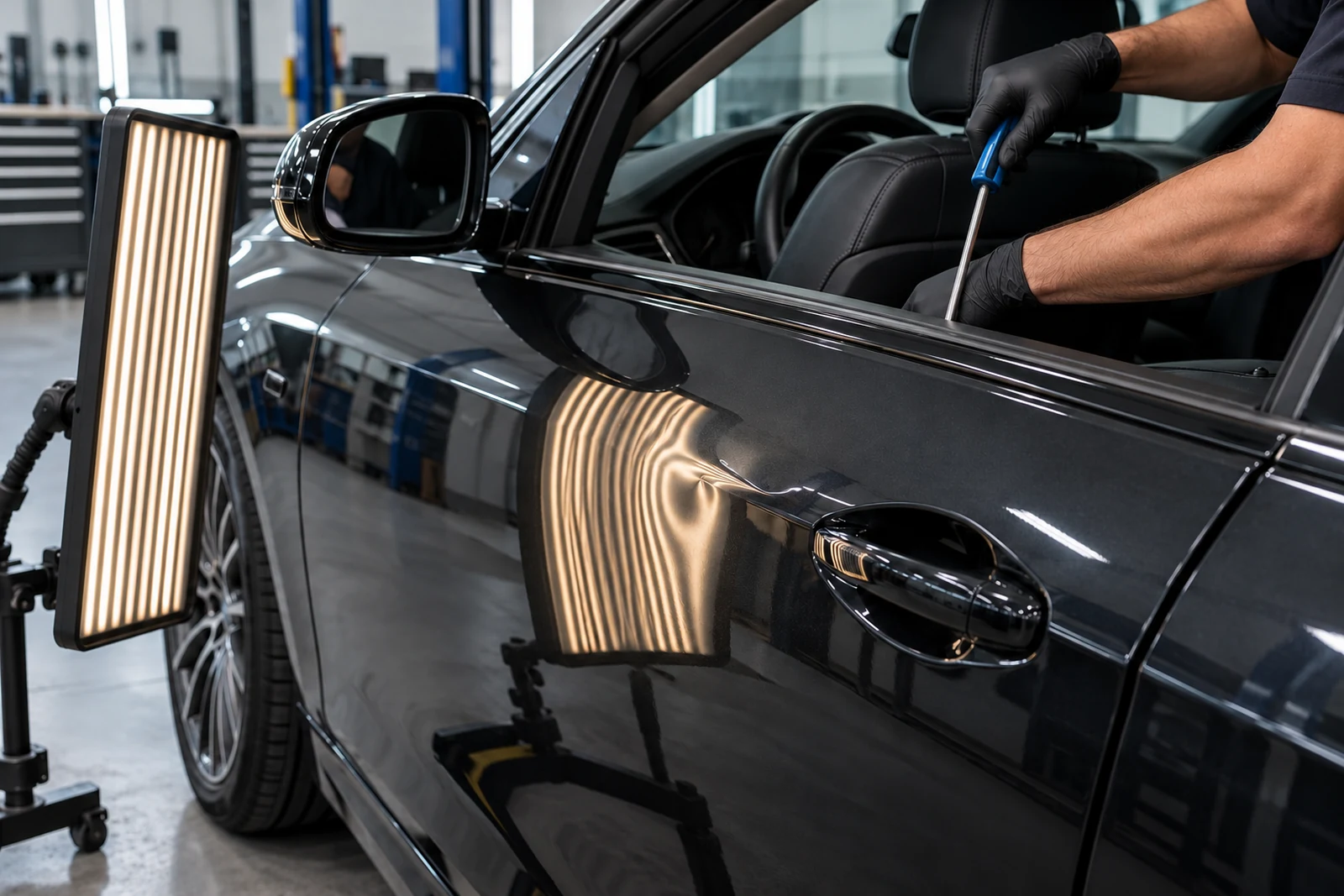
Body lines, edges and restricted access can make repair more complex. Send a wide photo and an angled close-up in daylight. Inspection confirms whether paintless repair, refinishing or replacement is appropriate. For light marks on the paint only, see our BMW scratch repair page.
Locks and latches
A door that will not lock can have a mechanical or electrical fault. We compare the affected door with the others and check the latch, actuator operation, wiring, connectors and power supply as appropriate before recommending parts.
A possible actuator, latch, wiring or local supply fault; testing identifies the cause.
May indicate a struggling actuator or restricted mechanism; inspect before replacing parts.
Bounces back open, or needs slamming to stay shut.
Check latch position, sensing and wiring rather than assuming the switch has failed.
On cars with soft close, the door stays on the first catch.
Can point to the actuator, or to the key and its battery.
Compare remote operation, a spare key where available and the cabin locking control. A problem affecting several doors can involve the key, vehicle power supply, receiver or control system. One affected door calls for local mechanical and electrical checks.
BMW key fob repairIf the door will not close or remain securely latched, do not drive the car. Do not hold or tie it shut to continue a journey. Contact us to discuss appropriate recovery; vehicle collection by a driver is not suitable for an unsecured door.
Seals and noise
BMW doors use several rubber seals, one on the door itself, one on the body opening and others around the glass. Heat dries them out over time. When they shrink or tear, you hear it on the highway before you see it.
What you noticeA hiss or whistle from one door at higher speeds, often worse in a crosswind.
Likely causeA shrunken seal, a door that has dropped slightly or a window not closing fully.
What you noticeDamp carpet after rain or a car wash, or water marks on the door card.
Likely causeA torn seal, blocked door drain holes or a lifted moisture sheet behind the trim.
What you noticeFine dust along the sills and door shuts, especially after desert drives.
Likely causeA seal that no longer presses evenly against the body all the way round.
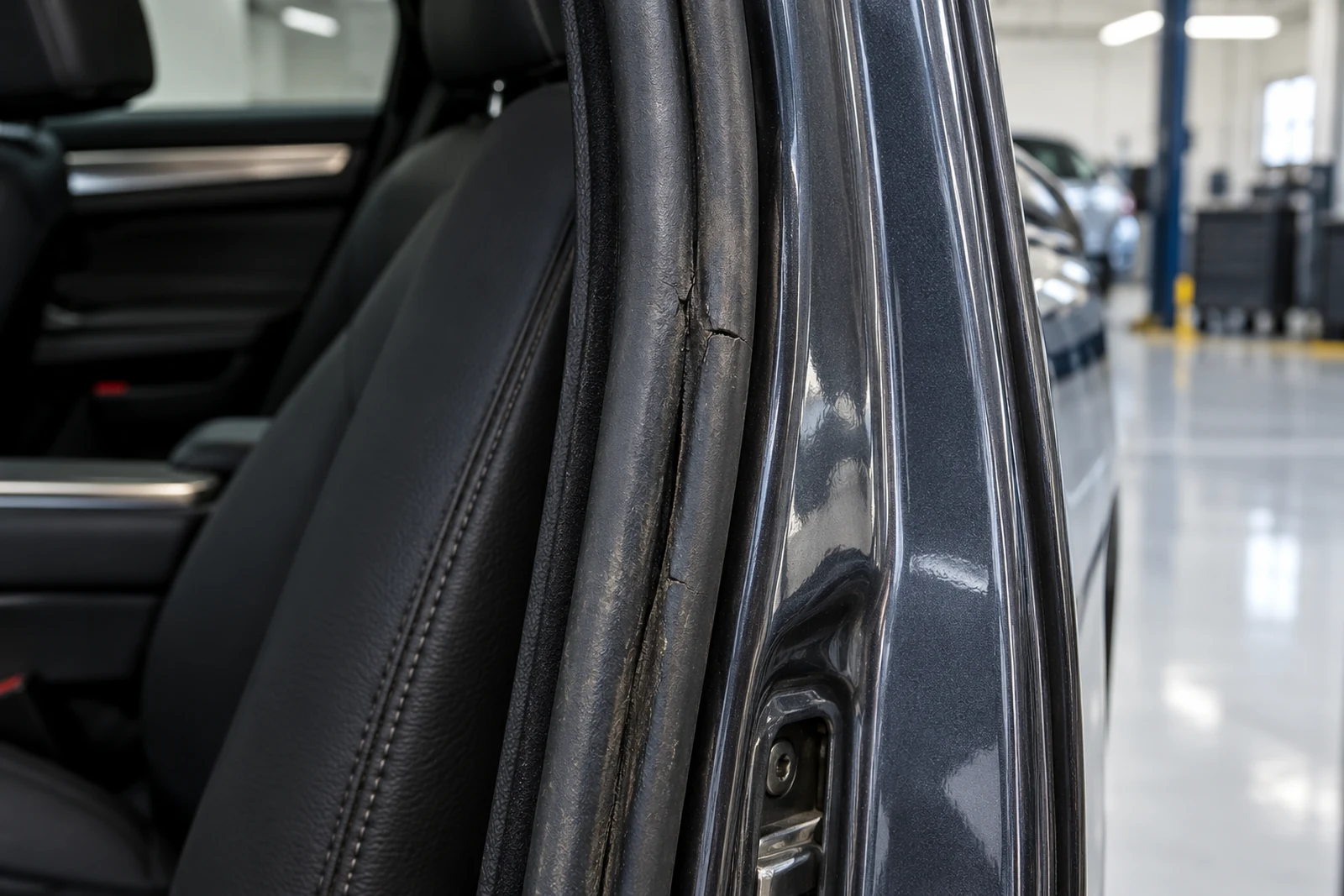
A new seal will not cure wind noise if the door itself is sitting out of line. That is why we check the door gaps and the window position before replacing any rubber. Sometimes an adjustment is all it needs.
On the door
Some door faults are big enough to have their own pages. If yours is one of these, the links below go straight to the detail, prices and questions for that job.
Outer handles that pull but do nothing, loose grips and Comfort Access sensors.
See door handle pageWindows that drop, grind, stop halfway or go up crooked.
See window pageGlass, housings and folding motors.
See mirror pageRelease levers and armrest pulls.
See interior handle pageHeat blocking film for door glass.
See tint pageHinges and alignment
Heavy BMW doors, especially the long front doors on coupes and large SUVs, can start to drop over the years. The first sign is often having to lift the door slightly to close it, or a gap that is wider at the top than the bottom.
Play in the hinges lets the rear of the door drop.
The door clunks, will not hold open or swings in the wind.
The door closes stiffly or rattles once shut.
A door refitted without careful setting of the gaps.
Inside the door
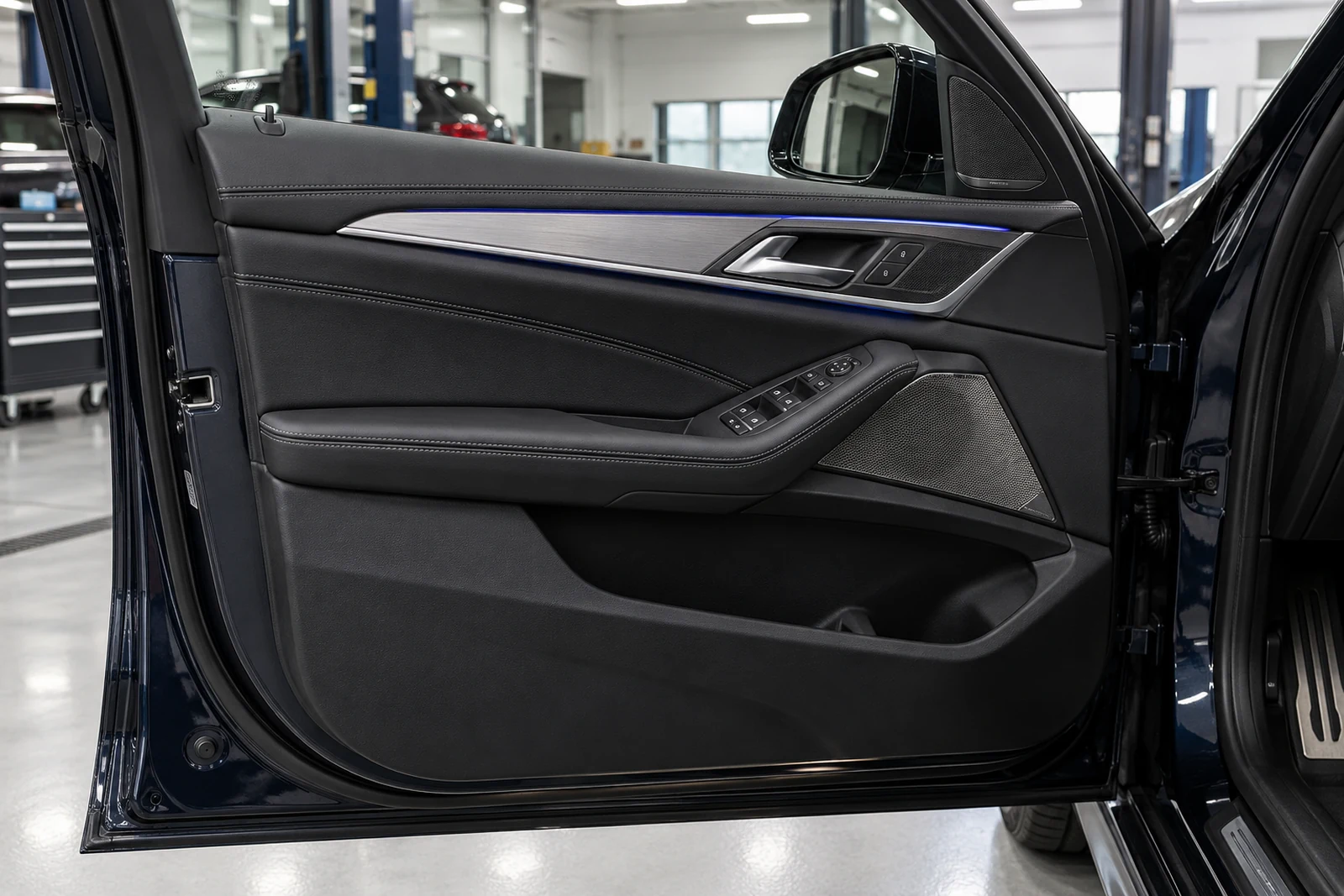
The door card is the trim panel you see from inside the car. It carries the armrest, switches, speaker grille, lights and storage pocket, all held on by plastic clips that get brittle in heat. A loose or noisy door card is usually a fixable job, not a replacement.
The panel pulls away at the edges or rattles over bumps.
Worn leather, split seams or a loose armrest.
Fabric or leather inserts coming unstuck in the heat.
Dented or loose grilles and buzzing door speakers.
Ambient strips, puddle lights and warning lights not working.
Window and mirror switches that stick or stop working.
After a collision
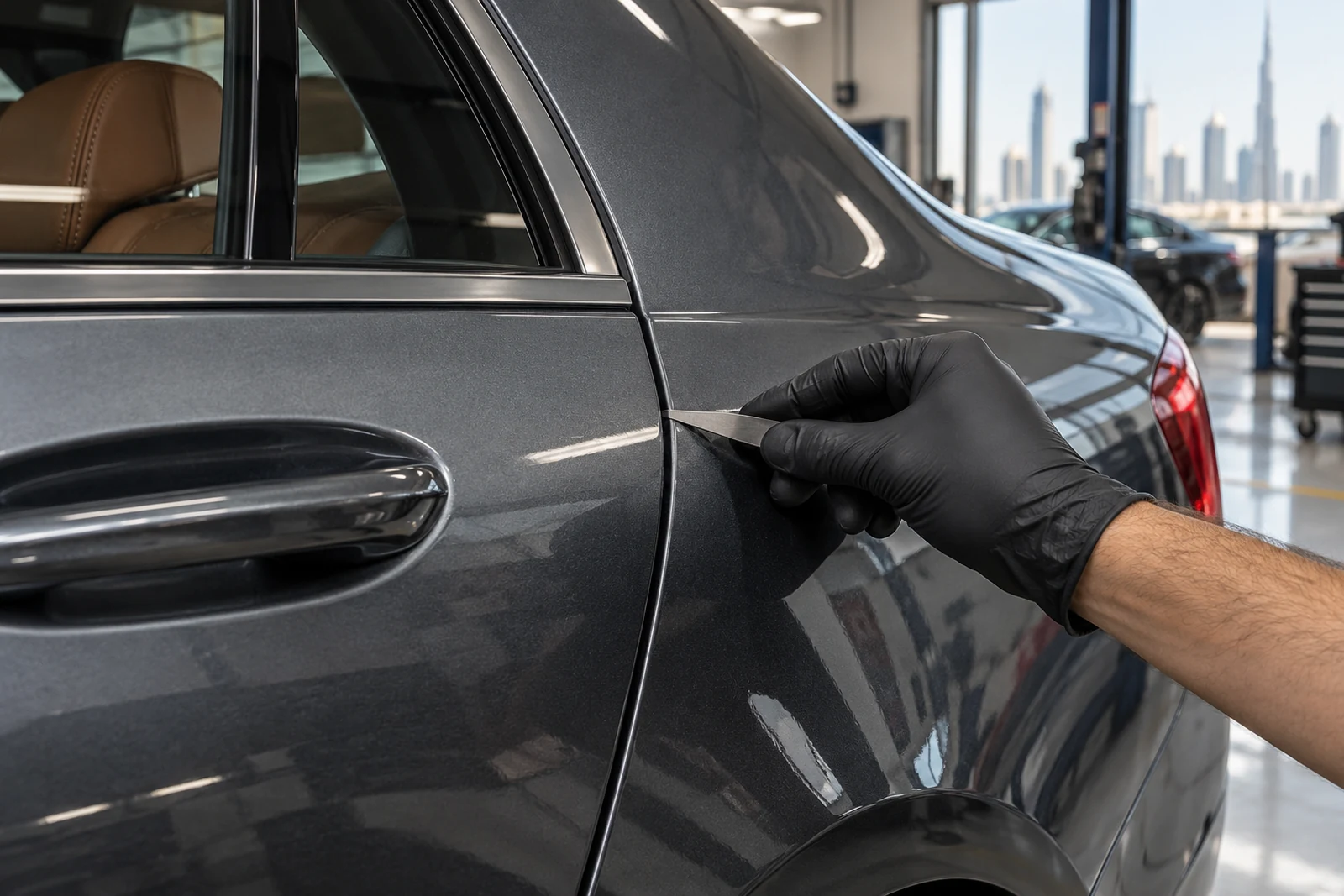
After a side knock, the question is whether the door shell can be repaired or should be replaced. It depends on how deep the damage goes, not just how it looks from outside. We look at the door, the inner frame and the parts inside before giving you an answer.
The door skin is dented or scraped, but the inner frame and edges are straight.
Damage reaches the door edge, the window frame or the hinge area.
The inner structure of the door has been pushed in or torn.
Our process
Whatever the fault, the job follows the same five steps. You hear what we found and what the fix will cost before the main work begins.
We look at the panel, test the lock, window and switches and check the door gaps.
You get a clear explanation of the fault, photos where useful and a price.
Trim and fixings are removed using the model-specific access method, with electrical and restraint-system precautions where applicable.
Dents, locks, seals or panels are repaired or changed as agreed.
Check the functions affected by the work, including secure latching, locking, window movement, trim fit and sealing as applicable.
Door care
Heat, dust and tight parking are hard on doors. A few simple habits help the seals, locks and paint last longer and keep small faults from turning into bigger repairs.

End bays and wider spaces cut the risk of door dings from other cars.
Use a care product compatible with the fitted seal and follow the vehicle and product instructions.
Check the small drain holes under each door so water can escape.
Slamming wears hinges, strikers and the soft close mechanism.
Clean sand from the door shuts so it does not grind into the seals.
Report new rattles or wind noise so their cause can be checked before choosing a repair.
Every model
From older E series cars to the latest G series models, the door layout is similar but the parts, wiring and trims differ. We work on doors for every BMW, including coupes with frameless glass and large X models with heavy doors.
Match the work to your BMW
A bare shell does not automatically include glass, regulator, latch, wiring, mirror or interior trim. Confirm what is supplied and which existing components can be transferred.
Match the VIN, production specification, door position and body style. Compare genuine new parts and any suitable alternative or used assembly by condition, compatibility and warranty.
Tell us about frameless glass, soft close and Comfort Access. Window setup or other procedures depend on the parts disturbed and the applicable BMW instructions.
Trace the entry path with a controlled inspection or water test as appropriate. Check seals, drains and the moisture barrier; wet carpet alone does not identify the source.
Inspect hinge play, gaps, striker engagement and previous damage. A check strap controls opening movement; it is not a substitute for correcting worn hinges or structural damage.
Confirm secure latching and locking, affected electrical functions, window operation and trim fit. Leak or wind-noise complaints need relevant checks after the repair.
Local workshop care
Bring us the door problem. Get a clear explanation of the proposed repair and agree the work before it starts.
Timing depends on inspection, parts supply, access and any paint preparation or curing. Ask for the expected parts lead time and workshop time separately before booking. Hidden damage may change the plan after inspection.
Confirm the written coverage, duration and exclusions for the selected parts, fitting and paint work before approval. New and used parts may have different terms. Ask how any problem after repair should be reported.
The fitted cost depends on the fault, required components and any paint or trim work. Ask for an itemised quote including inspection, parts, labour, refinishing where required. A photo estimate is provisional until the repair requirements are confirmed.
Possibly. Intact paint helps, but dent shape, depth, location, access, stretched metal and previous repairs also matter. Photos help with an initial assessment; inspection confirms whether paintless repair is suitable.
The decision depends on damage to the skin, frame, reinforcement and mounting areas, together with the applicable BMW repair instructions. Airbag deployment requires a separate model-specific restraint-system assessment; deployment alone is not a universal rule for replacing the door shell.
An actuator fault is one possibility, but the latch, wiring, connectors and supply also need checking. If several doors are affected, compare the key and cabin locking controls and investigate the shared power or control system.
Usually a shrunken or torn seal, a door that has dropped slightly or a window not closing fully. We check alignment and the window first, because a new seal does not fix a door that is out of line.
Blocked door drains, a torn seal or a moisture sheet that has come away behind the trim are the usual causes. All three can be checked and fixed.
A dropped door, a striker out of place, a worn check strap or a lock that is starting to fail can all make a door stiff. If it does not latch securely, do not drive. Arrange appropriate assistance.
Usually, yes. Broken trim clips and loose parts behind the door card are common causes, and replacing the clips quietens most rattles.
The paint code is a starting point. Existing finish, ageing and previous repairs affect the match. We assess colour and finish and explain whether adjacent-panel blending is needed before agreeing the refinishing work.
Yes. We offer free pickup in Dubai, and the work is done at our Al Quoz workshop, open Monday to Saturday, 9am to 7pm.
Book now
Send us photos of the door, a short video of any noise and your model and year. Photos help with an initial assessment. Inspection confirms the cause, repair plan and final quote. Tell us whether the door securely latches so we can discuss a suitable visit or recovery arrangement.