12V battery
By fitment. Check battery specification, fitting and registration where required.
BMW i4 G26 electric Gran Coupé
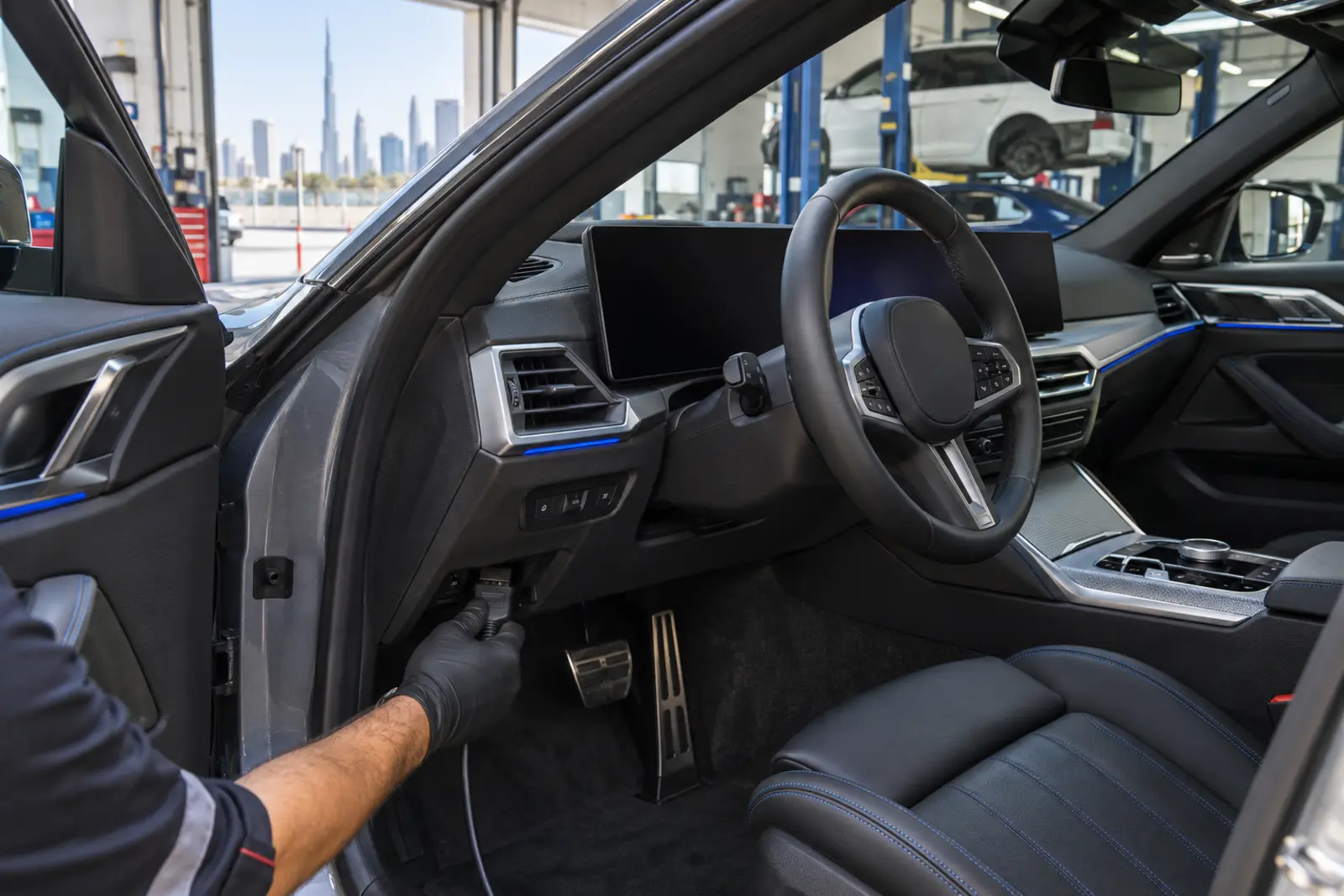
Book maintenance or have a charging fault, drivetrain warning, rear ride-height change or brake vibration assessed at our independent Al Quoz workshop. Initial fault-code scans and reports start from AED 150. We quote further tests and repairs separately.
Costs and inclusions
Confirm scan coverage and whether further testing is needed.
By fitment. Check battery specification, fitting and registration where required.
By test scope. Agree the AC, DC or drivetrain checks before ordering parts.
After inspection. Confirm the affected corner or axle, parts and any setup.
After diagnosis. Confirm work available for your VIN, parts availability and final tests.
Ask for parts, labour, setup, final testing to be itemised. Additional tests and repairs are quoted separately.
Model and equipment
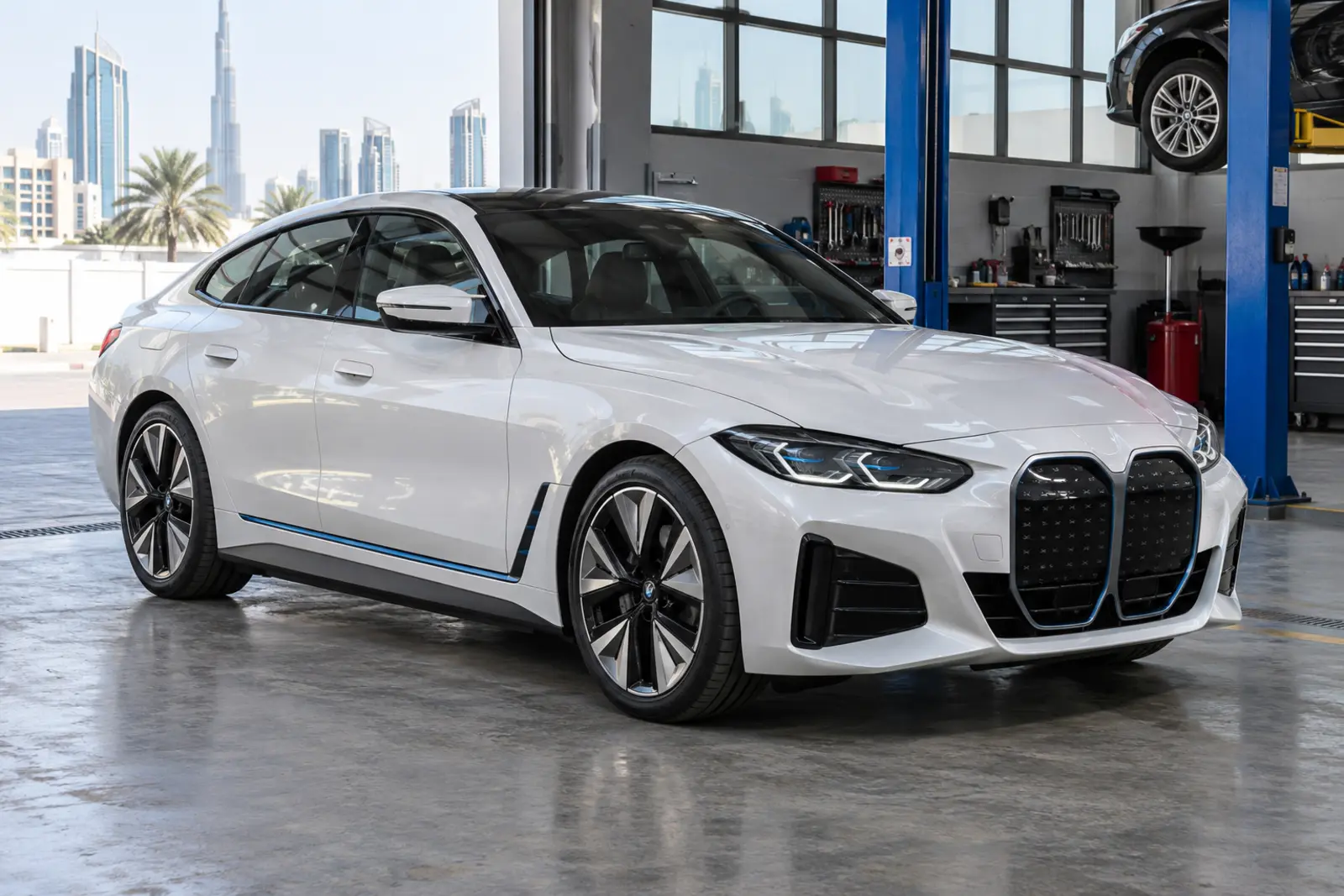
The G26 i4 is an electric Gran Coupé. Share the model badge, build date and VIN if available. Confirm parts and equipment for the actual car and market.
Planned maintenance
Bring your latest i4 service record or a photo of the maintenance display. Tell us about faults you want checked while the car is in.
Use the vehicle display and service records to confirm the work due.
Confirm the brake fluid due date even if the pads have plenty of life left.
Ask for the condition of the discs and pads on the axle that makes noise or vibrates.
Check the approved front and rear sizes and report uneven tread wear or a pull.
Report weak airflow or uneven cabin cooling and check when the cabin filter was last replaced.
Mention low-voltage warnings or failed charging sessions when you book so the workshop can allow for diagnostics.
Brakes and tyres
Tell us whether vibration comes through the pedal, steering wheel or seat. Note when it began and any recent wheel work. See BMW brake inspections and repairs.
The inspection looks at the affected axle and the condition of the fitted pads and discs.
A vibration that follows speed can call for a separate wheel and tyre check.
A change in rear ride height can affect how the i4 feels as it moves off.
Compare the corners and when the car drops.
Investigate air loss before pricing a spring or compressor.
Use fault data to guide height-sensor or electrical checks.
Inspect the affected corner if there is a knock, pull or uneven wear.
Rear self-levelling and wheel checks
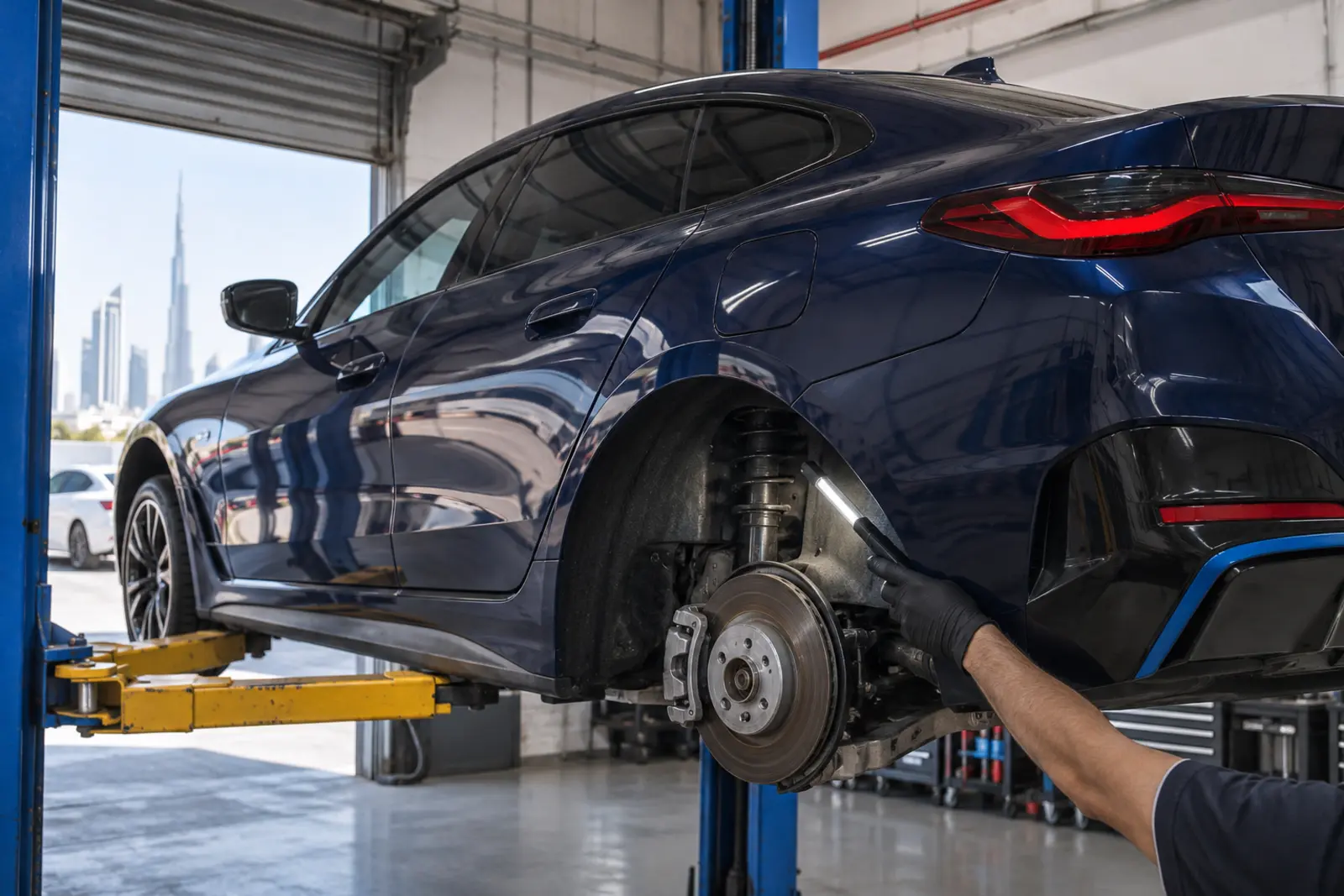
Tell us which side changes height and how long the car was parked. On i4 models with rear self-levelling air suspension, the checks can cover the rear air springs, air supply and height-sensor readings. See BMW suspension repair.
Tell us if the height changes again after the car wakes up. See BMW suspension repair.
What drivers notice first
Choose what changed on your i4 to see which details help the workshop narrow it down.
If several warnings appear together, note which one showed up first.
Tell us which charger fails, whether the session starts and what the display says.
Try to recall which functions still worked when the i4 stopped responding, such as the locks or instrument display.
Send the warning as displayed and tell us whether the i4 can enter ready mode or accelerate normally.
Note which corner is low and whether it settles while parked or changes after the car wakes up.
Say which door, display or control is affected and whether it started after a supply warning or update.
Note where any fluid appeared and share the temperature warning. Follow the vehicle instructions.
Electric drive and wheel-speed symptoms
Tell us whether it happens when you accelerate, lift off the pedal or hold a steady speed. The conditions help distinguish a drive warning from a wheel or brake concern.
Share the drivetrain warning, charge level and whether the i4 still enters ready mode. Fault records can guide checks of the affected drive system.
Note the selected drive mode, whether the change repeats, and any accompanying braking or drivetrain warning.
Tell us about recent tyre or wheel work. An inspection and, when appropriate, a road test can help separate wheel-speed vibration from a drive-unit concern.
Follow any stop instruction shown by the vehicle. Record the exact wording once safely parked.
Before you move the car
Use the instruction shown on the i4 display and check the handbook. If you are unsure whether it can be moved, call to discuss recovery.
Once parked safely, capture the message and note whether it first appeared on plugging in, unlocking or pulling away.
If the car displays a stop instruction, stop safely and follow the handbook. Tell the recovery provider that the vehicle is an electric BMW i4.
Give the provider the exact warning and say whether the i4 enters ready mode.
Keep clear of exposed electrical parts and tell the workshop or recovery provider about collision damage or flooding.
Include the dashboard message when you call so we can discuss whether the car needs recovery or a workshop visit.
Find where the session stops
If the i4 charges at one location but fails at another, tell us which equipment and charging type you used. The test plan depends on where the session fails.
Tell us whether the i4 has charged successfully on the same wallbox before and whether the charger displayed an error.
Note the station and which device reported the error, the i4 or the charger.
Record the battery percentage when charging started and when it cut out.
Tell us whether the plug goes fully in and whether you hear the lock engage. Leave a stuck connector alone.
Check the handbook for the release procedure. Note whether the charge point showed that the session had ended.
Stop using equipment that looks damaged or overheats and arrange advice.
Fault data can help distinguish an inlet or communication problem from a fault in the onboard AC charging equipment.
The first checks look at fault records and whether the i4 and fast charger established a connection.
Share the target percentage and whether the session stopped at that setting or ended earlier.
Send the exact message, whether you used AC or DC, and the result of any previous successful session.
Ask which checks apply to the i4. Problems with the wallbox or building supply are assessed separately. See the BMW charging fault service.
Two separate electrical systems
The i4 uses a low-voltage system for its electronics and a separate traction battery for electric drive. Testing helps identify which system needs attention.
If keys, locks or displays stop responding, ask about the low-voltage supply and DC/DC support.
Tell us how long the i4 was parked and whether it had already shown a supply warning.
Ask which battery fits and whether installation and registration are included where required.
The traction battery stores energy for electric drive. Share the exact warning if one appears.
Charging interruptions and lower range can have several causes. Ask which data supports the next check.
Confirm the tests and repair options available for your VIN, parts availability and written cover.
Temperature management
The i4 uses temperature management for the traction battery and electric drive. A warning, repeated charge interruptions or visible fluid loss can guide a circuit-specific check.
Follow the dashboard message and handbook if a warning returns. See coolant leak testing.
Range and battery condition
Compare range on the same route at a similar starting charge. Highway speeds, cabin cooling and tyre condition can affect energy use, and the dashboard estimate changes with recent driving.
For a sudden or persistent change, share what you observed and any warning. Ask what battery data the workshop can obtain for your i4 and what the readings can establish.
Gran Coupé cabin and access
Tell us which function is affected, whether it happens with both keys, and whether it started after a supply warning or software update.
Curved display and iDrive Report whether the display goes blank, restarts or loses audio while other functions still respond.
Frameless door glass Tell us which window fails to drop or reseal when the door opens and closes.
Tailgate and access Describe whether it responds to the key, cabin button and tailgate switch.
Recent work or warnings Mention battery work, a software update, door repairs or a warning that appeared first.
Your fitted quotation
Ask which finding supports the recommended work and what further checks could change the estimate.
Compare quotes for the same parts, labour and final checks. Ask for any optional work to be listed separately.
Used i4 inspection
Before buying a used i4, agree which checks can be carried out. Ask the seller to bring the charging cable, keys and available invoices.
Confirm the inspection scope and ask how you will receive the findings before agreeing to buy.
Common booking questions
Questions about i4 charging, warning lights, rear suspension and arranging a workshop visit.
The i4 is fully electric and has no petrol or diesel engine. Check the vehicle display for applicable maintenance such as brake fluid and vehicle checks.
Yes. Share whether the issue is with AC at home, DC at a public charger, or both. We can confirm what the vehicle-side assessment should cover.
The i4 has separate low-voltage and high-voltage systems. Testing helps identify whether the problem is the 12V battery, its supply or a separate fault.
The model and VIN help identify fitment. Share which side drops and when it happens. Inspection findings help distinguish an air leak from a supply or control fault before parts are priced.
Ask how long to allow for the first visit. Repair timing can be confirmed after the tests and a parts availability check.
BMW Repair Dubai in Al Quoz
Send the i4 badge and year with the service you need or the symptom you noticed. We can discuss the next check and when the workshop can see the car. If the i4 cannot be driven, tell us so we can discuss suitable transport.