Initial noise assessment
AED 250–450Per visit allowance for initial inspection, relevant fault scan and a safe road test where appropriate. Extended tracing and dismantling are separate.
Squeal, rattle, knock, whine or clunk
Book BMW noise diagnosis and repair at our Al Quoz workshop in Dubai. We investigate rattles, squeals, knocks and clunks, explain the findings and quote the repair before replacing parts. Start with your model and a short description of the sound.
A video is optional. Record only while safely parked, away from traffic and moving engine parts.
Plan your visit
Start with an assessment, then approve the repair once the cause is understood. These are example Dubai budgeting ranges, not fixed workshop offers. We confirm our assessment fee and included checks before starting.
Per visit allowance for initial inspection, relevant fault scan and a safe road test where appropriate. Extended tracing and dismantling are separate.
One conventional belt, fitting and running check. Tensioners, pulleys, oil leaks and timing-chain work are excluded.
One axle on a conventional brake system, new replacement parts, fitting and checks. Performance and ceramic systems need a separate quote.
One conventional mount, fitting and verification. Active mounts, additional mounts and associated faults can increase the cost.
Budget figures cover the work described. Repair ranges exclude the separately agreed diagnostic charge. Parts brand, model, access and fault severity change the total. We do not assume the assessment fee is waived or credited; any credit is stated in your written quote.
A scan alone is not a complete noise diagnosis. The initial visit may identify the fault or establish which further checks are needed. Extra diagnostic time, dismantling and repairs require your approval.
Start with the location
Where the sound seems to come from narrows the list of causes quickly. Sound travels through the body, so this is a starting point, not the answer.
Belts and pulleys, the timing chain, injectors, the water pump, vacuum hoses and the cooling fan. Most squeals, ticks and whistles start here.
Read about engine noisesWheel bearings, control arm bushings, drop links, shock absorbers and brakes. Hums, clunks and grinding usually come from here.
Read about suspension noisesThe gearbox, driveshaft, transfer case on xDrive cars and the exhaust with its heat shields. Rattles, buzzes and whines often start here.
Read about exhaust rattlesThe differential, rear wheel bearings and rear suspension. A whine that changes with speed is often the differential.
Read about differential noiseBlower motors, AC flap motors, the AC compressor and trim rattles. Clicking behind the dashboard is very common on BMWs.
Read about AC noisesSteering racks, column joints, tie rod ends and top mounts. Creaks and knocks when turning in car parks point here.
Read about steering noiseSound can be misleading. A loose heat shield in the middle of the car can sound like it is coming from the back seat, and a front wheel bearing can seem to come from the dashboard. That is why we confirm the source on the lift before naming the part, rather than replacing whatever is closest to where the noise seems to be.
Describe the sound
The type of sound says a lot about what is moving, rubbing or loose. This is how we read each one before the car goes on the lift.
If a noise comes with a warning light, a burning smell, smoke, a change in how the brakes feel or a temperature reading higher than normal, stop the car and call us. Call to discuss safe transport. Free pickup for a drivable car is different from breakdown recovery; recovery arrangements and any charge are confirmed separately.
Timing tells the story
Two cars can make the same sound for different reasons. When it happens is usually the clue that separates them.
Chain rattle, belt squeal or a lifter tick that fades as the oil warms up.
Belt pulleys, the water pump, a loose heat shield or a vacuum leak hiss.
Boost leaks, engine mounts, exhaust leaks or driveshaft joints under load. Our guide to noise when accelerating goes deeper.
Worn pads, glazed discs, a sticking caliper or a loose brake part.
Steering joints, top mounts, CV joints on driven axles or a wheel bearing under load.
Bushings, drop links, shock absorbers and loose trim.
Wheel bearings, tires, the differential or wind noise from a door seal.
The compressor or accessory drive where fitted, the blower, or a flap motor. Compressor design varies by model.
Your model and a brief description are enough to book. If you have noticed whether the car is cold, warm, braking or accelerating, that helps us plan the checks. You do not need to reproduce the sound yourself. Intermittent sounds may require a cold start or a longer assessment, agreed with you.
Under the hood
Engine noises worry owners the most, and they deserve the most care, because a few of them come before expensive damage.
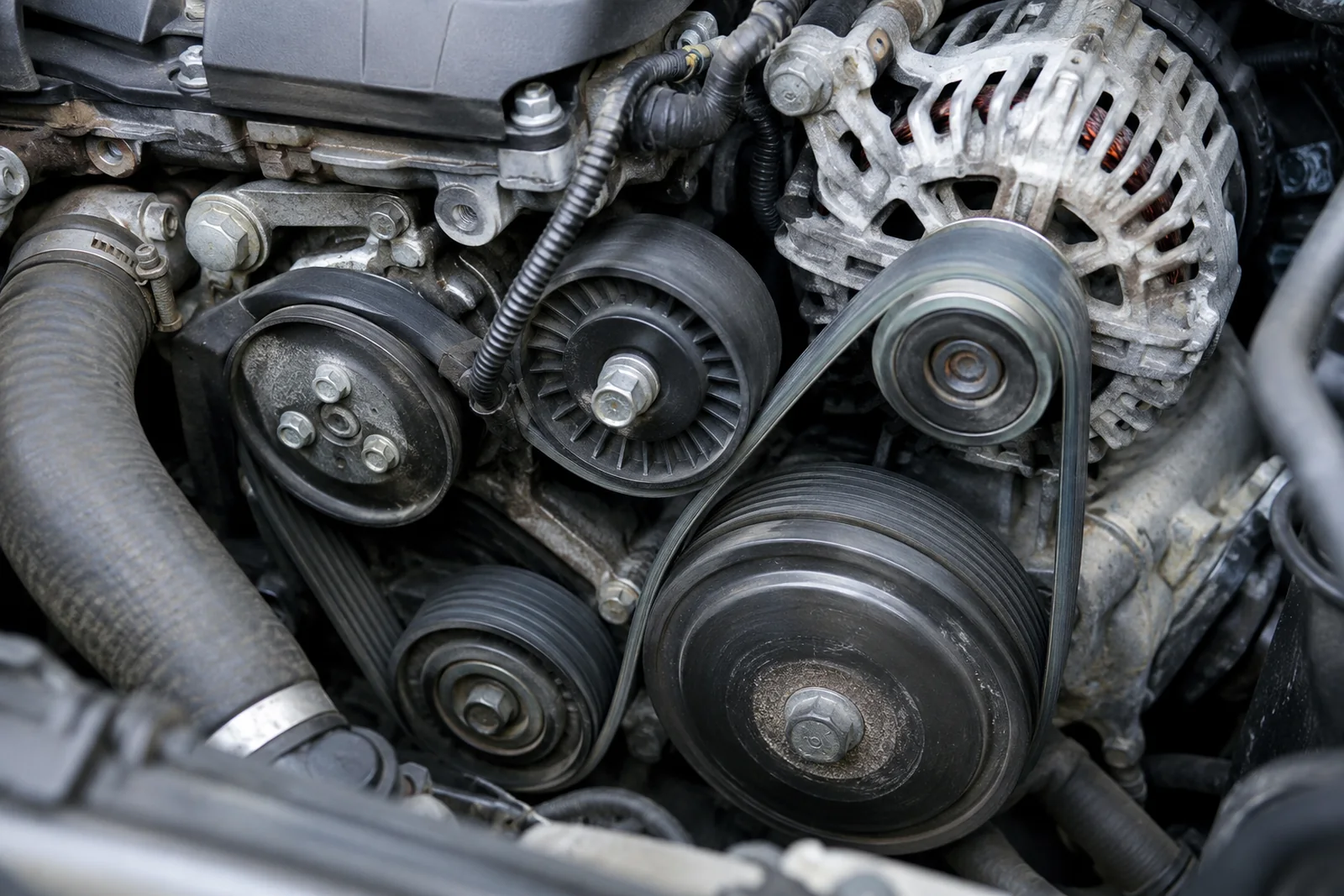
A worn drive belt, a weak tensioner or a dry idler pulley squeals on start up or with the AC on. Our serpentine belt replacement page covers the fix, and our guide to pulley noise explains the sounds.
Some four cylinder petrol and diesel engines are known for chain and guide wear. A new cold-start rattle warrants investigation, but it does not prove chain wear. We check the engine version, oil condition, related faults and other possible sources before recommending timing work.
Some direct injection engines have a characteristic, even injector or fuel-pump tick. A new, louder or irregular tick, especially with rough running or an oil-pressure warning, needs assessment rather than being dismissed as normal.
A split intake hose, a cracked crankcase vent valve or a boost pipe off its clamp. Our guide to vacuum leak diagnostics explains how these are found.

Corners and wheels
BMW front suspension uses several arms and rubber bushings on each side. They wear gradually, and the noise usually comes before you notice any change in handling.
Many suspension noises come from parts that also affect alignment and tire wear, so after replacing them we check the alignment before the car goes back.
Braking turning and pulling away
The sound and when it happens guide the inspection. They do not prove which part needs replacing.
Squeal can involve pad and disc vibration, contamination or hardware. Scraping can come from debris, backing-plate contact or worn components.
Pads, discs, clearance and brake hardware. BMW warning systems vary; persistent grinding needs prompt inspection.
Understand brake noise · Brake pad replacementA whine that rises with vehicle speed may involve the differential, but tires and wheel bearings can produce similar sounds.
The sound under safe driving conditions, relevant bearings, leaks and lubricant condition before recommending differential work.
Where fitted, a worn center bearing or flex disc can contribute to a clunk or vibration when load changes.
The actual driveline layout, couplings, bearings and mounts. Not every BMW uses the same components.
Transfer-case operation and tire compatibility may need investigation. The symptom alone does not establish transfer-case failure.
Approved tire size combinations, rolling circumference and condition. Factory staggered sizes can be correct.
See our BMW transmission repair service for gearbox-related investigation.
Underneath the car
A metallic buzz may come from a loose attachment or contact between components. We identify the source before deciding how much work is needed.
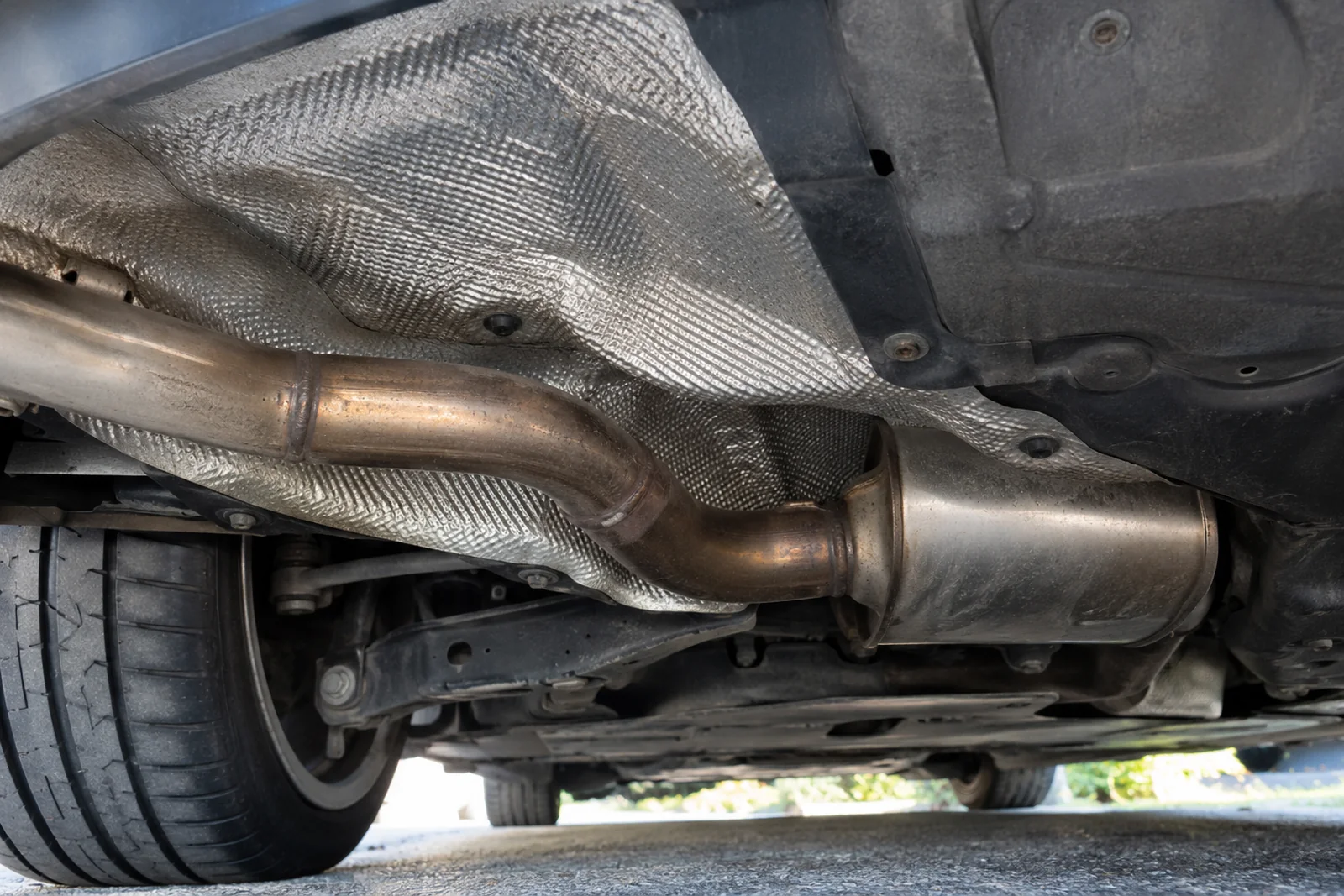
Thin metal shields protect the floor and nearby components from exhaust heat. Loose or corroded clips and bolts can let a shield vibrate at idle or at a particular engine speed.
Check the fixing and the shield conditionWorn exhaust hangers or rubber mounts can allow the pipe or silencer to touch the body or subframe. We look for movement, damage and contact marks.
Restore support and clearance where neededWhere fitted, a worn flap or actuator can rattle or click. Ticking or puffing near the engine may indicate an exhaust leak and needs investigation.
Check operation and rule out leakageDo not treat every underneath rattle as harmless. If fumes enter the cabin or a component is hanging loose, stop safely and contact us about inspection and safe transport.
Inside the car
Not every noise is mechanical. Some come from inside the dashboard, and in Dubai the AC works so hard that its noises are among the most common we see.
A small flap motor that directs air around the cabin. When its gears wear, it clicks for a few seconds after starting or when changing the AC settings.
The blower fan behind the glovebox. Leaves, sand or a worn motor make it noisy, often only at some fan speeds.
The compressor, its drive where fitted, or another component affected by AC load may be involved. The fitted system determines the checks. Our BMW AC repair page covers the system.
The engine cooling fan can run on after a hot drive, which is normal. Persistent high fan speed needs assessment alongside ambient temperature, AC load, coolant temperature and any faults. Our guide to fan noise explains why.
Door panels, the sunroof frame and seat belts. Heat makes plastics expand, so these often appear in summer.
That is usually a battery or starter problem rather than a noise fault. See our guide to clicking and not starting.
Understand the complete budget
These worked examples show how diagnosis and repair can add up. They are example scenarios, not completed customer jobs or offers for every BMW.
2016 BMW 320i
Assumes a worn accessory belt is confirmed and the pulleys remain serviceable. Includes a new belt, fitting and running checks; excludes a tensioner, pulley or leak repair.
Final parts choice, scope and total follow inspection.
2018 BMW 520i
Assumes inspection confirms worn front discs and pads on standard brakes. Includes new aftermarket discs and pads for one axle, fitting and brake checks; excludes calipers and performance brakes.
Final parts choice, scope and total follow inspection.
2017 BMW X3
Assumes one conventional engine mount is confirmed faulty. Includes one new replacement mount, fitting and verification; excludes other mounts and unrelated driveline repairs.
Final parts choice, scope and total follow inspection.
How the job is done
The hardest part of fixing a noise is finding it. This is how we do it without replacing parts on a guess.

We discuss the symptom and check for obvious safety concerns before running or driving the car. A safely recorded video is optional.
If the initial inspection shows it is safe, we carry out a controlled road test within road and traffic limits, with you where practical.
We inspect the suspension, driveline, brakes and exhaust from below, checking for play, leaks and contact marks.
We use appropriate listening checks and relevant fault data. A scan can help with an electronic or engine-running fault, but cannot rule out a mechanical noise.
We explain the findings and proposed repair cost before repair work starts, with photographs or video where practical. Diagnostic charges are agreed before assessment.
We repeat the relevant stationary checks and, when safe, compare the original complaint on a road test. Any remaining unrelated sound is explained.
From the first check to handover
Understand the checks, the findings and the next step before approving a repair.
We begin with your description and a safety check, then agree the initial work and charge. A belt-area squeal needs different checks from a cabin rattle or a brake grind. Your model and a brief description are enough to start.
Depending on the complaint, checks may include a cold start, inspection on a lift, relevant fault data or a controlled road test when safe. We compare the noise with engine speed, road speed, temperature and load.
A scan can help explain rough running or warnings. Bearings, shields and suspension parts can make noise without storing a fault code.
You receive an explanation of what was found and the proposed repair. Photos, video or measurements help where practical. Urgent safety work is separated from other recommendations.
If the noise does not occur during the visit, we explain what was checked and agree any further time, testing or dismantling before continuing.
A loose attachment may need securing; a damaged component may need replacement. After approved work, the relevant checks assess the original complaint. The invoice and handover explanation identify the work performed and any remaining symptoms.
Checks for your BMW
Engine version, suspension design and equipment vary across 3 Series, 5 Series and X models and between generations. Hybrid and electric BMWs also have different pumps, fans and normal operating sounds. Electric models do not need combustion-engine timing checks.
If the noise comes with shaking, see our BMW vibration diagnosis and repair service. You do not need to identify the faulty component before contacting us.
Owners ask us
Do not assume a new noise is safe to ignore. Stop safely for heavy knocking, persistent brake grinding, smoke, overheating, oil-pressure warnings or a change in braking or steering. Call for advice about inspection and safe transport; urgency depends on the actual symptoms.
Timing components are one possibility, alongside the accessory drive, exhaust and lubrication-related causes. The engine version and inspection findings determine the repair. Avoid repeated starts to demonstrate a severe rattle.
An unchanged, even tick can be characteristic of direct injection. A new or worsening tick, rough running or an oil-pressure warning needs inspection. Follow the vehicle warning rather than assuming the sound is harmless.
Usually worn suspension bushings, drop links or top mounts. We check them on the lift.
Wheel bearings and uneven tire wear are possibilities, along with some driveline faults. Inspection and a safe road test help distinguish the source.
A flap actuator, its linkage or another dashboard component may be involved. We check when the clicking occurs and whether air direction changes correctly before recommending a part.
A video can help but is not required to book. Record only from a safe stationary position or let a passenger record safely. Never use your phone while driving or reach near belts, fans or hot components.
We can investigate intermittent sounds, but they may not occur during the first visit. We explain what was checked and agree any further time or tests before continuing; we do not recommend parts solely because the sound could not be reproduced.
We confirm the assessment fee, included checks and any agreed time allowance before starting. Repair work is quoted separately after the findings. Any credit toward an approved repair is stated in the quote, not assumed.
Free pickup is available for drivable cars in Dubai. If driving is unsafe, contact us about recovery arrangements and any separate charge. Our workshop is at 39 Al Quoz 4, open Monday to Saturday, 9am to 7pm.
Heard something new from your BMW?
Call with your BMW model and the sound you have noticed. We explain the assessment charge before starting and provide a repair quotation after investigation. Free pickup is available for drivable cars in Dubai; discuss recovery separately if driving is unsafe.