
Diagnosis first
Confirm the assessment charge and whether it is credited against an approved repair. Testing may include fault records, live readings, leaks and electrical circuits.
Lambda sensors and exhaust readings
An engine light, a fault code for a lean or rich mixture, rising fuel use or a rough idle. Our independent Al Quoz workshop checks fault records, live readings and relevant circuits to distinguish a failed lambda sensor from a mixture, wiring or exhaust fault. Get the findings and a fitted quote before approving replacement.
Cost and repair options
The fitted price depends on the exact sensor, access and confirmed fault. A parts-only listing cannot establish your repair total. Send your model, year and fault code to arrange assessment and a vehicle-specific quote.
Confirm the assessment charge and whether it is credited against an approved repair. Testing may include fault records, live readings, leaks and electrical circuits.
The quote should identify the bank and position, part brand and number, quantity, labour and post-repair checks. Replace additional sensors only when justified.
Seized threads, damaged connectors, wiring or an underlying engine fault may change the work required. Agree extra costs before that work proceeds.
A fixed oxygen-sensor repair tariff is not published here. Confirm the fitted total, transport arrangements and parts availability in writing before approval.
What the sensor does
An oxygen sensor, also called a lambda sensor, sits in the exhaust and measures how much oxygen is left after combustion. The engine computer uses that reading to add or take away fuel many times a second. The control strategy depends on the engine and operating conditions. A sensor reading must be assessed alongside the rest of the system.
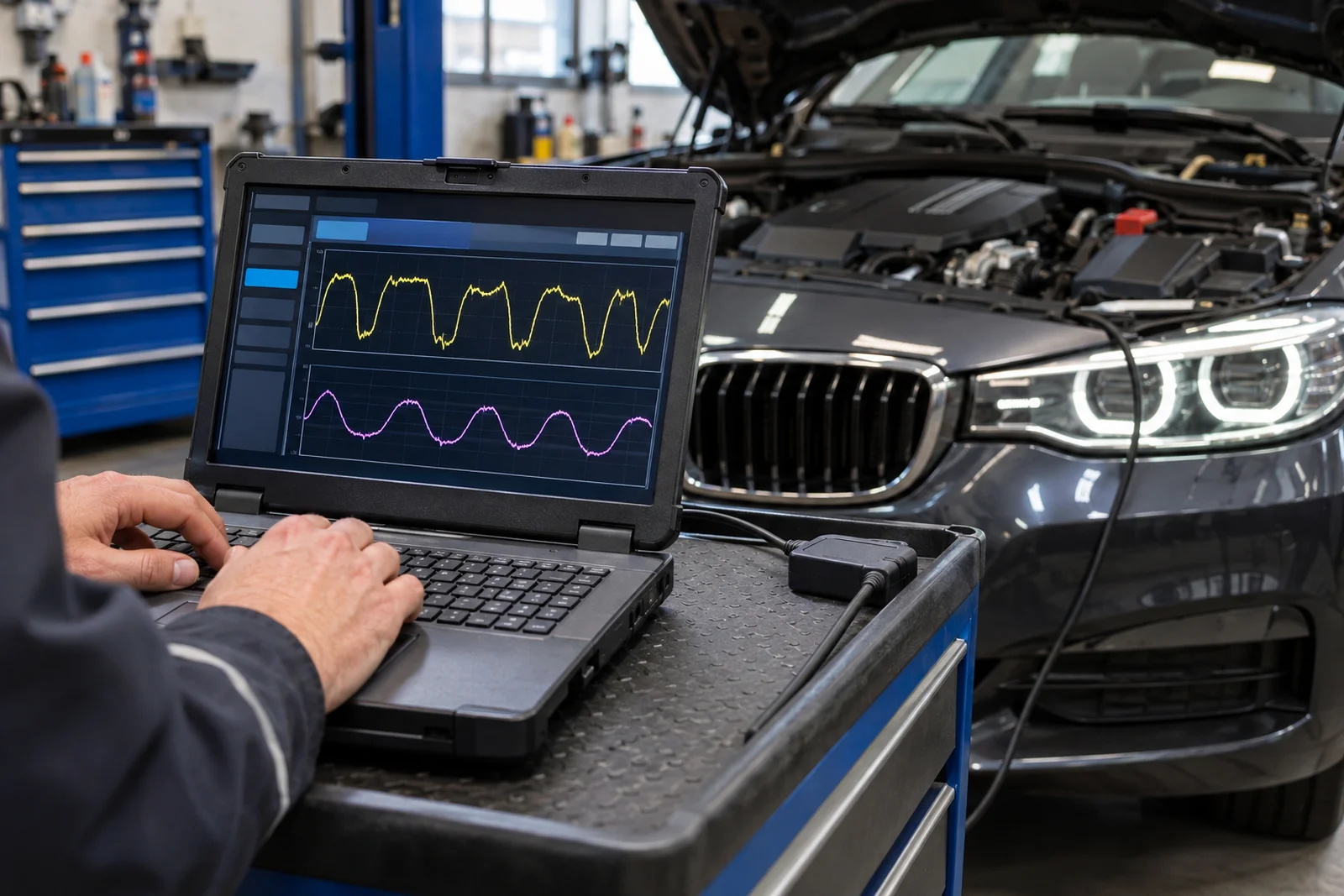
Many modern BMW engines use a wideband upstream sensor. Its lambda or pump-current data must be interpreted using the correct test procedure. A switching sensor uses a different signal pattern; neither should be judged against a universal waveform.
The engine control unit uses downstream readings alongside upstream data to assess catalyst operation. A catalyst-efficiency fault requires checks of the sensors, exhaust integrity and catalyst performance before a replacement decision. Some engine strategies also use downstream feedback for mixture correction. Its role must be confirmed for the fitted engine.
Signs and fault codes
An engine warning, changed fuel consumption or uneven running can justify diagnosis. Symptoms alone do not identify an oxygen sensor as the cause.
The signs are easy to confuse with other faults. A rough idle can also be a vacuum leak, worn spark plugs or a dirty throttle, and high fuel use can come from tyre pressure or driving style. Fault records and live data guide further electrical, mixture and exhaust checks.
P0130Upstream sensor circuit fault, bank 1.P0136Downstream sensor circuit fault, bank 1.P0030Sensor heater circuit fault, bank 1.P0171System too lean, bank 1. Often a leak, not the sensor.P0172System too rich, bank 1.P0420Catalyst efficiency below threshold, bank 1.These are generic codes and the exact wording varies by engine. BMW also uses its own fault numbers, which give more detail, so we read both with a BMW level tool. Bank numbering follows the engine’s cylinder and exhaust grouping. An inline-six may have two diagnostic groups without two physical cylinder banks.
Rule it out first
An oxygen sensor reports what it sees. If another fault changes the mixture, the engine control unit may store a mixture or plausibility code while the sensor is responding correctly. Replacing that sensor will not repair the underlying cause.
An exhaust leak before the sensor is another common cause, because outside air gets drawn in and the sensor reads lean. We check for leaks, look at fuel trims and compare both banks before deciding a sensor has failed. Differences between available cylinder groups help direct testing but do not identify a failed part on their own.
Position matters
The correct sensor depends on your engine, exhaust layout and emissions specification. We check the VIN and engine code before matching the part.
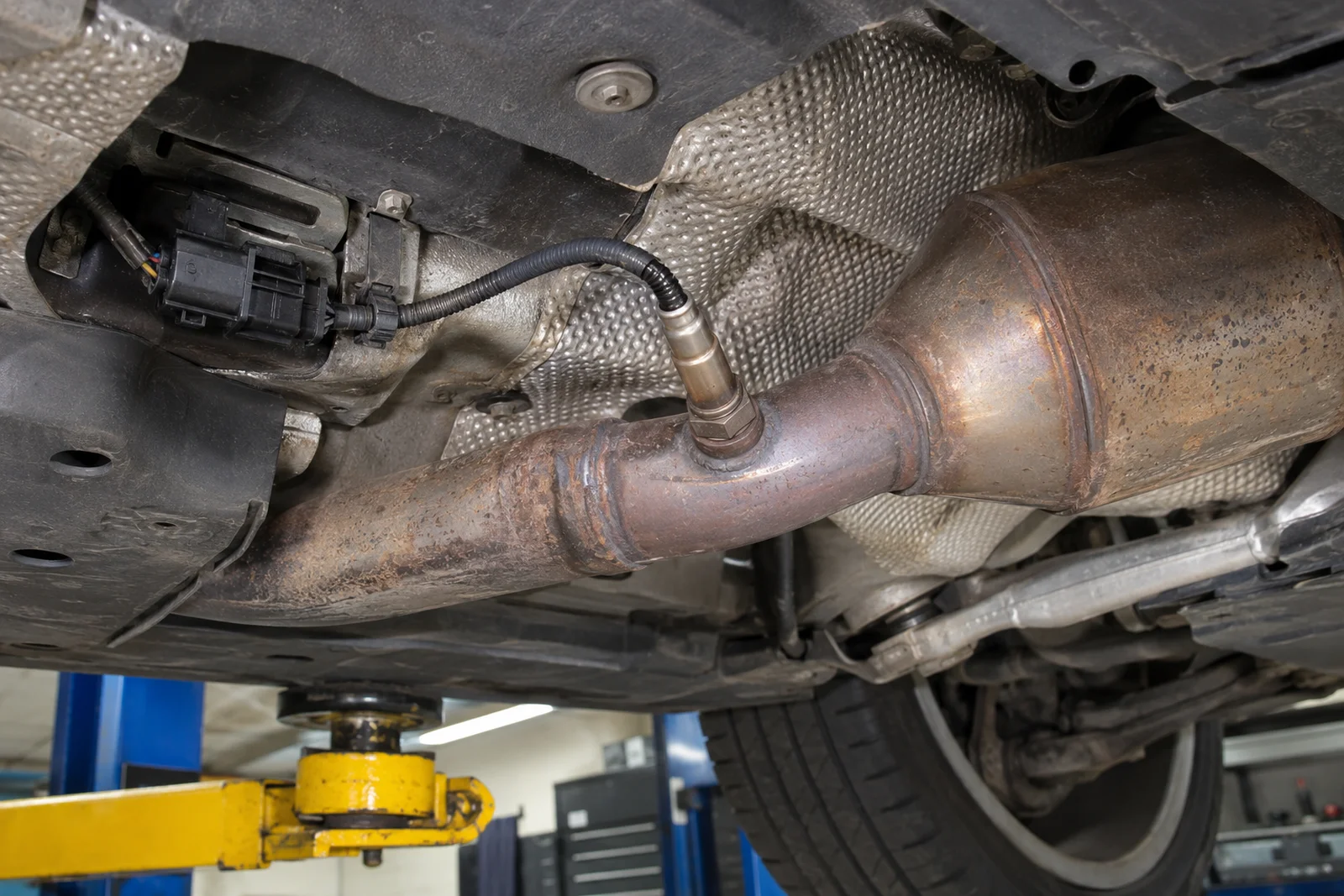
Sensor 1 generally identifies the upstream control sensor. Its technology and part number must match the fitted engine.
Sensor 2 generally identifies the downstream diagnostic sensor. Confirm the exact position in BMW repair information.
Bank 1 includes cylinder one. Some inline-six engines use separate exhaust groups called Bank 1 and Bank 2, despite having one physical row of cylinders.
Check sensor quantity, technology and catalyst arrangement.
Confirm how the exhaust groups map to the diagnostic bank labels.
Identify the cylinder-one group and upstream or downstream position.
Distinguish lambda sensors from NOx, temperature and DPF-related sensors.
A code identifies a circuit or condition to investigate. It does not prove that the sensor needs replacement.
Why they fail
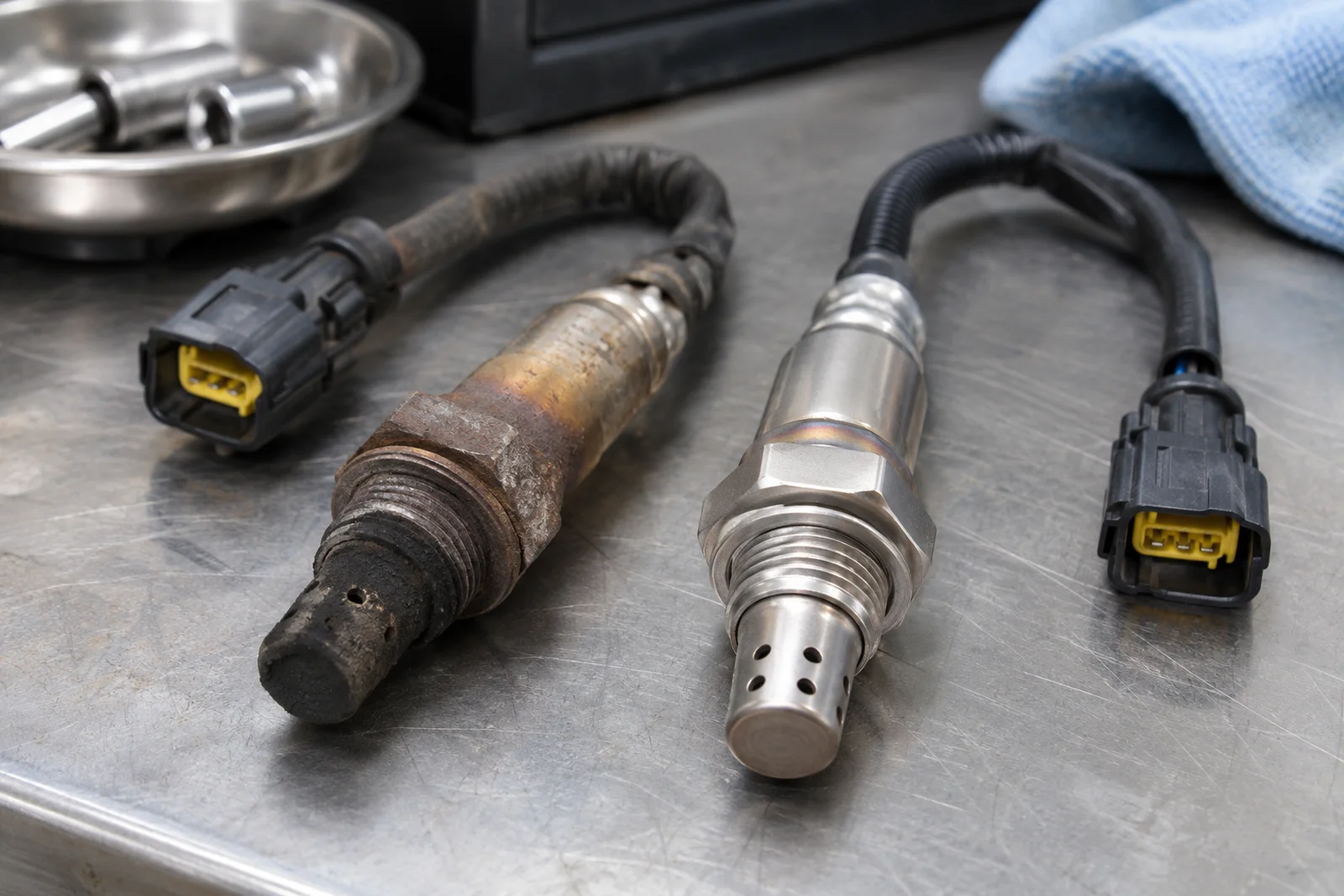
Oxygen sensors are wear parts. They live in very hot exhaust gas and slowly lose speed and accuracy. Contamination, electrical faults and unsuitable operating conditions can affect their service life.
If a sensor has failed early, we look for the reason. Replacing the sensor without fixing an oil or coolant problem can expose the replacement to the same contamination. A blue tint of smoke, a sweet smell or a drop in coolant level are clues we look for before fitting a new sensor.
How we work
Agree the diagnostic scope and charge first. Results determine whether sensor replacement, wiring repair or investigation of another fault is appropriate. Verification follows the engine-specific procedure; road testing is used only when safe.
Choosing the part
Sensors are sold in different qualities and for different positions. We match the part by VIN, engine and emissions specification, sensor technology and confirmed position, then explain options before ordering. Whatever you choose, the sensor must suit the exact position, because upstream and downstream sensors are not interchangeable on most BMWs.
Sensors from the brands that supply BMW for many engines, such as Bosch and NTK, made for the exact position.
Sensors from known brands built to match the original. They can keep the cost down on older cars.
Avoid unverified fitment and improvised wiring. A manufacturer-approved universal sensor can suit a listed application with its prescribed connector; it is not interchangeable with every wideband sensor.
Why it matters
The effect depends on the fault and how the engine is running. Arrange diagnosis rather than assuming every engine warning is a minor sensor issue.
A flashing engine light can indicate severe misfiring and catalyst-damage risk. Avoid heavy load and follow the vehicle handbook. If the car shakes severely, loses substantial power, smells strongly of fuel or shows an overheating warning, stop safely and arrange assistance. A steady light with normal running still needs prompt assessment.
Check the complete circuit
The integrated heater helps a lambda sensor reach operating temperature. A heater-circuit code such as P0030 needs checks of the sensor, supply and control circuit.
A heater code does not automatically mean a new sensor.
What is checkedThe heater is assessed using the wiring diagram and sensor-specific test procedure.
Repair decisionA confirmed internal heater failure can justify replacement of the matched sensor.
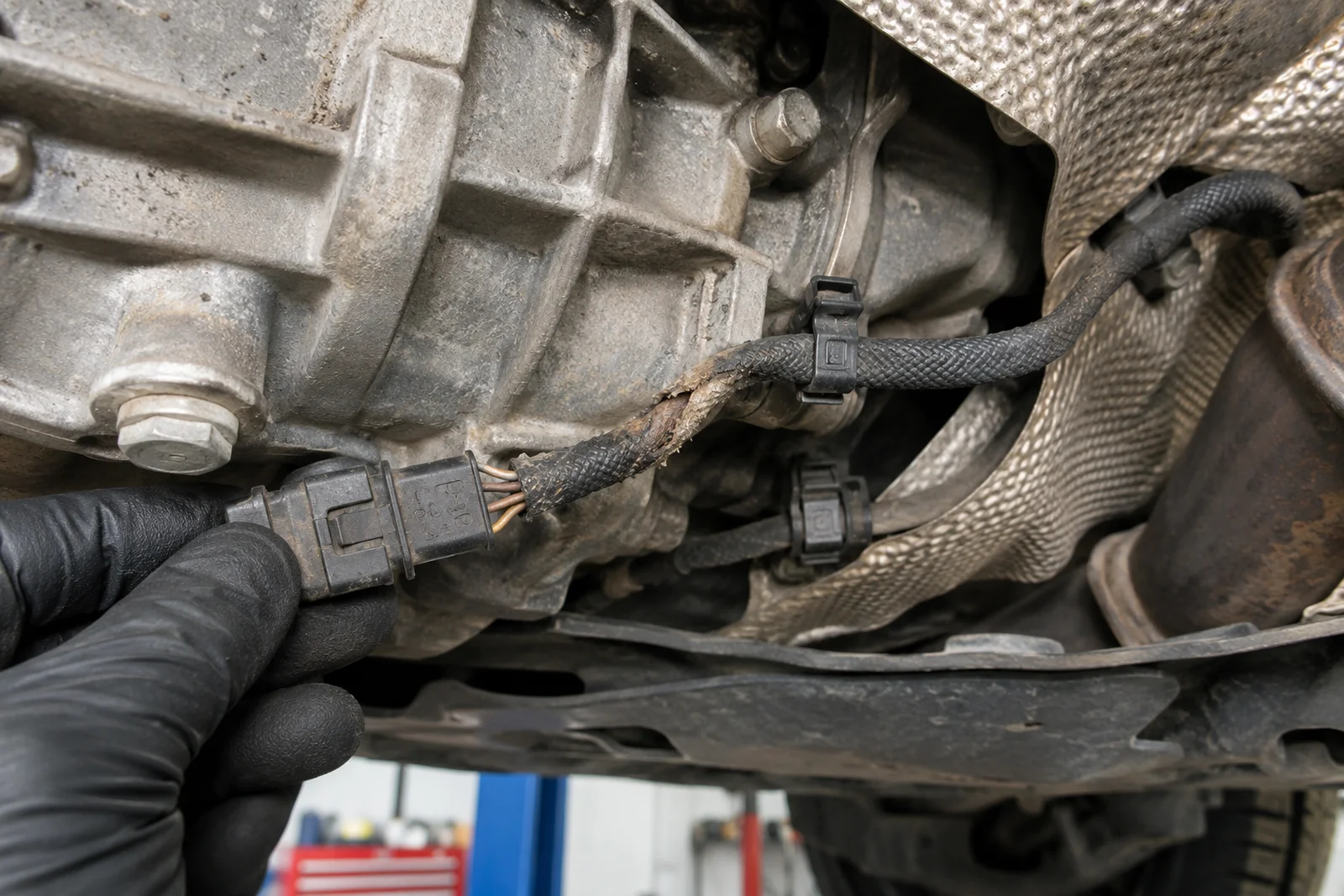
What is checkedInspect for rubbing, heat damage and circuit faults near the exhaust and gearbox.
Repair decisionRepair damaged wiring using the approved method, restore heat protection and verify operation.
What is checkedCheck connector condition, supply and control. Investigate why a fuse has blown.
Repair decisionCorrect the confirmed circuit fault before deciding whether the sensor also needs replacement.
From findings to approval
Compare the part options and written total. Confirm whether access work, seized threads or additional repairs change the quote before authorising them.
Timing depends on the diagnostic result, access and parts availability. Ask what is included in the estimate and how any delay will be communicated.
Review post-repair readings, returning faults and monitor readiness. Confirm any further drive cycle and the applicable warranty duration, limits and claim arrangements on the quotation or invoice.
FAQ
Many last a long time, but heat, oil burning and short trips shorten their life. We judge by live data, not by distance alone.
The code alone cannot establish that driving is safe. Follow your BMW handbook and seek advice based on symptoms. With a flashing warning, severe rough running, substantial power loss, strong fuel smell or overheating, stop safely and arrange assistance.
Not always. Lean codes on BMWs are often caused by vacuum or exhaust leaks, so we test for those first.
Only if testing shows both are worn. Often only one position has failed.
After repairing the confirmed cause, we check operation and fault recurrence. Clearing a warning alone is not proof of repair; relevant monitors may need suitable driving conditions to complete.
Upstream sensors sit before the catalyst and control fuelling. Downstream sensors sit after it and check the catalyst.
Yes. A slow or wrong reading often makes the engine run rich, which uses more fuel.
A like-for-like sensor normally does not require coding. Any adaptation reset, service function or relearn must follow the procedure for that engine. Clearing codes does not mean emissions readiness is immediately complete.
Yes. A rich mixture or misfire left too long can overheat the catalyst.
Yes. We offer free pickup in Dubai, and the work is done at our Al Quoz workshop, open Monday to Saturday, 9am to 7pm.
Have a fault code?
Send your model, year, fault code and symptoms, and say whether the warning is steady or flashing. We can explain the next assessment step; a code sent by message is not a confirmed diagnosis.
Send your codeRelated reading on BMW engine repair and ECU repair.
NTK sensor positions and bank identification · HELLA lambda sensor testing · BMW vehicle-specific owner guidance. The fitted vehicle’s repair information takes precedence over general examples.

Book a sensor check
Send your model, year, fault code and symptoms. Tell us whether the warning is steady or flashing. We will confirm assessment arrangements, explain the findings and quote for the proposed repair before approval.