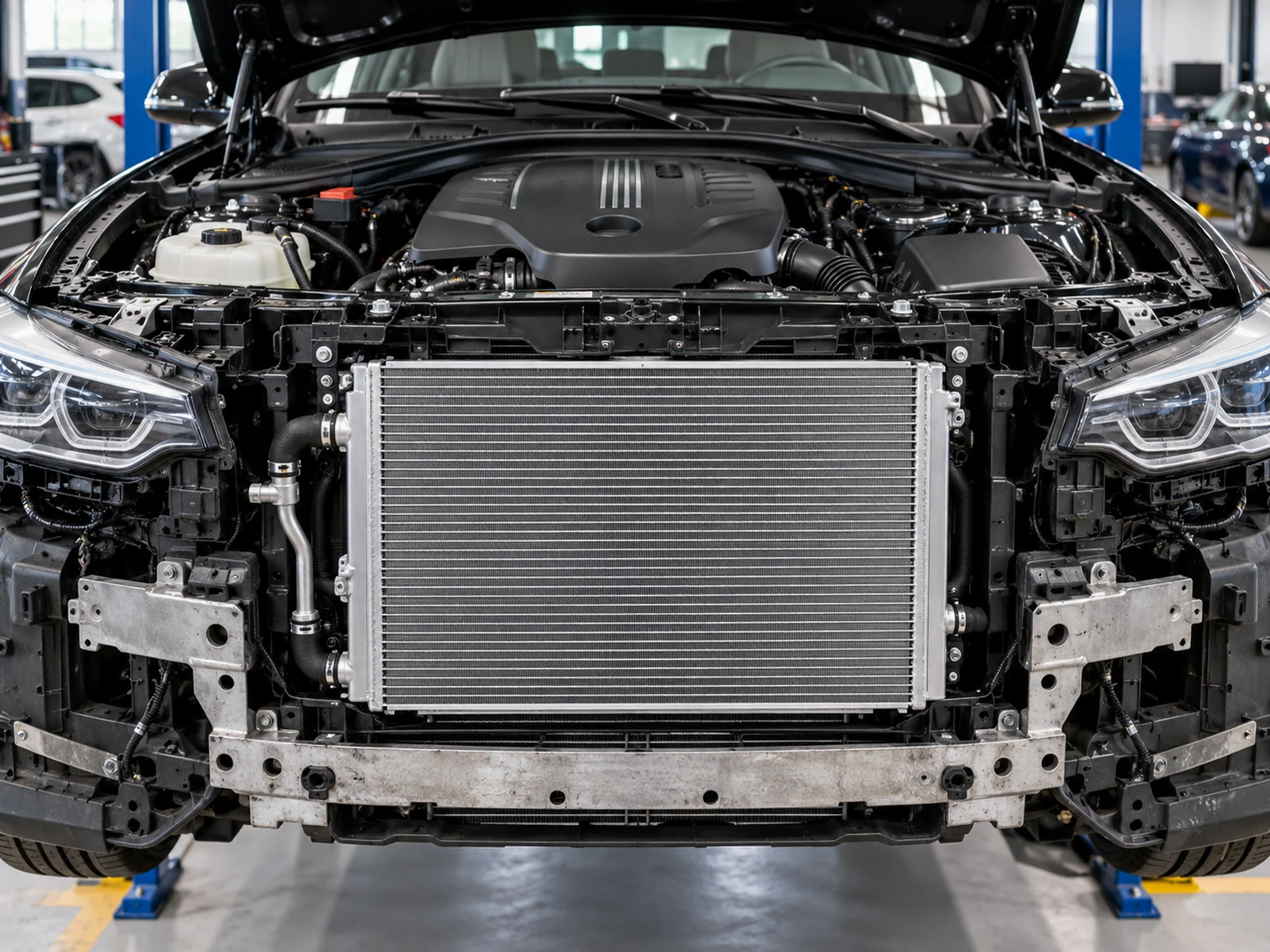
BMW Radiator Repair and Replacement in Dubai
Coolant loss, a leaking radiator or a temperature warning needs the cause checked before parts are replaced. Our independent Al Quoz workshop inspects your BMW’s radiator and related cooling parts, explains the findings and quotes the required work. Fitted pricing depends on your VIN, radiator specification and confirmed fault.
- Radiator leak repair
- Radiator replacement
- Upper and lower hoses
- Expansion tank and cap
When to stop and arrange an inspection
Cooling faults do not follow a predictable sequence. Act on the warning or symptom you have, even if the leak looks small.
Stop safely and switch off
An overheating warning, steam or rapid coolant loss needs urgent attention. Do not continue to the workshop or open the expansion-tank cap while hot. Call to discuss recovery.
Low coolant warning
Stop somewhere safe and follow your vehicle’s handbook. Check the level only when the system is cold. If the level is very low, cannot be maintained or a leak is active, arrange recovery rather than driving.
Deposits, smell or repeated top-ups
Dried deposits, a sweet smell or recurring coolant loss need inspection. A normal display does not prove the cooling system is sound. Do not use a puddle’s size to judge the repair.
BMW radiator replacement cost in Dubai
A fitted price depends on the chassis number, cooling circuit, radiator brand and confirmed damage. Send your model, year and VIN for a parts check. Inspection establishes whether the radiator or a less costly connected part needs work.
Leak or connection repair
Ask for the failed hose, connector, seal or cap to be identified and quoted. This is a different scope from replacing the complete radiator.
Radiator replacement
The quotation should name the radiator and include fitting labour, specified coolant, installation seals and the required filling and testing procedures.
Additional work
A pump, thermostat, auxiliary radiator or contamination treatment is a separate item when needed. Confirm any diagnostic charge, VAT, availability and completion estimate.
Ask for parts brand and number, labour, coolant, required checks, total including VAT, and parts and labour warranty conditions in writing. A parts-only listing is not the price of an installed radiator. Final pricing is confirmed before work starts.
Conditions that can expose a cooling fault
Heat, airflow restrictions and component condition can affect cooling performance. These conditions do not prove that the radiator itself has failed.
High ambient temperature
Hot weather reduces the temperature difference available for heat rejection. Check the actual fault rather than assuming every cooling system is operating beyond its capacity.
Traffic and fan operation
At low road speeds, fan operation becomes important. Temperature rising in traffic can call for fan, control, airflow and circulation checks.
Condenser and radiator airflow
The AC condenser and engine radiator perform different jobs. Debris between heat exchangers, damaged fins or an airflow fault can reduce cooling.
Age and previous repairs
Inspect end tanks, connections and mounting points for leaks or damage. Previous incorrect coolant, impact damage or poor installation can influence the repair.
Identify the radiator and cooling circuit first
Your chassis number, engine and equipment determine the correct radiator. Similar-looking cooling parts are not necessarily interchangeable.
Engine radiator
Transfers heat from engine coolant to the passing air. Confirm whether the suspected leak is in the core, end tank, neck or a connected part.
Pump and temperature control
BMW engines can use mechanical main pumps, electric pumps and separate auxiliary pumps. Test the fitted system and its thermostat or heat-management controls.
Expansion tank and cap
The tank accommodates coolant expansion. Its cap regulates pressure to the specified limit. A tank or cap fault does not automatically require a new radiator.
Separate cooling circuits
Some vehicles have a low-temperature circuit for charge-air cooling or additional thermal circuits. Identify which reservoir and heat exchanger belong to the reported fault.
Repair or replace
Can the leak be repaired without a new radiator?
Many BMW radiators combine an aluminium core with plastic end tanks. Confirm the construction and damage before deciding. A hose, seal or cap repair may resolve the coolant loss while retaining a sound radiator. Avoid adding stop-leak products without the vehicle manufacturer’s approval.
When the radiator can stay
- The leak is at a hose, clamp or connector
- A sealing ring or bleed screw has failed
- The radiator is blocked on the outside with sand and dirt
- The expansion tank cap no longer holds pressure
When replacement is appropriate
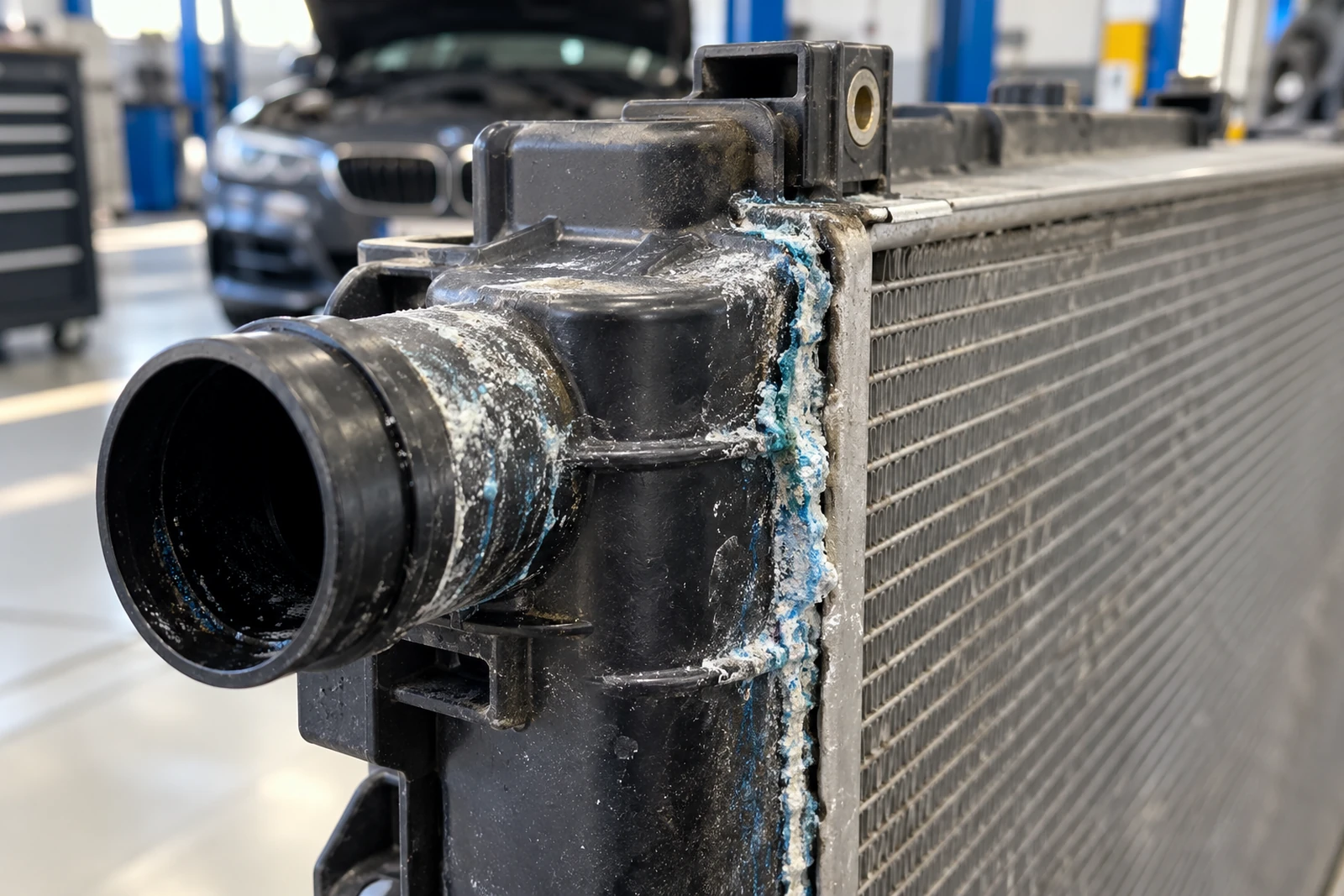
- The plastic end tank is cracked
- The core is leaking between the fins
- Core damage or restriction is confirmed to affect cooling
- The inlet or outlet neck is broken
Confirm where the coolant is escaping
Coolant can run along covers and undertrays before reaching the floor. Evidence at the source matters more than the puddle’s location.
Radiator core and end tanks
Inspect seams, tubes, necks and mounting areas. Separate old staining from an active leak and check whether an adjacent connector is responsible.
Hoses, connectors and seals
Check hose condition, quick connections and sealing rings. Replace the failed component without condemning a radiator that passes inspection.
Other cooling components
The tank, cap, pump, thermostat housing or heater circuit may be responsible. For coolant loss without a confirmed radiator fault, see our coolant leak diagnosis service.
Cooling parts
Related parts checked during radiator work
Check connected parts while access is available. Additional replacement should follow evidence of a fault or a specified installation requirement, rather than age or discolouration alone.
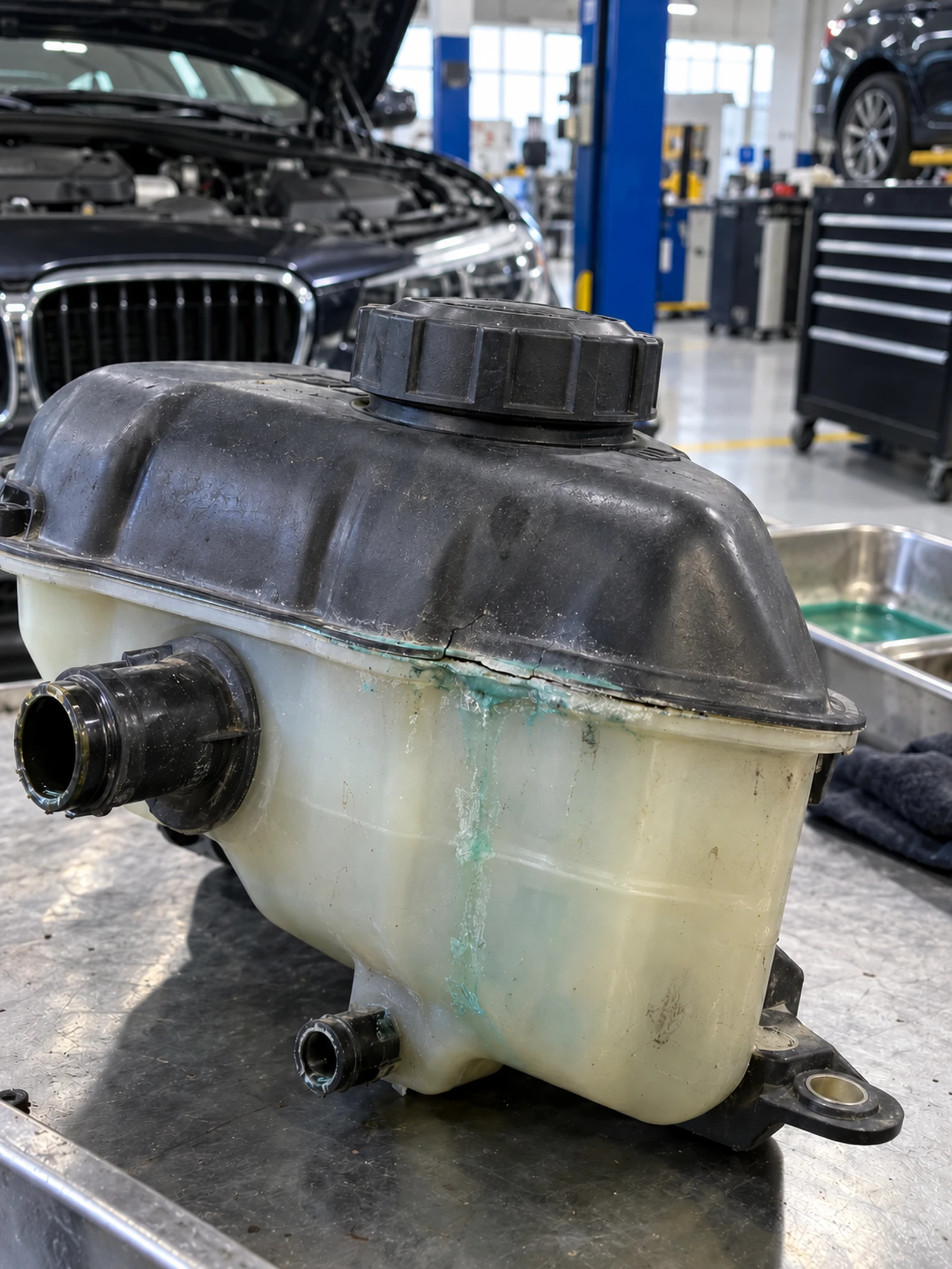
Expansion tank and cap
Plastic tanks crack with age and heat, often along the seams where you cannot easily see. A worn cap lets pressure escape and coolant boil off.
Water pump
Check the mechanical or electric pump fitted to the engine. A pump is quoted separately when testing supports replacement.
Thermostat
A thermostat stuck open can delay warm-up. A thermostat that restricts circulation can contribute to overheating. Diagnosis depends on the fitted control system.
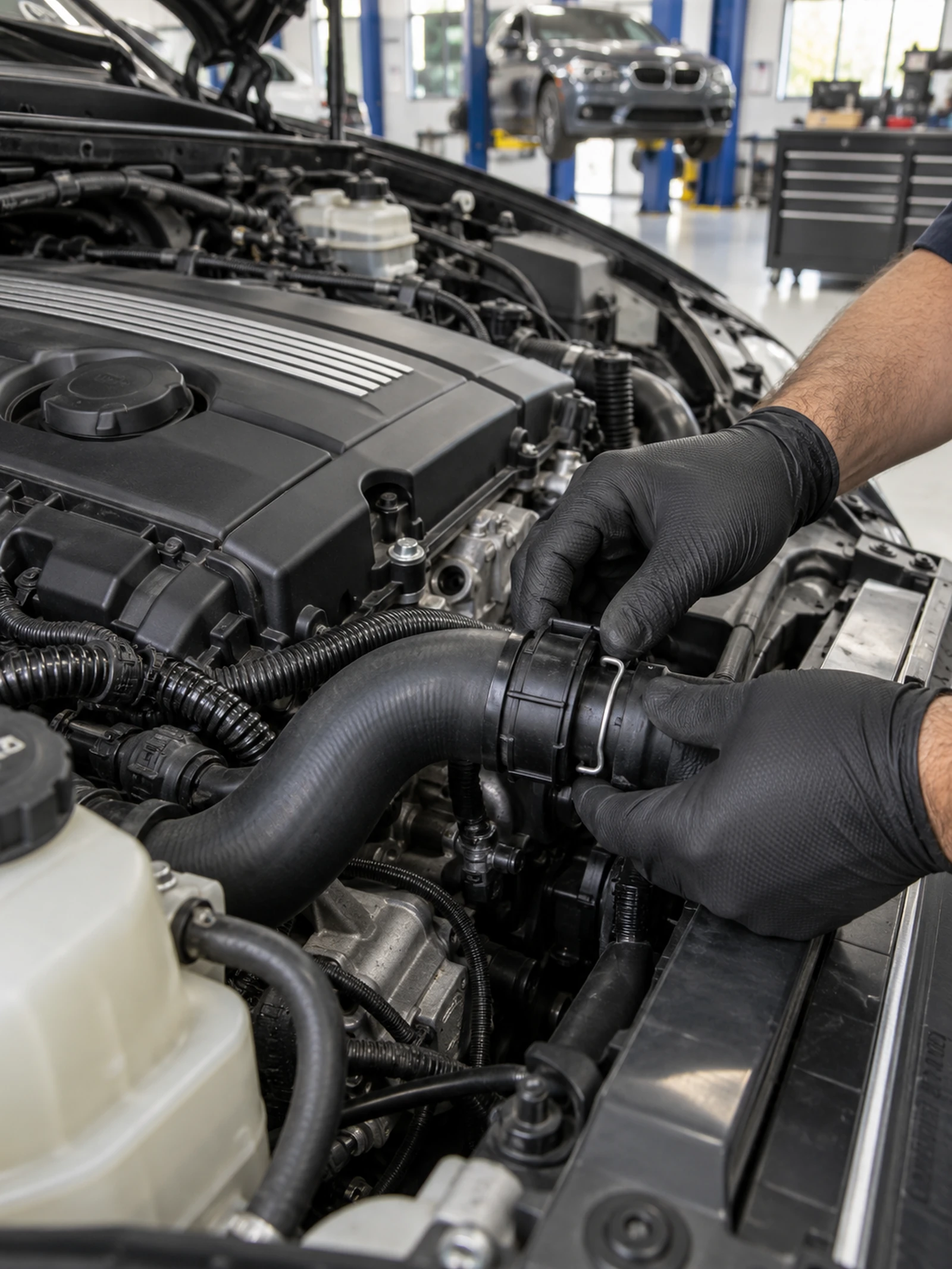
Upper and lower hoses
Hoses and their plastic quick connectors harden in the heat and start to weep. The upper hose and its connector at the radiator are a common failure point.
Electric fan
Check fan operation and controls when cooling performance falls at low speed. Traffic-related overheating can have more than one cause.
Sensors and bleed screws
Check sensor readings when relevant. Inspect fitted bleed screws and seals for leakage or damage.
Auxiliary radiators and other heat exchangers
A radiator quotation must identify the exact unit. Engine, gearbox, charge-air and AC heat exchangers have different connections and service procedures.
Auxiliary engine radiators
Some specifications have additional engine-cooling radiators. Confirm the location, connections and part number for the affected unit.
Oil heat exchangers
Engine or transmission oil coolers may be air-cooled or coolant-fed. External leakage and internal fluid mixing require different tests. Sludge alone does not identify the failed component.
Charge-air cooling
A water-cooled charge-air system can use a separate low-temperature coolant circuit. Its radiator and pump should not be confused with the main engine circuit.
AC condenser
The condenser contains refrigerant rather than engine coolant. A refrigerant leak belongs to the AC repair service, even when it sits beside the radiator.
If your BMW starts to overheat
An overheating engine can be damaged quickly, and driving on to reach a workshop can turn a radiator job into a cylinder head job. These steps protect the engine and you while you get help.
Pull over
As soon as it is safe, leave the road and stop the car away from traffic.
Switch off the engine
Turn the engine off rather than letting it idle in the heat.
Leave the cap closed
Never open the expansion tank while hot. Pressurised coolant can burn.
Call us for recovery
Call to discuss recovery, availability and any charge. Send your location only when it is safe. Routine pickup and recovery may require different arrangements.
Our process
How we diagnose and replace a BMW radiator
Coolant leaks can hide. A drip at the front might start at a hose at the back of the engine, so we find the source before quoting. We explain where the leak is and what needs replacing, and you approve the price before work starts.
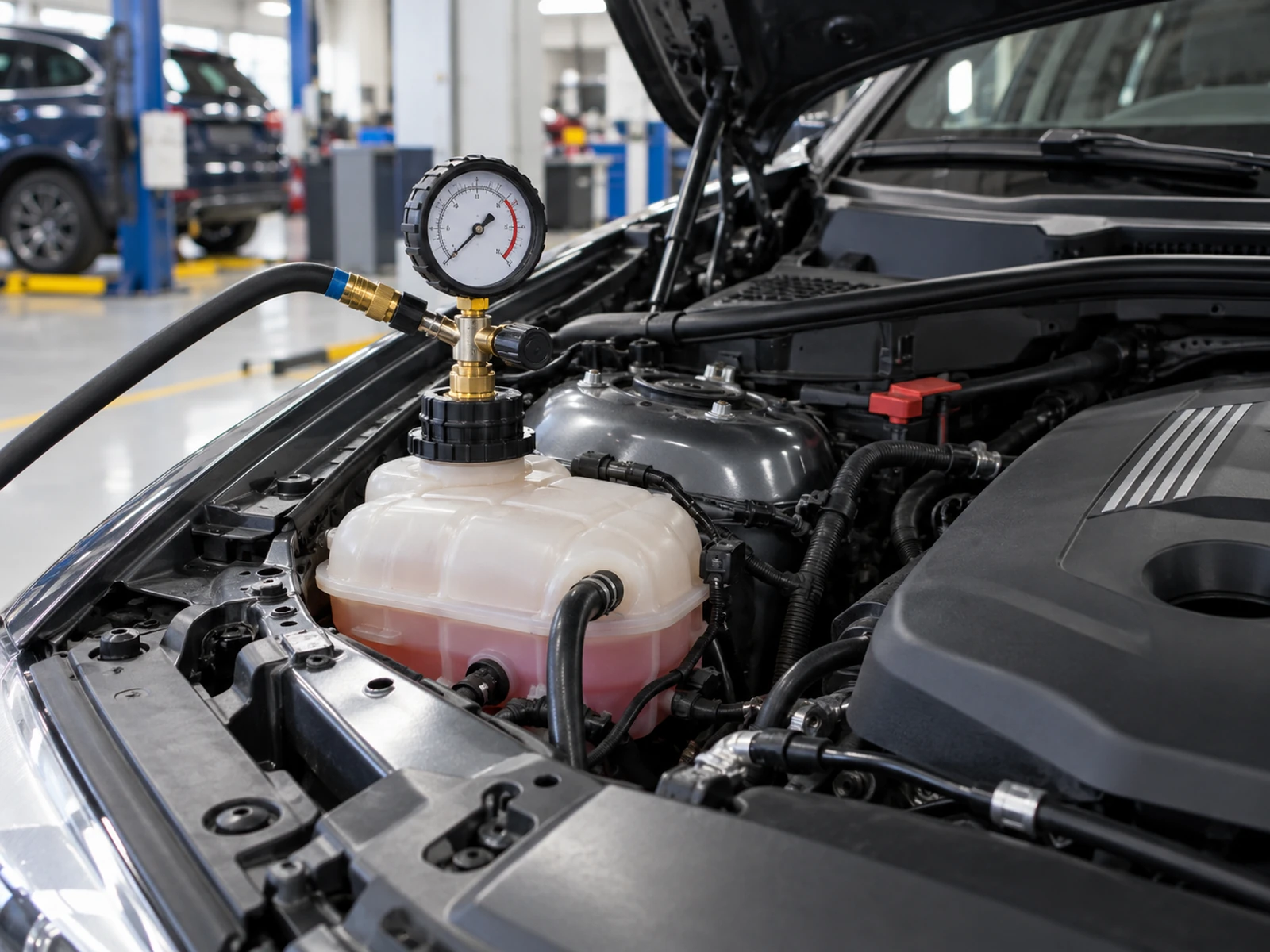
Pressure test
Test the identified circuit at the specified pressure when safe. Inspect for leakage and check the cap where relevant. An inconclusive test may require further diagnosis.
Fault scan and fan test
Check relevant fault codes, temperature data, fan operation and the fitted pump type. Investigate circulation or airflow faults when the symptoms call for it.
Clear quote
You see what is leaking and what is worn, with part options and a price before work starts.
Repair or replacement
Fit the agreed VIN-compatible radiator or failed connection. Renew seals, clips and other installation parts as specified, checking supports and adjacent heat exchangers.
Refill with BMW coolant
The system is filled with the correct coolant mix for your BMW, to the level marked for a cold engine.
Bleed and road test
Fill and bleed using the vehicle-specific procedure, including vacuum filling or diagnostic functions where specified. Recheck leaks, operation and the cold level. Road-test only where safe.
Tell us when the warning appears, including in traffic, at speed or with the AC on.
A safely taken photo can help describe the concern. Do not open a hot cooling system or reach near moving fans.
Note any coolant level or temperature messages shown on the dash.
Tell us which coolant, water or sealant was added and whether the vehicle overheated.
Choosing the replacement radiator
Compare the specification, brand, supplied fittings and written warranty for your exact application. Supplier reputation alone does not establish that two radiators are identical.
Genuine BMW
BMW-packaged parts selected by the correct part number and applicable supersession. Confirm the supplied unit and availability in the quotation.
OE supplier brand
An established original-equipment supplier may offer a suitable replacement under its own brand. Verify the specific product, fitment and construction rather than assuming equivalence.
Aftermarket
Consider a compatible product with a clear manufacturer, specification and warranty. Check cooling capacity, mounting points and any integrated cooler connections.
Which coolant does your BMW need?
The correct choice depends on your BMW’s specification and the cooling circuit being serviced.
Confirm the correct product
Check the applicable BMW coolant approval and circuit specification. Similar colours do not establish compatibility.
Prepare the specified mix
Ready-mixed coolant and concentrate require different preparation. Follow the required concentration and water-quality instructions.
Fill, bleed and recheck
Use the vehicle-specific filling and bleeding procedure. Check the level when cold, following the handbook.
Follow your vehicle’s handbook and arrange diagnosis of the coolant loss. Never open the expansion-tank cap while the system is hot.
Radiator fitment across BMW models
The model badge alone does not identify the radiator, pump or coolant. Supply the VIN and describe the symptoms so the correct application can be checked.
Petrol and diesel
Engine generation, transmission and equipment can change the radiator and connections. Match the actual vehicle specification.
M models
Additional radiators and oil heat exchangers vary by model. Identify the damaged unit and check the adjacent cooling pack.
Plug-in hybrids
Engine cooling and electrified-system thermal management may use different circuits. Confirm the requested work and required capability before booking.
Electric BMWs
Electric vehicles use thermal management rather than combustion-engine cooling. Confirm the affected circuit and service capability separately.
How much does BMW radiator replacement cost in Dubai?
The fitted price depends on the VIN-compatible radiator, brand, labour and required coolant and testing. Send your model, year and chassis number for a parts check. The final quotation follows diagnosis and should state VAT and any additional work.
Can a radiator leak be repaired without replacement?
Yes, when the leak comes from a serviceable hose, connection, seal or cap and the radiator is sound. A cracked plastic tank, broken neck or leaking core commonly requires radiator replacement. Inspect the source before deciding.
Can I drive with a coolant leak?
Do not continue driving with an overheating warning, steam, rapid loss or a coolant level that cannot be maintained. Stop safely, switch off and arrange recovery. For other coolant warnings, follow the vehicle handbook and obtain advice before continuing. Never open the cap while hot.
Does a pressure test find every coolant leak?
No. It can reveal many external leaks, but intermittent loss or an internal fault may require further checks. A negative pressure test does not by itself explain recurring coolant loss.
Should the expansion tank and pump be replaced too?
Not automatically. These parts are inspected and quoted separately if faulty or required by the repair procedure. Age or staining alone does not establish that every component needs replacement.
How long does replacement take?
Timing depends on access, parts availability, the affected circuit and any additional faults. Filling, bleeding and final checks are part of the job. Confirm the expected completion time with the quotation.
What coolant will be used?
Coolant meeting the applicable BMW specification for your vehicle and circuit, prepared at the required concentration. Colour alone is not a compatibility guide. Tell us what has previously been added.
What checks follow installation?
Check the installation and connections for leaks, complete the specified filling and bleeding procedure, verify relevant temperatures and fan operation, and recheck the cold level. A road test is performed only where safe.
What warranty applies?
Ask for the warranty on the chosen radiator and labour in writing before approving the quote. Confirm duration, exclusions and the process for reporting a recurring leak. Coverage depends on the supplied part and agreed work.
Do you collect BMWs in Dubai?
Free Dubai pickup is offered. Tell us if the car is leaking or has overheated so transport suitability can be confirmed. Recovery availability and any charge should be agreed separately before dispatch.
Book now
Arrange a radiator inspection in Al Quoz
Visit our independent BMW workshop at 39 Al Quoz 4, Dubai. Send your model, year, chassis number and warning message to discuss the next step. We explain the findings and quote before work starts. If the car is overheating, stop safely and call to discuss recovery.