
Oil stays inside
Engine oil lubricates the crankshaft bearings. The rear seal contains oil around the rotating shaft.
Oil between the engine and the gearbox
Oil at the engine and gearbox joint needs a confirmed diagnosis before an expensive strip-down. We assess the leak and quote BMW rear crankshaft seal replacement at our Al Quoz workshop, with the access, parts and related repairs explained before you approve the work.
A quote built around your car
The fitted cost depends on transmission access, the seal assembly and the findings. Confirm the full job before approving the repair.
Establish the source and agree inspection charges before testing.
Identify the engine, gearbox and drivetrain, then price the dismantling and refitting required.
Specify the seal brand, carrier or gasket where needed, replacement fasteners and fluid replenishment.
Confirm parts availability, completion estimate and written warranty terms.
Small seal, substantial access
The rear crankshaft oil seal contains engine oil where the rotating crankshaft leaves the engine towards the transmission.
Normally reached after transmission removal
Engine oil lubricates the crankshaft bearings. The rear seal contains oil around the rotating shaft.
The engine may use a separate seal or a carrier assembly with additional sealing joints. Fitment is checked by engine and VIN.
Escaping engine oil can drip from the bell housing or contaminate a dry clutch. Transmission-fluid leakage is a different repair.
A wet bell housing is a clue, not a diagnosis Oil can travel down the engine, along the sump or across the undertray. Confirming its source can avoid unnecessary gearbox removal.
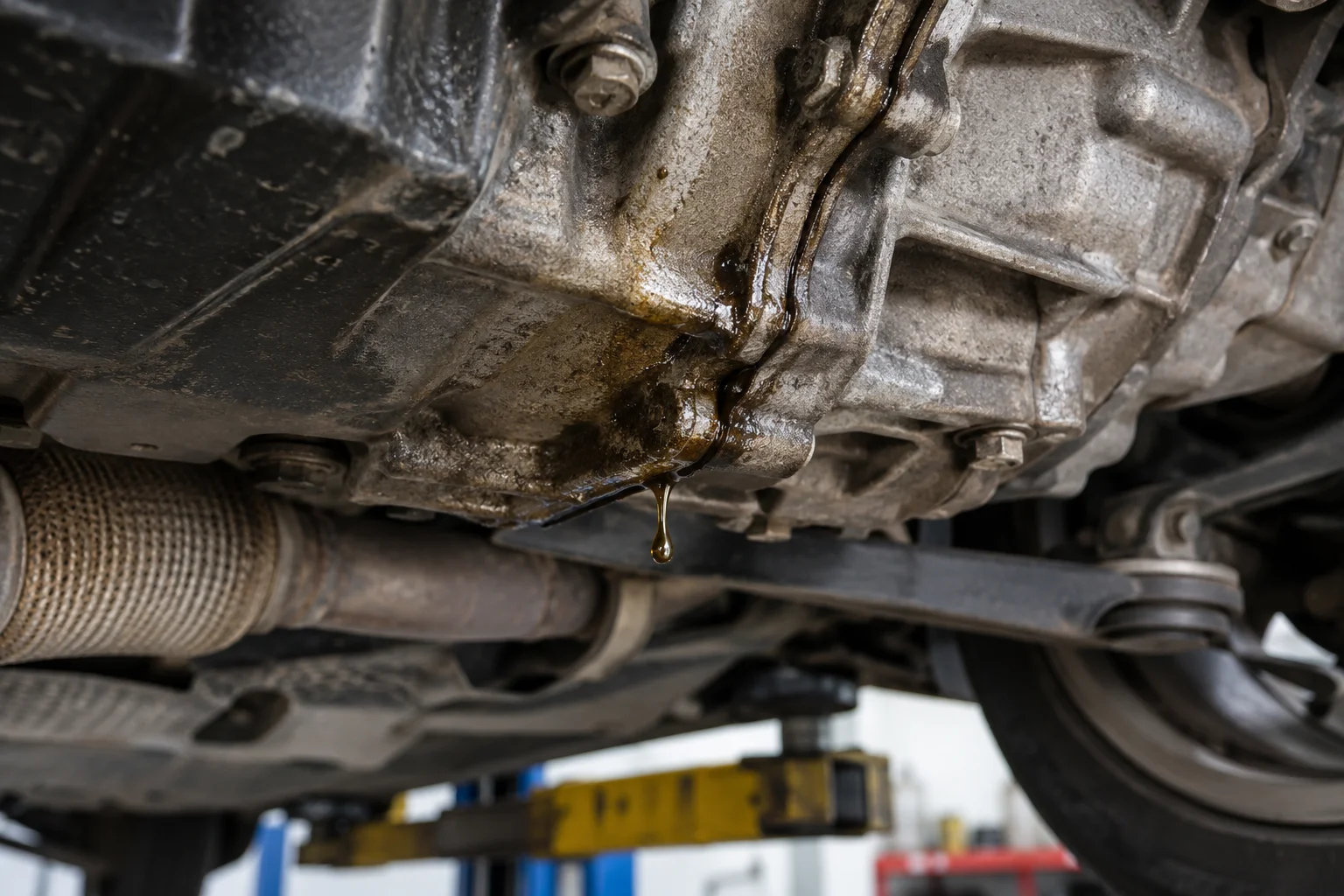
These symptoms justify inspection, but none identifies the rear seal on its own.
Fresh drips or a wet bell housing can come from the engine, its rear sealing joints or the transmission.
Repeated top-ups need investigation. Oil consumption and other external leaks must also be considered.
On a manual car, oil contamination may affect the clutch. Smoke or odour can occur if leaking oil reaches hot components.
Stop safely and switch off. Do not restart to test the leak. Arrange assistance for a pressure warning, rapid loss, significant smoke or unsafe clutch operation. An oil-level message is different from an oil-pressure warning; follow the vehicle handbook and the exact message.
Trace the source before the strip-down
Undertray residue and fluid colour alone cannot identify the failed component. These are the main areas to distinguish.
Trace the valve cover, filter housing and other upper joints.
Oil may run down the engine before collecting at the bell housing.
Inspect the rear sump joint, carrier and adjoining sealing faces.
More than one joint can contribute to the same wet area.
Identify the fluid and the exact transmission design.
Input or pump-side seals require a different repair from the engine rear seal.
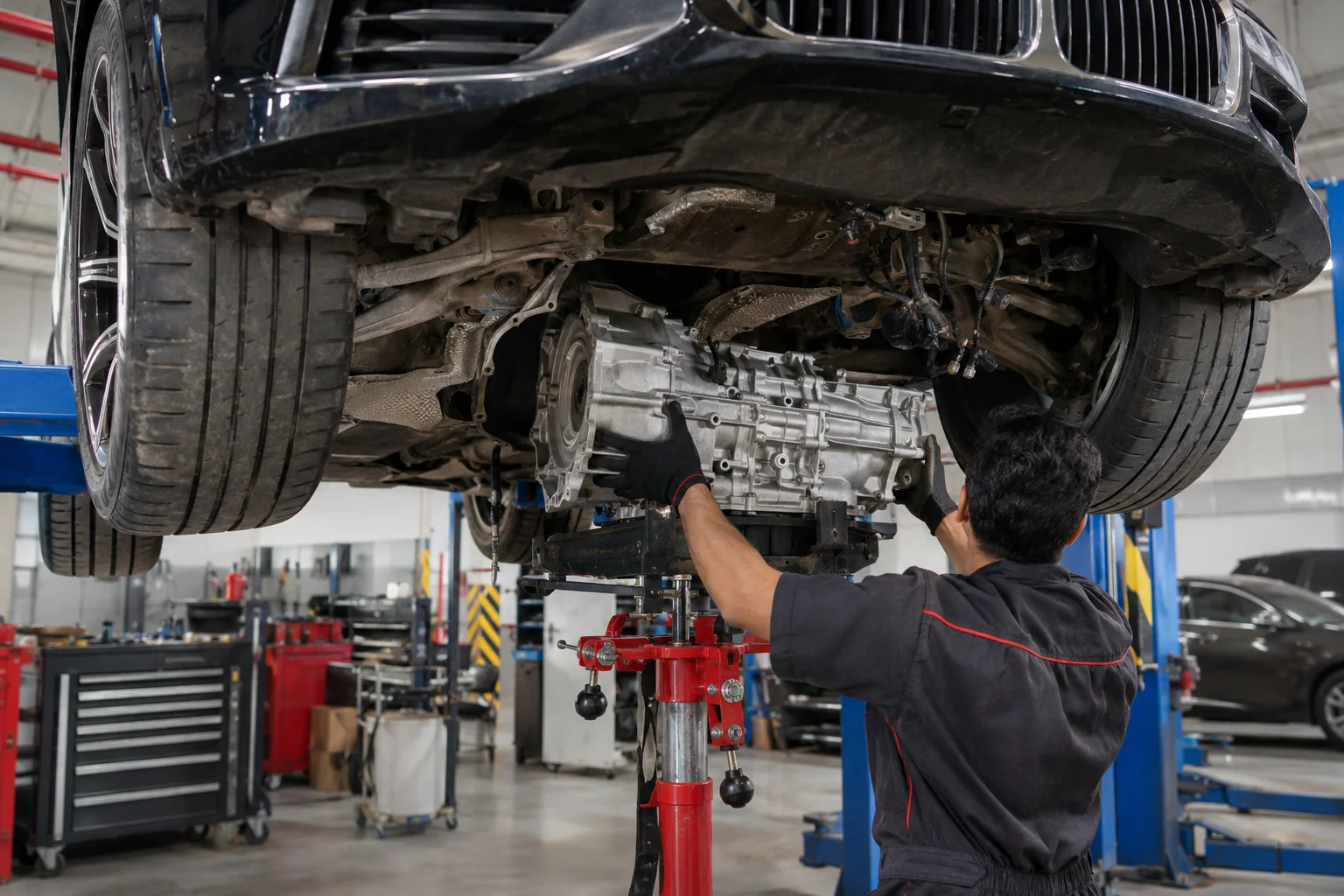
The seal is concealed behind the flywheel or flexplate. The workshop must support the engine and transmission as specified and create enough clearance to expose the rear crankshaft.
Check the chassis, engine, transmission and xDrive equipment before estimating labour.
Exhaust sections, heat shields, propshafts or transfer-case components may need moving or removal. The exact procedure varies.
Check locating dowels, mounts, connections and specified fasteners. Restore disturbed fluid levels using the correct procedure.
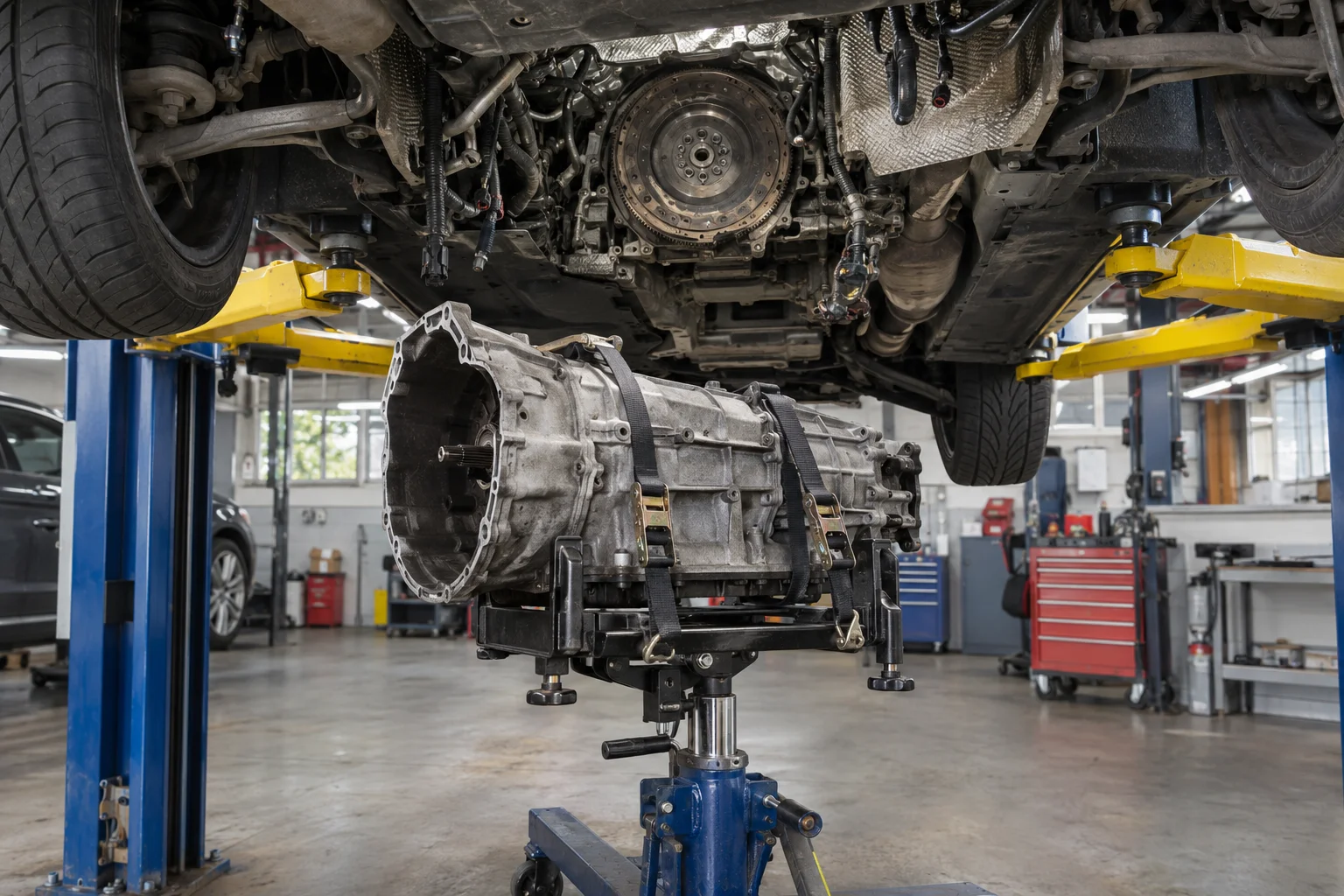
Confirm your gearbox first
The rear seal performs the same function, but the surrounding components and inspection requirements differ.
Any additional clutch, flywheel or gearbox repair should be quoted separately from the rear main seal work.
Abnormal crankcase pressure can contribute to leakage. Assess the ventilation system and repair a demonstrated fault, rather than replace a PCV component automatically.
Elastomer and PTFE seals have different handling requirements. Match the part and fitting method to the engine.
Check for grooves, damage and carrier-joint leakage. A sleeve or alternative lip position is suitable only where the specific design and repair instructions permit it.
Our PCV valve service covers ventilation faults. Correcting an underlying cause can reduce the risk of a repeat leak.
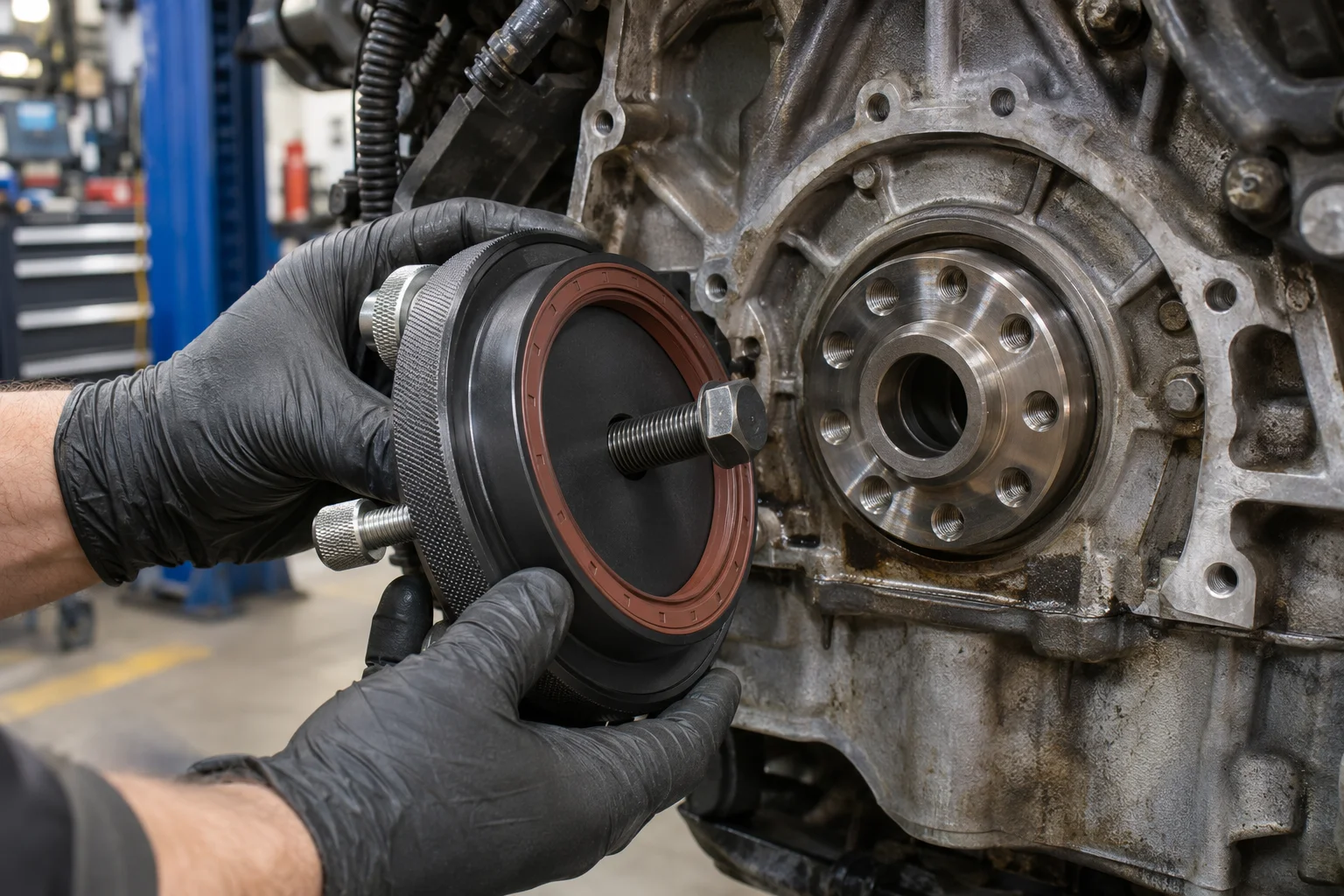
The repair depends on the sealing surfaces, installation tool and engine-specific instructions as much as the new part.
Use the specified sleeve or installer and avoid scratching the shaft or housing during removal.
PTFE seals commonly require a dry shaft and lip. Observe the selected manufacturer's settling period before rotation or engine starting; do not apply one method to every seal.
Renew specified carrier seals, sealant and one-time-use bolts. Follow the required tightening sequence, depth and any processing time.
Your car, your approval
A useful quotation connects the inspection findings to the proposed work, so you can understand the repair before committing.
Page visuals explain components. Ask for findings and relevant inspection photos from your own vehicle.
Review the leak findings and why the recommended access or replacement is necessary.
Confirm the proposed brand, part numbers, seal material and availability. Ask for separate pricing on related work.
Confirm parts and labour warranty duration, exclusions and how to report fresh leakage. Coverage can differ by repair and parts option.
Identify the leak and vehicle layout, agree testing charges and explain the proposed repair.
Remove the required components, assess the shaft and carrier, and install the correct seal according to its instructions.
Observe any settling or cure time, restore fluids, check operation and inspect for fresh leakage. Road-testing follows only when safe.
Ask for a completion estimate after diagnosis and parts confirmation. Workshop labour, parts lead time, seal settling requirements and additional findings can all affect the collection date.
No. Other engine joints and transmission leaks can leave fluid in the same area. Cleaning, fluid identification and targeted inspection establish the likely source; further dismantling may be necessary.
Minor dampness and active leakage need different assessment. Do not rely on top-ups alone. A pressure warning, rapid loss or significant smoke calls for stopping safely, switching off and arranging assistance.
Confirm diagnosis charges, transmission removal and refitting, seal or carrier, specified bolts, fluid replenishment and any separately priced repairs.
Only if its condition, contamination or wear justifies replacement and you approve it. Shared access can save repeat labour, but a serviceable clutch need not be replaced automatically.
No. The chassis, transmission and drivetrain establish the access procedure. Transfer-case and propshaft handling must be confirmed for your vehicle.
An additive does not correct a damaged sealing surface, fitting fault or crankcase ventilation problem. Identify the cause and check product compatibility before adding anything to the engine.
Request an estimate after inspection. Allow for parts supply, access, the seal manufacturer's settling requirements and final checks; there is no reliable universal same-day promise.
Ask for the proposed seal brand and part number, availability and written parts-and-labour coverage. Confirm duration and exclusions before authorising the repair.
Free Dubai pickup is advertised for booked work. Tell us if the vehicle cannot be driven safely so suitable recovery can be discussed. Confirm recovery charges and access before dispatch.
Send model, year, mileage, gearbox type, warning messages and a safely taken leak photo if available. Do not crawl under an unsupported car. Our workshop is at 39 Al Quoz 4, Monday to Saturday, 9am to 7pm.

Oil at the gearbox joint?
Tell us your model, year, transmission and symptoms. We will discuss inspection, availability and a written repair quote. Mention any pressure warning or rapid oil loss so collection or recovery can be planned safely.