Starting and smooth running
Crank position, air flow and exhaust oxygen readings help the engine manage its operation. Signal faults can cause starting or running problems, but similar symptoms have other causes.
Independent BMW workshop in Al Quoz
Warning lights, rough running or parking assistance that has stopped working? We diagnose the affected system, check the sensor and its circuit, and explain the repair before you approve parts. Initial fault-code scans and reports start from AED 150; further testing and replacement are quoted separately.
Know what your quote covers
There is no single fitted price for every BMW sensor. The part, access, circuit condition and required setup determine the replacement total. Ask for a vehicle-specific quote before ordering a sensor.
This is the published starting price for a scan and report. It is not a sensor replacement price or a promise that every fault can be diagnosed by scanning alone.
The estimate identifies the confirmed sensor, part option, labour and any required setup. Further circuit testing, seized fittings, wiring repairs and calibration can change the total.
| Work requested | What determines the fitted quote |
|---|---|
| ABS wheel-speed sensor | Wheel position, compatible part, access and condition of the encoder or reluctor ring |
| Crankshaft or camshaft sensor | Engine variant, sensor position, access and signal or timing checks |
| Oxygen or NOx sensor | Engine, bank and position, exhaust equipment, thread condition and applicable setup |
| PDC or TPMS sensor | Equipment and part compatibility, bumper or tyre access, permitted coating and required initialisation |
| Oil, coolant or battery sensor | Actual fluid or battery condition, circuit findings and any drain, refill or access work |
Before approval, confirm the part brand and quantity, labour, diagnostic charges, any diagnostic credit, calibration and warranty terms. No replacement total is confirmed until the required work and compatible parts are established.
What sensors do
Your BMW uses sensor readings to manage the engine, braking, parking assistance and battery. One missing signal can affect more than one function.
Crank position, air flow and exhaust oxygen readings help the engine manage its operation. Signal faults can cause starting or running problems, but similar symptoms have other causes.
Wheel speed and steering angle help the car monitor movement. A missing wheel-speed signal can affect ABS, DSC and indirect flat-tyre monitoring, depending on the fitted system.
Parking aids, cruise control and battery management use their own measurements. An unreliable reading may disable a function or make it operate in a backup mode.
A returning warning needs another look. The cause may be the sensor, connector, wiring or the condition being measured. Previous invoices and fault reports can help us check what was already done.
Grouped by system
These are the sensors we replace most often, grouped by the system they belong to. Where we have a dedicated page for a sensor, it is linked so you can read the detail.
Rough running and warning lights
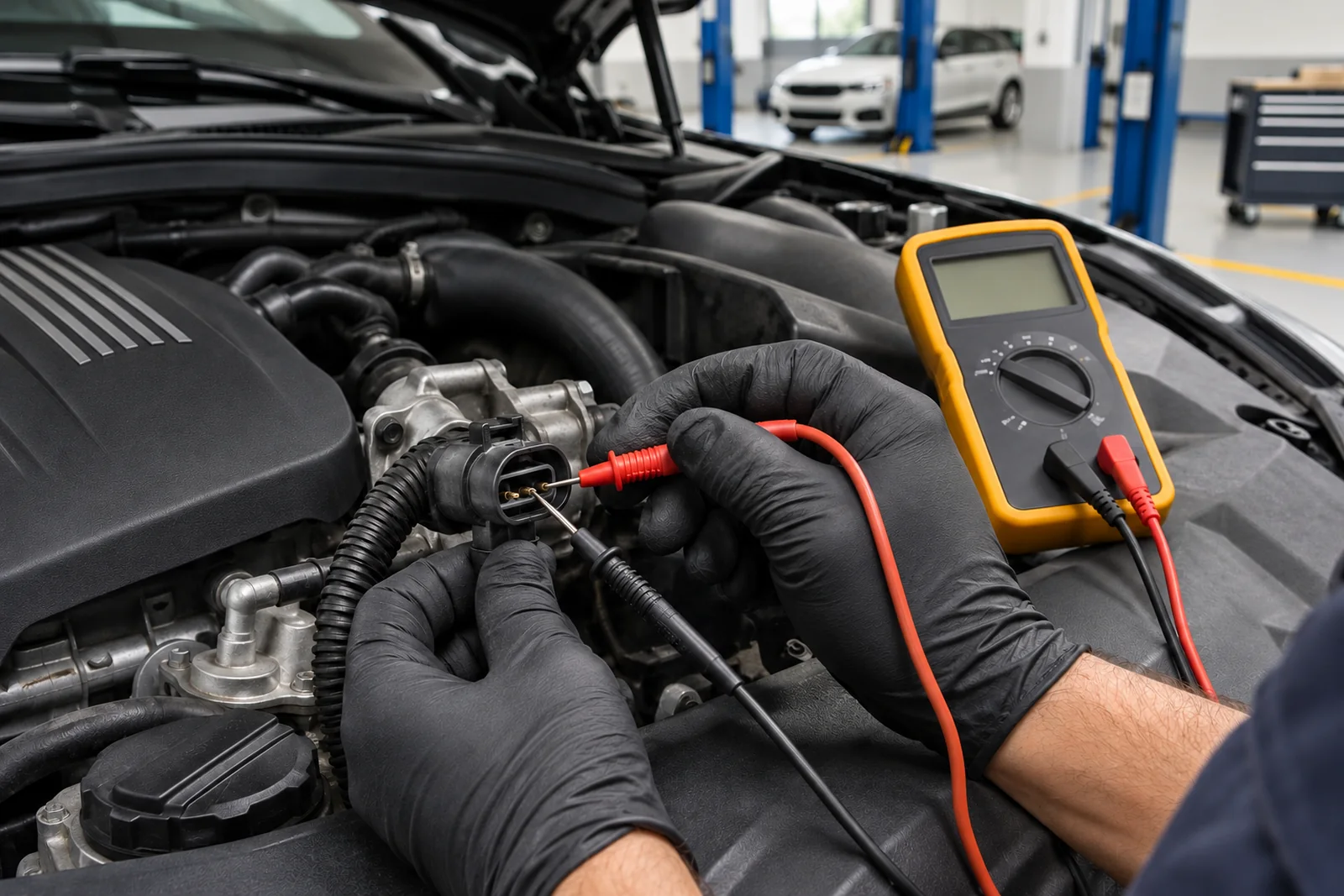
A check-engine light can involve combustion, air leaks, fuel delivery, timing, wiring or a sensor signal. The symptoms below guide testing; they do not identify a failed part on their own. We compare fault records and live data with the applicable test procedure.
If the eccentric shaft sensor reports a fault, the Valvetronic motor may also be involved. Our Valvetronic motor page explains that system.
Where heat damage is found, inspect the affected loom and connectors. A damaged plug or wire may need repair even if the sensor is healthy. Nearby components should not be replaced simply because they share the same location.
Emissions
Sensors in the exhaust tell the engine how well it is burning fuel and how well the catalytic converter and diesel filters are working. They live in extreme heat, so they wear out with age.
The diagram is schematic. Sensor numbers, positions and exhaust treatment equipment vary by engine and original market.
Control the fuel mixture. A slow or failed sensor raises fuel use and can cause rough running. See our oxygen sensor page.
Watch the catalytic converter. A fault here usually brings on the engine light without much change in how the car drives.
On diesel models the NOx, temperature and pressure sensors keep the exhaust cleaning system working. Faults can lead to reduced power.
Exhaust sensor faults can also be a symptom rather than the cause. Misfires, oil burning or an exhaust leak can change the exhaust measurements without proving the sensor itself has failed. We look at fuel trims and misfire counters before deciding that a sensor itself has failed.
Brakes, stability and traction
Chassis sensors feed the brakes, stability control and four wheel drive. When one fails, several warnings often appear at once, which can look alarming even when the cause is a single small part.
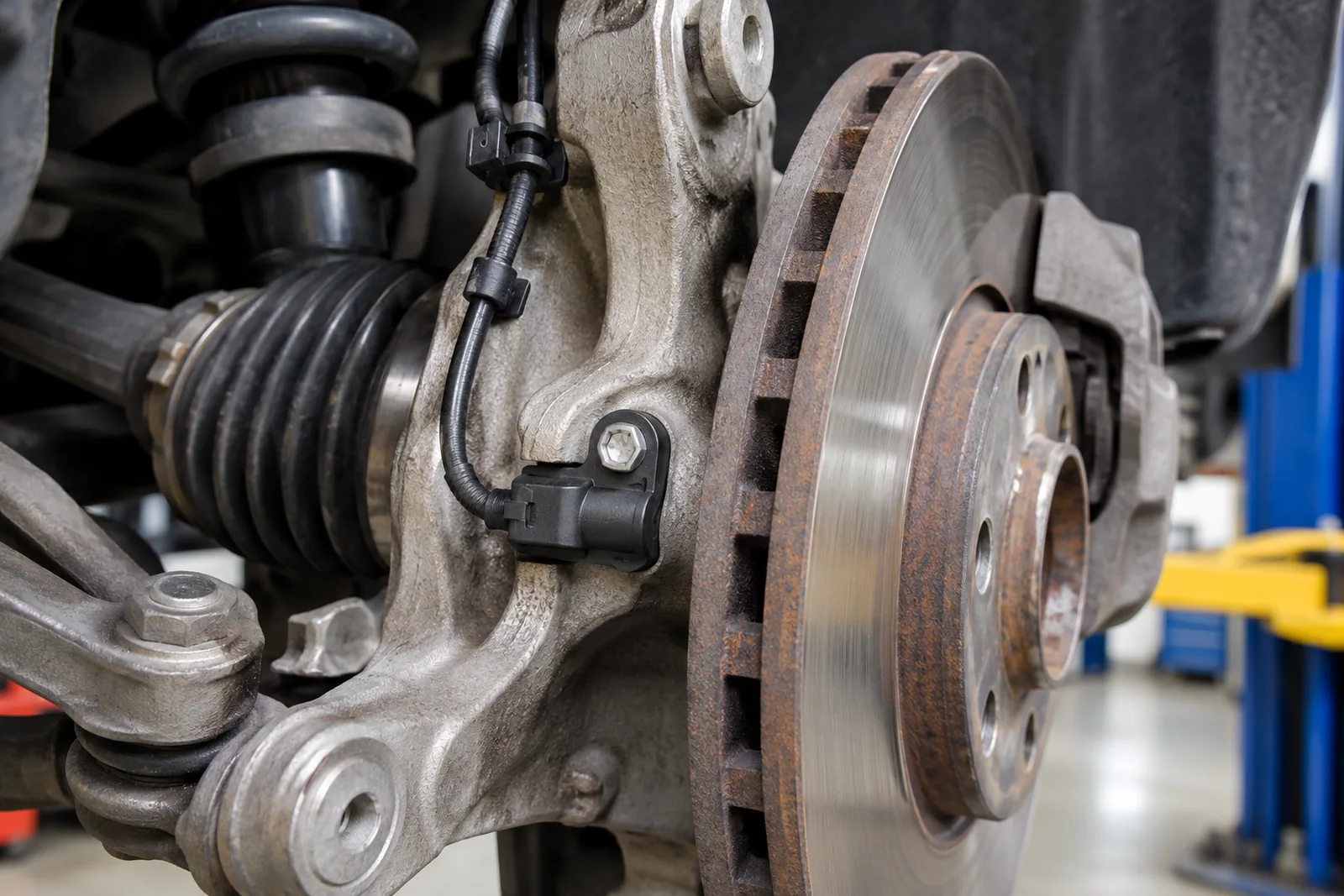
Wheel speed sensors also read a magnetic ring on the hub or drive shaft. A worn wheel bearing or a cracked ring can give the same warning as a failed sensor, so the hub is checked whenever a wheel speed fault returns after a new sensor. On many BMWs the ABS module itself can also fail, and our ABS module repair page covers that case.
Wheel-speed signals support ABS and stability functions. Indirect flat-tyre monitoring also uses wheel speeds; direct TPMS uses pressure sensors in the wheels. Check the fitted system, sensor circuit and encoder or reluctor ring before replacing parts.
Tells the stability system where the wheels are pointing. After alignment or steering work it may need to be reset, and a faulty sensor can make stability control step in when it should not.
A small wire in the pad that tells the car when pads are thin. It is replaced with the pads and the service reminder is reset.
Parking and driver assistance
Three different technologies need different checks. We inspect the fitted system, its mounting and its signals before recommending parts or calibration.
Ultrasonic sensors need secure mounting and a clear surface. Any permitted paint coating must follow the vehicle procedure.
Sensor readings, holders, coating, connectors and moisture.
Cameras need a clear view and correct mounting. A number plate frame, film or tint near the camera can obstruct its view.
Lens visibility, mounting, wiring and any required calibration after windscreen or body work.
Radar location and bumper repair limits depend on the fitted equipment. Repainting or impact damage may affect the sensing area.
Mounting, the bumper transmission zone, supply and vehicle-specific calibration requirements.
We check sensor readings and mounting, inspect any relevant coating or obstruction, complete calibration where required and test the assistance functions as appropriate.
Explore parking system fault repairsEveryday dashboard warnings
These sensors sit behind some of the most common BMW messages, and each one needs a slightly different approach.
The intelligent battery sensor measures current, voltage and temperature to support battery-state assessment. Battery discharge or charging warnings can have several causes, so the battery, supply and relevant circuits are tested. Main-battery replacement registration is a separate procedure from replacing the IBS; follow the requirements for the fitted vehicle. See our battery replacement page.
Many BMW engines use electronic oil-level measurement. A low-level message, unavailable measurement and oil-pressure warning mean different things. Check measurement conditions, the actual oil quantity using the applicable procedure, and the circuit. Do not treat an oil-pressure warning as a harmless level-sensor fault.
Temperature and level signals help monitor the cooling system. Check actual temperature, coolant level and leaks where indicated before blaming a sensor. Persistent fan operation has several possible causes. Follow the Check Control instruction if overheating is reported and never open a hot coolant reservoir.
Before any part is ordered
A sensor code tells us which circuit is unhappy. It does not tell us whether the sensor, the wire or the engine itself is the problem.
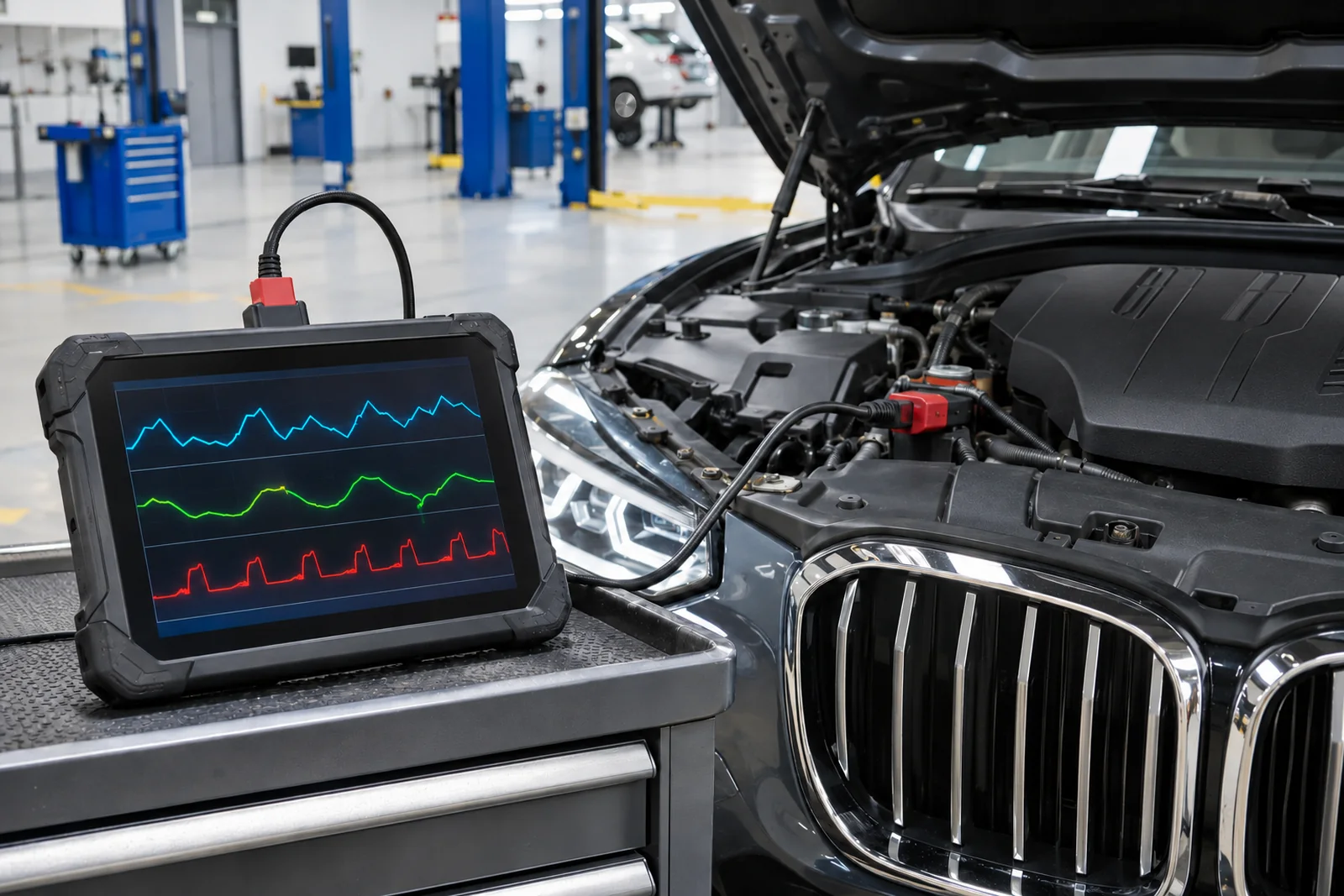
The fault record guides the next test. Signal plausibility, supply, ground, wiring and the measured mechanical condition help distinguish a failed sensor from a circuit or system fault.
The right part and the right repair
The repair should follow the test results. A healthy sensor with damaged wiring needs a different solution from a failed sensor.
When testing identifies a repairable connector or harness fault, repair that fault and check the sensor signal again.
For confirmed wiring or connector damageWhen the sensor has failed, match a genuine BMW or OEM option to the installed equipment and include any required setup in the quote.
For a confirmed sensor failureA damaged encoder ring, intake leak or actual fluid problem needs its own remedy. Replacing a sensor alone will not correct that condition.
When the reading reflects another faultProduction date, engine, original market and fitted options can change the specification. We check the bank, position or affected wheel or bumper location as applicable. If needed, we may ask for the VIN privately to confirm the part.
Petrol, diesel, plug-in hybrid and electric BMWs do not share every sensor system. A fully electric BMW has no combustion-engine oxygen or crankshaft sensor.
See our workshop and service information for BMW diagnostics and free pickup and delivery across Dubai.
How we work
The checks depend on the fitted sensor and reported symptom. We agree the assessment scope before repair and explain the findings.
Because a full scan reads every module, it often shows faults the owner did not know about, such as a stored battery or wheel speed fault. We list these separately in the findings and tell you which ones matter now and which can wait, so the quote covers what you choose and nothing more.
FAQ
Short answers to what owners ask us about sensor faults and warning lights.
Follow the exact Check Control message. An oil-pressure or overheating warning, braking problems or severe running symptoms may require stopping safely and arranging recovery. A parking-assistance fault has different implications, but you must not rely on the affected assistance feature. Contact us with the warning photo to plan assessment.
Clearing a code does not repair a faulty circuit or mechanical problem. Record the fault information first, diagnose the cause and complete the applicable verification after repair.
Systems can share signals or power supplies. A wheel-speed fault can affect ABS, DSC and indirect flat-tyre monitoring, while direct TPMS uses separate pressure sensors. The fitted equipment and fault records determine the checks.
We offer genuine BMW or OEM parts matched to the installed equipment. Ask for the quoted brand, part number and warranty terms. A similar connector or model badge alone does not establish compatibility.
Not every sensor needs coding. Some jobs require adaptation, initialisation or calibration, depending on the component and vehicle. Main-battery registration is separate from IBS replacement. The quote should state which procedure applies.
Possible causes include actual low oil, measurement conditions, a sensor or wiring fault. Oil-pressure warnings require different checks and must not be dismissed as level-sensor problems. Follow the vehicle instructions.
Where testing confirms a repairable connector or harness fault, repairing that circuit may be the appropriate solution. If the sensor is faulty, fit the compatible replacement. Approve the findings and scope before work.
Time depends on diagnosis, access, part availability, seized fittings and any calibration. We confirm the expected workshop time with the quote rather than promising one completion time for every sensor.
The initial fault-code scan and report starts from AED 150. Replacement is quoted separately for the confirmed part, access, labour and setup. Ask about further diagnosis and warranty before booking.
Keep the invoice and diagnostic findings, note when the warning returned and send a photo. Request the selected parts and labour warranty terms, duration and exclusions in writing before approving work. A returning warning needs reassessment.
Free pickup and delivery is available across Dubai. Our independent workshop is at 39 Al Quoz 4, open Monday to Saturday, 9am to 7pm. Tell us if the vehicle cannot safely be driven so the collection arrangement can be discussed.
Book a sensor check
Send your model, year, warning photo and when the symptom happens. Include previous sensor replacements or recent battery, brake, bumper or windscreen work. Our independent workshop at 39 Al Quoz 4 explains the assessment and fitted quote; a booking is confirmed when a slot is agreed.