BMW Timing Chain Replacement in Dubai
Cold-start rattling, persistent chain noise or timing faults need an engine-specific check. Our independent BMW workshop in Al Quoz investigates the cause, explains the findings and quotes for the parts and labour your BMW needs before replacement begins.
Prices
BMW timing chain replacement cost in Dubai
Published Dubai specialist guides indicate roughly AED 3,500 to 7,000 for BMW timing-chain replacement. This is a general market estimate, not our fixed offer. Complex access, additional drive components or internal damage can take the total above this range.
Compare the complete fitted quotation
- 1Parts and labourCorrect chain drive, guides, tensioners, required fasteners, seals, oil and filter.
- 2Access and related repairsEngine or gearbox removal where required, oil-pump drive work and debris inspection clearly itemised.
- 3Total and termsConfirm VAT, diagnostic charges, transport, exclusions, expected turnaround and written warranty coverage.
- 4Parts choiceAsk about genuine BMW or suitable OEM options, compatibility, availability and the terms for each.
Listen first
What a worn BMW timing chain sounds like
A new rattle, whine or clatter needs investigation. Sound alone cannot identify the failed component or predict how long it will last. Do not repeatedly restart an engine with severe mechanical noise, an oil-pressure warning or suspected loss of timing.
Rattle for a few seconds
A metallic rattle right after a cold start that fades once oil pressure builds. Possible causes include tensioner behaviour, lubrication or other engine components. A cold-start assessment helps narrow the cause.
Arrange diagnosisWhine that rises with revs
A high pitched whine that sounds like a supercharger. On some engines the oil-pump drive or other rotating components can be involved. Identify the source before selecting a repair.
Get it checked as soon as you canConstant clatter or knock
A rattle that no longer goes away once warm. This can indicate a serious mechanical fault. Stop safely, switch off and ask about recovery.
Stop driving and call usHow it works
What the timing chain does in your BMW
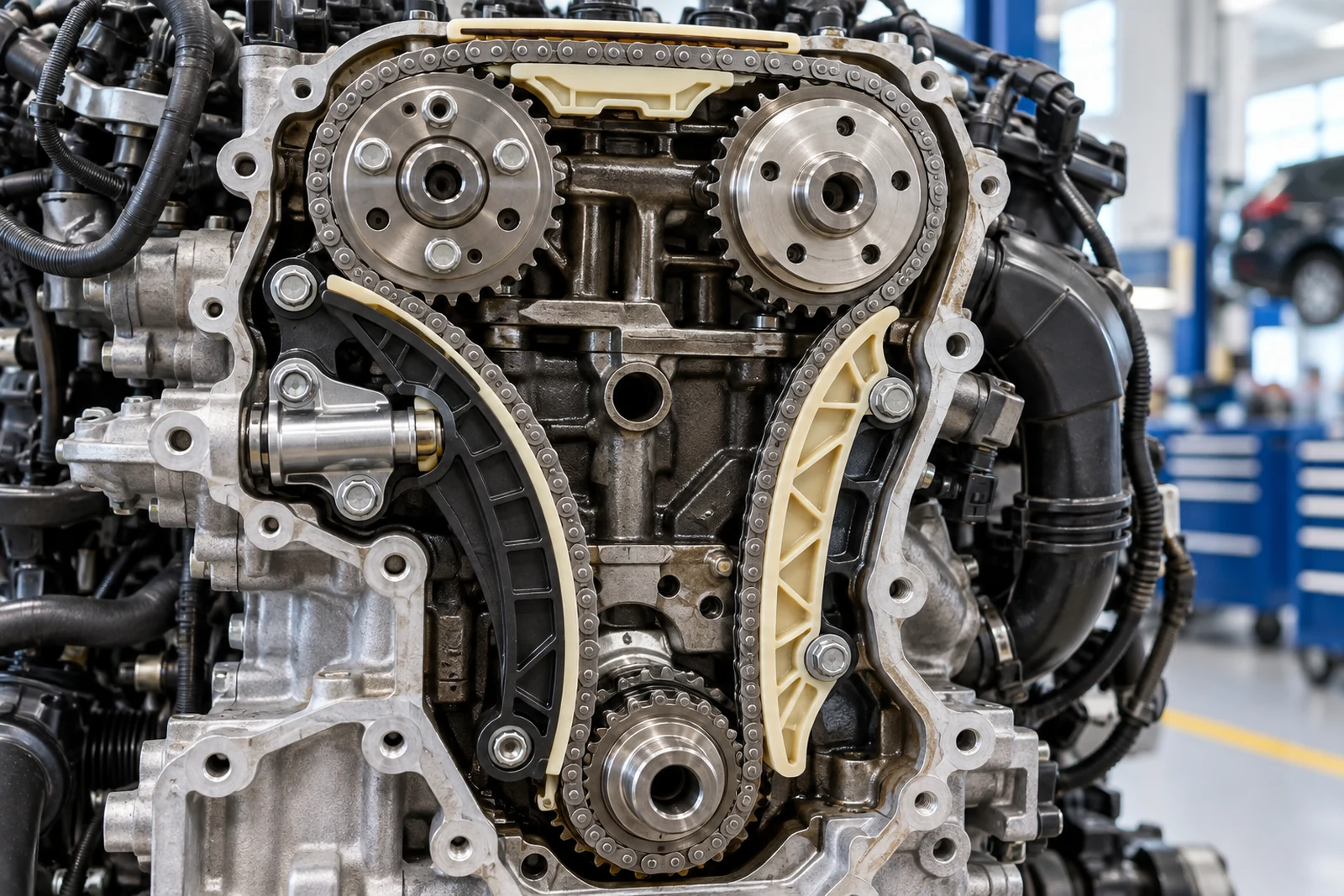
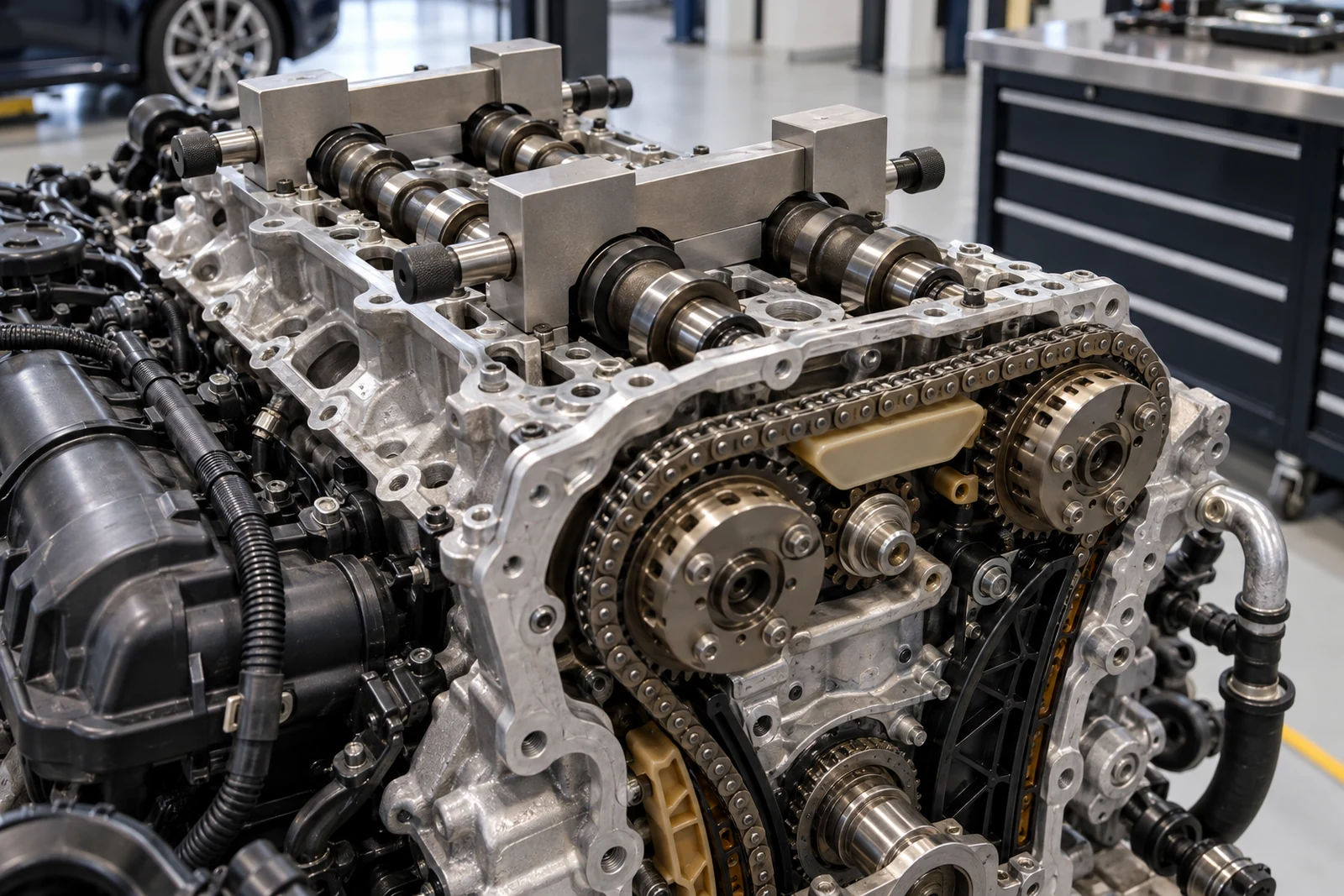
The timing chain links the crankshaft at the bottom of the engine to the camshafts at the top. It keeps the valves opening at exactly the right moment as the pistons move. If the timing slips even slightly, the engine runs badly. If it slips a lot, valves and pistons can meet.
A steel chain that stretches slowly over time as its links wear.
Plastic faced rails that keep the chain on its path. Old plastic can crack and break off.
Uses oil pressure and a spring to keep the chain tight. A weak one lets the chain slap.
Your engine
BMW engines and timing chain problems
Engine code, production date and vehicle configuration determine the parts and access required. Model badges alone are not enough. Send the model, year and VIN so the correct repair procedure and compatible parts can be checked.
Front timing drive. Distinguish the timing-chain assembly from the oil-pump drive. Confirm which components need work rather than assuming a single universal kit.
VIN-specific partsRear timing-drive access can require substantial dismantling. The proposed engine or gearbox removal method must be explained for the particular vehicle.
Confirm accessConfirm the engine version, affected components and extent of work. Do not price a V8 from a four-cylinder estimate or assume identical parts across revisions.
Assess full scopeInvestigate timing faults alongside VANOS operation, lubrication and other noise sources. A fault code or model reputation does not establish chain wear.
Test before repairIdentify the exact engine and installation. Parts revisions and access differ. These families should not be assigned a blanket low-risk rating or replacement interval.
Check compatibilityNot sure which engine you have? Send us your chassis number and we will check it for you.
Why chains wear
What causes BMW timing chain wear
Chain wear can involve lubrication problems, guide or tensioner deterioration, component design and previous repair quality. Service history helps diagnosis but does not establish the cause by itself.
The chain lives in engine oil
The tensioner runs on oil pressure and the chain is lubricated by oil. Incorrect oil, insufficient oil pressure or low oil level can affect the chain drive. Correct servicing reduces avoidable wear but does not eliminate every failure mode.
BMW oil changeLong oil intervals
Use the engine-specific maintenance requirements and assess operating conditions, service history and oil condition when planning service.
Low oil level
Oil burning or leaks drop the level between services and starve the tensioner.
Short trips
Engines that never warm up properly collect fuel and moisture in the oil.
Design and age
Some engines simply use guide materials that harden and crack with age and heat.
Why timing matters
What happens if you ignore a worn chain
There is no dependable sequence or safe waiting period for chain failure. The next step depends on whether the fault is unconfirmed, wear has been established or internal damage is suspected.
Identify the source
Review when the noise occurs, scan faults and assess oil and related components. Avoid approving a chain replacement on sound alone.
Agree the chain work
Identify the applicable chain drive, guides, tensioners and related parts. Approve the itemised repair and any access work.
Assess lubrication risks
Identify the fragments and inspect the affected areas. Sump or oil-pickup inspection and cleaning may require additional authorisation.
Check for engine damage
A chain-only repair may be insufficient. Assess valve and piston damage using suitable tests before comparing repair options.
Found plastic pieces in the oil?
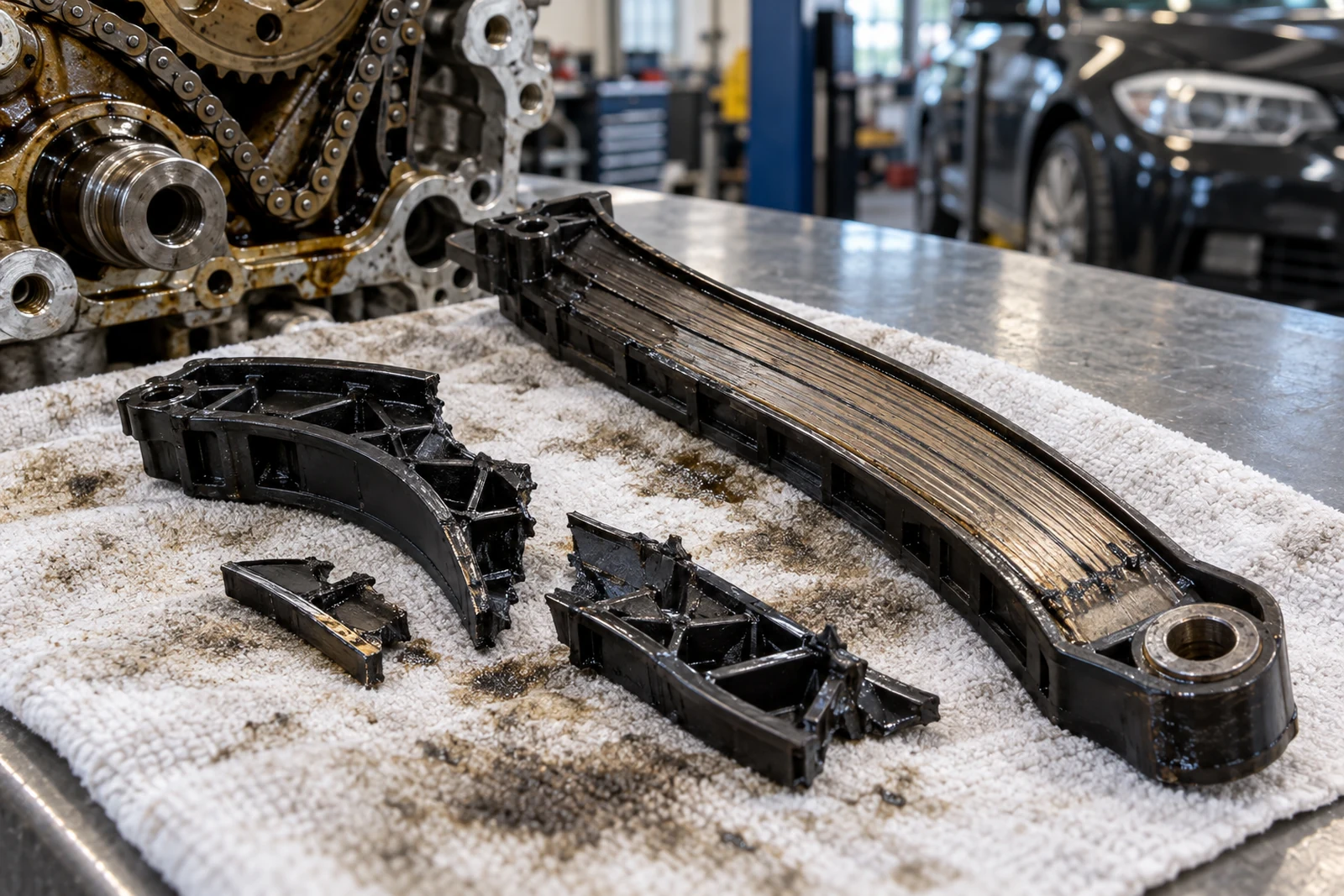
Small pieces of black or brown plastic in the oil, the filter housing or the sump are often bits of a broken guide rail. They can also block the oil pump pickup and starve the engine of oil. If you or another garage found pieces like these, stop using the car and discuss inspection and recovery before restarting. The material must be identified rather than assumed to be a guide.
Diagnosis
How we check a BMW timing chain
Initial checks establish the likely cause and whether mechanical inspection is justified. A scan alone cannot confirm chain wear. Some measurements and guide checks require access, so diagnosis and dismantling charges should be agreed separately.
Listen and record
Review the noise history and assess a cold start only when safe. Existing recordings can help, but do not restart a damaged engine just to make one.
Read timing values
Read fault codes and relevant correlation or VANOS data where available. Interpret these with engine-specific checks and possible oil-pressure, sensor or control faults.
Look inside
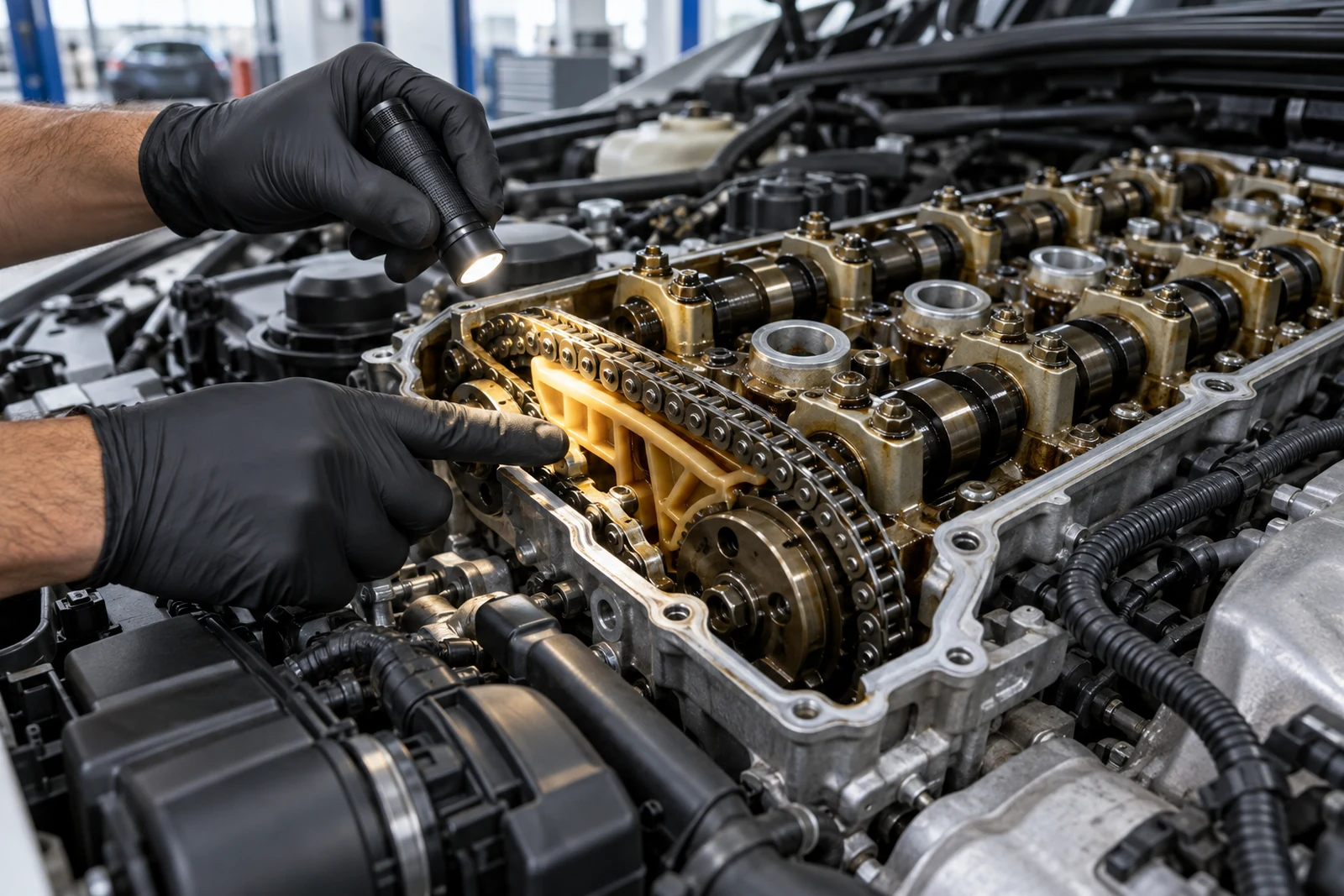
Accessible inspection may show damage, but cannot rule out wear elsewhere. Follow the applicable mechanical measurement and inspection procedure where needed.
Check the oil
Oil level, condition and any plastic pieces in the oil or filter tell us a lot.
Noises that sound like a timing chain but are not
Injectors and fuel-system components can produce ticking. A changed or unusually loud sound still needs assessment.
A rattle from under the car at certain revs is often a heat shield on the exhaust, a simple and cheap fix.
VANOS control or adjuster faults can cause timing errors or noise. Solenoids, adjusters and lubrication are distinct checks.
A tapping from the top of the engine on cold start can come from lifters waiting for oil, not the chain.
Parts
What is replaced in a timing chain job
Specify the complete repair for the engine and findings. A chain kit is not automatically a complete fitted service. Confirm its contents, required related parts, labour and fluids on the quotation.
Timing chain
The upper and lower chains, depending on the engine.
Guide rails
New rails so the chain runs on a clean, unworn path.
Tensioner
A fresh tensioner to hold the new chain at the right tension.
Sprockets
Replaced when worn, often included in the chain kit.
Seals and gaskets
Renew disturbed seals and gaskets as required by condition and the engine repair procedure.
Single use bolts
Stretch bolts that BMW says must not be reused.
Oil and filter
Fresh oil so the new chain starts with clean lubrication.
Related checks
Specify whether VANOS or oil-pump drive inspection and replacement are included or separately quoted.
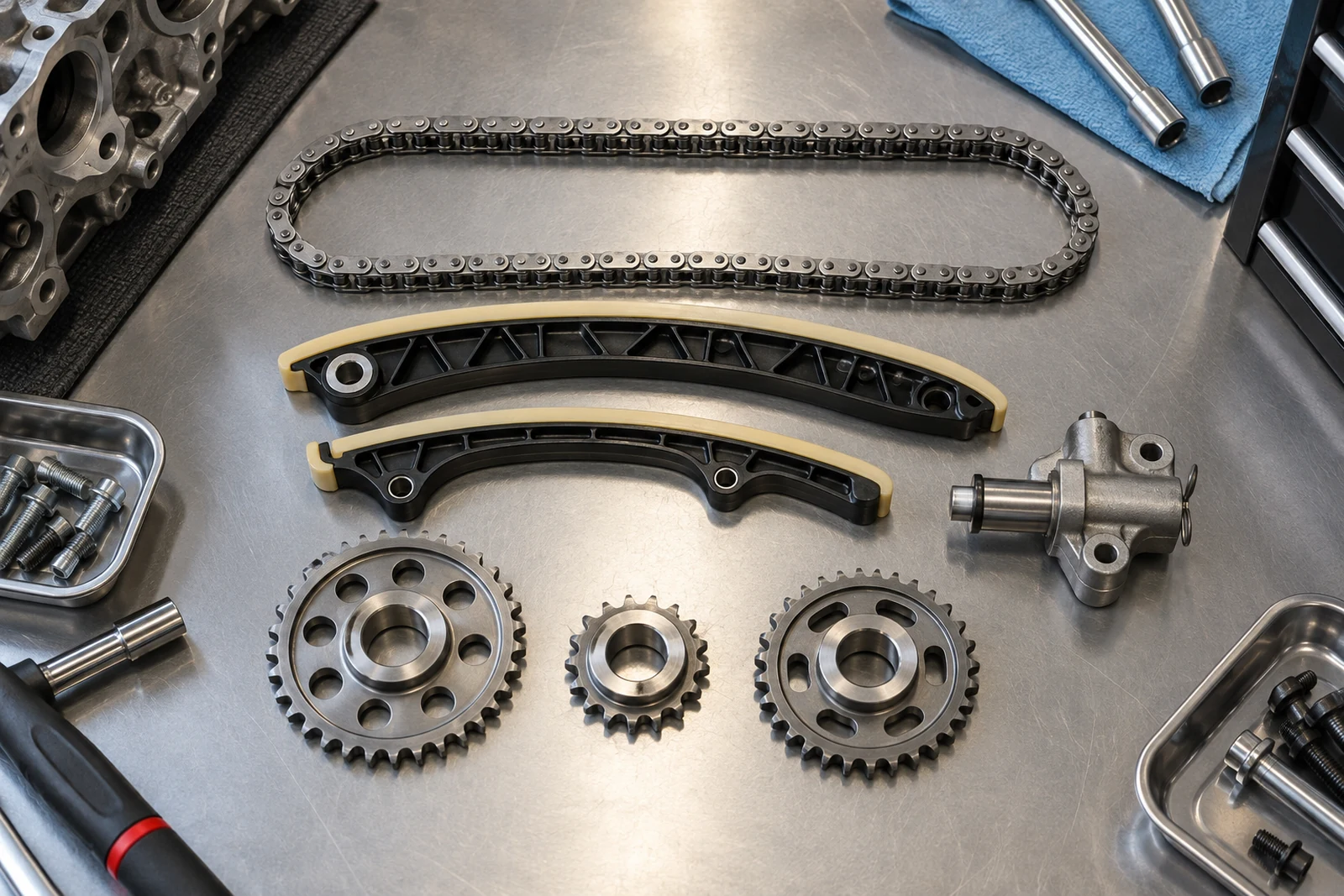
Old guides tell the story
Worn guides often show deep grooves where the chain has cut into the plastic, or have pieces missing. Comparing old and new parts side by side shows clearly why the noise started. If VANOS faults show up too, see our VANOS unit replacement page.
The repair
How we replace a BMW timing chain
Timing work is precise. The engine has to be locked at exactly the right point so the new chain goes on with perfect timing. A single tooth out can mean poor running, fault codes or worse, so every step follows the BMW procedure for your engine.
Confirm and quote
Agree initial tests, then any required dismantling. Approve the final scope and additional findings before repair proceeds.
Access the chain
Covers come off. On some engines the engine or gearbox has to come out.
Lock the timing
Crankshaft and camshafts are locked with BMW timing tools.
Fit new parts
Chain, guides, tensioner and seals are fitted and tightened to spec.
Check and test
Verify mechanical timing using the prescribed procedure, check leaks and running, review applicable diagnostic results and road test only when safe.
Prevention
How to make your BMW timing chain last
Correct oil and maintenance help protect the chain drive. They cannot reverse existing wear or guarantee that a component will not fail.
Plan the correct oil service
Follow engine-specific requirements and review demanding use with the workshop rather than applying one interval to every BMW. See BMW oil change.
Check the oil level
Many BMWs use some oil between services. Check the level on the dashboard regularly and top up with the right grade.
Use approved oil
Use oil with the BMW approval listed for your engine. The tensioner depends on the right oil pressure.
Listen on cold starts
A new rattle in the first seconds after starting is your early warning. Arrange assessment without assuming the repair will be simple.
How much does BMW timing chain replacement cost in Dubai?
Published Dubai specialist guides indicate roughly AED 3,500 to 7,000 for BMW timing-chain replacement. This is general market guidance, not our fixed offer. Engine access, parts and additional damage can increase the total. Confirm fitted inclusions, VAT and exclusions in your quotation.
How do I know if my BMW timing chain is worn?
Rattling, whining, rough running and timing faults warrant investigation but do not prove chain wear. Diagnosis combines symptoms, fault data and engine-specific checks. Mechanical inspection or measurement may be needed.
Can I keep driving with a rattling timing chain?
Do not keep driving or repeatedly restart an engine with severe mechanical noise, an oil-pressure warning or suspected skipped timing. Stop safely and discuss recovery. A brief new noise also needs assessment because sound cannot establish a safe remaining life.
Does a BMW timing chain need regular replacement?
There is no single replacement mileage for every BMW timing chain. Follow the exact engine guidance and investigate symptoms, findings and any applicable component updates. A chain is not automatically replaced at a timing-belt interval.
Which BMW engines have timing chain problems?
Assessment must use the engine code, production date and vehicle history. N20 and N26 timing and oil-pump drives, N47 diesel arrangements and different N63 revisions need distinct parts and procedures. Model reputation alone does not diagnose a fault.
How long does a timing chain replacement take?
Allow for a multi-day repair, with the schedule confirmed after assessment. Access, parts availability, debris cleanup and additional damage affect completion. Engine or gearbox removal is vehicle-specific and should be explained before approval.
Should the guides and tensioner be replaced too?
A confirmed chain repair normally considers the associated guides and tensioner as a system. The engine procedure and findings determine the parts list. An isolated tensioner repair is only appropriate when diagnosis supports it and wider wear has been assessed.
Can oil changes prevent timing chain wear?
Correct oil, level and servicing help lubrication and tensioner operation. They cannot repair a worn chain, restore a broken guide or prevent every design-related or age-related failure.
Is it worth replacing the timing chain on an older BMW?
Compare the complete repair price with the engine condition, wider vehicle needs and realistic replacement value. Where timing has been lost, assess internal damage before approving a chain-only repair.
Is a rattle always the timing chain?
No. Other sources include accessory-drive components, heat shields, fuel-system ticking, valve-train noise and VANOS-related faults. The noise source and supporting test results must be assessed.
Book now
Catch the chain before it costs you the engine
Send the model, year, mileage, VIN and when the noise occurs. Our independent workshop at 39 Al Quoz 4 explains the diagnostic stage, repair options and quotation before work proceeds. Ask about pickup for a driveable car or recovery availability and charges if it should not be driven.