
What you may see
- Drops after parking
- Note their location and whether fresh fluid appears again.
- A wet pan or casing
- Oil and road dust can gather around a leaking joint.
- Oil along the underside
- Airflow can carry fluid away from its actual source.
Gearbox oil leaks, seals, pans and cooler lines
Oil drops under your BMW, a burning smell or a wet gearbox need the source identified before parts are ordered. Our Al Quoz workshop traces transmission leaks, explains the repair and fluid costs, then fixes the confirmed leak and sets the level to the gearbox-specific procedure.
Plan the repair
An accessible leak and a seal that requires gearbox removal are different jobs. The budgets below help you compare the repair being proposed, rather than an oil-change price alone.
Indicative market range for selected seals, sleeves, lines, gaskets or pan work.
A separate service budget where required; do not automatically add it to a leak quote that already includes those parts.
Removal and refitting, seal access, fluid and any associated wear must be priced for the fitted gearbox.
These are indicative UAE market budgets, not fixed BMW workshop offers. Fluid quantity, parts brand and access change the total. Confirm diagnosis, recovery, removal/refitting, testing and exclusions in the written quote. Internal damage or contaminated fluid circuits require separate approval.
Diagnostic scan advertised at AED 150 on our homepage. A scan is not a complete mechanical assessment; confirm further testing costs before booking.
Send your model, year, mileage and symptoms. We confirm the assessment arrangements and any further work before you commit.
Find the source first
A BMW automatic gearbox has several places where fluid can escape. Each one needs a different repair, so guessing usually means paying twice.
Pan damage, gasket deterioration or an incorrect previous fitting can allow oil to escape.
Plugs that were reused or overtightened after a service can weep slowly.
Pipes and crimped hoses running to the oil cooler crack or loosen at their joints.
The connector sleeve on the side of the gearbox lets fluid escape and soak the wiring plug.
Where the drive leaves the gearbox, worn seals leak onto the prop shaft or the transfer case.
Behind the torque converter, this seal drips from the bell housing between engine and gearbox.
On many cars more than one point is weeping by the time the owner notices drops. Oil also runs backwards along the underside while driving, so the wettest spot is often not where the leak starts. We clean the area, run the car and trace the fluid back to its real source before quoting.
Age and heat are the main causes. Seals in a gearbox that has spent years in Dubai summers lose their flexibility faster than the same parts in a cooler country, and cars that sit parked for long periods can start weeping when they are used again. A previous service done with the wrong bolts or plugs is the other common cause we see.
Spot the symptom
A wet underside needs inspection. Slipping or a warning needs extra care. Neither the colour of a stain nor its size tells you how much transmission fluid remains.
Identify the fitted assembly
ZF 6HP and 8HP installations do not all use the same pan. We identify the gearbox and its installed filter arrangement before quoting parts.
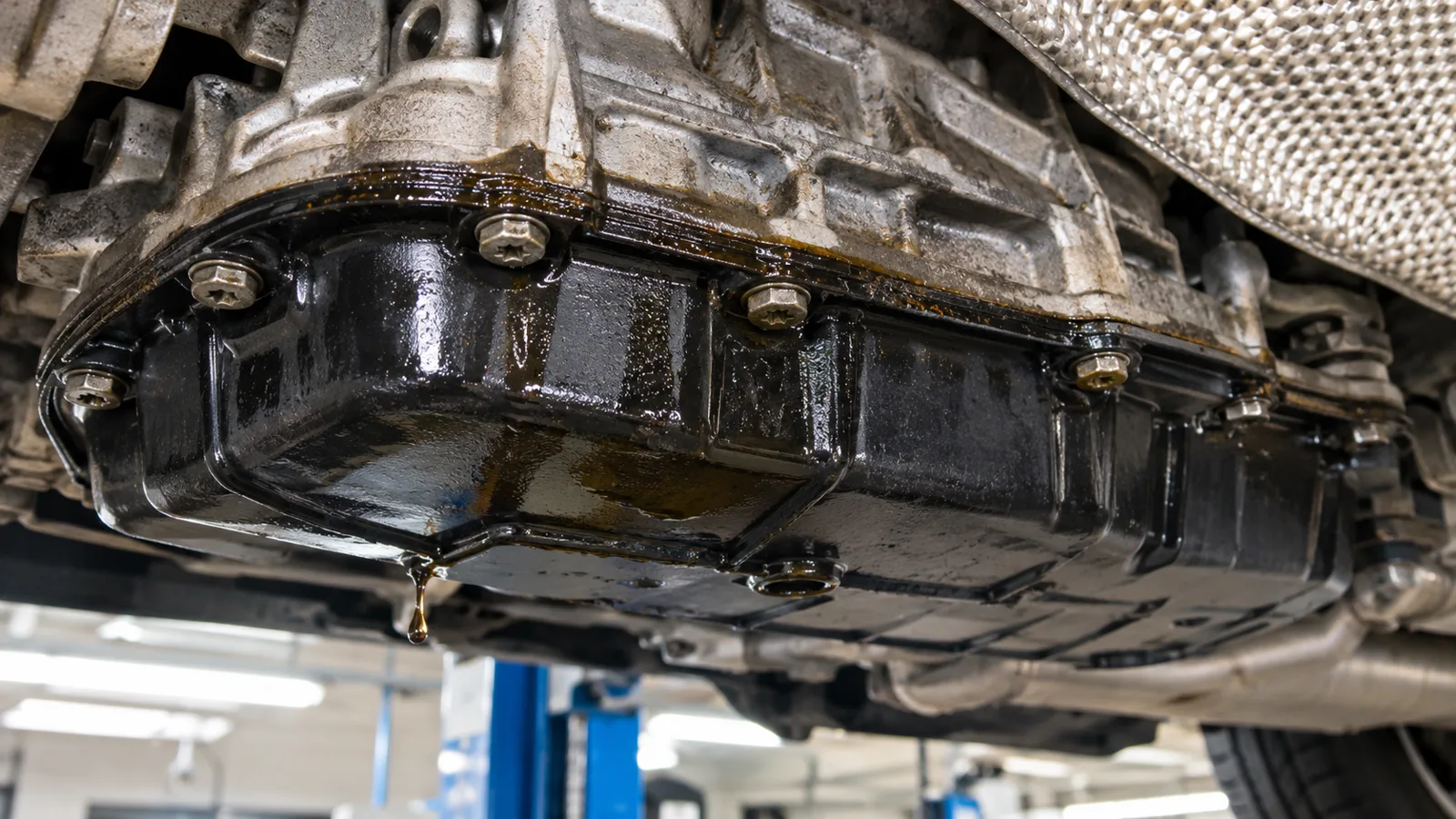
Use the specified fasteners, renewal requirements, tightening sequence and torque. Not every BMW gearbox uses aluminium single-use bolts.
A sudden puddle after an underside impact may indicate a cracked pan. Stop safely and arrange assessment before further driving.
A seal and an electrical connection
On applicable gearboxes, a sealed connector sleeve carries wiring through the transmission casing. A failed seal can leave oil around the plug and nearby pan edge.
Clean and trace the source. Oil at the pan edge may have travelled from the connector above it.
Inspect the plug and loom for contamination or damage. Some designs can allow oil migration into wiring.
Renew the failed sleeve or seals. Pan, filter and fluid work depends on access and the gearbox procedure.
Electrical symptoms need their own tests. Where control or hydraulic faults are confirmed, our BMW mechatronic repair service covers the next options.
Follow the complete cooling circuit
A pressurised cooler-line leak can lose fluid quickly. We inspect the components fitted to your BMW and distinguish external leakage from contamination inside a heat exchanger.
Look for cracks, seepage and damage where flexible sections join metal pipes.
Trace leakage at connections instead of assuming the wettest area is the source.
Check the housing and seals where this equipment is fitted.
Check external sealing and investigate possible cross-contamination on coolant-to-oil systems.
With an active puddle, slipping, smoke or a stop instruction, stop safely and call to arrange assessment or recovery.
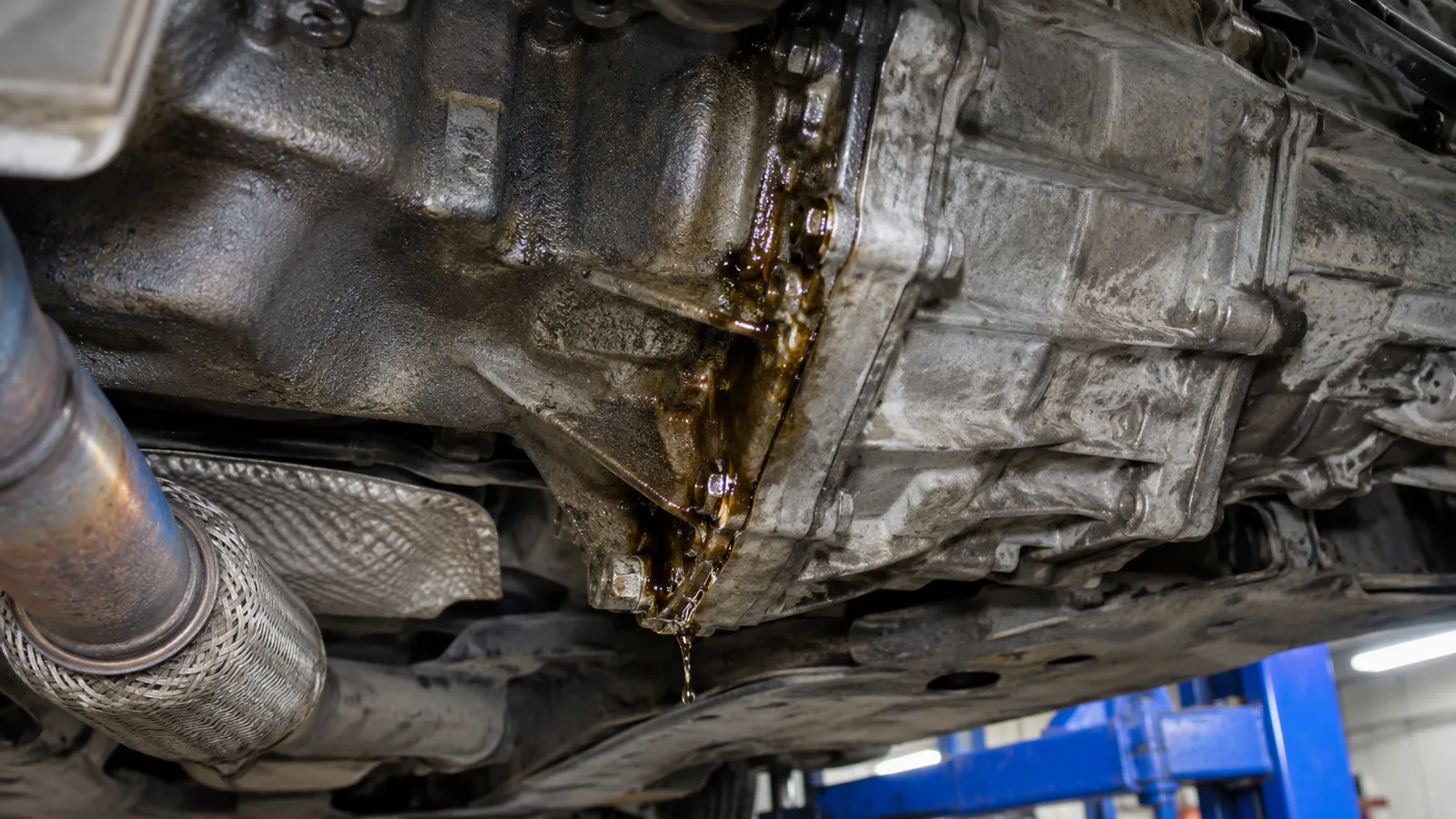
Engine or gearbox
A drip from the gap between the engine and the gearbox can come from either side. The fix and the parts are completely different.
A confirmed front transmission seal or engine rear main seal generally requires gearbox removal. We first exclude oil running down from above. If another defect is visible once access is available, we show the evidence and quote it separately; an undamaged seal is not automatically replaced. Our BMW rear main seal replacement page covers the engine side.
A gearbox-specific procedure
Many BMW automatics use a fill-plug procedure instead of a dipstick. The fluid approval, vehicle position, engine state, selector sequence and temperature must suit the exact transmission.
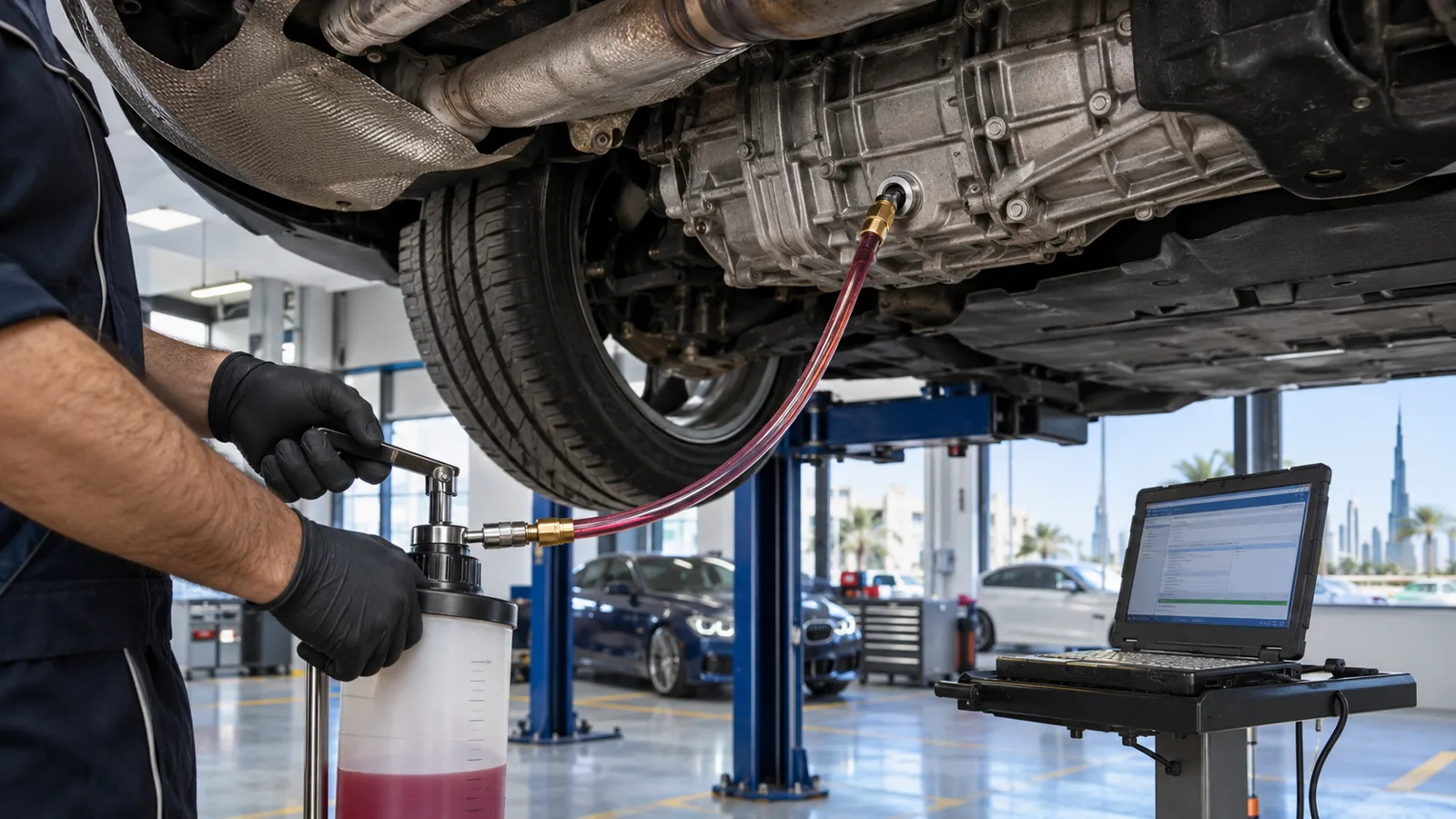
A reading outside the specified window can be misleading. We monitor temperature with diagnostic equipment and follow the procedure for the gearbox fitted.
Confirm the gearbox, approved fluid and required fill instructions.
Position the car level and follow the specified engine and selector sequence.
Monitor fluid temperature and set the level under the prescribed conditions.
Inspect for leaks after safe operation and repeat any level check within the correct window.
Leak inspection may take place at operating temperature. Fluid level is checked within its specified temperature range. Both underfilling and overfilling can affect operation.
Why it is worth fixing early
Even a slight weep needs assessment because the amount already lost is unknown. The stages below describe possible consequences, not a timetable or a safe distance you can drive.
Damp pan or plug. Check the fluid level and source before the leak worsens.
Level starts to fall. Shifts may feel slightly firmer when hot.
Slipping, flaring and heat build up. Clutch packs start to wear.
Warnings, limp mode and worn internals. Repair cost rises sharply.
Insufficient fluid can affect hydraulic pressure, lubrication and heat control. There is no dependable distance or time before damage occurs, and the risk cannot be calculated from a floor stain. Avoid driving with slipping, loss of drive, a stop instruction, smoke or an active leak; arrange recovery.
Topping up the fluid yourself is not a lasting fix, and the wrong fluid can damage the gearbox. If the car is slipping or showing a gearbox warning, do not keep driving it. Call us so we can tell you the next step.
How the job is done
You see where the leak is and agree the cost before any part is ordered.
The underside is cleaned so fresh fluid shows clearly.
The source is traced, running the vehicle only when safe.
Fault memory and fluid temperature readings are checked.
You receive the finding with photos and a full price.
New seals or parts, then fluid set at the correct temperature.
Shifts tested, then the leak point checked hot.
We identify the exact gearbox from the VIN and fitted unit, then use an approved fluid for that application. BMW vehicles can have ZF, other automatic, dual-clutch or manual transmissions; M models do not all use DCT. The repair record should state the fluid used, parts fitted and checks completed. Any additional leak is shown and quoted before extra work proceeds.
Once the repair is done, we note the fluid type and the work on your invoice so the next workshop that touches the gearbox knows what was fitted. If we find other weeping seals that are not leaking yet, we show you and leave the decision with you.
Owners ask us
Short answers before you book.
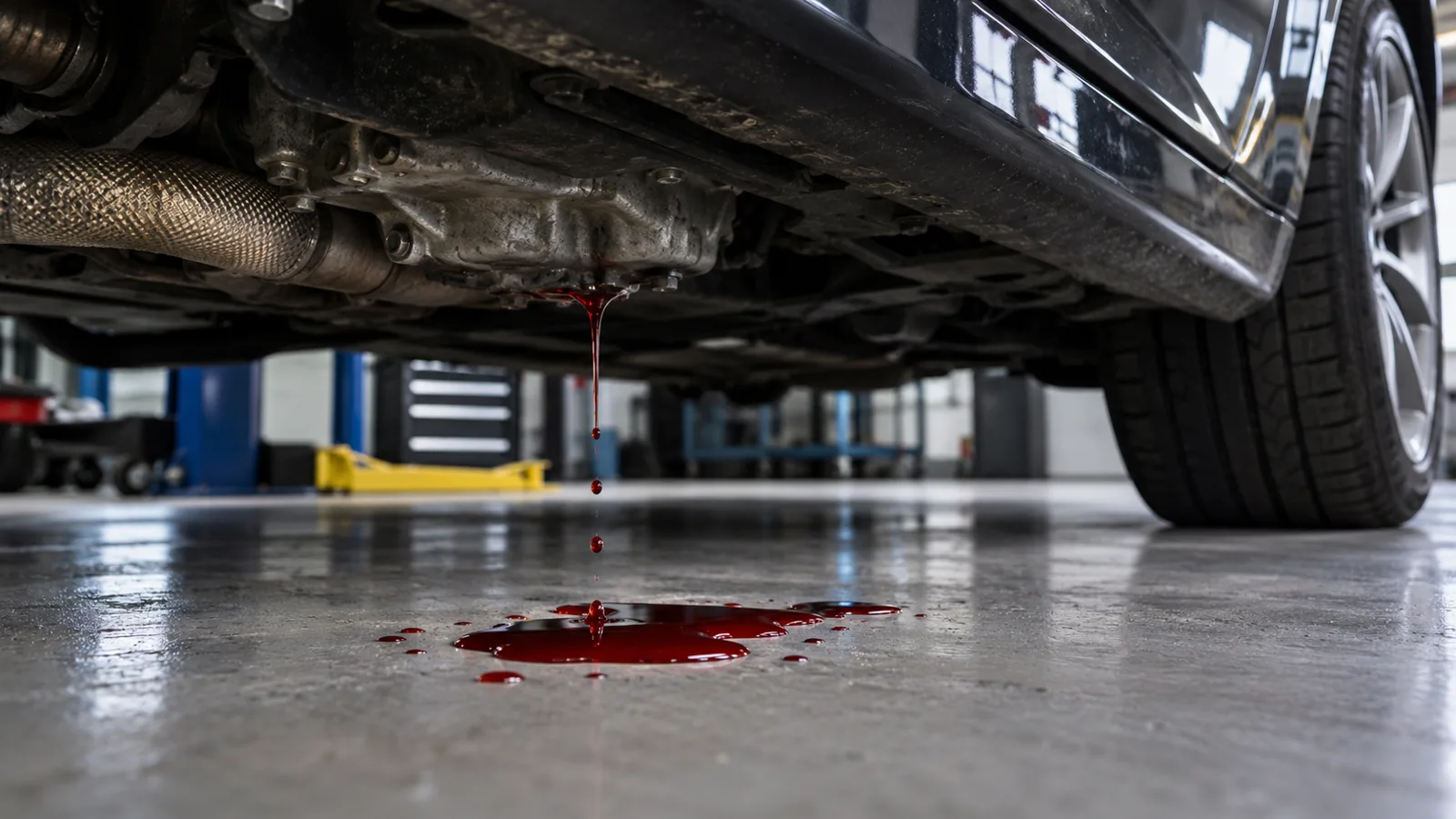
It varies by fluid specification and condition. Colour alone cannot identify a transmission leak.
The fluid level and leak severity must be assessed. Stop safely for slipping, smoke, an active leak, loss of drive or a stop instruction. Call before continuing; recovery may be needed.
Possible sources include the pan, plugs, connector sleeve, cooler lines and shaft seals. Oil can travel from another component, so we trace the source.
The level is set at the fill plug using a temperature reading from the gearbox computer.
It depends on the installed pan/filter design and its condition. Some 6HP and 8HP units have integrated-filter plastic pans; other arrangements allow separate service parts.
Appearance is not conclusive. We clean and trace the leak, inspect both sides and check the relevant fluid levels.
We do not recommend additives. The worn seal or part needs replacing.
Accessible repairs may be shorter than jobs requiring gearbox removal. We confirm the estimate after diagnosis and parts availability; contamination or internal damage adds work.
The correct level must be restored. Whether a full service is needed depends on contamination, service history, access and the gearbox procedure, not colour alone.
We offer free pickup and delivery in Dubai. Call to confirm availability and access. If the vehicle cannot safely be driven, confirm suitable recovery arrangements and any charge. Our independent workshop is in Al Quoz, open Monday to Saturday, 9am to 7pm.
Drops under the car or a burning smell?
Send us a photo of the leak with your model and year. We collect the car for free anywhere in Dubai, trace the leak and send the cost before any work starts.
