
Yellow warning
The gearbox may limit shifting. Colour alone does not tell you whether continuing is safe. Read the complete message and describe how the car behaves.
Gearbox warnings, limp mode and shifting faults
Does your BMW specifically say transmission or gearbox malfunction? Share the full warning. We use the gearbox fault records and relevant fluid, electrical and operating checks to narrow the cause before quoting a repair.
Plan the repair
A warning does not tell you which repair bill applies. Diagnosis separates an electrical or hydraulic fault from internal gearbox damage before you approve expensive work.
Selected component work; some components are only available as part of a larger assembly.
Repair or replacement depends on findings, compatibility and required setup.
Extent of wear and hard-part damage determines the approved rebuild.
Used, rebuilt and new units have different condition, availability and fitted costs.
These are broad UAE market planning ranges, not our fixed tariffs or a diagnosis of your car. The written BMW quote confirms parts condition, removal/refitting, fluids, coding when required, testing and any exchange charge. Diagnostic work and unrelated faults are separate unless included.
Diagnostic scan advertised at AED 150 on our homepage. A scan is not a complete mechanical assessment; confirm further testing costs before booking.
Send your model, year, mileage and symptoms. We confirm the assessment arrangements and any further work before you commit.
Understand the message
A gearbox warning tells us where to begin testing. A broader drivetrain malfunction warning can also involve engine or other propulsion systems. If that is the message you see, start with BMW drivetrain warning diagnosis.
The gearbox may limit shifting. Colour alone does not tell you whether continuing is safe. Read the complete message and describe how the car behaves.
Follow the displayed instruction. Severe slipping, grinding, smoke, leakage or loss of drive calls for a safe stop and recovery arrangements.
A restart may clear the display without fixing the cause. Photograph the message when safely parked and avoid clearing codes before assessment.
EGS gearbox control, engine management, ABS and DSC share information. A voltage or communication problem can affect several systems. Limp mode is a protective response, not permission to keep driving.
Why it happens
A transmission warning can have electrical, hydraulic, software or mechanical causes. Testing determines whether a local repair, control-unit work or internal gearbox repair is justified.
Leaks and old fluid change hydraulic pressure and the gearbox reacts with harsh shifts or slipping.
A weak battery or charging fault can set gearbox codes across several control units at once.
Oil in connectors, corrosion or a damaged loom interrupts signals to the gearbox computer.
Solenoids, pressure regulators or the control board inside the gearbox start to fail.
Wrong readings make the gearbox computer choose the wrong gear or lock into one.
Heavy traffic, towing or a cooling fault push fluid temperature past its limit.
A relevant software issue or incorrect setup after repairs may affect operation.
Clutch packs, the torque converter or bearings wear after high mileage or low fluid.
One fault can also lead to another. A leak that lowers the fluid causes heat, the heat wears the clutches, and the worn clutches produce slip codes. Finding the first cause is what stops the problem coming back after a repair.
Tell us about recent fluid work, battery replacement, programming and fitted parts. We check that the fluid and level procedure were correct, parts match the vehicle and any required setup was completed. Battery registration applies to equipped vehicles and is not, by itself, proof of a transmission fault.
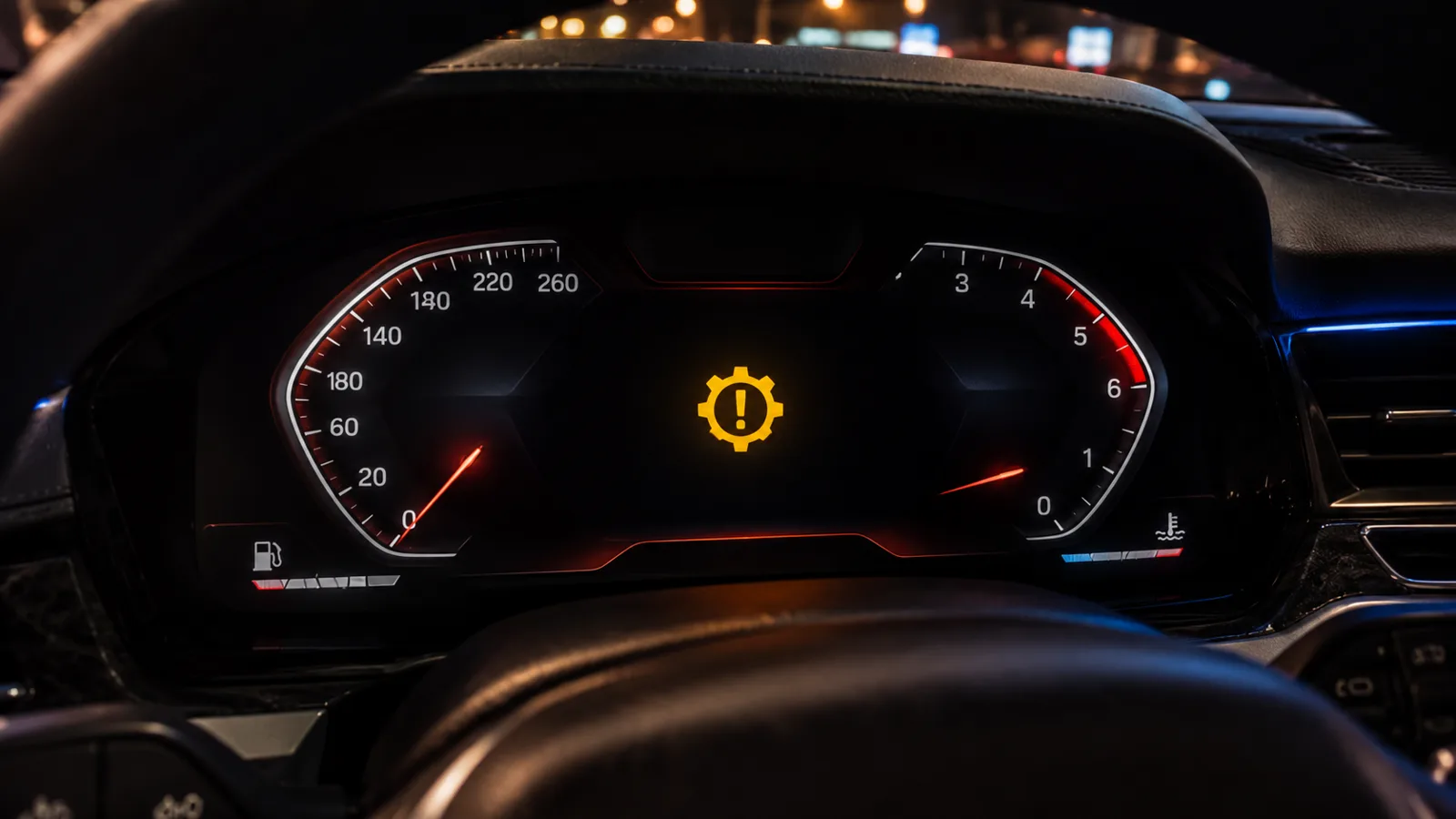
If it happens on the road
Protection mode may limit shifting or select a fallback gear. It does not guarantee the car can be driven safely. Follow the vehicle’s displayed instruction and owner’s manual. With loss of drive, severe slipping, grinding, smoke, leakage or a stop message, stop in a safe place and arrange recovery.
Driving long distances in limp mode keeps the fault active and can add heat and wear, so treat it as a way to get somewhere suitable to stop, not as a normal driving mode.
Reach a safe stopping placeAvoid hard acceleration and sudden manoeuvres; use hazards when appropriate.
Note the messageTake a photo of the dash when it is possible to do so.
Follow the displayed instructionDo not restart repeatedly or treat a cleared message as a repair.
Observe without going underneathReport visible fluid, smoke or smells from a safe position.
Call before continuingWe will tell you the next step for your car.
A warning disappearing after a restart does not establish that the fault is repaired. Photograph the message only once safely stopped, note when it appeared and avoid clearing codes before assessment. Describe any loss of drive so we can discuss suitable transport rather than asking you to drive an unsafe car to the workshop.
Evidence before replacement
We connect the stored fault to the conditions in which it happened, then test whether the suspected component is actually at fault.
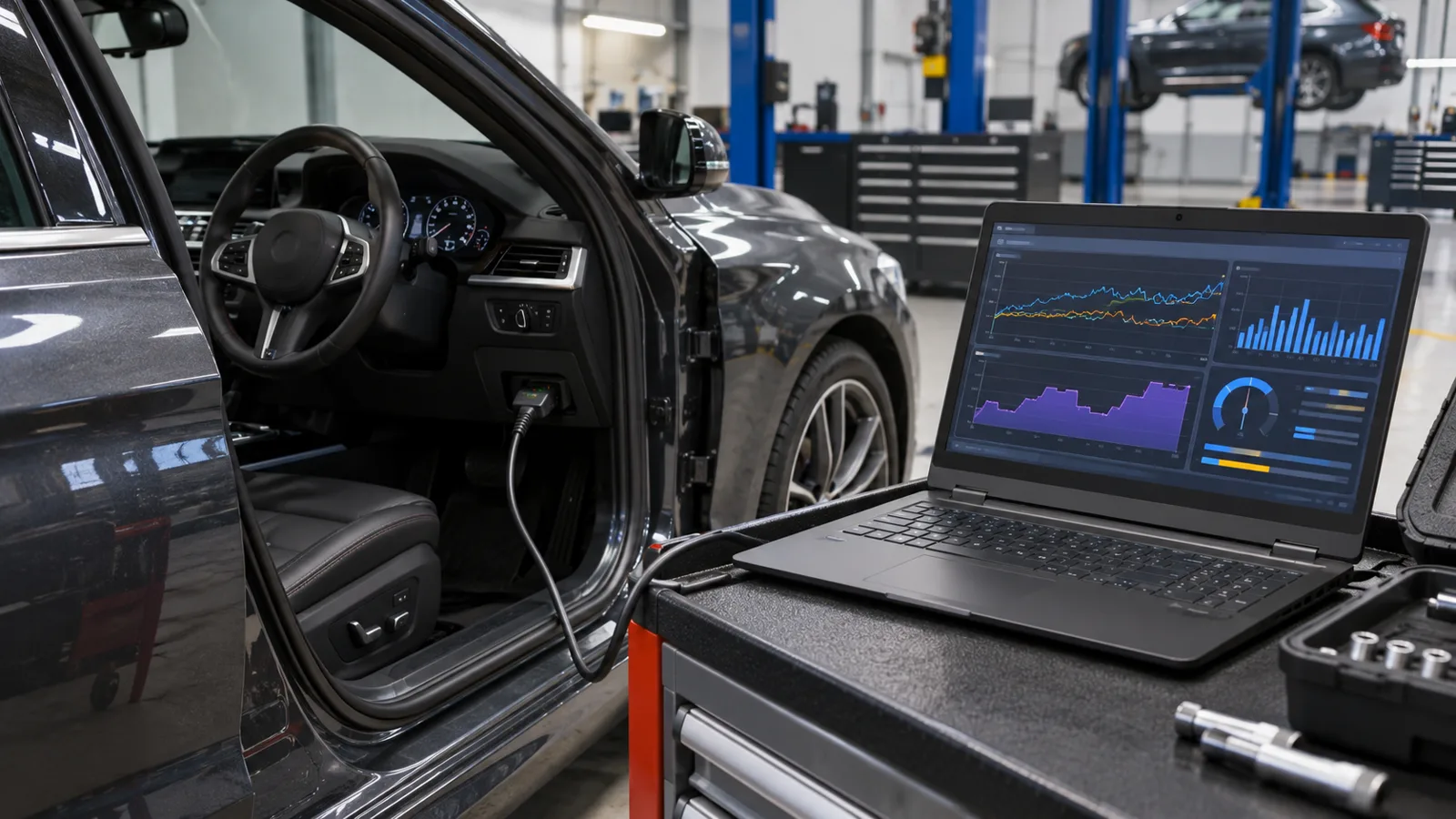
Read EGS and related modules before clearing codes. Available event data may include temperature, voltage, gear or operating conditions; not every fault records every value.
Check available input and output speeds, selected gear and adaptation values. A code identifies a test direction, not automatic proof of a failed gearbox.
Electrical or hydraulic checks follow the applicable test plan. Direct pressure readings are not available on every transmission. Road testing follows safety and fluid checks.
If a warning returns, the original report can be compared with the new findings to distinguish a repeated fault from a different one.
Electronics before parts
Transmission adaptations compensate for operating characteristics and wear. They are diagnostic information, not a universal reset button. Software changes and electrical repairs are considered only where test results support them.
Reset and relearn only when required by the repair instructions. A fluid change alone does not automatically justify erasing adaptations.
Check whether an applicable software measure addresses the documented fault; an update cannot repair worn clutches.
Test battery condition, charging and supply voltage where relevant to the stored faults.
Register a replacement battery on vehicles that require it, with coding if the approved battery specification changes.
Electrical supply checks help distinguish a transmission defect from a voltage or communication issue. We do not promise that a battery replacement will cure a gearbox warning without supporting test results.
Cars imported from other markets sometimes carry software or coding that does not match the parts fitted after a repair. A gearbox control unit or mechatronic from another car can also need its software matched before it works correctly. We check the software level as part of the diagnosis and only update when there is a clear reason to.
Heat is a symptom to investigate
Dubai heat, towing and slow traffic increase thermal demand. A temperature warning still needs a cause identified, even if it has happened only once.
A warning after a long drive, harsh shifts when hot, a burning smell or reduced drive.
Fluid loss, cooling performance and internal slip. Cooler, thermostat and fan checks depend on the system actually fitted.
The confirmed fault, the correct fluid specification and the prescribed level procedure. A fluid change alone cannot repair worn hardware.
Repeated overheating can degrade fluid and friction materials. Clearing the warning does not remove the source of the heat.
Your gearbox matters
BMW uses several gearbox families. The installed version determines the correct tests; the examples below do not establish a fault in your car.
Harsh shifts, mechatronic sleeve leaks, worn clutches at high mileage
Oil pan leaks, adaptation faults, mechatronic and sensor codes
Shift quality complaints, software and fluid related faults
Clutch and hydraulic faults, launch related wear, specific fluid needs
Knowing the exact gearbox also decides the fluid, the parts and the software we use. We confirm it from your chassis number before quoting, because similar looking cars can carry different gearboxes.
Manual BMWs can also show drivetrain warnings, usually linked to sensors, the clutch or the engine rather than the gearbox itself. Those are covered on our BMW clutch replacement page.
Choose the work supported by the findings
A malfunction message alone does not justify a replacement gearbox. Compare the confirmed defect, available repair options and complete fitted cost.
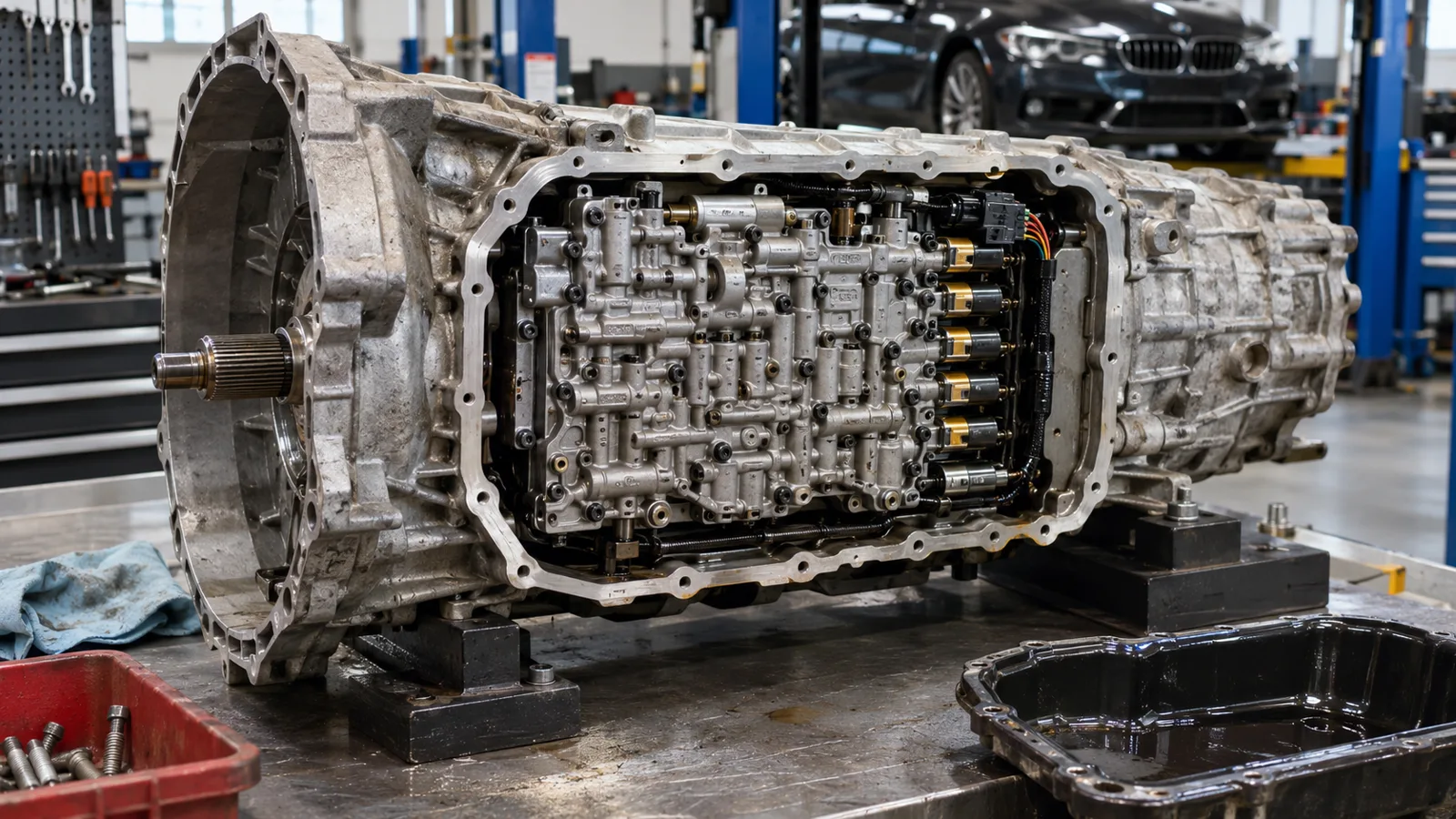
Ask what failed, how it was tested and why the proposed option suits your BMW. We explain the finding and price before ordering parts.
For a confirmed supply, wiring, leak, sensor or service-related problem. Repair the cause and validate the result before proposing larger work.
A solenoid, valve body or mechatronic repair depends on test results and parts availability. Setup is performed when required for the replaced component.
Explore mechatronic repairFor confirmed internal damage where this is the practical option. Used, remanufactured and new units differ in condition, history, cost and cover.
Explore gearbox repair optionsVIN and gearbox compatibility · unit condition · removal and refitting · fluid · required programming · testing · parts and labour cover · exchange-core conditions
From your symptoms to a clear decision
Agree the initial assessment first. We follow the symptoms and applicable test plan, and discuss further diagnostic work if an intermittent fault needs more time.
Note the warning, hot or cold behaviour, recent work and any loss of drive. Decide whether the vehicle is safe to run.
Record EGS and related faults, then assess battery, charging and communication findings where relevant.
Identify leaks, fluid specification, the correct level procedure and connector or loom damage.
Use directed checks and available live data. A controlled road test is included only when safe.
Show the findings, recommended work, parts choices and estimated timing. Nothing is ordered without approval.
Complete the required setup and checks, recheck fault memory and record the work carried out.
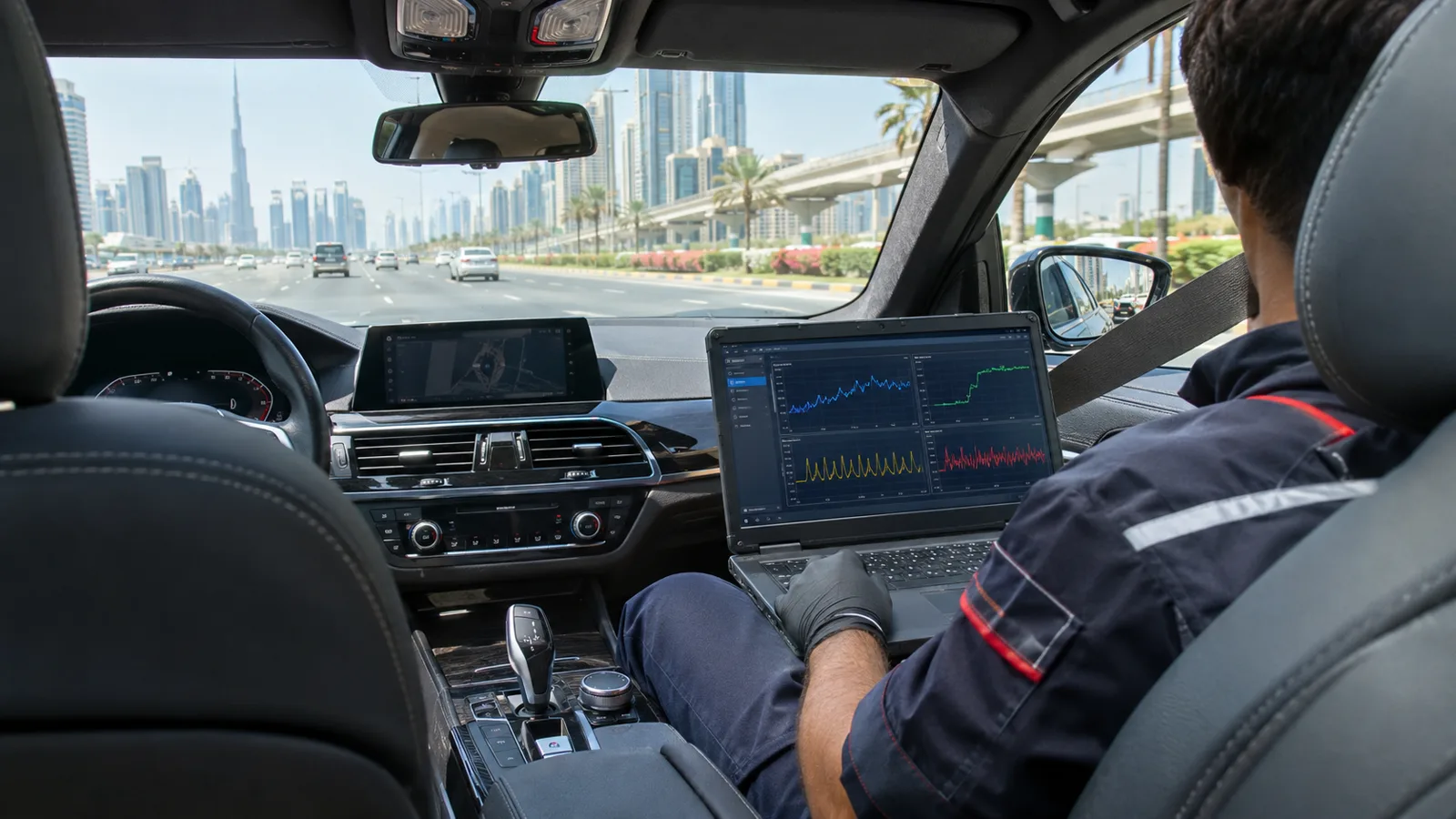
Know what happens next
You receive the diagnosis and repair options, not just a code number. Ask to see removed parts; exchange units may need to go back to the supplier.
Send your model, year and the warning message to arrange an assessment at our Al Quoz workshop.
Owners ask us
Quick answers before you book.
The gearbox computer found a fault and is protecting the gearbox.
Limp mode does not establish a safe driving distance. Follow the dashboard instruction and stop safely for slipping, loss of drive, grinding, smoke or leakage. Call to discuss recovery.
Low voltage can trigger transmission or communication faults. Battery and charging tests must support that diagnosis before parts are replaced.
No. The cause stays and the warning usually comes back.
The message alone cannot decide that. Electrical, fluid, control-system and internal checks establish the repair options.
Yes. A leak lowers pressure and causes slipping, heat and warnings.
Heat exposes worn parts, low fluid and cooling faults.
On some models it improves shifting and fault handling. We check your version.
Timing depends on the symptoms, access and whether the fault is intermittent. Ask for an initial assessment slot; further testing and parts lead times are confirmed separately.
We offer free pickup and delivery in Dubai. Call to confirm availability and access. If the vehicle cannot safely be driven, confirm suitable recovery arrangements and any charge. Our independent workshop is in Al Quoz, open Monday to Saturday, 9am to 7pm.

Warning on the dash or stuck in one gear?
Send us a photo of the warning with your model and year. We collect the car for free anywhere in Dubai, find the cause and send the cost before any work begins.