
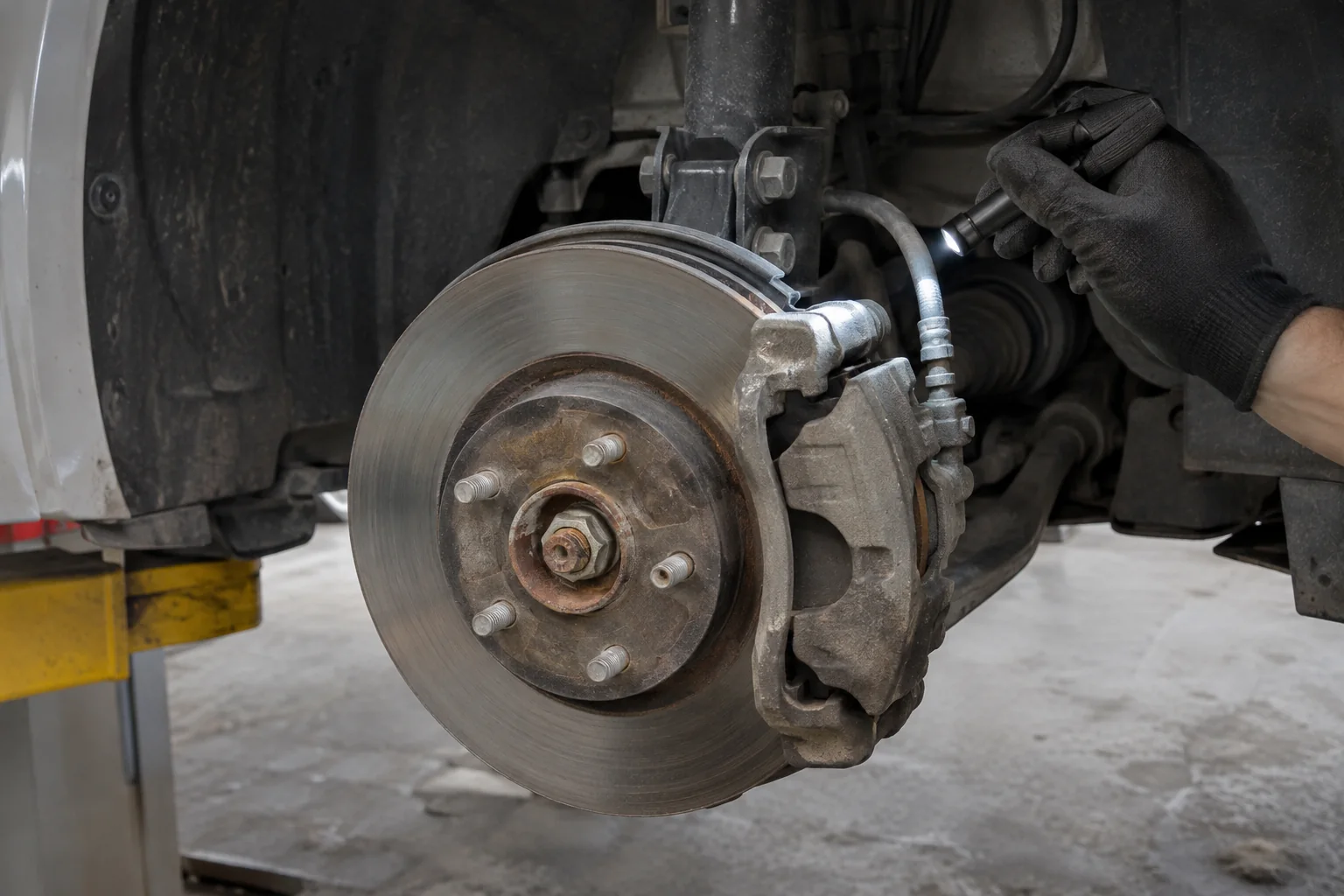
Stop safely and arrange assistance if braking is impaired, the pedal becomes soft or sinks, or there is severe grinding. A red brake-system warning that remains after releasing the parking brake also needs urgent attention. Read the exact message and handbook guidance. Do not drive to a workshop with compromised braking.
Match the warning to the next step
A brake service countdown, a pad-wear message and a brake-system fault mean different things. Record the exact wording and whether braking has changed. Treat the behaviour of the car as well as the symbol seriously.
| What you notice | What it can mean | What to do |
|---|---|---|
| Brake service countdown | A maintenance estimate on a supported model, not a measurement of every pad. | Plan an inspection. Do not treat the remaining distance as a guarantee of safe pad life. |
| Pad-wear message | A wear sensor or its circuit may need attention. | Arrange prompt inspection of pads and the sensor circuit. Clearing the display does not replace worn parts. |
| Persistent red brake-system warning or abnormal braking | A condition that needs urgent assessment rather than an assumption that pads alone are due. | Stop safely and arrange assistance. Follow the exact vehicle warning. |
| Squeal with otherwise normal braking | Several friction, fitting or component conditions can cause noise. | Have it checked. The sound alone does not establish pad thickness. |
An external brake-lamp fault concerns the stop lights and is a separate diagnosis from a pad-wear or hydraulic-system warning. ABS and stability-control messages also need their own assessment. For faults beyond routine pad replacement, see our BMW brake repair information.
Ask what the inspection measured
A useful inspection records the remaining friction material and the condition of the pads, discs and calipers. A glance through the wheel may show an outer pad while hiding a much thinner inner pad. Uneven wear needs an explanation before new parts are fitted.
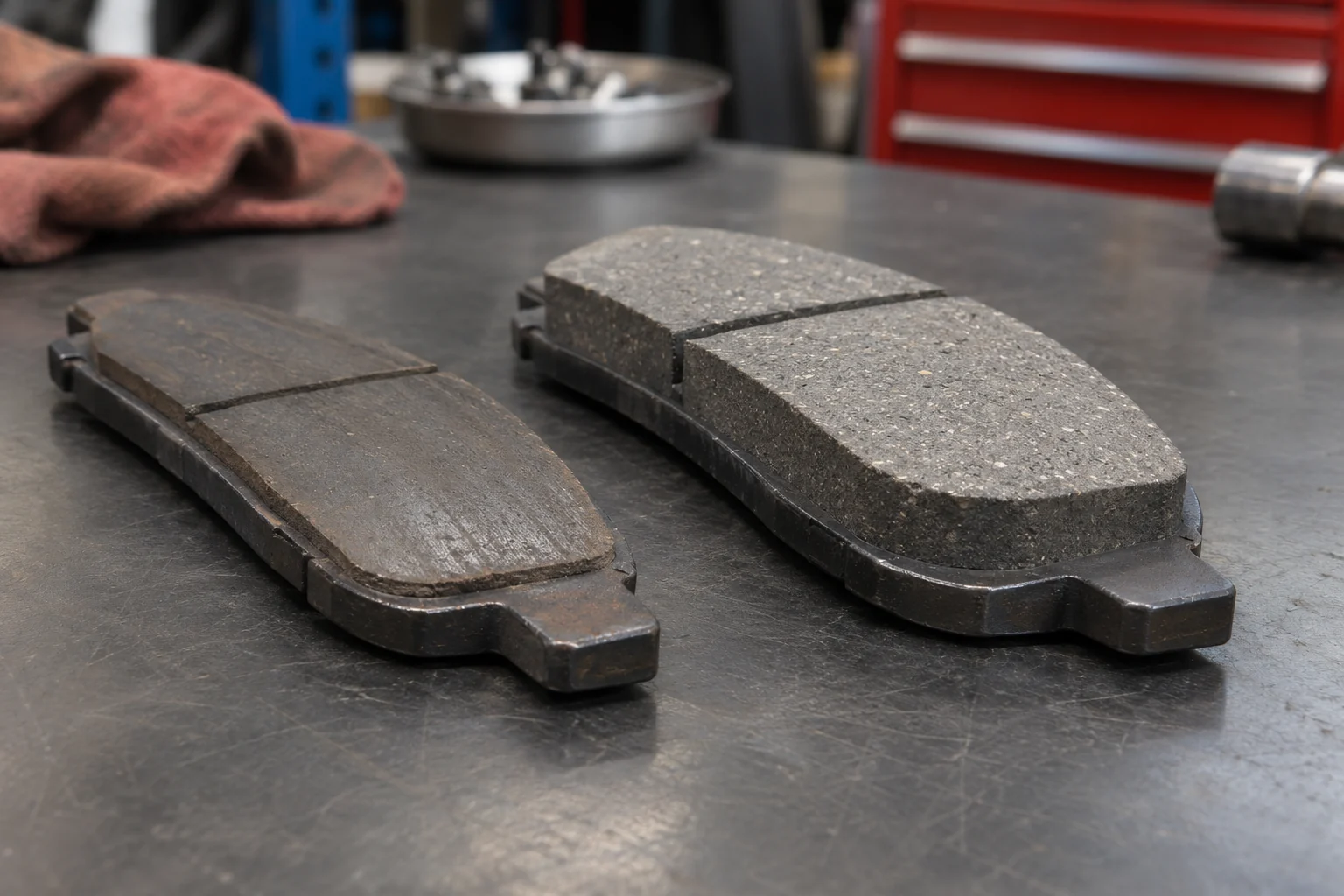
Ask whether the thickness figure refers to friction material alone or includes the metal backing plate. There is no single quarter-inch replacement rule for every BMW. The decision should use the applicable vehicle and component limits, current condition and the inspection findings.
- Pads can be the main job
The pads need replacement and the discs and calipers remain suitable for continued use.
- Discs need assessment too
Thickness, cracks, heat damage, scoring or other defects can change the repair scope.
- Wear is uneven
Caliper movement, relevant guides and other causes need checking so the next set does not repeat the pattern.
- Symptoms do not match pad wear
A soft pedal, persistent warning or other abnormal behaviour needs diagnosis beyond simply installing pads.
For conventional metal discs, request the measured thickness and the applicable service limit. A lip alone does not establish the remaining life. Resurfacing is only an option where permitted for that exact disc and condition; it is not an automatic part of a pad change. Carbon-ceramic components have different inspection requirements.
Brembo's minimum disc-thickness guidance explains why measurements and component limits matter. The fitted BMW brake specification remains the reference for your car.
Identify the brakes fitted to your BMW
The model badge is a starting point, not a complete parts specification. Standard brakes, optional M Sport brakes and M-model systems can use different parts. Caliper colour or an M Sport styling package alone does not establish which pads fit.
Provide the VIN, model year and any known brake modifications. The workshop should match the installed caliper, disc and sensor arrangement as well as the vehicle records. This matters on cars with upgraded brake kits or parts changed by a previous owner.
| Detail | Why it affects the job |
|---|---|
| Front or rear axle | Pad shape, size, sensor and parking-brake requirements can differ. |
| Standard or optional brake package | One BMW series can have more than one compatible parts listing. |
| Metal or carbon-ceramic discs | Pad compatibility and inspection criteria must match the actual system. |
| Rear parking-brake design | A motor on the caliper and a separate parking-brake mechanism require different service approaches. |
| Previous modifications | The original VIN listing may no longer describe every fitted component. |
xDrive describes the drivetrain; it is not itself a brake specification. For an M model, ask which service function the fitted brake system requires. The badge alone does not establish what must be reset or adjusted after fitting.
Compare the exact pad product
Ask for the brand, part number and application before choosing by price or dust claims. Genuine BMW packaging, an OE supplier's aftermarket range and other aftermarket products are different offers. A supplier making original-equipment parts does not mean every pad it sells is identical to the BMW-supplied product.
Organic, semi-metallic and ceramic describe broad friction-material families. They do not provide a universal ranking of stopping performance, noise or lifespan. A low-dust road pad still needs to be suitable for your disc, caliper, sensor and use. Low-dust ceramic pads for metal discs should not be confused with a carbon-ceramic brake system.
If you tow, regularly carry heavy loads or use the car on track, explain that before parts are selected. Road and track requirements can differ. Avoid choosing a product solely because it is described as longer lasting or environmentally friendly without supporting information about that actual product.
What a professional pad replacement should include
The useful question for an owner is what has been checked and why. Brake work requires the correct tools, component instructions and expertise. This is a workshop quality checklist rather than a universal dismantling procedure.
- Confirm condition and authorise the scope
Record the inspection findings, identify compatible parts and agree any work beyond the pads. Replace pads as a set on both wheels of the affected axle. Front and rear axles do not automatically need changing together.
- Prepare for the installed brake system
Use the correct lifting points and safe support. The technician should establish any rear parking-brake service requirement before retracting pistons or removing components.
- Check the supporting components
Inspect relevant guides, boots, pad seats and caliper movement. Support a removed caliper appropriately, protect the hose and keep contamination away from friction surfaces.
- Fit and assemble to the correct instructions
Manage piston retraction and fluid level appropriately, fit the correct hardware and use the specified fastener replacement and tightening requirements. One torque figure or lubricant rule does not cover all BMW brake assemblies.
- Complete the checks before handover
Confirm a stable pedal and relevant stationary checks before moving the vehicle, then carry out appropriate running checks. Finish the applicable sensor work, service functions and aftercare explanation.
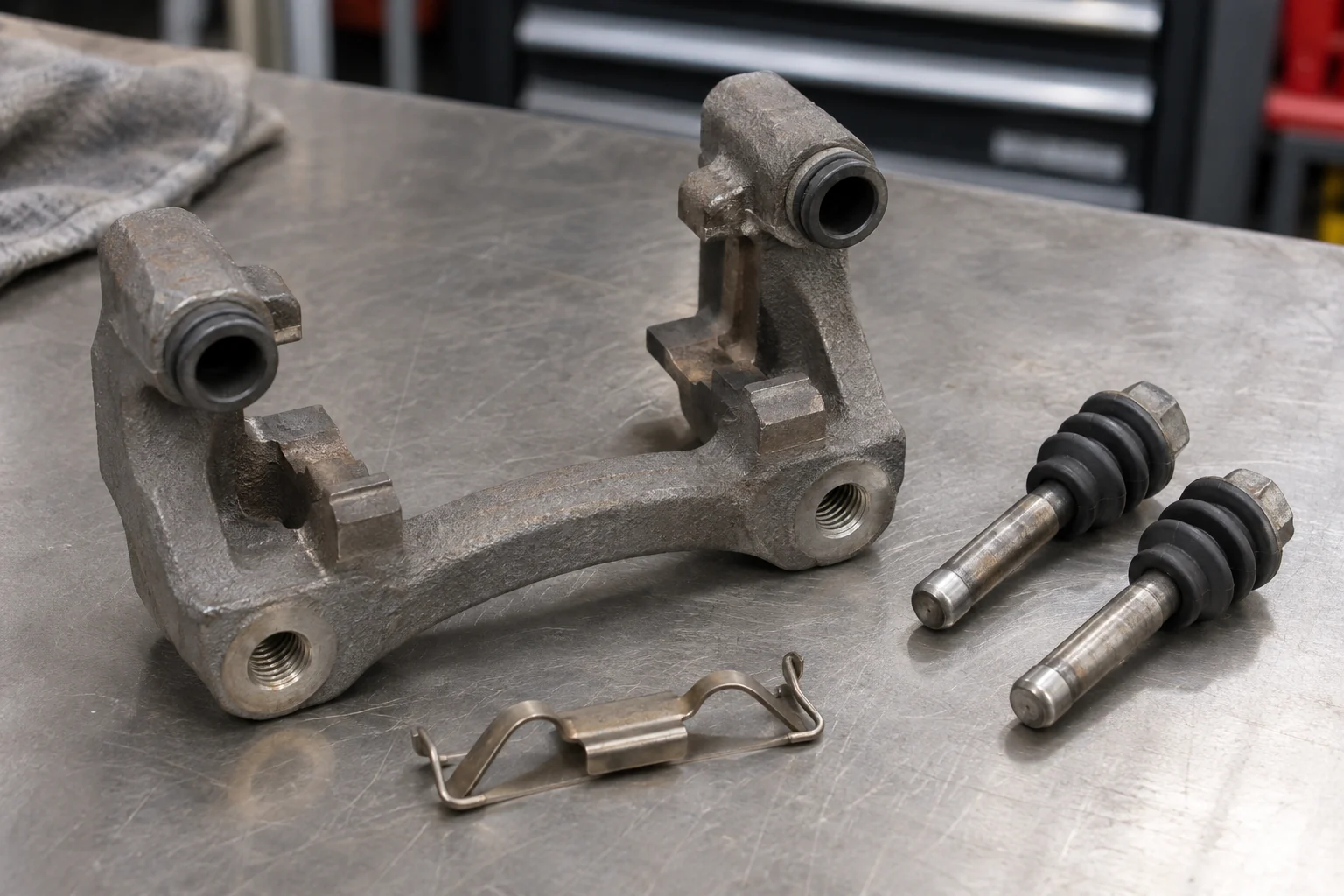
Brembo's pad and disc fitting instructions show the importance of qualified installation and functional checks. Product instructions apply to their specified application and do not replace BMW's procedure for your vehicle.
Check the sensor and service reset
A pad-wear sensor monitors its particular location, not every friction surface. A worn or damaged sensor, connector or wiring can affect the warning. Ask whether a sensor is being checked, reused where permitted or replaced, and whether that part is included in the quote.
On applicable BMWs, the Condition Based Service reminder for the serviced axle is reset after the work and required sensor checks are complete. A reset changes service information; it does not restore friction material or repair a fault. If the message remains, investigate the cause rather than repeatedly clearing it.
HELLA's BMW F10 and F11 service-reset information shows the relationship between completed brake work, the wear contact and CBS. Its model-specific conditions should not be copied as one button sequence for every BMW.
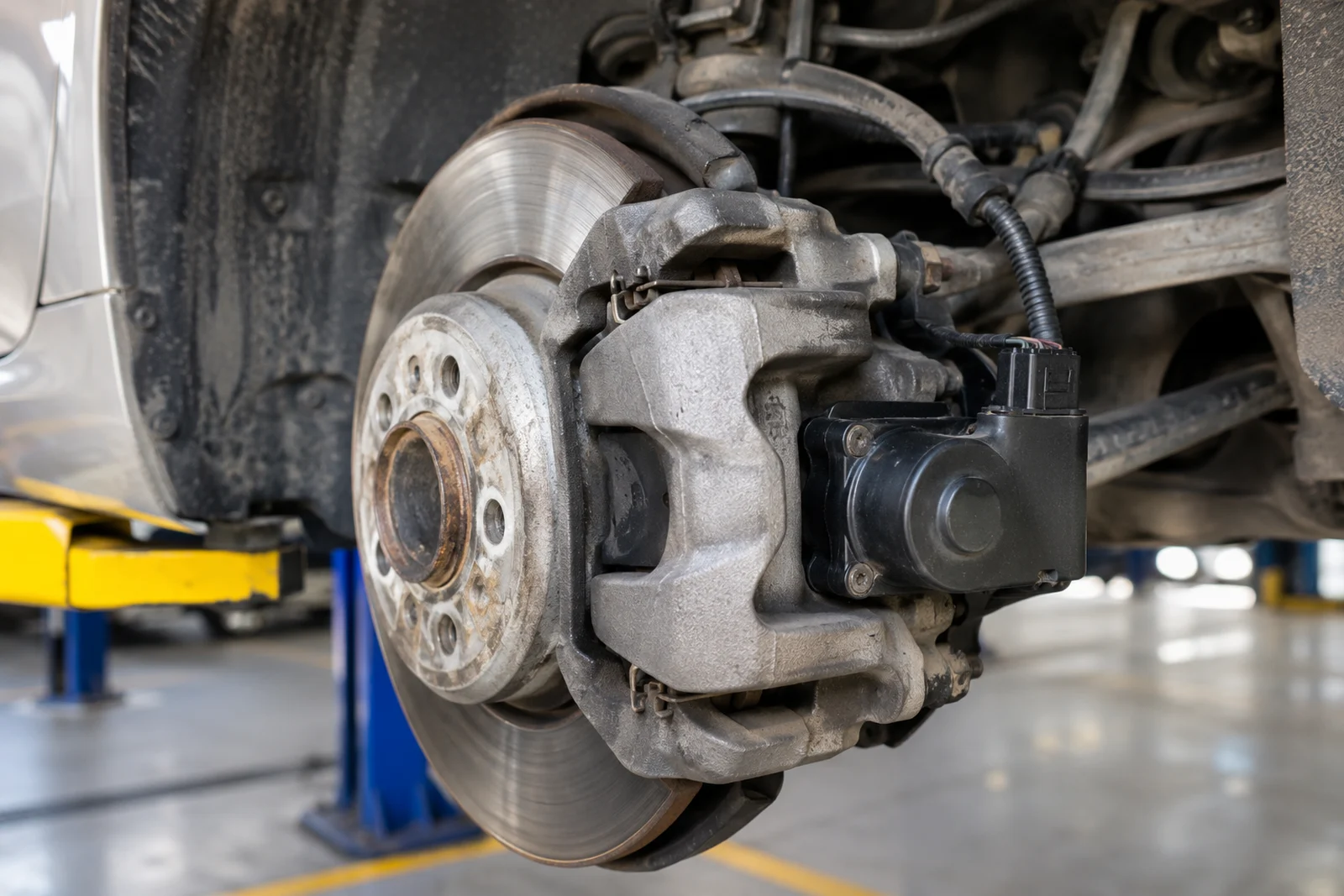
Rear parking-brake mechanisms also vary. Where an electric motor acts on the rear caliper, the required maintenance function must be completed using the correct equipment. Other designs use a separate parking-brake arrangement. The technician should identify the fitted mechanism and follow its procedure rather than force a piston back or assume all BMWs need the same steps.
What to check in a brake pad quote
Compare the axle, parts and work each quote covers. The fitted brake pad price covers a specific starting job. Check which sensor, disc or other work has been added and ask what finding supports it.
Ask for a written total before approving work.
| Quote item | What to establish |
|---|---|
| Axle and quantity | Front, rear or both axles; the pad set for both wheels on each serviced axle. |
| Pads | Brand, part number and suitability for the fitted brakes and intended use. |
| Sensor | Inspection versus replacement, and the price of any required sensor. |
| Discs or caliper work | Measured findings, reason for replacement or repair, and approval for the extra work. |
| Labour and service functions | Fitting, applicable parking-brake work, reminder reset and completion checks. |
| Other charges | Any diagnostic fee, recovery or collection charge and additional fluid service. |
| Final terms | Total payable, availability, completion estimate and written warranty scope. |
Compare estimates for the same work. A parts-only price cannot be compared directly with a fitted axle-set quote. If discs or a caliper are added after inspection, ask for the reason and revised total before approval. A higher quote can reflect a different brake specification rather than higher labour for the same parts.
Judge pad life by use and condition
Frequent braking, heavy loads and repeated high-energy stops can change wear. Mechanical problems such as a sticking caliper can also make one pad wear faster. Smooth, anticipatory driving can reduce unnecessary braking, but safety takes priority over trying to extend pad life.
There is no reliable replacement distance based only on a 3 Series, 5 Series or X Series badge. Retain inspection measurements so a later check can compare actual condition. A service estimate or another driver's mileage is not a substitute for checking your car.
Brake fluid is a separate maintenance and safety concern. Its condition is not a direct measure of pad life. An unexpected fluid level or braking change needs investigation; topping up fluid does not correct worn pads or a leak.
Electric and hybrid BMWs still need brake inspection
Regenerative braking can reduce how often friction brakes are used in some driving conditions. It does not establish the remaining pad thickness or make conventional brake checks unnecessary. Wear, corrosion, pad movement and the disc surface still need assessment.
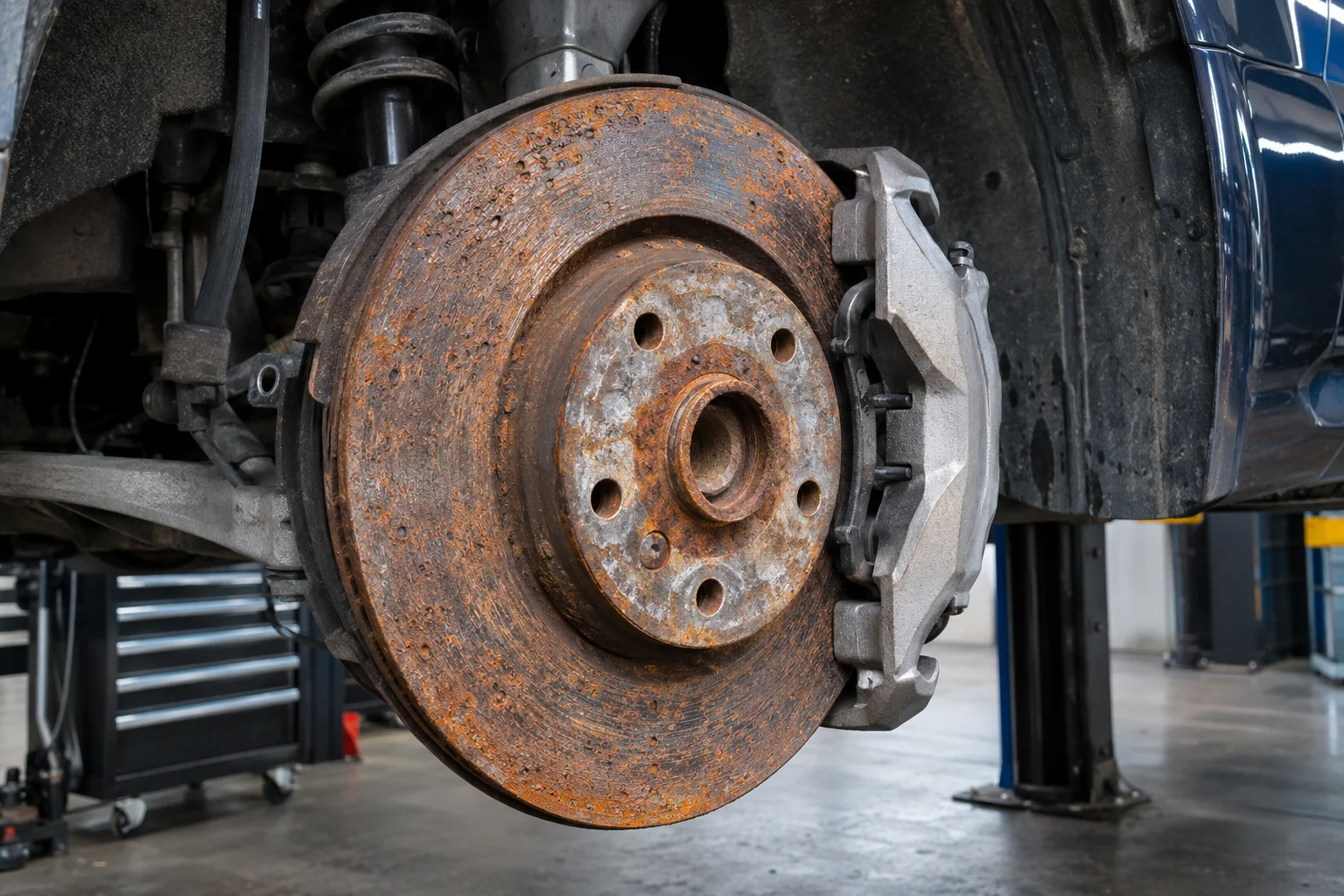
A surface film after parking and persistent corrosion or damage need different assessments. Do not try to cure questionable braking with repeated hard stops. Identify the fitted system and follow the vehicle's maintenance guidance. Neither electric power nor a plug-in hybrid badge gives a guaranteed pad lifespan.
Know what to expect after fitting
Ask for the bedding instructions for the actual pads and discs fitted. The procedure and usage period vary by product. Avoid unnecessary harsh braking where the supplied instructions require a gentle initial period, but always brake as firmly as needed in an emergency.
Brembo's bedding guidance explains the purpose of allowing new friction surfaces to settle. It is not a reason to accept a soft pedal, impaired braking or a new serious warning as normal.
Report persistent noise, pulling or vibration for reassessment. If braking is compromised, stop safely and arrange assistance. Keep the invoice, parts description and applicable warranty terms, including whether labour and removal/refitting are covered. A parts warranty alone may have a different scope from the fitted repair.
Questions before approving a pad change
Do both axles need new pads together
Not automatically. Pads are replaced as an axle set for both wheels on the affected axle. Inspect front and rear separately and ask for the findings supporting each recommendation.
Can the discs stay when new pads are fitted
They can if the exact discs remain serviceable and suitable for the new pads after inspection. Ask for thickness and condition findings. Disc replacement is not automatic with every pad change.
Does a pad warning prove all the pads are worn out
No. A sensor monitors its location, and its circuit can also develop a fault. Physical inspection is needed, including pads that are not visible through the wheel.
Should I accept a quote without a pad brand
Ask for the brand, part specification, axle and fitted total before deciding. Similar descriptions can cover different products, sensor costs and brake packages.
Why is the warning still on after replacement
Possible causes include sensor or wiring faults, an incompatible part or an incomplete service function. Ask for the cause to be checked. Repeated resets do not replace diagnosis.
Is reduced braking normal while pads bed in
Do not treat impaired braking or an abnormal pedal as acceptable bedding behaviour. Stop safely and contact the workshop for assistance. Follow the supplied product instructions after the braking system has been confirmed safe.
Discuss the brake inspection for your BMW
Send your model and year, the exact warning, what happens when braking and any known brake upgrades. Include existing pad or disc measurements if available so our independent Al Quoz workshop can discuss the inspection scope and quotation.
If braking is impaired, arrange assistance rather than driving in. Confirm any assessment or recovery charge before authorising it. Independent BMW specialist, not affiliated with BMW AG.