
One confirmed failed mount
The quote identifies the side or mounting position, part number and brand, fitting work and final checks. The other supports are inspected without assuming they all need replacing.
Vibration, clunks and a shaking cabin
Vibration through the seat at idle, a clunk when selecting drive or movement as you pull away can come from worn engine mounts. Our Al Quoz workshop checks the mounts and other likely causes, then quotes the compatible parts and fitting before you approve replacement. Ask about your model, the fitted cost and free Dubai pickup.
Know what the fitted quote covers
The fitted cost depends on your exact BMW, the mount type and quantity, parts brand and access required. We provide a vehicle-specific quotation after identifying the fault. A single parts listing cannot price a pair of mounts or a complete fitted repair.
The quote identifies the side or mounting position, part number and brand, fitting work and final checks. The other supports are inspected without assuming they all need replacing.
Ask for the quantity and each component to be itemised. Transmission or torque supports are separate items unless expressly included. Any shared labour saving depends on access.
Vacuum supply, switching valves or electrical controls may need diagnosis. A control fault can require a different repair from replacing the hydraulic mount itself.
Confirm assessment charges, any credit against approved repairs, parts, required fasteners, labour, testing and VAT treatment. Oil-leak repairs, damaged brackets, additional mounts and alignment are included only when listed. Ask for the parts and labour warranty in writing, including its duration, limits and exclusions.
Start with the model, year and symptoms. A VIN or existing part number helps confirm fitment.
There is no fixed mount-replacement tariff published here. Parts availability and the amount of dismantling affect the estimate and completion time; these are explained with the quotation before work starts.
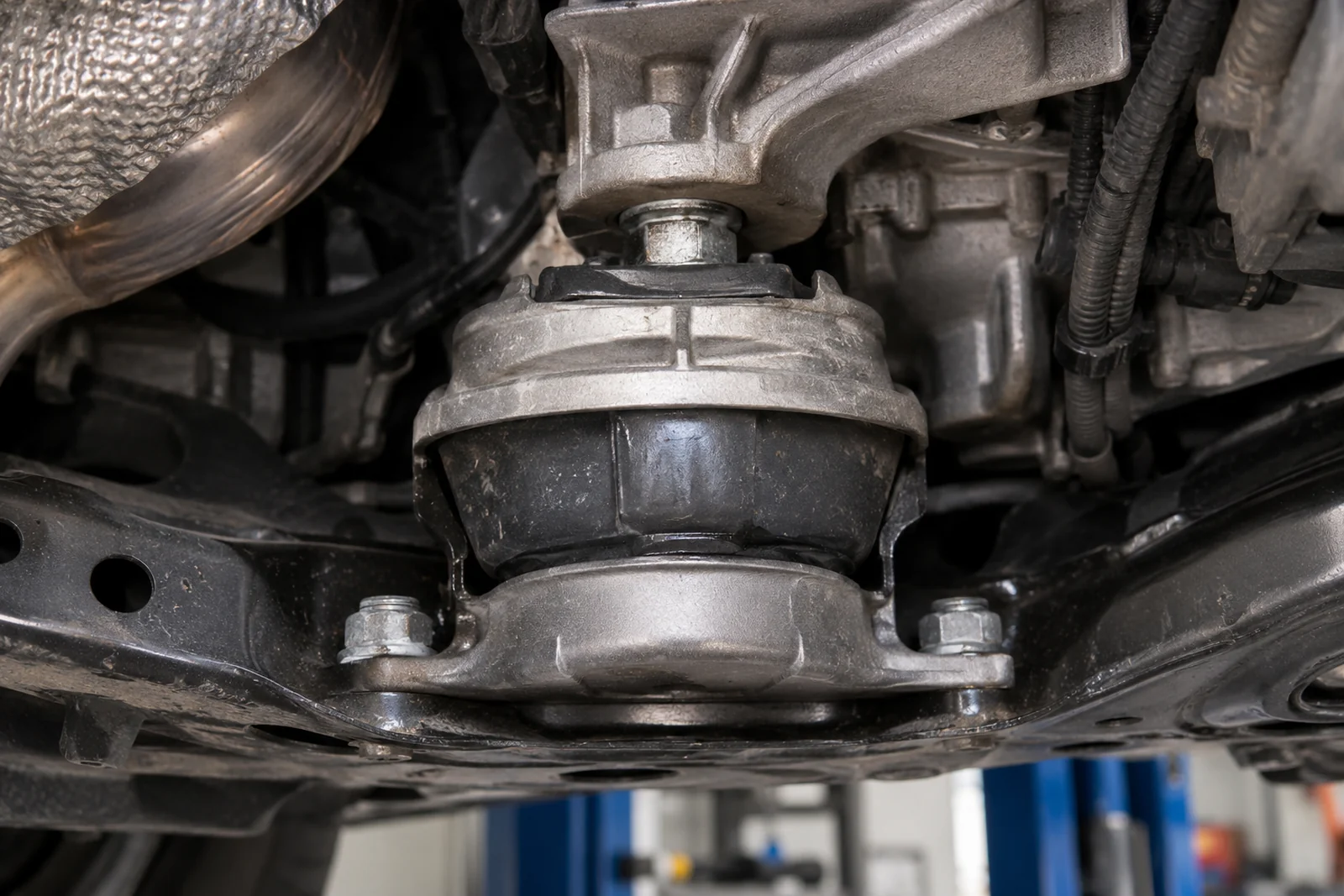
Support and vibration isolation
Engine mounts support the powertrain and control how its movement reaches the body. Their rubber and, where fitted, hydraulic damping reduce vibration through the seat, pedals and steering wheel while allowing controlled movement under load.
The number and position of mounts depend on the engine, transmission and chassis. Many longitudinal installations use left and right engine mounts with separate transmission supports. Transverse layouts can use a different arrangement, including torque supports. Left and right mean the vehicle’s sides when facing forwards, not automatically the driver’s or passenger’s side.
Cracked rubber, separation, collapse or loss of hydraulic damping can affect these functions. Fluid near a mount must be traced: an engine oil leak above it is not proof that the mount itself is leaking.
Describe what changed
These symptoms justify inspection. None identifies a failed mount on its own, and more than one fault can be present.
Tell us whether it changes between park, neutral and drive, with the air conditioning on, or as the engine warms up.
A thump when selecting drive or reverse can involve mounts, driveline play or transmission operation. The location and timing matter.
Mount movement, engine running quality and driveline components are assessed together rather than choosing parts from the symptom.

Visible movement or contact with nearby components needs a controlled workshop check. Avoid deliberate revving or load tests at home.
Splits, separation, sagging or hydraulic leakage can support a replacement recommendation after the source and mounting arrangement are checked.
Suspension, exhaust clearance and subframe components also need consideration. A road bump does not isolate the engine mounts as the cause.
Severe banging, visible displacement or component contact
Stop safely and arrange inspection or recovery before continuing. We cannot confirm that a damaged mount is safe to drive on remotely. For a mild new vibration, contact us promptly and describe the symptoms so we can advise on the next step.
Match the system fitted to your car
Rubber bonded to a supporting structure provides mechanical isolation. Inspect for separation, distortion, cracks and incorrect installed position.
A fluid chamber adds damping. Inspect the mount condition and trace any leakage; loss of damping and visible collapse are related possibilities, not an identical failure sequence on every car.
Some applications change damping to suit operating conditions. Check the fitted control arrangement, vacuum hoses and supply, switching valves, connectors and wiring as applicable.
For example, BMW’s N57TU technical documentation describes a motor-mount vacuum unit operated through electro-pneumatic valves. This is an application example, not a claim that every diesel or six-cylinder BMW has the same system. VIN-specific identification comes before parts selection.
A mechanical mount can fail without a dedicated fault code. A stored control fault does not by itself prove the complete mount needs replacement. BMW N57TU technical reference · ZF mount design reference
Find the cause before choosing parts
The engine can generate abnormal vibration, or a worn mount can transmit normal vibration more strongly. The workshop checks both the source and the path into the cabin.
Compare running quality and controlled mount movement. Load changes are a clue, not confirmation of a failed mount.
Inspect mounts, brackets, clearances and driveline play. Transmission engagement must also be considered.
Use fault history and relevant live data alongside mechanical checks. Engine malfunction diagnosis may be needed.
Inspect tyres, wheels and rotating driveline components according to when the vibration occurs.
Mounts, shafts, couplings, axles and engine operation can produce overlapping symptoms. Fitment determines which components apply.
Brake condition, disc variation or runout, tyres and suspension play need consideration rather than assuming an engine-mount fault.
A scan alone cannot rule out every misfire or mechanical problem. We combine the complaint, inspection and relevant tests. If the cause is unclear, our BMW vibration diagnosis service covers the wider investigation.
Address the cause of wear
Mount life varies with design, age, use and contamination. There is no single replacement mileage that applies to every BMW in Dubai.
Tell us about recent repairs and whether the symptom started suddenly or gradually. Those details help avoid replacing sound parts or overlooking a leak that needs separate attention.
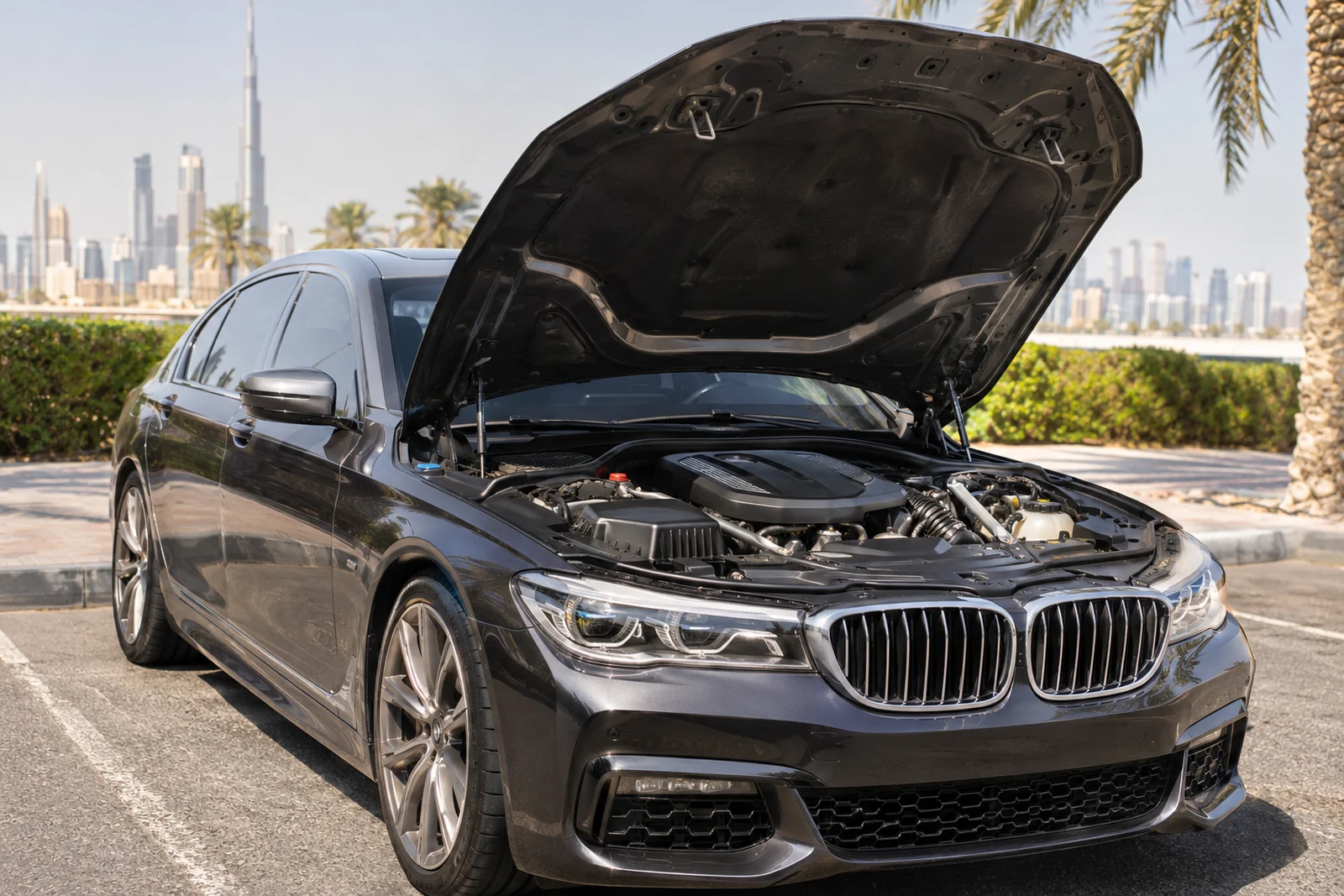
Check the whole chain
The engine mounts share the work with other rubber parts along the drivetrain. When one is worn, the others take extra load, so we look at the whole chain.
Hold the engine on the subframe.
Holds the back of the transmission. A worn one adds clunks on shifts.
A rubber coupling between gearbox and driveshaft on many rear wheel drive models.
Supports the middle of the driveshaft. Wear gives vibration on the move.
Connect the subframes to the body and can add knocks over bumps.
Transmission mounts are assessed separately. Replacing a confirmed worn support during the same visit can be convenient, but shared access and labour savings vary. Slipping or harsh shifts require diagnosis beyond a mount inspection; our transmission repair page explains what we check.
Choose fitment and comfort together
The part must match the vehicle application, mounting position and control system. A familiar brand name alone does not prove that a particular product is identical to the original BMW part.
BMW-packaged parts matched to the application and any relevant part-number supersession. Ask which components and fasteners the quotation includes.
A supplier may make original equipment and also sell aftermarket products. Compare the specific part specification, compatibility and warranty rather than assuming every product is interchangeable.
Availability, quality and damping characteristics vary. Confirm the named brand and application. Firmer performance mounts may increase vibration and may not suit a daily-use comfort goal.
One mount or a pair should be recommended from condition, compatibility and any application-specific repair guidance. The opposite mount is not automatically failed because one is damaged. Transmission supports and torque mounts need their own findings.
Supply the model and year first. The VIN helps distinguish chassis generation, engine, transmission, drive layout and mounting system. xDrive and transverse-engine arrangements can change access. Hybrid and electric powertrain supports need their own application-specific procedure rather than a conventional combustion-engine assumption.
How the job is done
We reproduce the concern where safe, review fault history and use relevant live data and running checks. A scan is one part of the diagnosis.
We inspect damage, leakage, clearances and brackets, then perform controlled movement or system tests appropriate to the vehicle.
You get the worn mounts, photos and part options with prices before anything is ordered.
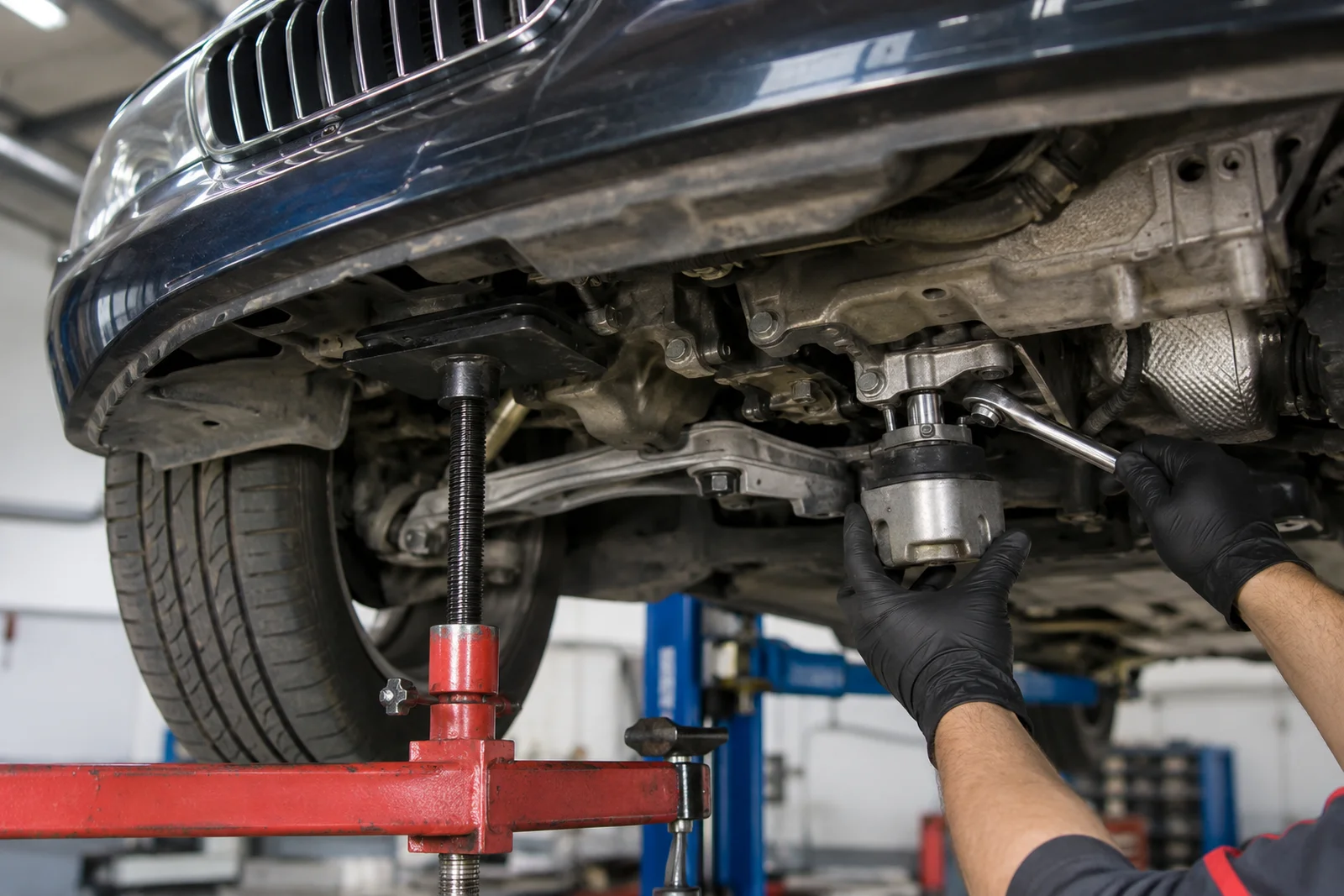
The powertrain is supported at the specified points using the appropriate equipment. Access and isolation follow the vehicle-specific procedure.
Mount orientation, seating and fastener requirements follow the repair procedure, including replacement bolts and torque-angle stages where specified.
The original complaint is reassessed, with idle, load changes and road testing where appropriate. Any remaining vibration is discussed before handover.
If we find other worn parts along the way, such as a leaking gasket above the mount or a tired gearbox mount, we tell you and send photos. Nothing extra is fitted without your approval, so the final bill matches the quote you agreed to.
Clear findings before approval
Ask which mount is affected and what confirms the fault: separation, collapse, verified leakage, excessive movement or a tested control-system problem. Inspection photos help explain accessible damage.
Review the part brand and number, quantity, required fasteners, access work and fitted total. Separate related leak repairs or additional supports so you can approve each recommendation.
Discuss the original vibration and the checks carried out after fitting. Keep the invoice, stated parts and labour warranty and any advice about unresolved symptoms or follow-up work.
BMW Repair Dubai is an independent workshop at 39 Al Quoz 4. Contact us on 056 464 6081 to discuss the findings, quote or collection arrangements. An enquiry does not confirm parts stock or an appointment until the workshop agrees the details.
Before you arrange the repair
The fitted price is quoted for your vehicle after the failed component is identified. It depends on mount quantity and type, the named parts brand and access. Compare parts, fasteners, labour, testing, assessment charges and VAT treatment; an individual part price is not a complete repair quote.
We cannot establish that remotely. Severe banging, visible engine displacement or contact with nearby parts calls for stopping safely and arranging inspection or recovery. A mild new vibration still needs prompt assessment. Do not carry out deliberate loaded-engine tests at home.
Not automatically. Inspect each support and follow the applicable repair guidance. A pair may be appropriate when both show deterioration or the application calls for it, but the quotation should explain the findings and quantity.
Completion depends on access, parts availability and whether related damage is found. Some jobs can be completed within a day once parts are available; this is not a promise for every model. Ask for the estimated completion time with the fitted quotation.
They address vibration caused by the confirmed mount fault. Misfires, wheel or tyre problems and driveline faults need their own diagnosis. The handover check should compare the original symptom and explain any remaining concern.
Only when its condition or the applicable repair procedure justifies it. It supports the transmission and can contribute to movement or clunks. It is a separate quoted item unless expressly included.
There is no universal mileage interval for every BMW mount. Inspect according to the vehicle’s service guidance and investigate new symptoms, visible damage or contamination. Age alone does not confirm failure.
Yes. Rubber damage, separation or a hydraulic leak may not create a dedicated fault code. On controlled systems, diagnostic information and checks of vacuum or electrical controls help identify the cause. No code does not prove the mounts are sound.
Ask for the available named brands for your VIN. Genuine, OE-supplier and other aftermarket products must be checked for the exact application. Compare damping characteristics and written warranty coverage as well as the price.
There is no universal coding or alignment requirement for every mount replacement. Follow the specific repair procedure. Control-system checks, adaptations or alignment may be relevant depending on the fitted system and what was disturbed during access.
Send the model, year and when the vibration or clunk occurs. Mention warning messages and recent work. A VIN helps confirm parts fitment; a short video can help describe the symptom but cannot replace an inspection.
Yes, the workshop offers free pickup in Dubai. Call or WhatsApp to arrange the collection details and tell us if the vehicle may need recovery rather than being driven. The workshop is at 39 Al Quoz 4, open Monday to Saturday, 9am to 7pm.

Book a mount check
Tell us your model, year and when the vibration happens. We will collect the car for free anywhere in Dubai, check every mount and send you the cost before any work starts.