
What to do when the warning appears
Read the full message rather than relying on the warning's colour or its short title. Wording and instructions vary with the vehicle and software. A message asking you to drive moderately does not mean continued driving is safe in every situation.
Severe shaking, unpredictable power loss, loss of drive, changed steering or braking, smoke, a fuel smell or a serious accompanying warning requires prompt attention. Follow the vehicle instructions for overheating or oil-pressure warnings. Do not continue driving to test whether the problem clears.
| What you notice | What it means for the next step |
|---|---|
| Severe shaking or flashing engine warning | Stop safely and arrange urgent assessment. Continued misfiring can damage the exhaust treatment system; do not try to reproduce it. |
| Missing drive, a gear will not engage or power is unreliable | Propulsion may be unsafe for traffic. Discuss recovery and explain the exact symptoms. |
| Drive-moderately instruction with the vehicle otherwise behaving normally | Follow the handbook and displayed instruction, avoid demanding acceleration and arrange assessment. This is not a remote clearance to continue a journey. |
| Warning disappears after a restart | Record what happened and have the stored information assessed. Disappearance does not establish that the cause has been repaired. |
Do not make motorway acceleration runs, repeatedly cycle the ignition, disconnect the battery or clear codes to see whether the warning returns. Once safely parked, contact the workshop with the message and symptoms. If recovery is needed, the operator must use a method suitable for the specific drivetrain and vehicle instructions.

What to record before the assessment
A clear description helps select the next checks. Use observations already made during normal use rather than trying to create another event. Record the warning only when parked; the driver should not film a display while moving.
- The complete messageInclude any instruction, engine warning or other Check Control message shown at the same time.
- The circumstancesNote whether it appeared at startup, idle, during normal acceleration, a shift, after refuelling or after charging.
- How the vehicle behavedDescribe shaking, hesitation, reduced power, unusual noise, poor shifts, inability to select drive or lack of drive readiness.
- Vehicle and repair historyGive the model, year, engine or vehicle details, recent work, modifications and whether a restart changed anything.
A useful description
The warning appeared during normal acceleration on my usual journey. The engine then ran unevenly, so I stopped safely. I recorded the full message and have not cleared any faults.
If you have already used a scanner, keep the original report, including exact codes and their descriptions. Tell the workshop if codes were cleared or the battery was disconnected. That history matters even when the warning is no longer visible.
Do not open hot cooling systems, loosen fuel lines, probe connectors or work beneath an unsupported vehicle. Owners of hybrids and electric BMWs should not disconnect or investigate high-voltage components. Safe observations are useful; component testing belongs with appropriately equipped and qualified personnel.
Why different faults can produce the same warning
The drivetrain warning is an instruction to investigate the vehicle's propulsion systems, not a component diagnosis. Several diagnostic branches can lead to similar wording. Which branch matters depends on the powertrain, symptom and evidence stored by the relevant control units.
Ignition and uneven running on petrol engines
A petrol engine misfire can involve an ignition coil, spark plug, injector or the engine's mechanical condition. A cylinder-specific fault helps locate the uneven running. The technician then checks the suspected cylinder and uses the findings to decide whether ignition, fuelling or further mechanical testing is needed.
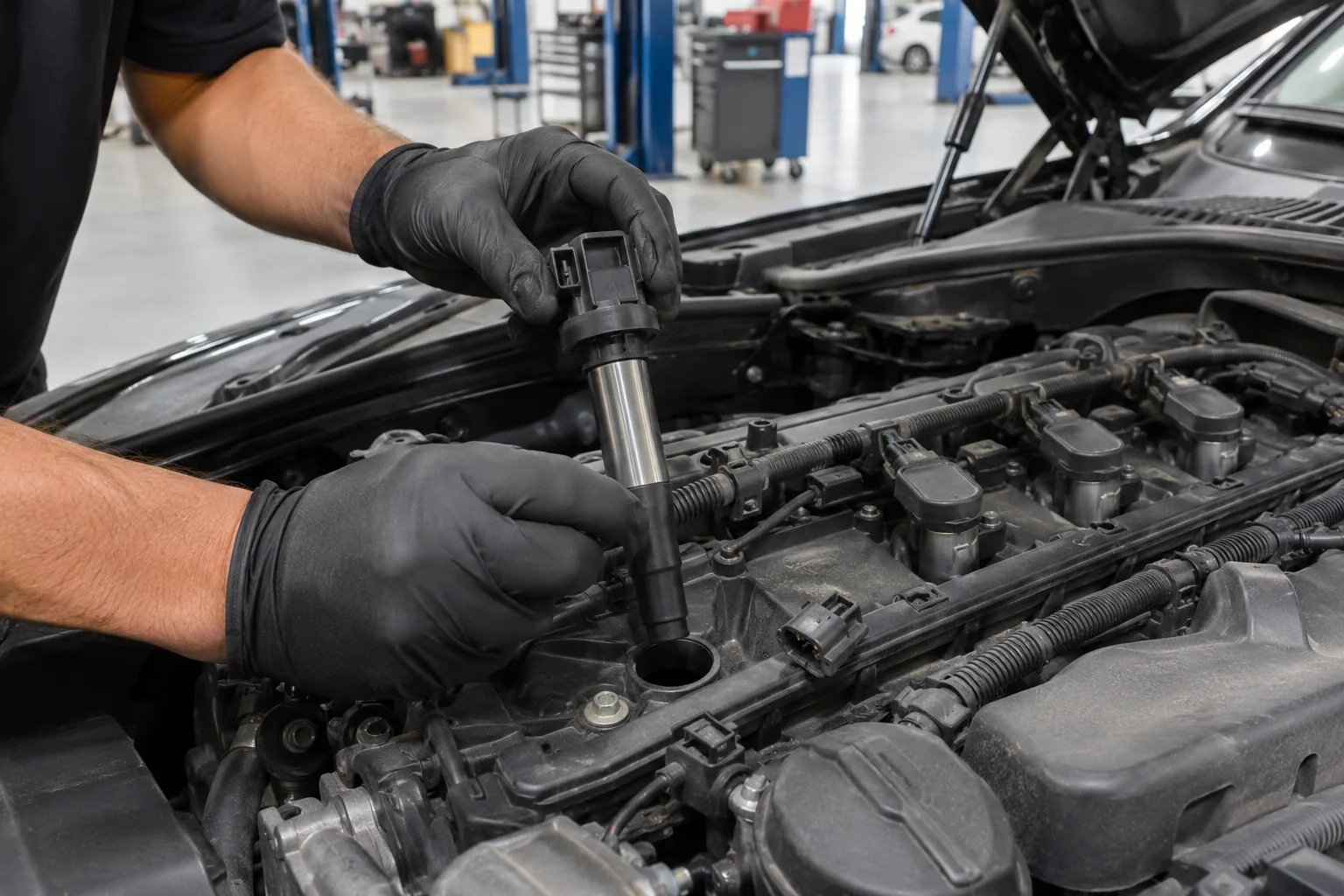
Where diagnosis supports an ignition fault, ignition coil replacement may be the appropriate repair. Diesel engines do not use petrol-style ignition coils and spark plugs to ignite their fuel, so the same parts explanation must not be transferred to them.
Fuel supply and injector control
Fuel delivery and injector-control problems can affect combustion and available power. The workshop may compare the pressure requested by the engine computer with the recorded pressure, then check the relevant supply and control circuits. A pressure shortfall and an electrical activation fault call for different checks.
BMW's N63 quantity-control-valve bulletin gives a specific example in which an electrical connection at a relay caused the warning. It applies to the listed vehicles and faults, not every BMW. If testing instead supports injector work, discuss the scope on the fuel injector repair page.
Intake air and boost control
On a turbocharged engine, a leaking connection, damaged charge pipe or boost-control problem can prevent the system from delivering the requested air pressure. Inspection and suitable leak testing can help distinguish an air leak from a control problem. That distinction matters because a pipe or connection repair has a different scope from turbocharger work.
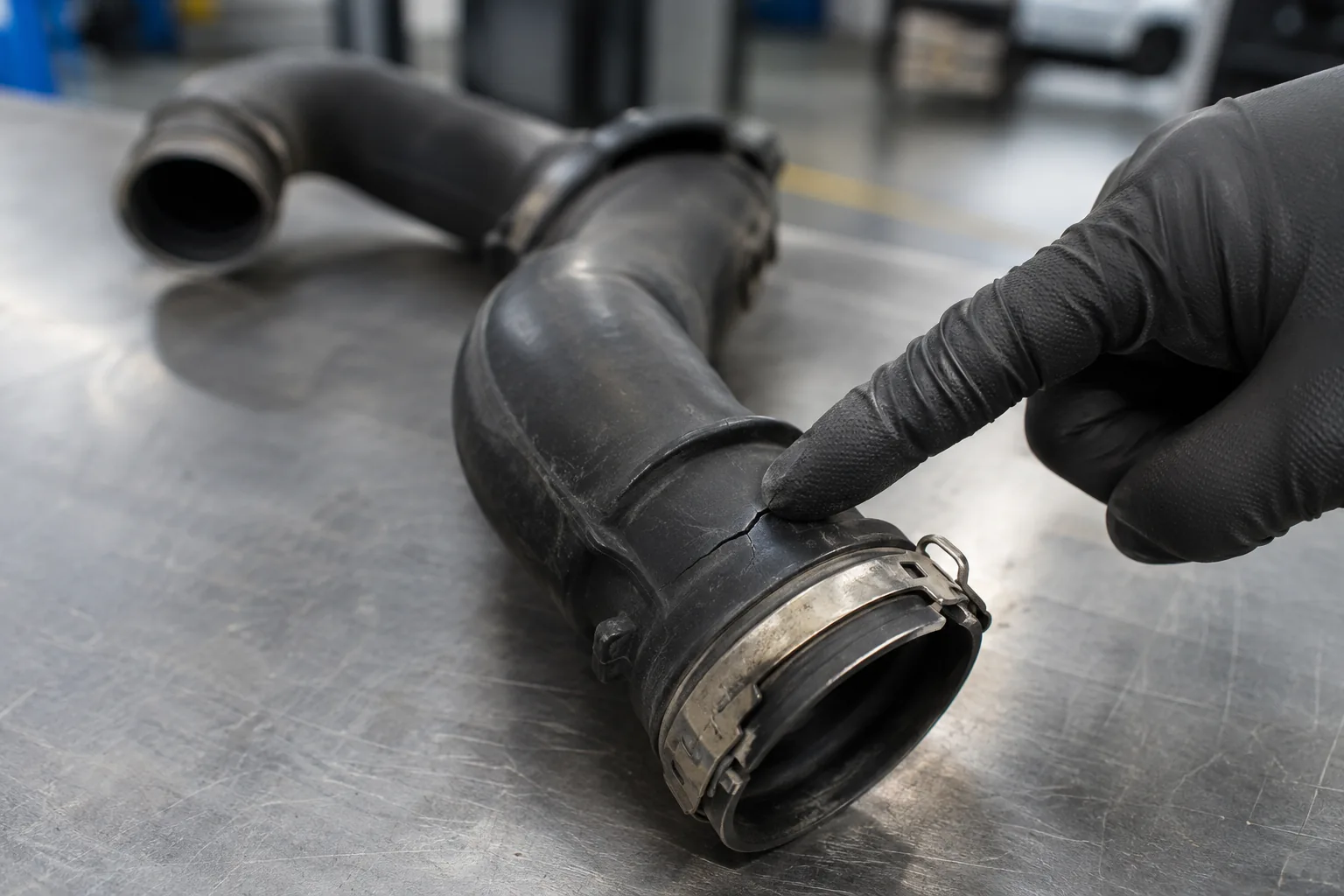
BMW's intermittent power-loss bulletin covers specified N20, N26 and N55 applications produced up to November 2015. It includes charge-air leak checks alongside Valvetronic, tank-ventilation and software checks. The relevant fault combination and vehicle details determine which instructions apply.
Timing control and engine management
On engines fitted with these systems, VANOS adjusts camshaft timing and Valvetronic varies intake-valve lift. They perform different jobs, even though both affect how the engine breathes. A fault in either system needs checks matched to the fitted engine, stored information and symptoms.
The technician may need to distinguish a control or electrical problem from a mechanical one. Ask which system was tested and what was found before approving a timing-chain or valve-control assembly replacement.
Transmission and electrical supply
Transmission faults are a separate possible branch, particularly when poor shifts, missing gears or failure to engage drive accompanies the warning. Relevant gearbox fault data and physical findings should guide the work. See the transmission malfunction guide for that specific warning context.
Electrical supply, wiring or communication problems also need proper assessment when the evidence points there. Do not dismiss multiple faults as harmless low voltage or replace a battery solely because this message appeared. Equally, a mechanical driveline noise needs its own inspection; it is not proof of the cause of a control-system warning.
What a useful diagnostic process should establish
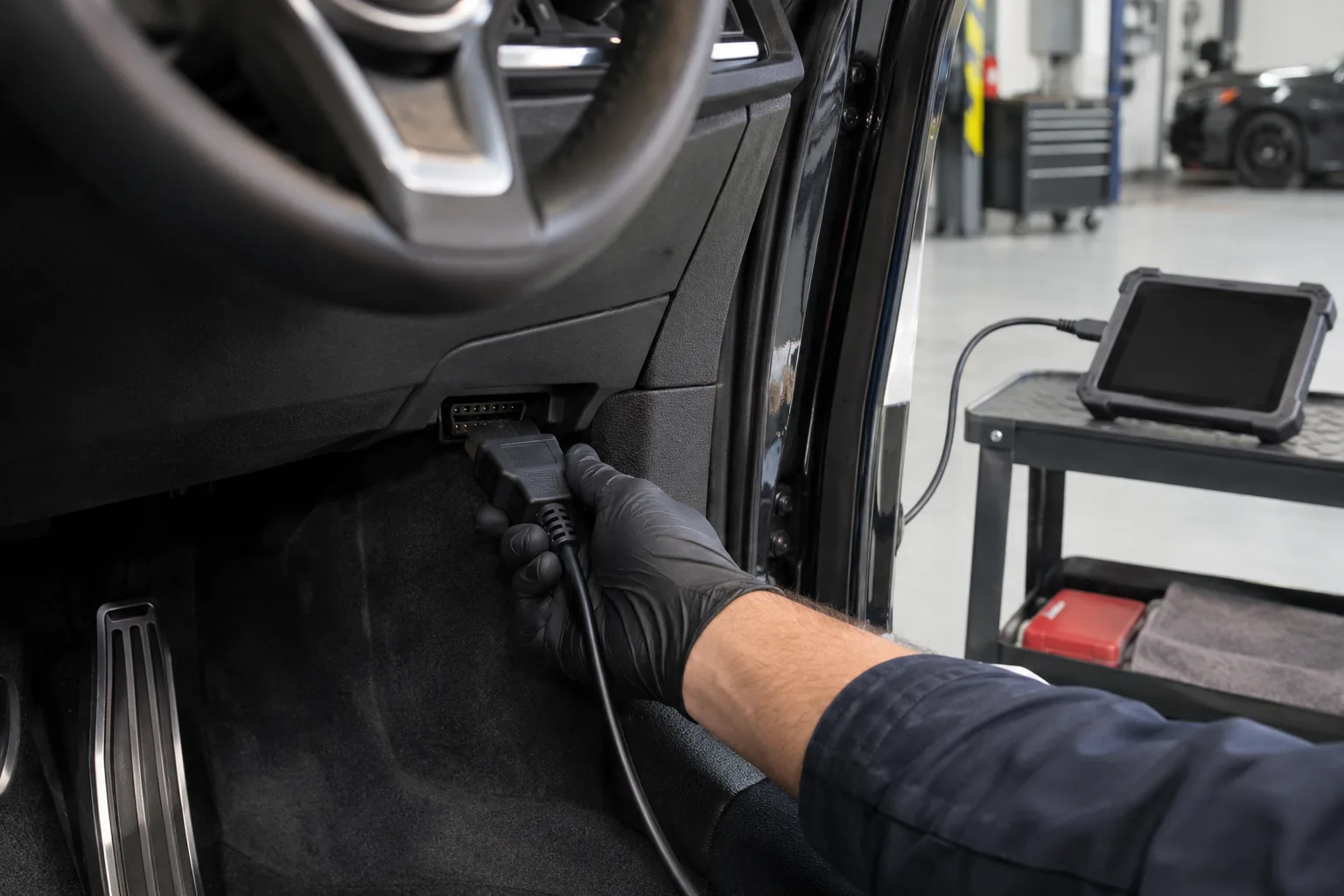
A generic on-board diagnostics (OBD) reader may provide useful engine codes while missing information held by other BMW control units. BMW's ISTA diagnostic software supports vehicle tests and guided test plans, including those described in the technical bulletins linked here. The useful result is an explanation connecting the complaint, fault records and test findings.
Ask for the exact codes, their descriptions and any available freeze-frame or environmental data. These records describe conditions captured when a fault was stored, such as engine speed or temperature where supported. They can help explain an intermittent event without asking you to reproduce unsafe symptoms.
- Preserve the original information
- Save the relevant faults, their status and available operating-condition data before clearing them. Note recent work and what the driver experienced.
- Read the relevant control systems
- Depending on the vehicle, this can include petrol engine management DME, diesel management DDE, transmission control EGS and the appropriate hybrid or electric drive systems.
- Distinguish the cause from its consequences
- One fault can lead to restricted output or related messages. A consequential fault is not automatically a second failed part.
- Test the suspected branch
- Use suitable electrical, running-quality, pressure, air-system or mechanical checks. Extra testing should have a clear scope before approval.
- Explain the repair and confirm the result
- Connect the proposed work to a finding, then verify the original complaint when safe and check for relevant remaining faults.
Chassis systems may also store information, but a DBC, AWD or DSC warning is not interchangeable with a drivetrain warning. If several appear together, retain all the messages. The DBC, AWD and DSC guide explains that separate warning group.
A road test is not always the first step or appropriate for an unsafe vehicle. If a fault only appears under certain conditions, the technician decides how to investigate it safely. You should not be asked to reproduce severe power loss or a violent misfire on public roads.
What the diagnostic explanation should tell you
Ask whether a stored fault is currently present, historical or a consequence of another event. Those distinctions help explain the testing plan; they are not a reason to ignore the original complaint. A report containing many codes needs interpretation rather than a matching list of replacement parts.
A useful explanation connects a specific finding with the proposed work. For an air-system repair, that could be the location of a confirmed leak and its relationship to the pressure fault. For an electrical repair, it could be a connector or circuit finding. If the cause is still uncertain, ask which further check would resolve it.
How fault evidence can change the repair
These documented BMW examples show why the full fault description and vehicle details matter. They apply to the vehicles and conditions in each bulletin; they are not universal code definitions or owner repair instructions.
| Documented example | What the diagnostic checks establish | Why the repair can differ |
|---|---|---|
| N63 electrical activation faults | In SI B12 37 15, codes including 11C302 concern fuel-control activation. BMW directs technicians to the applicable test plans and a quantity-control-valve relay connection. | The specified correction addresses the relay connection. A fuel-related fault can therefore lead to connection work instead of pump replacement. |
| Low charging pressure on specified F-series engines | SI B12 36 15 includes 120308 with other possible air-mass or Valvetronic faults on the listed N20, N26 and N55 applications. The process includes charge-air leak checks and guided testing. | The findings determine whether hardware work and programming, or the specified software correction, applies. The low-pressure code alone does not identify a failed turbo. |
| A warning that disappears after restarting | SI B12 10 16 documents a software plausibility issue on specified early N63T vehicles. Diagnosis and vehicle applicability still have to be checked. | For those applications, BMW specifies programming. The warning disappearing after an ignition cycle does not itself confirm a repair. |
Why restarting or clearing the warning is not a repair
A warning can disappear when the operating condition changes or after an ignition cycle. That does not prove the underlying problem is harmless, and a temporary return of normal power is not evidence that a part has recovered permanently.
For example, BMW's N63T software bulletin describes specified vehicles where an ignition cycle clears a drivetrain message caused by a software plausibility issue. It prescribes diagnosis and programming for those applications. This does not mean that restarting fixes every warning, or that every BMW needs a software update.
Keep any record of the original event and tell the workshop what changed after restarting. Avoid repeated resets or battery disconnections to suppress the message. Clearing fault information can remove useful context without addressing the cause.
If software work is proposed, ask why it applies to your exact vehicle and findings. Programming needs the correct procedure, equipment and power support. Do not install unverified coding files or treat a generic reset service as a substitute for a fault assessment.
How petrol diesel hybrid and electric checks differ
The badge alone does not identify the diagnostic route. A 320i, a 520d, an i8 and an i4 do not share the same propulsion layout, even when the wording looks similar. Model year, engine, production details and transmission matter more than a repeated model-name checklist.
- Petrol — ignition, fuel, air and engine-control checks may be relevant, guided by the specific engine and evidence.
- Diesel — use the correct combustion, fuel and air-system information. Petrol ignition-coil explanations do not apply.
- Plug-in hybrid — record whether the combustion engine was running, whether charging or drive readiness was affected, and the complete warning. Multiple propulsion systems require the appropriate expertise.
- Fully electric — there are no petrol ignition coils or combustion-engine boost faults to diagnose. Electric drive, battery management and related control systems require their own assessment.
BMW's G26 i4 bulletin on an SME sensor fault concerns the Storage Management Electronics (SME), which manages the high-voltage battery. It documents a drivetrain message and, in some cases, no drive readiness in a specific software-related scenario. High-voltage diagnosis and repair require personnel with the appropriate training.
Give the workshop your vehicle details so it can check applicability. Historic bulletin codes and software versions should not be copied into a repair instruction for another vehicle simply because the dashboard message matches.
What determines the repair cost
There is no single price for fixing a drivetrain warning. A connector repair, a confirmed ignition fault, an air leak, software work and a transmission repair are different jobs. The cost should follow the finding rather than the wording on the display.
Before approving work, ask for the initial assessment charge and what it includes. A scan and initial inspection may identify the cause or show that more testing is needed. Pressure tests, extended electrical investigation, dismantling or specialist work may have separate charges that should be agreed first.
- Which part or system has been confirmed, and what evidence supports the repair?
- Does the written total include parts, labour, fluids, programming and testing?
- What is excluded, including recovery, unrelated faults or additional diagnostic time?
- If replacement is proposed, what part specification or condition is being quoted, and why is repair unsuitable?
For indicative repair budgets and the assessment scope, see our BMW drivetrain malfunction repair costs and booking information. Check which job and vehicle each budget covers, then request a written quotation for your findings. An initial scan charge and the cost of tracing an intermittent fault may cover different amounts of work.
Check recalls and warranty before approving paid work
Use BMW Group's official recall checker with your 17-character vehicle identification number (VIN). If a recall or technical update is listed, ask an authorised BMW partner to confirm the applicable work and arrangements. Check any remaining warranty coverage separately before approving related paid repairs.
The historical BMW bulletins cited in this guide explain particular diagnostic situations. A bulletin published for the US market does not establish that your vehicle has a UAE recall or qualifies for free repair. Applicability depends on the vehicle and the relevant programme.
After the assessment and repair
Ask the workshop to explain which finding was addressed and how the result was checked. The warning being absent at handover is useful, but an intermittent complaint may require a planned follow-up. Keep the fault report and invoice so any recurrence can be compared with the original event.
If the symptom cannot be reproduced, ask for a record of what was checked, any unresolved safety concern and the conditions that require stopping. Keep a copy of the original scan and the report after repair. Comparing them can help the workshop investigate a recurrence without losing the earlier history.
For future care, follow the maintenance requirements for the actual powertrain and fitted components. Keep records of engine servicing, relevant fluid work and recent repairs. Use parts and fluids with the required specification; no single maintenance item prevents every electronic, mechanical or software fault.
In Dubai, noting a hot restart, a long period in traffic, AC operation or a warning after charging helps describe the circumstances. Do not assume heat or fuel quality is the cause without evidence. If the warning returns, report the new conditions and associated symptoms rather than repeatedly clearing it.
Common BMW drivetrain warning questions
Does drivetrain malfunction mean the gearbox has failed
No. The warning can accompany different propulsion-related faults. The exact vehicle, symptoms, stored information and tests determine whether the gearbox is involved.
Can I drive with a drivetrain malfunction warning
Follow the exact Check Control and handbook instructions. Stop safely and arrange assistance if power or control is unsafe, the car shakes severely or a serious accompanying warning appears. A message alone cannot establish that a journey is safe.
Is the problem fixed if the warning goes away after restarting
No. A change after restarting is useful history, but does not prove a repair. Preserve the event details and arrange assessment rather than repeatedly resetting the vehicle.
Can a battery or wiring problem cause related warnings
Electrical supply and communication faults can be relevant, but they need evidence. Do not replace the battery or dismiss other faults as low voltage solely because several warnings appeared together.
Why does a basic scanner show no useful code
A generic reader may not access every relevant BMW control unit or manufacturer-specific detail. The scan scope, fault history and actual symptoms need to be considered together.
Does every BMW need the same repair for this message
No. Petrol, diesel, hybrid and electric systems differ. Even within one model range, production details and the fitted equipment affect applicability.
What should I ask before approving a repair
Ask for the confirmed finding, proposed work, assessment charge, included parts and labour and checks after the repair. Clarify any further testing or exclusions before approval.
Independent BMW workshop in Al Quoz
Discuss your BMW drivetrain warning
Tell us the model, year, complete message and symptoms already noticed. Ask about the assessment scope and charge before approving work. If the car is unsafe to drive, discuss suitable recovery first.
Independent BMW specialist. Not affiliated with BMW AG.