
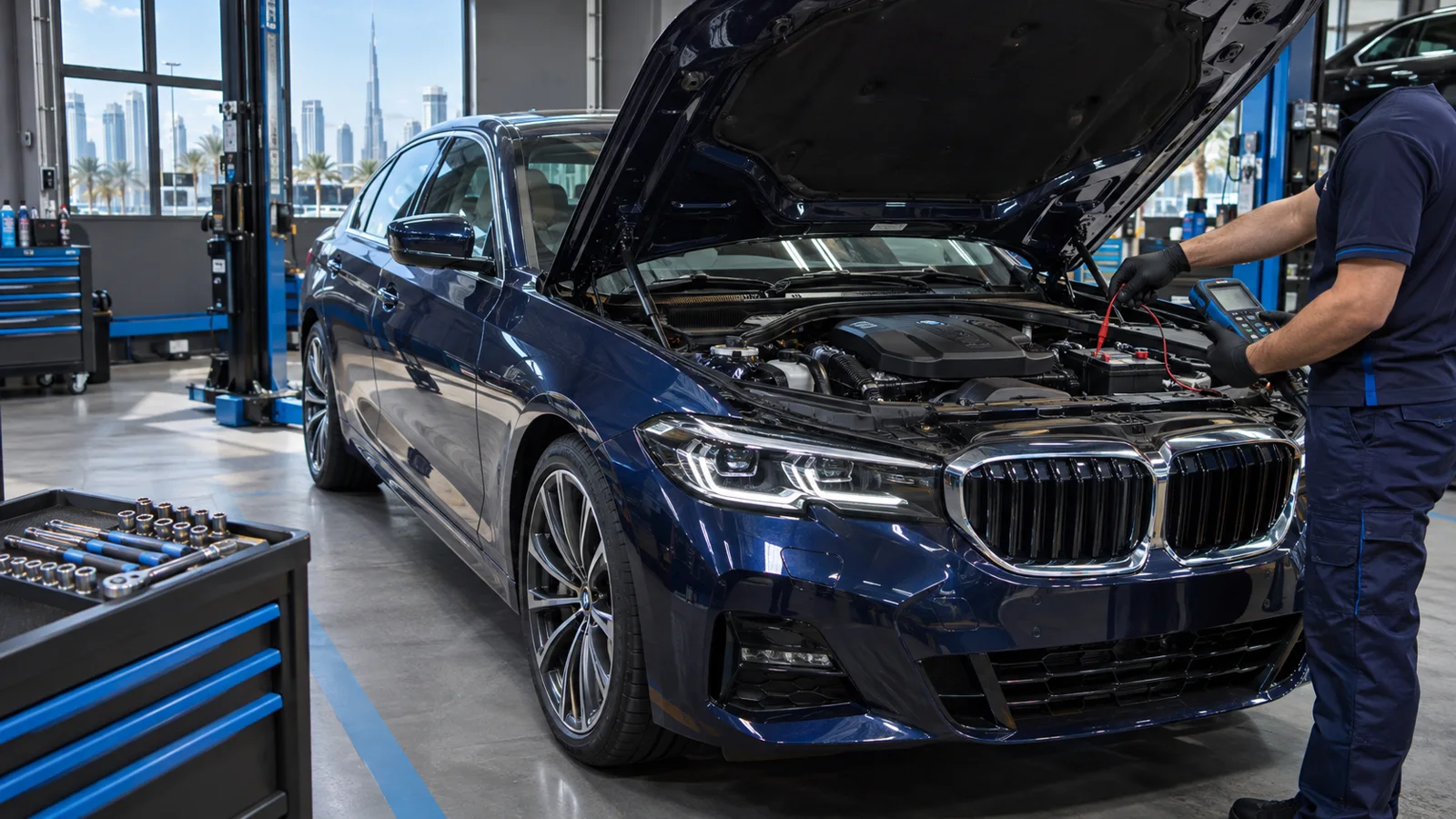
What the clicking pattern tells you
Cranking is the repeated turning sound made as the starter rotates the engine before it runs on its own. A click without that turning sound is a different complaint from an engine that turns normally but does not fire. Describe the distinction when you call for help; it changes which checks are useful.
| What happens | What it can suggest | What it cannot prove | Useful next check |
|---|---|---|---|
| Rapid repeated clicking, with little or no engine rotation | Unstable electrical supply as the starting system tries to operate | That the battery alone needs replacing | Battery condition and connections under starting load |
| One distinct click and no crank | A starter engagement problem, inadequate supply or a mechanical restriction | That the starter motor has failed | Supply, earth path and starter command before judging the starter |
| Slow, laboured engine rotation | Battery, cable, starter or mechanical resistance | Whether the resistance is electrical or mechanical | Battery performance, voltage drop and starter operation |
| Normal cranking but no start | A different fault path involving engine operation or start authorisation | That replacing the starter will make the engine fire | Vehicle-specific no-start diagnosis |
| Ticking or rattling after the engine starts | A running-engine noise rather than a no-crank click | A no-crank electrical fault | Identify the noise separately before continuing to drive |
A sound described as clicking may also come from a relay elsewhere in the car. Note whether it seems to come from under the bonnet or inside the cabin, without approaching moving parts. Neither the rhythm nor its apparent location proves that a particular component needs replacement.
Safe checks while your BMW is parked
Start with observations that do not require touching the starting circuit. Keep the parking brake applied and use the normal starting procedure in the handbook. If you are beside traffic, prioritise a safe waiting position and recovery assistance rather than opening the bonnet to investigate.
- Record one normal attempt
Note the click pattern, whether the engine turns and the exact message on the display. A short recording from the driver's position can help the workshop distinguish a click from a crank or a running-engine rattle. Avoid repeated attempts just to improve the recording.
- Observe the instruments
Tell the technician whether the display dims, resets or stays lit during the attempt. Working lights and a working radio do not establish that the battery can supply the much larger demand involved in starting the engine.
- Read start-related messages
Record a key-recognition, selector or brake-related instruction exactly as shown. Follow the handbook rather than bypassing an interlock. If there is no starter operation, the technician may need to check whether the vehicle is authorising a start at all.
- Describe what changed recently
Include battery replacement, an extended parked period, recent electrical work, an accessory installation or an earlier charging warning. These details are evidence to investigate, not proof that the most recent job caused the problem.
Smoke, a burning smell, a visibly swollen or leaking battery, or hot damaged wiring needs professional assessment. Do not bridge starter terminals, strike the starter, disconnect the battery as a reset or reach beneath an unsupported vehicle.
In a Dubai car park, provide the exact location, access height and whether the car is in an underground bay. Tell the recovery operator if the steering or parking lock cannot be released. The operator can then plan suitable equipment without relying on the engine starting.
Why rapid clicking can involve the battery or its connections
The battery has to deliver current through the supply cables and back through the earth path. If voltage falls too far during a start request, components can engage and release instead of completing the start. A discharged or deteriorated battery is one possibility; a poor connection can produce a similar result.
State of charge and battery condition are different questions. A serviceable battery may be discharged after lights or other loads were left operating. A battery can also have enough stored charge to light the dashboard while being unable to deliver starting current reliably. Testing should establish which situation applies.
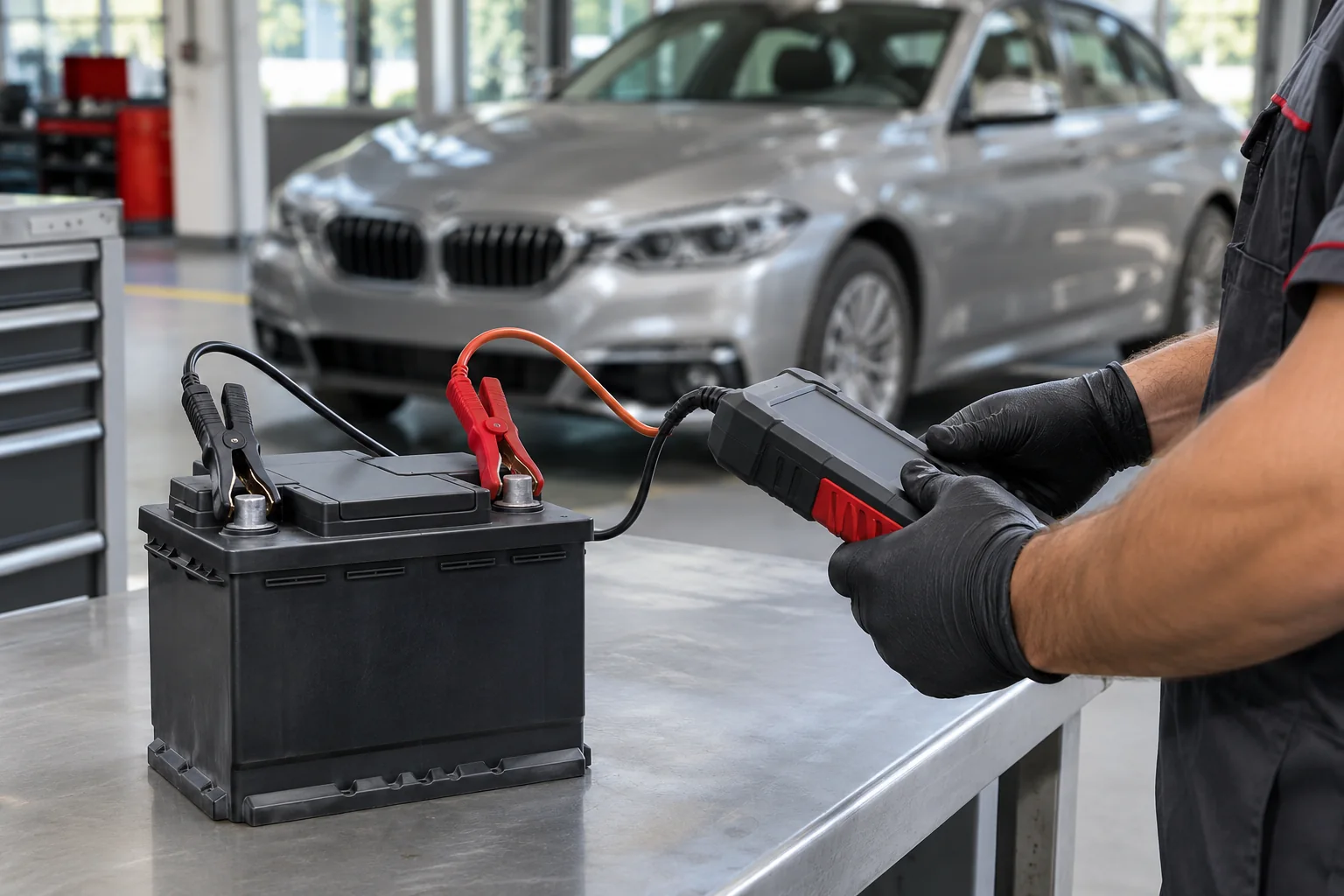
Corrosion, an insecure connection or resistance in the engine earth strap can limit current even when the battery itself is serviceable. Some important connections are concealed, and a tidy-looking engine bay does not rule out a cable fault. Do not dismantle battery connections solely because the engine clicks.
A single resting-voltage reading is not a complete diagnosis. The technician should interpret the battery test, its charge state and its behaviour during the complaint together. Test equipment settings must match the installed battery. Where a battery is charged before retesting, the assessment should account for that preparation.
If replacement is supported by the results, the correct type, capacity and vehicle setup matter. Our BMW battery replacement service covers the fitted battery and any applicable registration or configuration requirements. A new battery should not be used to conceal an unresolved drain or charging fault.
What one click can mean before replacing the starter
A distinct click can occur when a solenoid tries to engage, but that does not establish that the starter motor has failed. The motor may not be receiving usable power, its return path may have excessive resistance, or a mechanical problem may prevent normal movement. The actual source of the click still needs to be identified.
Bright dashboard lights do not clear the battery or its cables. The relevant question is what happens to supply and current flow during the start request. An intermittent connection can also explain why a car starts on one occasion and clicks on another.
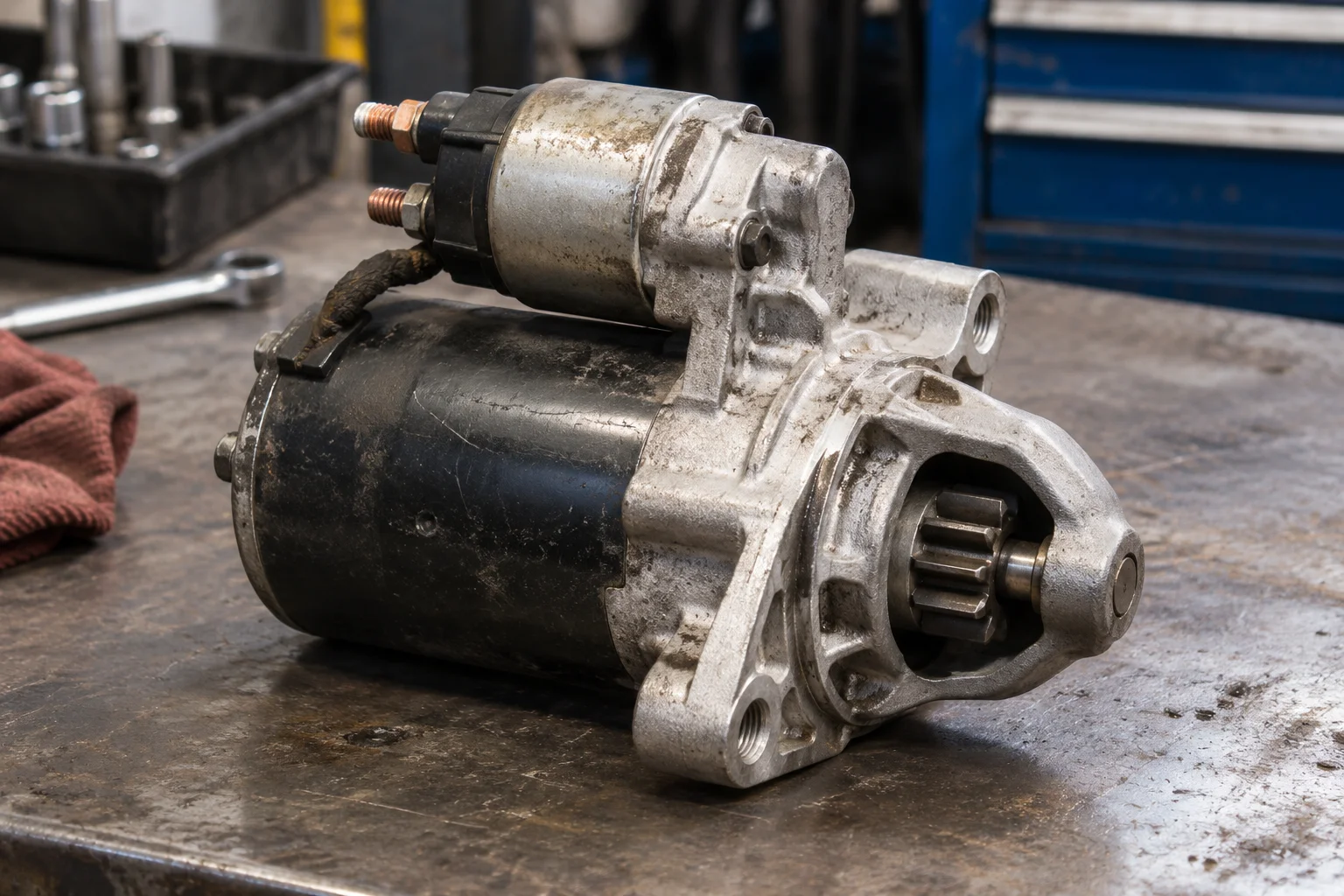
When the supply, earth and control command have been checked, the workshop can assess the starter assembly and engagement mechanism. Access and replacement scope vary with the engine and chassis. A separate solenoid replacement is not automatically available or appropriate for every fitted starter.
If the sound changes to a free-spinning whirr or a harsh grind, report that change rather than describing every attempt as clicking. The engagement between the starter pinion and engine ring gear may need inspection. A battery replacement alone would not explain damaged engagement components. The technician should distinguish a motor that is not turning from one that turns without rotating the engine correctly. Ask whether any proposed removal is part of the agreed diagnostic work or a separately quoted repair. Do not continue trying to start the car to force engagement or put yourself close to the mechanism to locate the sound.
For a confirmed starter fault, our starter motor replacement information explains the service destination. A recommendation should identify the finding that supports replacement, rather than relying on the sound or the vehicle's age alone.
What a jump start can and cannot establish
If the car starts with suitable external assistance, the additional supply has changed the starting conditions. That is useful evidence, but it does not automatically prove the installed battery needs replacing. Battery discharge, condition and connection problems still need to be distinguished.
If assistance does not work, do not immediately conclude that the starter has failed. The equipment, connection points, battery condition and vehicle instructions all affect the attempt. Stop and seek assistance when the correct procedure or equipment is uncertain.
Use the handbook for the exact vehicle and the booster manufacturer's instructions. Battery location is not necessarily the location of the designated assistance terminals. Do not apply conventional petrol-car starting advice to every plug-in hybrid, electric BMW or vehicle with an additional electrical system.
Use the BMW Driver's Guide for your vehicle identification number to find the applicable starting-assistance instructions. For an older vehicle not supported by the online guide, use its original handbook or obtain the correct instructions from a BMW Service Partner. Imported cars need the relevant model and market instructions. Do not jump-start a battery that appears damaged.
After a successful start, persistent electrical warnings, unstable operation or a burning smell call for assessment. Do not assume an arbitrary drive duration will restore a deeply discharged battery or resolve the reason it went flat.
What the workshop should establish before ordering parts
A useful diagnosis links the original complaint to a measured finding. Ask what was tested and under which conditions, especially when the fault disappears before the car reaches the workshop. An engine-only code scan or a list of low-voltage messages may not explain why the car failed to crank.
- Confirm the complaint and battery condition
- Identify whether the engine does not turn, turns slowly or cranks normally. Test the installed battery with appropriate equipment and record any need to charge and retest it.
- Check the supply and earth paths under load
- Inspect the relevant connections and measure voltage drop when the starting circuit is loaded. A resistance problem may only become clear during an attempted start.
- Verify the start command and starter response
- Check that the relevant control request reaches the fitted starting system. Interpret fault memory and live information using the vehicle's actual equipment and wiring.
- Investigate the remaining mechanical or charging concern
- Where the evidence calls for it, assess mechanical resistance, engagement components, charging performance or battery drain. These are different tests with different purposes.
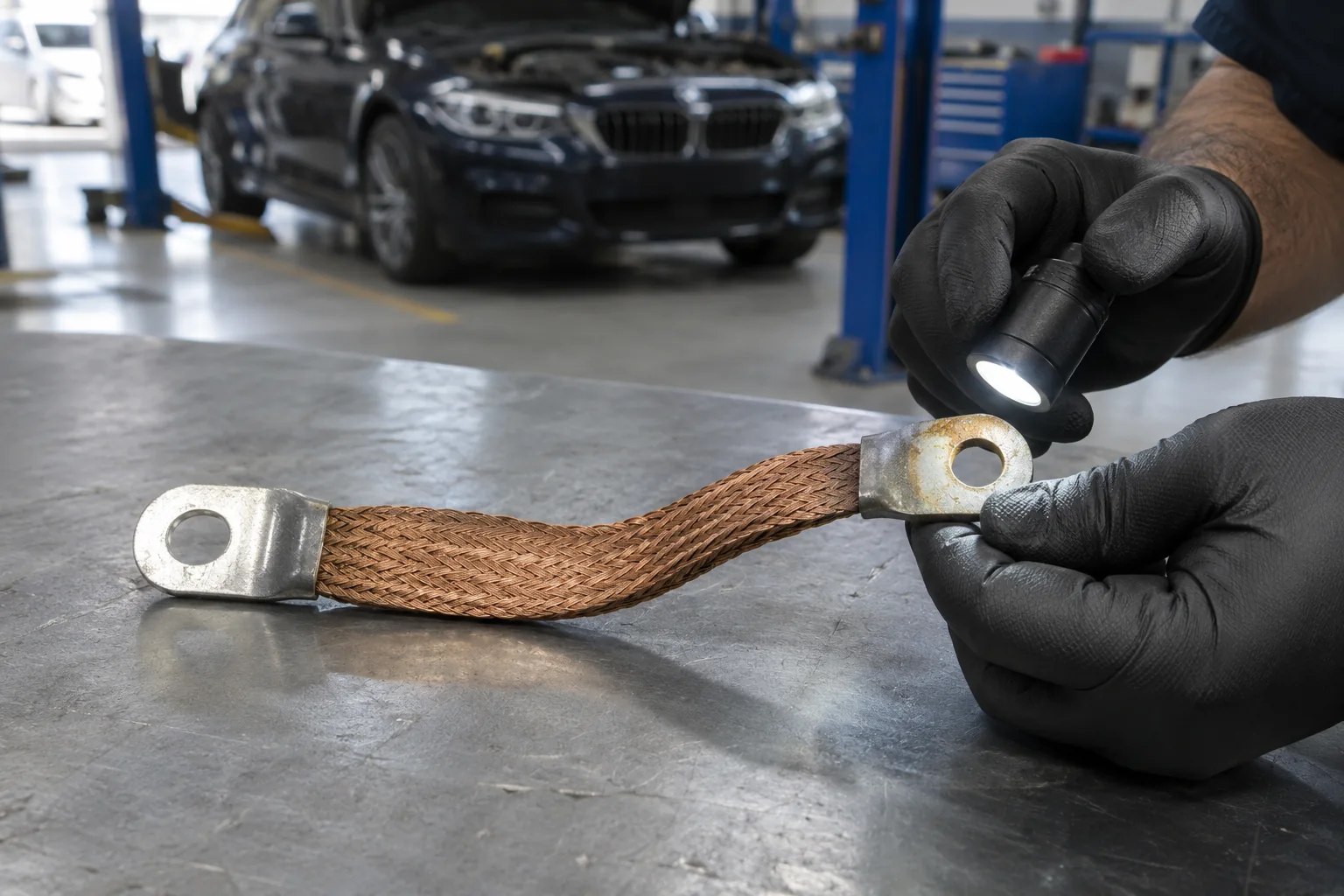
A voltage-drop test measures the voltage lost along part of the supply or earth path while current flows. A connection can look sound or pass a simple continuity check yet still perform poorly under starting load. The technician should identify the affected section and compare the result with the vehicle specification; this is workshop testing, not an instruction to probe a live starter yourself.
Bosch's starting-system diagnostic guidance describes checking battery condition, connections and earth paths, followed by supply and voltage-drop tests. The technician should use the applicable BMW test procedure and specifications rather than a universal voltage threshold copied from another vehicle.
For an intermittent fault, give the workshop its pattern: first start after overnight parking, after a short stop or after several days unused. The same conditions may need to be reproduced before a reliable repair recommendation is possible. A successful warm restart alone does not settle an overnight complaint.
Keep charging faults and running noises in their proper place
An alternator fault can leave a battery insufficiently charged, leading to a later starting complaint. However, a click is not itself an alternator test. Once the engine can run, charging performance needs to be assessed in the relevant operating conditions before an alternator is condemned.
If the car had a charging warning before the no-start, include that history. The charging-malfunction guide covers that related topic. If the battery repeatedly loses charge while parked, the workshop may need a separate investigation of vehicle sleep behaviour and current draw.
A rattle after the engine fires is a separate observation. Do not treat timing-chain replacement or an oil change as a routine cure for a no-crank electrical click. Lubrication and mechanical condition can matter to engine operation, but they need their own evidence and diagnosis.
Use the BMW engine-noise guide for sounds while the engine is running. If a severe new mechanical noise appears, stop safely and obtain advice rather than repeatedly starting the car to demonstrate it.
Match the repair and quote to the confirmed fault
A discharged but serviceable battery may need charging and investigation of the discharge. A failed battery needs the correct replacement and applicable setup. A damaged connection needs an appropriate connection or cable repair. A proven starter fault requires a suitable assembly or supported repair option. These findings should not all lead to the same invoice.
There is no single repair price for a clicking BMW. Ask for the diagnostic charge first, then a written quote that identifies the tested fault, proposed part and labour. Model, engine access, battery specification, cable location and the need to reproduce an intermittent failure can change the scope.
- Parts — Confirm the manufacturer, part number and whether the part is new or remanufactured where applicable.
- Labour and setup — Check removal and installation work, any battery registration or configuration, and the agreed verification.
- Other charges — Clarify recovery, additional diagnostic time and any exclusions.
- Warranty — Ask for the applicable parts and labour terms in writing without assuming a universal duration.
For general enquiry and assessment scope, use the BMW won't-start diagnostic service. This guide explains the clicking symptom; that service page covers arranging professional help.
Confirm the repair and reduce repeat starting problems
Agree the handover checks before approving work. The workshop should verify consistent cranking under the reported conditions and address any charging, connection or battery concern found during diagnosis. Clearing fault codes alone does not demonstrate a completed repair.
Retain the battery specification, fitting date and any setup record. For a cable or starter replacement, ask which test identified the fault and how the result changed after repair. If an overnight or hot-only complaint could not be reproduced, the report should explain what remains uncertain.
For longer parked periods, seek advice about a compatible maintenance charger and its correct connection points. Report repeated low-charge warnings and accessories that remain powered after locking. Frequent jump starts are a reason to investigate, rather than a substitute for maintenance.
If the complaint returns, record whether the sound and conditions match the original event and contact the workshop with the previous findings. This lets the next assessment build on evidence instead of automatically replacing another component.
BMW clicking and no-start questions
Can the battery be weak when the lights still work
Yes. Lights and electronics can operate even when the battery or a connection cannot support the starting load. Test the battery and relevant connections during the complaint instead of judging them from dashboard brightness alone.
Does one click mean I need a new starter
No. A single click warrants checks of supply, earth, the control request and starter operation. The source of the click also matters. Replace the starter only when the findings support that decision.
Why does my BMW click again after a new battery
The battery specification, state of charge, installation, connections and any required setup need checking. An unresolved cable, starter, charging or drain fault may still be present. Tell the workshop exactly when the replacement was fitted and how the symptom changed.
Should I keep pressing the start button
Repeated attempts can further discharge the battery and put extra demand on starting components. Follow the handbook's starting instructions and stop if the engine continues to click without cranking. Seek assistance instead of repeatedly retrying.
Can a key-fob battery cause the same complaint
A key-recognition problem can prevent an authorised start, but a click does not identify the key-fob battery as the cause. Record any key-related message and follow the vehicle's documented recognition procedure. The workshop can then separate authorisation from power-supply faults.
Does this advice apply to electric and hybrid BMWs
The electrical architecture and starting arrangements differ. Report the exact model and whether the vehicle reaches its ready state. Do not assume a conventional starter motor, alternator or jump-start procedure applies to every electric or hybrid BMW.
Published by BMW Repair Dubai. General starting-circuit explanations are supported by the linked Bosch technical guidance; vehicle-specific instructions come from the relevant owner's handbook. A sound description cannot replace inspection and measurements on the affected car.
Independent BMW workshop in Al Quoz
Get the clicking start fault assessed
Share your model, year, exact warning and whether the engine turns. Mention any recent battery work or jump start. Our workshop at 39 Al Quoz 4, Dubai can discuss the assessment scope and charge; if the car is stranded, describe the access conditions when asking about recovery.
Independent BMW specialist. Not affiliated with BMW AG.