
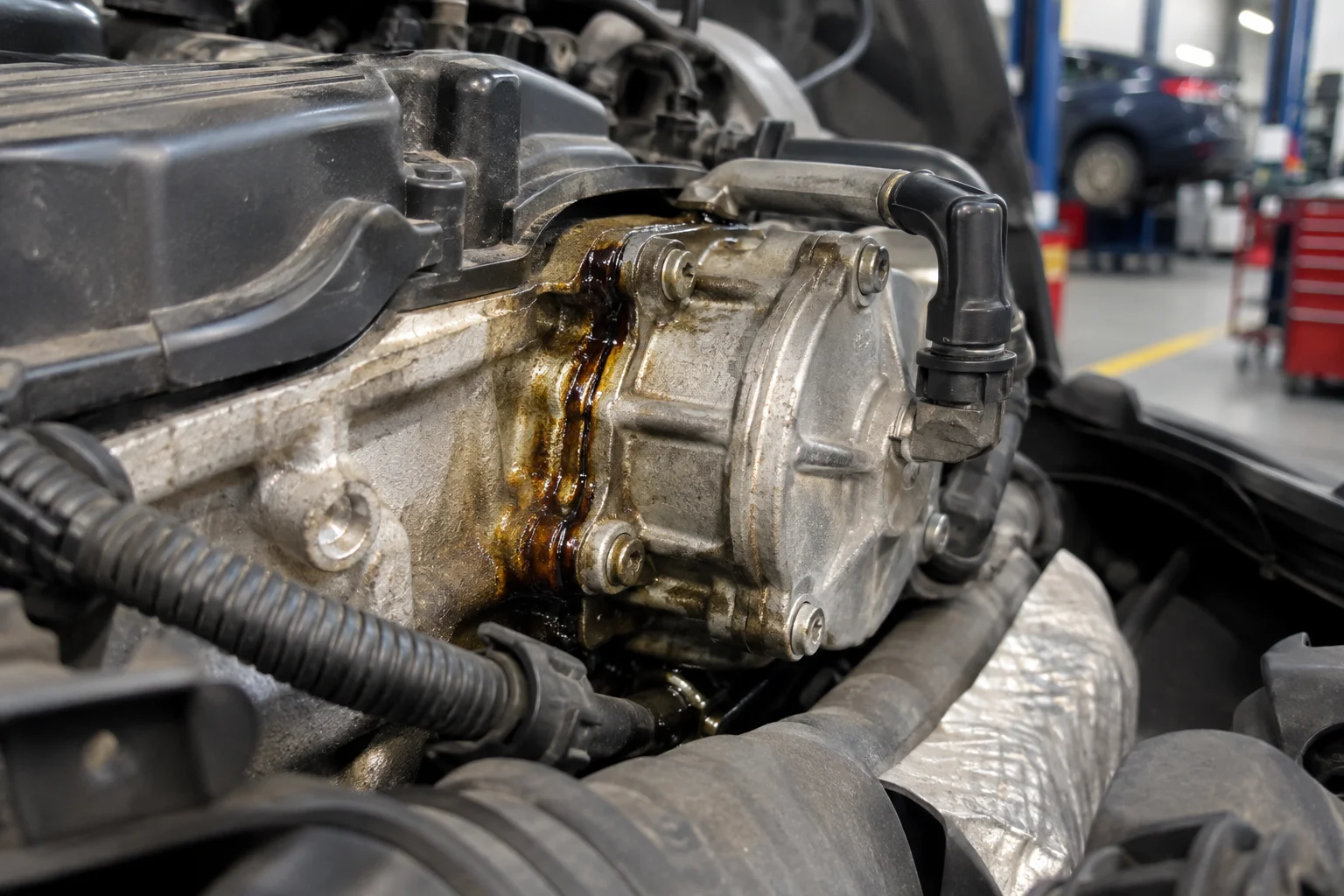
External oil leak
Seal repair assessmentDistinguish a mounting seal from a cover seal. Repair depends on pump condition and a suitable seal kit.
Oil at the back of the engine or a hard brake pedal
An oil leak at a mechanical vacuum pump and a loss of brake-assistance vacuum need different checks. We identify the fitted system, trace the leak and explain whether seals, a hose, a valve or the pump needs attention. Intake air leaks and lean-running faults are assessed separately.
Know what you are approving
The fitted repair price depends on the confirmed fault, VIN, access and selected parts. A part-only price cannot represent the complete job. Send the model, year and symptoms for an initial discussion; the repair quotation follows diagnosis.
Distinguish a mounting seal from a cover seal. Repair depends on pump condition and a suitable seal kit.
Isolate hoses, connectors and non-return valves before replacing the pump.
Confirm output at the pump and check the mechanical drive and lubrication, or electrical supply where fitted.
A leaking or contaminated booster needs its own diagnosis and repair scope.
This is the published starting price for a fault-code scan, not the full vacuum or brake diagnosis. Confirm additional test or dismantling charges and whether any diagnostic fee is credited before authorising them.
Ask for parts and labour, consumables, any transport charge and exclusions in writing. Keep unrelated intake leaks and any booster repair separate. Extra work needs approval.
Confirm parts availability, workshop time and the expected handover date after inspection. Ask for the applicable parts and labour warranty duration, mileage limit, exclusions and claim process on the estimate.
Start with the right question
Owners use the same words for two different faults. One is oil escaping from the outside of the pump. The other is the pump, or something it feeds, failing to hold vacuum. They need different repairs, so we separate them first.
On BMWs with an oil-lubricated mechanical vacuum pump, the pump is driven by the engine. The seal or gasket where it meets the engine hardens with heat and age, and oil seeps out.
Air gets into the vacuum side through a worn pump, a cracked hose, a failed check valve or a leaking brake booster, so there is less vacuum to work with.
Some cars have both at once. A pump that leaks oil from its seal can also be worn inside, and a pump that has been starved of clean oil can lose vacuum. That is why we test vacuum output even on cars that came in only for an oil leak, and check the oil level and condition on cars that came in for a hard pedal.
What you see, hear and feel
Most owners notice one of these first. Grouping them tells us where to look before any parts come off.
If the pedal becomes unexpectedly hard with the engine running or braking assistance changes while driving, stop safely and arrange recovery. Do not drive to the workshop to test it. A firm pedal after repeated presses with the engine switched off can be normal and is a different situation.
Why your BMW has a vacuum pump at all
Older petrol engines made plenty of vacuum in the intake manifold for the brake booster. Many BMW engines need a separate vacuum source. Mechanical pumps, electric auxiliary pumps and other brake-assistance arrangements vary by vehicle; identify the installed system before applying a test.
For oil-lubricated mechanical pumps, inspect the oil feed, drive and contamination before fitting another unit. An external mounting seal or cover seal may be serviceable if an approved repair route exists and the pump is sound. Low vacuum at the booster does not prove pump failure: isolate the supply line, check valve and booster and measure pump output first. Our BMW oil change page covers the oil grades and intervals that keep it healthy.
Find the cause of reduced assistance
A hard pedal does not identify the failed part
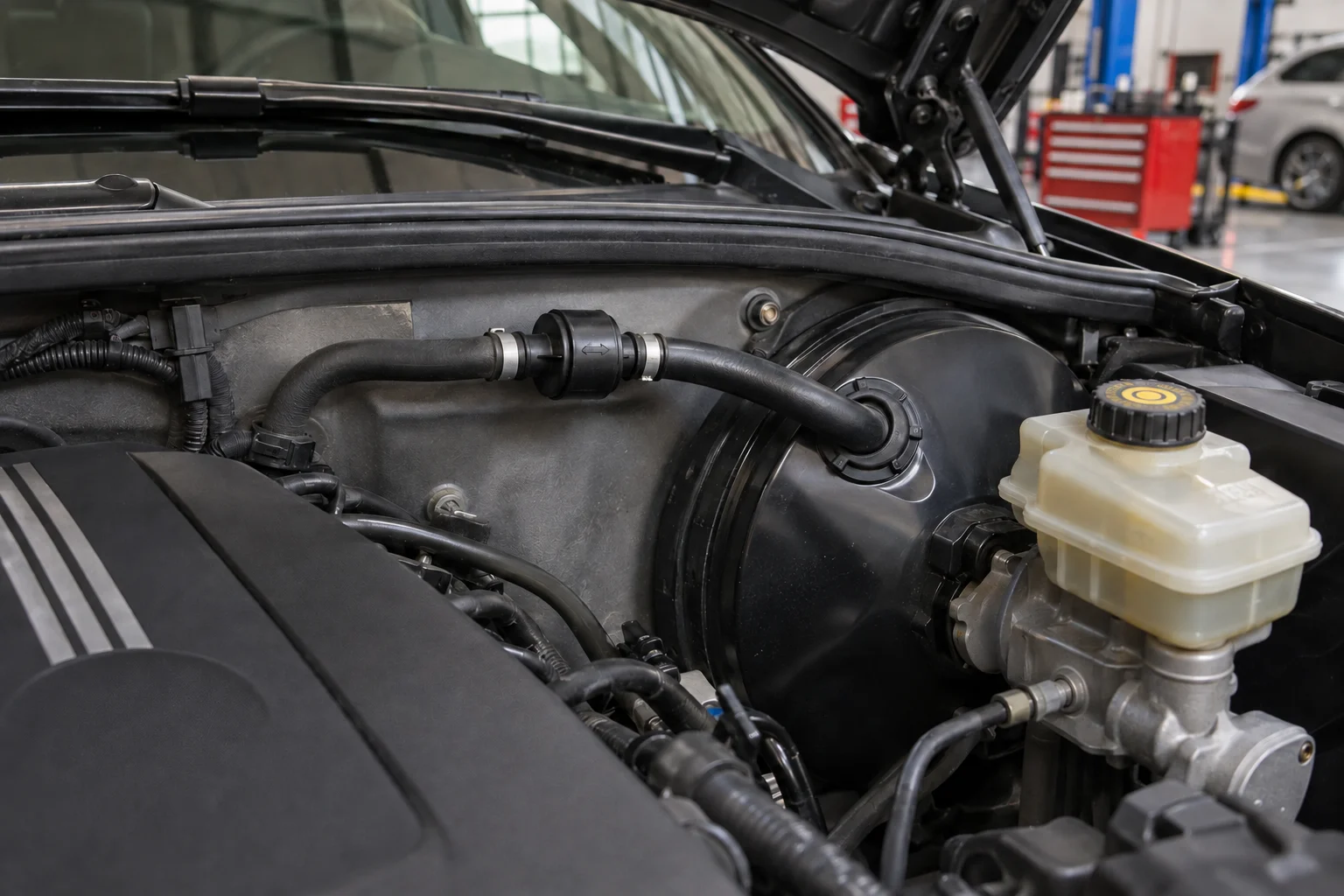
On vacuum-assisted systems, the pump, supply hose, one-way valve or booster can reduce assistance. We compare the supply and retention readings before choosing a repair.
A technician follows the procedure for the fitted braking system. Pedal feel alone cannot identify the faulty component.
Measure how well the system holds vacuum, then isolate the circuit to locate the loss.
Compare pump output and pull-down time with the reading at the booster to separate pump faults from supply restrictions or leaks.
Check that air can leave the booster and cannot flow back through the valve.
An important separate check
On applicable mechanical-pump systems, oil can enter the vacuum line and damage the booster. This needs a different repair scope from an external seal leak. BMW documented this on certain older applications; campaign eligibility must be checked by VIN with the authorised dealer and is not assumed for UAE cars.
If the booster itself leaks, we explain and quote that work separately. See our BMW brake repair service.
Follow the vacuum
Vacuum travels from the pump through plastic lines and rubber joints to everything that uses it. Heat and age can harden hoses and damage joints even when pump output remains within specification.
Makes the vacuum. Leaks oil from its seal or loses output when worn.
Plastic pipe with rubber ends. The ends split where they flex.
Holds vacuum in the booster. A failed valve lets it bleed away.
Uses the vacuum. A torn diaphragm hisses near the pedal.
On some engines a reservoir and electric vacuum converters feed turbo and flap controls.
A cracked line can be hard to see because it only opens when the engine moves on its mounts or when the plastic is hot. That is why we use circuit-appropriate vacuum tests and manufacturer-permitted leak testing rather than a visual check alone. A new line is far cheaper than a pump, so finding a split hose before condemning the pump can save a large part of the bill.
Where a line has failed from heat, we look at the lines next to it. Any additional replacement should be based on visible deterioration or failed testing and quoted separately.
When the leak is on the intake side
Some vacuum leaks have nothing to do with the vacuum pump. On relevant petrol engines, unmetered air entering downstream of the air mass sensor can cause a lean mixture. The engine may idle rough, hesitate or store lean faults.
Common sources on BMW engines include a failed crankcase ventilation valve, a split intake boot, an intake manifold gasket, a leaking oil filler cap seal and a cracked valve cover with a built in vent. Our PCV valve replacement page explains the ventilation side in detail.
Lean codes alone do not prove a vacuum leak. A weak fuel pump, a dirty air mass sensor or a failing injector can set the same faults. We read live data and smoke test the intake before replacing anything, so you pay for the part that is actually letting air in.
Vacuum-operated controls where fitted
On BMW engines fitted with vacuum-operated boost controls, the engine computer controls the wastegate or the diesel turbo vanes through electric vacuum converters fed by the vacuum pump. Some cars also use vacuum to open exhaust flaps or intake flaps.
When vacuum is weak, these controls cannot move properly. The result can be underboost, overboost, reduced power mode or exhaust flaps that stay shut. A turbo that seems faulty can be a vacuum supply problem, which is why the fitted actuator type is identified before considering BMW turbo replacement.
Vacuum moves the wastegate to control boost on engines that use vacuum actuators.
Vacuum positions the vanes on many diesel turbos.
Some sports exhausts open and close their flaps with vacuum.
These valves meter vacuum to each actuator and can fail on their own.
How we find it
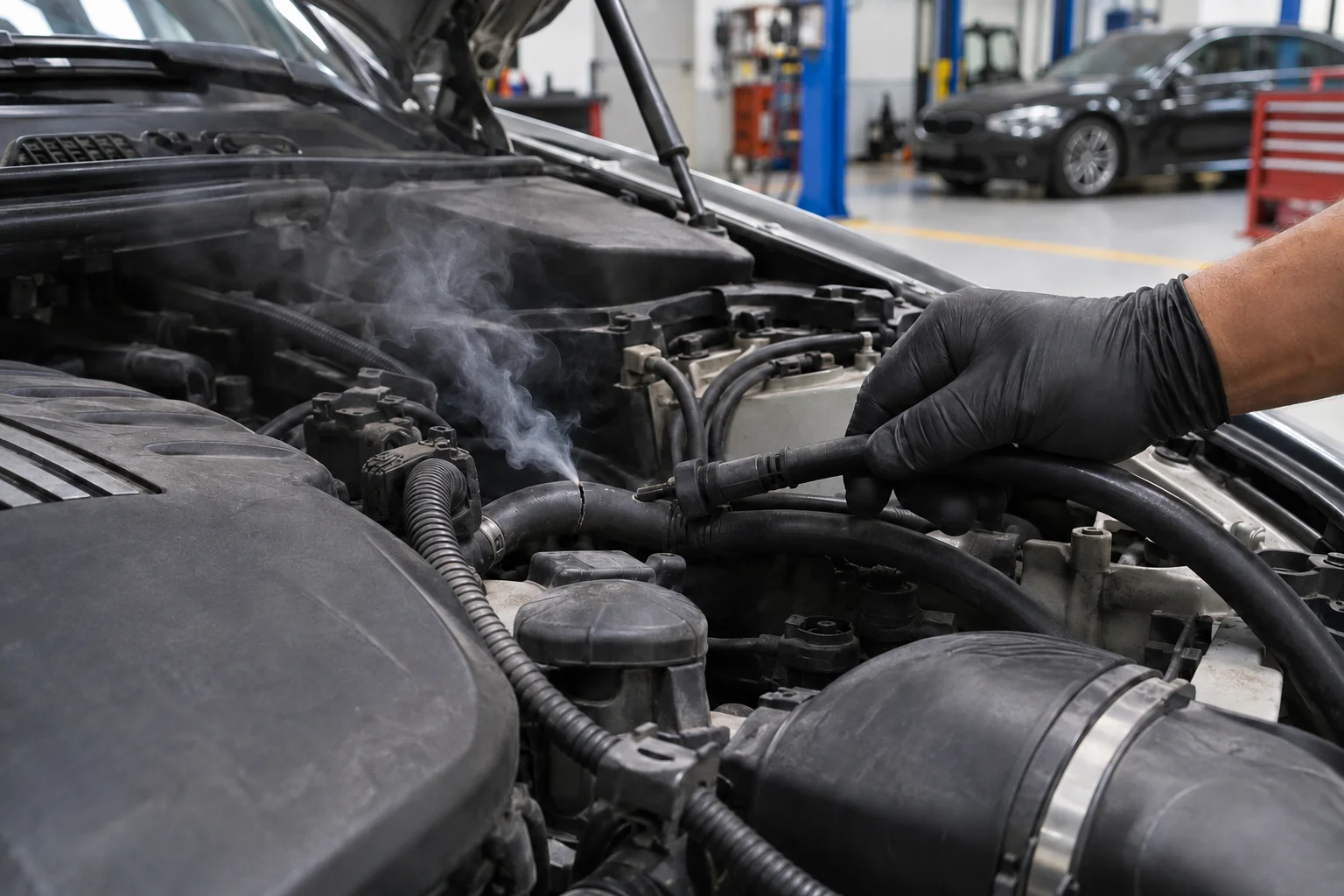
Pump output, pull-down time and retention tests answer different questions. Smoke testing is used only on suitable isolated circuits at the permitted pressure; it is not a blanket test for every booster or vacuum component. Our blog on diagnosing a BMW vacuum leak explains the methods in more detail.
We read stored faults, fuel trims and any boost or brake vacuum values the engine records.
A vacuum gauge shows how much vacuum the pump makes and how quickly.
Where permitted, regulated smoke testing locates leaks in an isolated intake or compatible circuit. Sensitive components are protected according to the vehicle procedure.
Pedal and hold tests confirm whether the braking side holds vacuum.
For oil leaks, the area is cleaned and checked again to confirm the pump seal is the source and not the valve cover or a turbo line above it.
How the job is done
Confirm safe pickup or recovery, availability and any transport charge before dispatch. Do not drive with reduced brake assistance.
Fault scan, vacuum gauge, smoke and brake checks.
Photos, the cause and the full cost sent on WhatsApp.
New seals, lines or pump fitted. Oil cleaned from the engine and gearbox housing.
Vacuum and brake assistance checked stationary first. Road testing follows only when safe; final leak and fault checks confirm the repair.
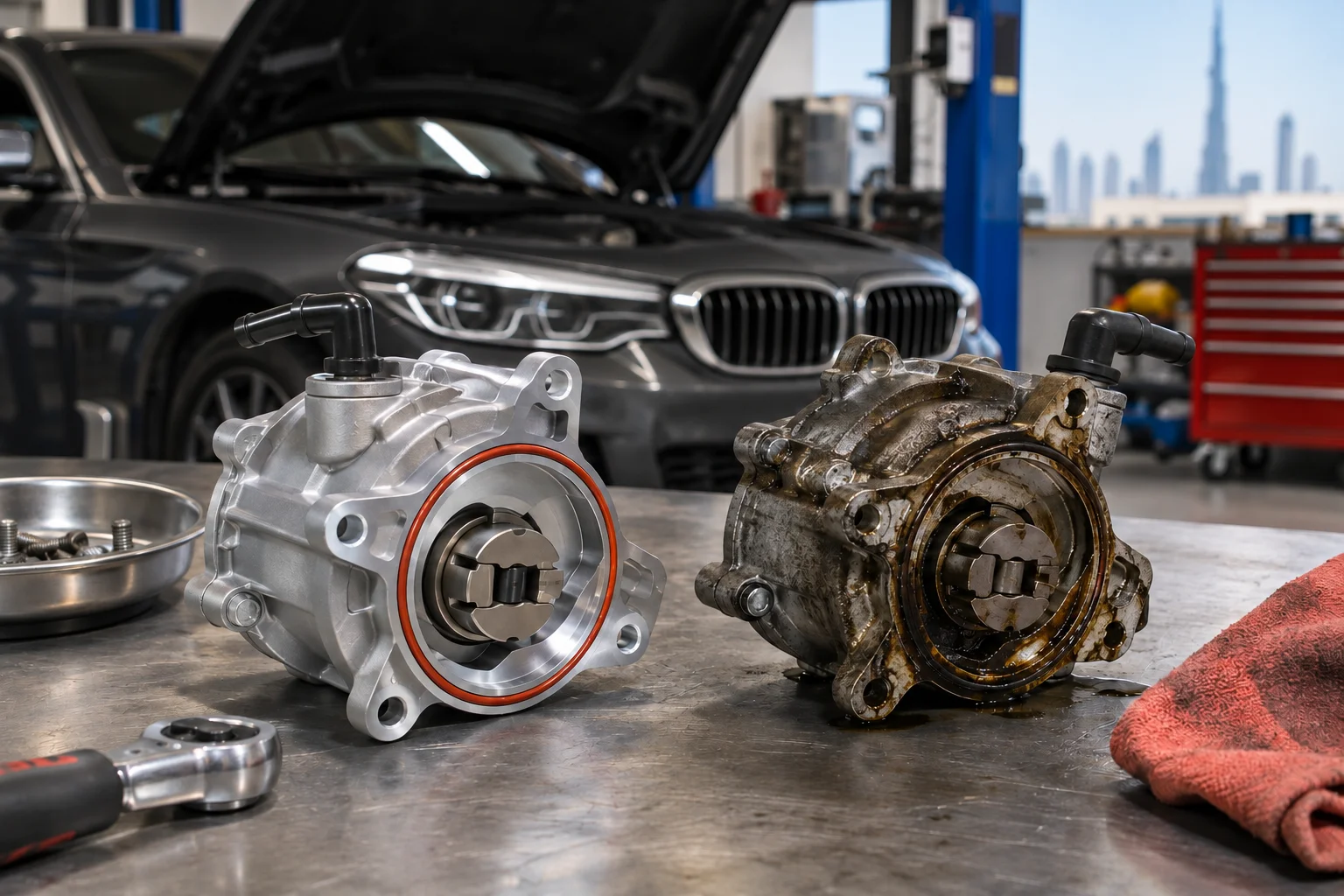
On engines where the pump sits behind the cylinder head, access can mean removing intake parts or engine covers. We explain how much dismantling your engine needs when we quote, so the labour is clear before work starts.
If we find anything else during the job, such as an oily valve cover or a cracked intake boot, we send photos and price it separately. Nothing extra is done without your approval. For oil leaks from other parts of the engine, see our BMW oil leak repair page.
Owners ask us
Ask to see the leak location, pump output and retention findings, and which circuit failed. A seal replacement should follow a confirmed external leak; a pump replacement should follow evidence about the pump itself. Keep the part number and agreed warranty on the invoice. Page images explain components and procedures, not a documented customer repair.
Technical references include Motorservice guidance on pump lubrication and BMW documentation for specific older booster-line applications. These sources do not establish that a campaign applies to your vehicle.
After identifying the fault, the estimate should separate the selected part, labour, related installation items, diagnostic charges. Any recovery, exchange-core deposit or extra dismantling should be stated before approval.
Coverage depends on the selected part and agreed work. Request the duration, mileage limit, parts and labour coverage and exclusions in writing before choosing an option. There is no single warranty promise here covering every supplier or repair.
Urgency depends on the leak rate, oil level, smoke and affected system. An oil-pressure warning, significant oil loss, smoke from hot components or reduced brake assistance requires stopping safely and arranging recovery. A small seep still needs assessment; it should not be dismissed without inspection.
Sometimes. Confirm the exact leak source, pump condition and availability of an appropriate seal repair. A mounting seal and a cover seal are different jobs. Low circuit vacuum requires isolation testing before deciding that the pump itself has failed.
A firm pedal with the engine off after repeated presses can be normal. Persistent loss of assistance with the engine running needs diagnosis of the fitted system, including its supply, valve, lines and booster. Do not drive if assistance is reduced.
Yes. Air leaks on the intake side set lean faults, and on some engines low vacuum sets boost or brake vacuum faults.
Usually on the back of the engine and the top of the gearbox housing, and sometimes on the floor. It can look like a rear main seal leak, so we trace it carefully.
It depends on the engine and what is leaking. A hose is quick, while a pump behind the cylinder head takes longer. We give you a time with the quote.
Only if weak vacuum is the cause. We test the pump and the electric vacuum converters before quoting, so you do not replace the pump for a turbo fault.
Diesel BMWs can develop pump and line leaks, but braking architecture and turbo actuators vary. Many turbo actuators are electric. Confirm the vehicle specification instead of assuming every diesel control uses vacuum.
We can fit genuine BMW, OE supplier or quality aftermarket parts. We price the options and you choose which one is fitted.
Contact us to confirm pickup eligibility, access and scheduling. If brake assistance is reduced, arrange recovery and confirm the charge before dispatch rather than driving the car.

Oil smell, hiss or a heavy pedal?
Tell us your model, engine and what you have noticed. Mention any change in brake assistance before booking so safe transport can be arranged. We identify the leak and explain the quotation before repair approval.