

Know what your BMW climate controls are doing
The selected temperature is a cabin comfort request, not a promised vent reading. AUTO can alter airflow and distribution as conditions change. A fan that becomes quieter after the cabin cools is therefore different from a blower that stops responding to a manual command.
BMW's explanation of the AUTO program describes adjustments based on temperatures, sunlight and selected settings. The exact functions depend on installed equipment. Older physical controls and newer iDrive climate menus should not be treated as interchangeable.
Before describing a fault, check that the outlets you are comparing are open, the required air distribution is selected and both zones have comparable settings. Where fitted, SYNC can align settings. Some BMWs also have a separate upper-body or centre-vent temperature adjustment; find it in the manual rather than assuming every blue-and-red control works the same way.
Use the BMW Driver's Guide for your VIN for the fitted controls. A setting you have not noticed before may explain a comfort change, but a warning, persistent smell or water inside the car still deserves its own assessment.
Warm air means the cabin is not losing enough heat
Air that moves strongly but remains warm points to a different complaint from very little air reaching you. First note whether the cabin eventually becomes comfortable or whether the air remains warm after the initial heat has reduced. A car parked in direct sunlight starts under different conditions from one collected from a shaded bay.
Cooling may be affected by refrigerant loss, compressor or control problems, condenser heat rejection or other system faults. That list is a set of possibilities, not a diagnosis. Selecting a compressor because the vents feel warm can lead to an expensive repair that misses the cause.
Notice whether all occupied zones are affected and whether the problem occurs on every journey. If it follows an earlier AC service, keep the invoice. Tell the workshop what the service actually included rather than assuming a charge receipt confirms that every component was tested.
Our BMW AC diagnosis guide explains the evidence used to separate cooling faults. This overview helps you recognise and describe the complaint; pressure interpretation, refrigerant quantity and component confirmation belong in that diagnostic discussion.
Cabin cooling and engine cooling are different systems. A warm vent does not establish that the engine is overheating. Conversely, an engine-temperature warning must be followed even if the cabin air still feels cold. Tell the workshop about both symptoms when they occur together and keep any warning photograph. Do not open a hot coolant tank or an AC service connection to compare fluids. The technician can identify whether the complaints are related before proposing work on either system.
Weak ventilation is an air-delivery complaint
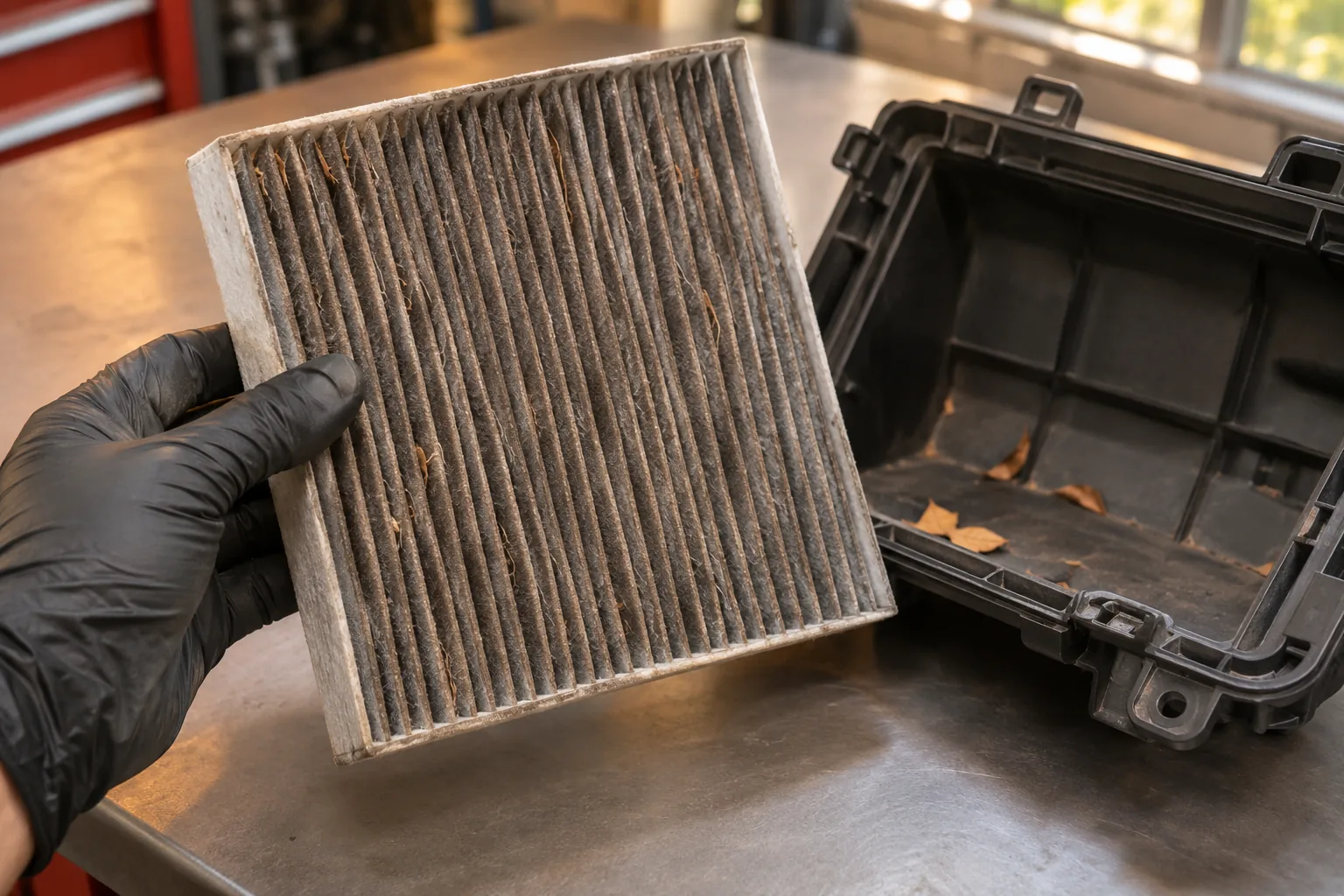
The cabin microfilter filters incoming air. A restricted filter or debris in its housing can affect ventilation, but a dirty filter is not the only possible explanation for low airflow.
Describe whether you can hear the blower, whether its sound changes with the selected speed, and whether air is weak at every outlet or only one group.
A closed outlet, changed distribution setting, air-path restriction, blower-control problem or flap issue may need consideration. Tell the workshop if the windscreen outlets work strongly while the face vents do not, or if the selected fan level has no noticeable effect. These are useful distinctions even if you cannot name a component.
Do not order a blower motor solely because the vents seem weak. The air path and relevant controls need checking. A refrigerant refill cannot repair an electrical blower fault, and a new filter cannot fix a refrigerant leak. Ask what finding supports the proposed job.
Filter access, construction and maintenance requirements vary. Use the specified filter and the applicable service guidance instead of one universal mileage interval. If the filter is wet, investigate where the moisture came from as well as replacing the filter where necessary.
A musty smell needs its source identified
A damp or musty smell when ventilation starts can involve the evaporator, filters, drainage or moisture elsewhere in the cabin. The evaporator is the cold heat exchanger within the climate system. Moisture can collect on it during cooling, and contamination can contribute to odours under certain conditions.
Record whether the smell appears only with cooling, with ventilation alone, or while the parked car is switched off. Also note wet mats, recent water entry and anything stored inside the car. A smell that persists without the fan running may have a source outside the ventilation system.
BMW's SI B64 04 03 on musty AC odour tells workshops to consider filters, water drains and other interior sources before the cleaning procedure. It is service information, not proof that any particular BMW has microbial contamination or that a treatment is covered by a UAE warranty.
Cleaning addresses a finding
Ask which surface or component needs treatment, how drainage will be checked and whether a damp filter or carpet also needs attention.
Perfume can hide the clue
A fragrance may mask a smell temporarily. It does not establish that moisture entry or a drainage concern has been resolved.
A burning, fuel-like or exhaust smell should not be treated as an ordinary musty-AC complaint. Stop safely and arrange an assessment rather than continuing with a deodoriser. Do not spray household chemicals into vents or combine cleaning products to chase an unidentified smell.
Different temperatures can start with different settings
Driver and passenger zones can be set differently. Vent direction, an outlet that is partly closed and an additional upper-body setting can change how the air feels even before a mechanical fault is considered.
Compare equivalent outlets with matching settings while the car is safely stationary. Note whether the difference remains after the cabin has settled.
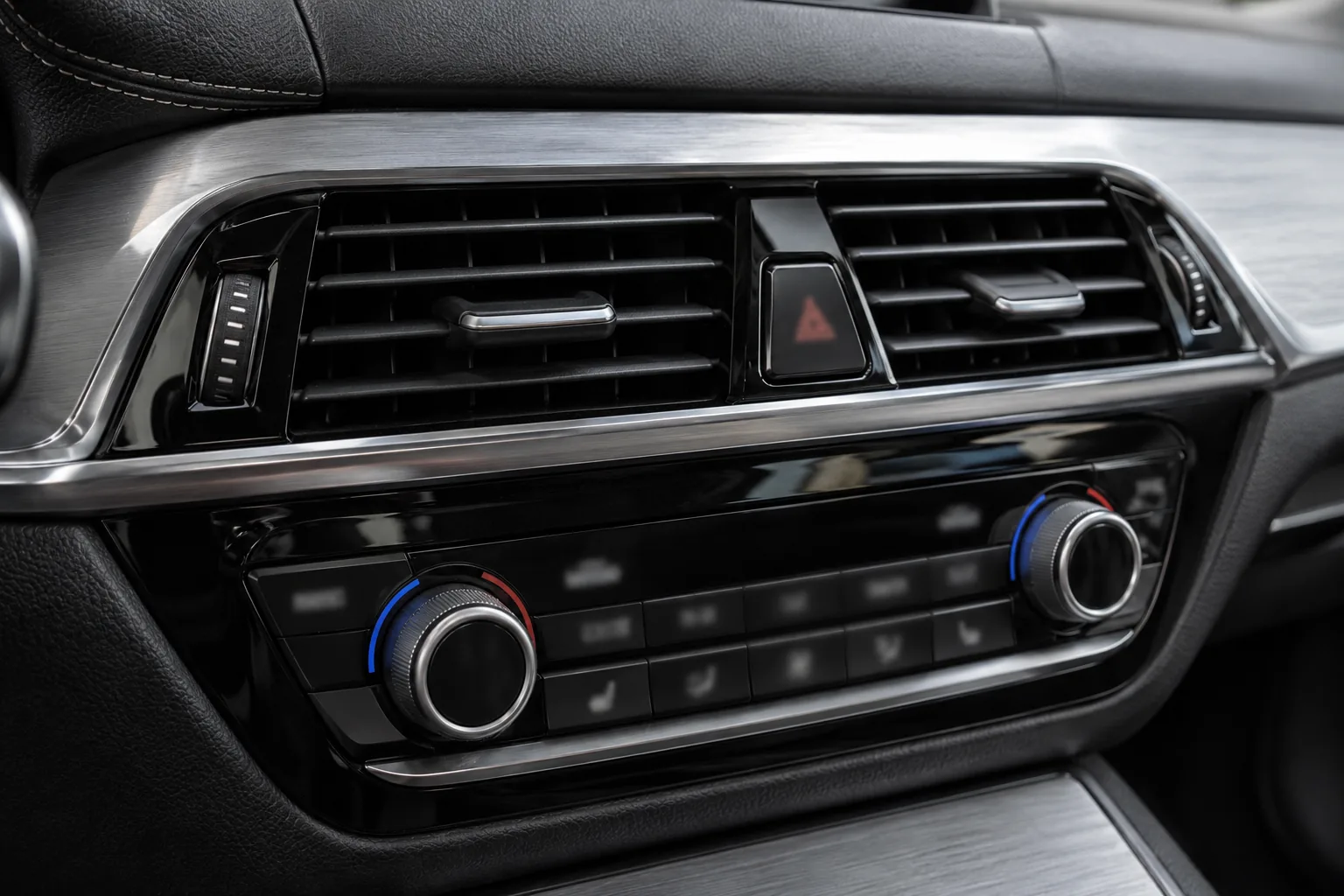
If one side stays warm despite matching settings, book a climate-system check. Air-mixing controls, flap operation and cooling performance may need consideration. A side-to-side difference alone does not prove that a flap motor has failed, and adding gas without a finding may leave the complaint unchanged.
Tell the workshop whether the difference is new, whether rear passengers notice it too, and whether it began after dashboard, filter or AC work. Keep the description tied to the outlets and operating conditions rather than judging the entire system by one vent.
Describe the sound separately from the cooling
A rattle behind the dashboard, a whistle at an outlet and a squeal from the engine bay are different observations. Record where the sound seems to come from and whether changing fan speed changes it. Do not reach into a vent or the engine bay to touch a moving part.
Also say whether cooling and airflow have changed. A brief sound during a control change is different from a new persistent grinding noise. The workshop should locate the source before recommending a blower, compressor or belt-drive component.
Use our BMW AC noise guide for the sound-specific discussion. If smoke, burning odour or another urgent warning accompanies the noise, stop safely and seek assistance.
Water outside and water inside are different concerns

The AC removes moisture from cabin air, and the resulting condensate normally drains outside. BMW's 2024 X3 manual describes condensation collecting beneath the parked vehicle during climate-control use. A modest clear-water patch after cooling can therefore be normal, but location and appearance alone cannot identify every fluid under a car.
Wet carpet or dripping below the dashboard deserves investigation. A drain or housing concern is one possibility; rainwater entry, a door or sunroof leak, and other sources may also need separating. Tell the workshop whether it follows AC use, rain, washing or more than one of these.
Lift out a removable wet mat where practical and arrange inspection rather than covering the damp area. Water held beneath carpet can remain after the visible surface feels dry. Ask whether the moisture source and any affected trim or electrical areas need checking.
A blocked drain is not the only explanation. BMW's North American bulletin SIB 64 05 20 describes a housing-cover seating issue on specified F39, F44, F45 and F48 vehicles produced up to 20 October 2020. It shows why model and production scope matter; it is not a blanket diagnosis or a UAE recall claim.
Do not push wire into a drain, crawl under an unsupported car or use high pressure to clear an unknown passage. Ask for the source to be confirmed before authorising drying or parts replacement, especially if the dampness returns.
Persistent misting is a visibility concern
Climate control can help manage moisture on the glass, but the controls and their interaction vary. Use the fitted demisting function and the instructions for your vehicle. If you cannot maintain a clear view, stop safely rather than continuing to adjust menus while driving.
Continuous recirculation can contribute to window misting under some conditions. The 2024 X3 manual advises using fresh-air or demisting functions when condensation appears. Treat that as model-specific operating guidance and consult your own manual for the available controls.
If fogging keeps returning, mention damp carpets, wet filters or other moisture signs when booking. An air-delivery problem may also affect how effectively the glass clears. The useful question is why moisture is building up or why the fitted demisting system is not clearing it, rather than which fragrance or glass product to buy.
Rear climate settings can change what passengers feel
Depending on equipment, the rear may have its own temperature and fan controls or may receive air from the front system. Check that rear outlets are open and that the relevant climate function is enabled. A small change to the front distribution or rear settings can alter passenger comfort.
Some operating modes can also restrict rear climate operation. The applicable manual explains these relationships. Avoid applying one iDrive menu sequence to every generation, and do not assume that every X5 or 7 Series has the same rear climate equipment.
If rear comfort remains poor while the front is normal, describe the affected row and outlets. The workshop needs to know the installed system before deciding whether to inspect a local control, air path or other component. This is especially useful after trim, seat or dashboard work.
Choose maintenance or repair for the complaint you have
A filter replacement, an evaporator clean and a refrigerant repair do different jobs. The proposed work should answer the actual complaint. Replacing a dirty filter may improve restricted air delivery; treating an identified odour source may address smell; neither automatically repairs a leak or restores a failed electrical control.
For routine care, follow the maintenance requirements for the car and inspect condition when symptoms appear. Ask about the filter and housing when dusty use is relevant, and report new dampness early. A regular check can find a concern, but it cannot guarantee that every future AC fault will be prevented.
Do not assume hot weather makes a gas refill due, or that an AC service must include every component. Ask for the service scope. Repeated loss of cooling after a recharge needs the earlier findings reviewed, rather than a standing instruction to add refrigerant again.
Our BMW AC repair service page covers workshop services and current starting prices. Request a quote that separates diagnosis, parts, labour, refrigerant and any cleaning or drying. Confirm exclusions and warranty terms before approving the job.
Bring a short description instead of a guessed part
Useful appointment information makes it easier to discuss the first step. You do not need to test the refrigerant or remove trim before contacting a workshop.
- Your vehicleModel, year and installed climate equipment where known. Confirm exact fitment before parts are ordered.
- The complaintTemperature, air volume, smell, sound or moisture. Say which outlets or cabin area are affected.
- The conditionsFirst start, after a long journey, in traffic, after rain or after washing. Include any warning text.
- The historyRecent filter, refrigerant, body or dashboard work and any previous cleaning or repair invoice.
Agree whether the first visit is a comfort check, an odour or water-entry investigation, or fault diagnosis. Hybrid and electric BMWs can involve high-voltage climate components, so equipment and technician suitability must match the vehicle.
At collection, compare the outcome with your original complaint. If the work addressed a smell or dampness, ask whether its source was found and what follow-up is needed if it returns. Keep the invoice and any observations about when the symptom stopped. A cooling check and an odour treatment should each have an outcome you can understand.
Questions about BMW air conditioning problems
Does a musty smell mean the evaporator needs replacing?
No. The source needs identifying first. Filters, drainage, the evaporator surface and moisture elsewhere in the vehicle may need attention. Ask which finding supports cleaning, drying or replacement.
Can an AC problem occur without a dashboard warning?
Yes. A change in cabin comfort, odour or moisture may be noticeable without a warning message. Describe what changed and have persistent symptoms checked rather than waiting for a lamp.
Should I approve a complete AC overhaul from the symptoms alone?
Ask for the confirmed faults and why each item is needed. A broad symptom can have several explanations. The repair scope should follow the findings and identify any remaining uncertainty.
Technical references
Use the current Driver's Guide for your VIN. The BMW bulletins linked above are historical service references with stated scope, not automatic instructions or coverage decisions for your car.
Tell us what has changed
Discuss your BMW AC concern
Send the model, year and whether the problem is cooling, airflow, smell, sound or dampness. Our independent Al Quoz workshop can discuss the appropriate first inspection. Follow any urgent warning before planning to drive in.
Independent BMW specialist. Not affiliated with BMW AG.