Separate serviceable valve
AED 500 to 1,000Allow for a compatible replacement valve, fitting and a post-repair check. A complete valve cover or additional hoses are outside this scope.
Whistling, oil use and lean running faults
Whistling, rough idle or rising oil use? Our independent BMW workshop in Al Quoz checks the crankcase ventilation system before recommending parts. Get the findings, suitable valve, separator or cover options and a written repair quote before work starts.
Plan your repair budget
The repair depends on whether your engine uses a separate valve, a separator and hoses, or ventilation built into the valve cover. These estimated budgets help compare complete repair scopes rather than individual spare-part prices.
Allow for a compatible replacement valve, fitting and a post-repair check. A complete valve cover or additional hoses are outside this scope.
Allow for an accessible separator, required breather hoses and seals, fitting and ventilation checks. Access requirements can change the total.
Allow for a compatible cover with integrated ventilation, required cover seals, installation and rechecking. Genuine parts or difficult access can cost more.
These are planning estimates informed by published Dubai repair prices, not fixed BMW Repair Dubai offers. Budgets exclude the initial diagnostic assessment. We confirm the assessment fee before booking and give a written total showing parts, labor and any additional work before approval. Oil service, ignition parts, unrelated leaks and recovery are extra only if required and agreed.
Tell us your model and symptoms to start. We check the fitted system and compatible parts; you do not need to identify the PCV design yourself. Part availability and inspection findings determine the completion time.
A small part with a big job
Every engine lets a small amount of combustion gas slip past the piston rings into the crankcase. That gas carries oil mist and moisture, and it has to go somewhere controlled.
Gas that slips past the rings builds up under the valve cover and in the crankcase.
The ventilation system separates oil from the gas and sends the oil back to the sump.
The cleaned gas is drawn into the intake and burned in the engine instead of going into the air.
Many systems regulate a slight crankcase vacuum. The design and expected reading depend on the engine.
When the valve sticks open, the engine pulls too much air through it and the crankcase vacuum becomes too strong. When it sticks closed or the oil separator blocks, pressure builds up instead. Both need diagnosis. The repair depends on the failed valve, separator, hose or other confirmed cause. The system has no warning light of its own, so most faults are found through the symptoms below or during a service inspection.
What you hear and see
A whistle, rough idle or rising oil use can point to a ventilation problem. These symptoms overlap with other faults, so we check the cause before recommending parts.
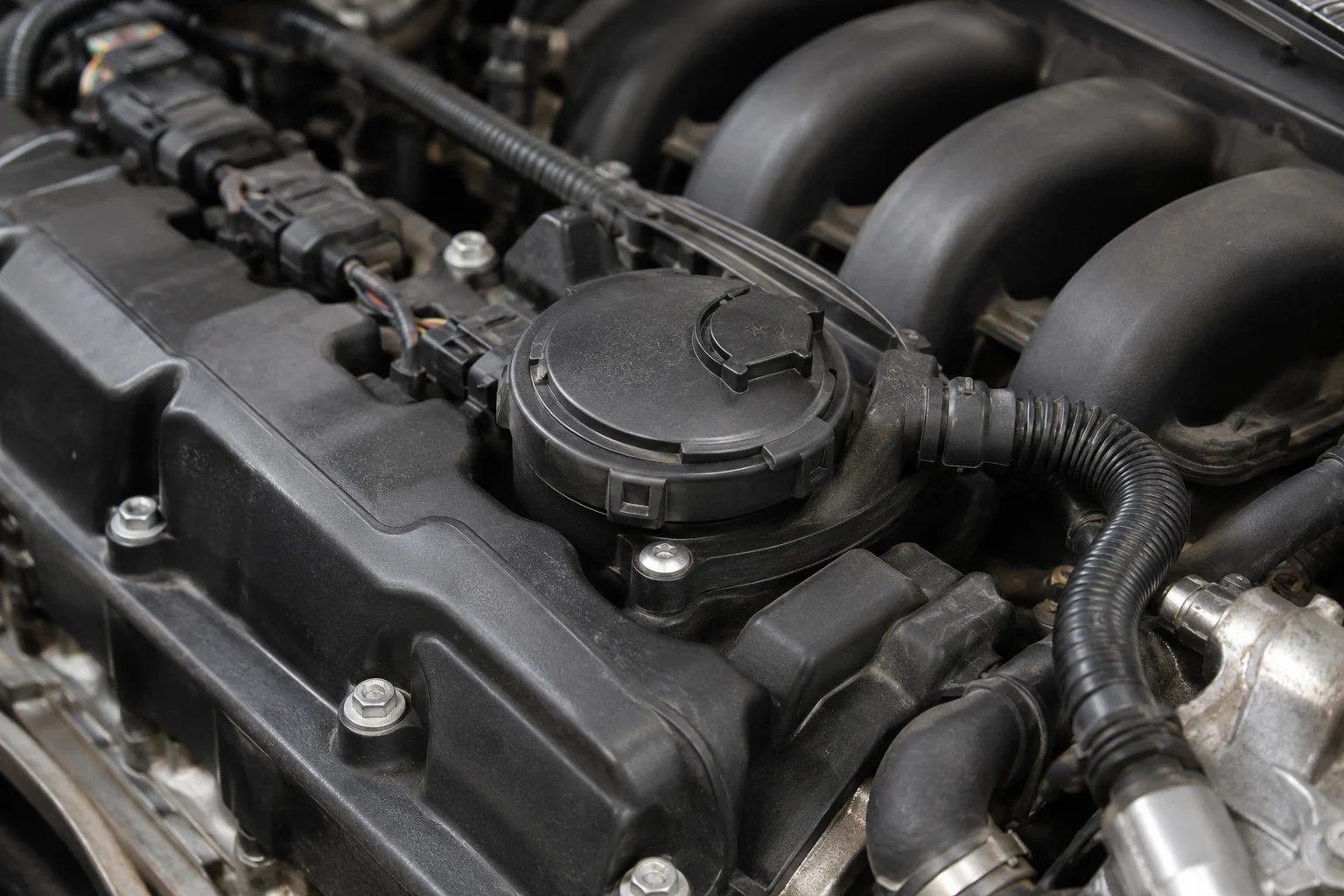
A whistle or howl can come from the ventilation system or another intake leak. Excessive vacuum can make the filler cap difficult to remove, but this alone does not identify the failed part.
Do not remove the cap with the engine running to test itUnmetered air can affect the mixture and cause a rough or hunting idle. Mixture and misfire faults need diagnosis because ignition, fueling and other air leaks can produce similar symptoms.
Record the warning message and when it appearsOil entering the intake may increase consumption or produce smoke at startup. We assess the pattern and amount rather than assume every oil-use complaint is a PCV fault.
Tell us if top-ups have become more frequentAbnormal crankcase pressure can contribute to leaks at seals, the filler or a dipstick tube where fitted. Several new leaks are a reason to check ventilation alongside the leaking joints.
A leak location is a clue, not a confirmed causeStop safely and switch off for an oil-pressure warning, heavy smoke, a strong burning smell or severe shaking. Avoid continuing with a flashing engine light and arrange assistance.
Choose the repair after diagnosis
PCV and CCV refer to parts or descriptions of the crankcase ventilation system. They do not identify one interchangeable BMW part. The fitted engine and cover version determine what can be serviced.
Older designs such as the M54 use a separate separator and connected hoses. We check hose condition, connections and the oil return route. Brittle hoses may need replacement, but the quote explains which parts are required and how they will be accessed.
Replace the confirmed failed componentsMany N-series engines integrate ventilation into the cover, but N52 versions and other engine families should not be treated as identical. A complete cover may be appropriate if internal components are not serviceable or the housing is cracked or distorted.
Check the actual cover and parts specificationB-series, diesel and performance engines use different ventilation arrangements and diagnostic procedures. Model badge and year are a starting point; we identify the engine and fitted components before selecting replacement parts.
Use the applicable repair procedureA diaphragm kit is an option only where it is compatible and the remaining assembly is sound. It cannot repair damaged internal passages, failed check valves or a cracked cover. We explain the parts choice, what it addresses and its limitations before you approve it.
A recording from a safe position can help, but it is optional. Do not reach near moving parts or remove the oil cap with the engine running to diagnose the fault.
A whistle is a clue
A ventilation fault can cause whistling, but intake leaks, hoses and other components can produce similar symptoms. Cap resistance or a change in sound is not a substitute for the correct diagnostic procedure.
We check relevant hoses, connections and intake components. A controlled smoke test can help locate leaks where appropriate; it does not guarantee that every internal valve fault will be visible or that diagnosis takes only a few minutes. Brake vacuum systems are assessed separately where relevant, including vacuum pump leaks.
Different conditions change the airflow
Many turbocharged petrol engines use different ventilation routes at idle and under boost. The exact passages and control valves depend on the engine.
Intake manifold vacuum can draw crankcase gases through the ventilation system.
Listen for changes in idle qualityWith the manifold pressurized, ventilation can route toward the turbo inlet. Control valves prevent flow in the wrong direction.
Consider symptoms under loadFaults can allow abnormal crankcase pressure or excessive oil carryover. Smoke and oil use may appear even without a whistle at idle.
Test the fitted system before choosing partsA light oil film alone does not establish a PCV or turbocharger fault. We consider the amount, symptoms and applicable test results together.
A ventilation fault and a turbo problem can produce similar symptoms. We investigate both where relevant and explain the findings before recommending the repair.
One fault, several symptoms
When the ventilation system cannot release pressure, the engine looks for another way out. That way out is usually the weakest seal.
Separator blocks or valve sticks closed
Pressure rises inside the crankcase
Oil is pushed past gaskets and seals
Leaks may appear at vulnerable gaskets or seals
If several gaskets start leaking at once, crankcase pressure is checked before any of them are replaced. Replacing a leaking gasket without addressing abnormal crankcase pressure can allow leakage to return. Our oil leak repair and rear main seal replacement pages explain those repairs.
Measure, then replace
A PCV fault can look like many other problems, from a bad injector to a vacuum leak. These checks tell us whether the ventilation system is really at fault.
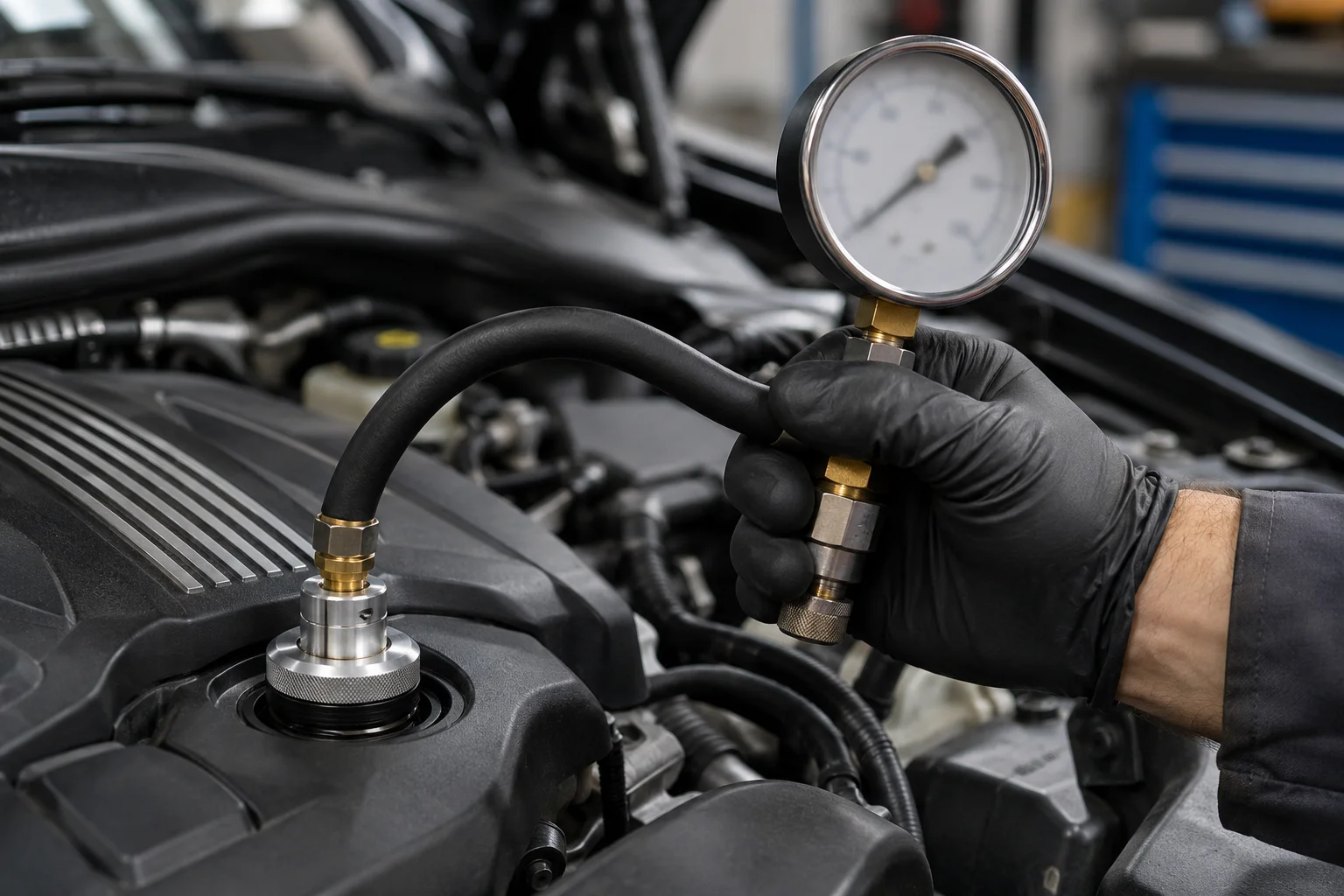
We use the diagnostic method and operating conditions specified for the fitted engine. Many systems can be assessed with pressure measurements; some designs require a different approach. Where measurements apply, we compare findings before and after the repair rather than use one universal vacuum target.
Where applicable, a suitable low-pressure gauge measures crankcase pressure against engine-specific limits.
Relevant mixture corrections help investigate unmetered air on applicable engines, alongside other checks.
A controlled smoke test can help locate external leaks where the engine-specific procedure permits it.
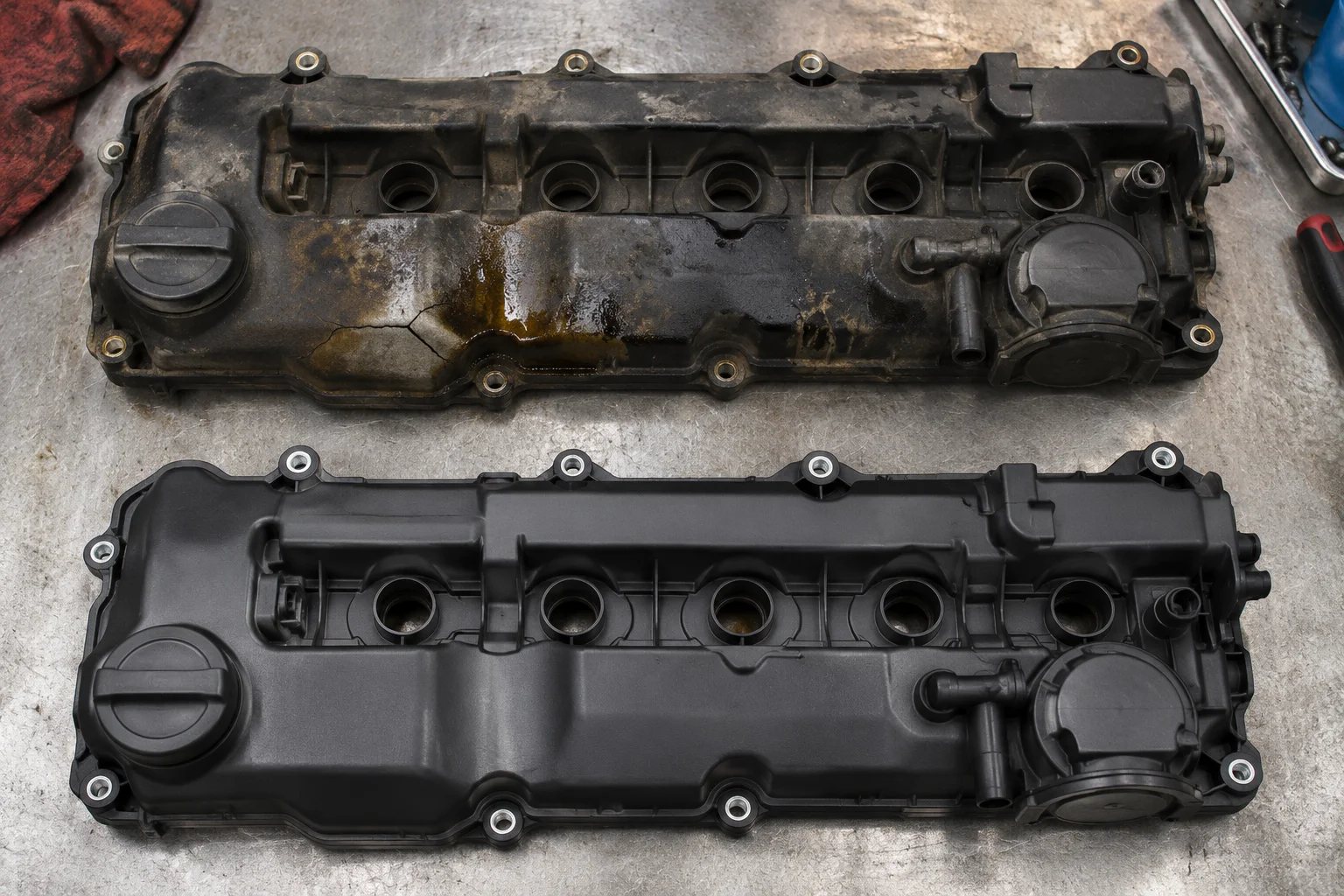
Cracks in the cover, oil in the intake and hardened hoses are inspected.
Dubai conditions
Most of the PCV system is made of plastic and rubber that sits on top of a hot engine. Heat cycles and age can affect these materials; local weather alone does not prove the cause of a fault.
The thin rubber diaphragm loses its flexibility with heat, then splits.
Years of heat cycles can distort the cover so the gasket no longer seals.
Breather hoses crack at the bends, often where they are hard to see.
Old oil produces more sludge, which can block the separator.
There is no fixed replacement interval for the PCV system. We check it whenever a BMW comes in with a whistle, rising oil use or several new oil leaks, and at major services on older cars. Keeping to the oil service schedule with the correct oil is one of the simplest ways to make the system last longer, because clean oil produces less sludge in the separator. Mention frequent short trips during assessment if relevant. A longer drive is not a repair for a blocked separator, torn diaphragm or active warning.
How the job is done
The goal is to fix the ventilation fault and any damage it has caused, without replacing parts that are still good.
Faults, fuel trims and crankcase vacuum are checked.
Diaphragm, cover, hoses and intake boots are inspected.
Cause, part options and cost before any work starts.
Valve, cover or hoses fitted with new seals.
Faults cleared, trims checked again after a drive.
When a cover is replaced, we fit the seals and any fasteners required by that engine’s repair procedure. Separate spark plug tube seals are renewed where applicable. Correct tightening sequence and torque protect the cover and sealing surfaces. If oil has collected in the intake, the hoses and boots are cleaned so the engine does not keep burning it. Adaptations are changed only where the applicable diagnostic or repair procedure requires it. A reading near a limit alone is not a reason to reset adaptations. Anything else found during the job is photographed and priced separately, and nothing extra is done without your approval.
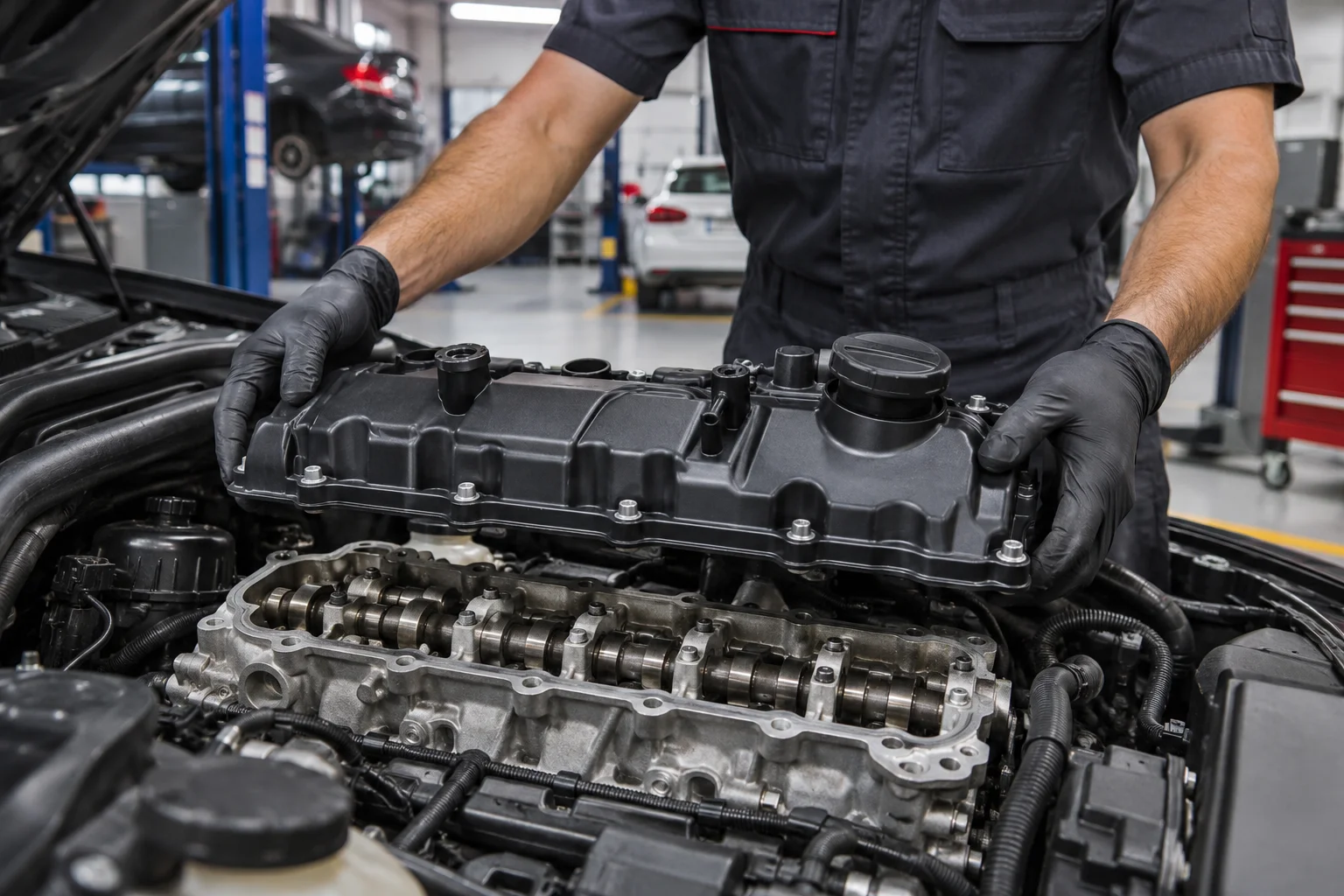
Compare example repair scopes
These example quotations are not completed customer jobs or fixed offers. They show how different repairs can affect the total. Each example assumes a new compatible replacement, fitting and post-repair checks; diagnosis and unrelated work are excluded.
Example for a BMW with a separately serviceable valve. Assumes straightforward access and no damaged hoses or housing. The selected valve must match the fitted engine.
Example for an older 325i with an M54 engine. Includes a compatible separator, required breather hoses and seals. Additional access problems or a damaged oil return connection change the quote.
Example for a 535i with an N55 engine. Includes a compatible complete cover and required cover seals. Oil service, damaged ignition parts and unrelated oil leaks are not included.
Your own quotation names the part brand, repair scope and final total. The right repair depends on inspection, even when your BMW matches one of these examples.
Before you book
Whistling, rough idle, increased oil use, smoke or new leaks can justify an inspection. These symptoms overlap with other faults, so they do not confirm that the valve or cover needs replacing.
There is no safe driving allowance that applies to every fault. Stop safely and switch off for an oil-pressure warning, heavy smoke, a strong burning smell or severe shaking. A flashing engine light needs urgent attention; avoid continuing to drive and arrange assistance. Call for advice about inspection or suitable recovery.
Planning estimates are AED 500 to 1,000 for separate valve work, AED 900 to 1,800 for separator and hose work, and AED 2,200 to 3,500 for complete cover work. These exclude the diagnostic assessment. The written quotation confirms the actual parts, labor, checks and payable total.
Confirm the assessment fee before booking. A fault-code scan alone cannot confirm every ventilation fault; pressure measurements, access work or further testing may be needed. We explain any additional diagnostic work before proceeding.
A straightforward repair may be completed within a workshop day once the fault is confirmed and parts are available. Diagnosis, difficult access, additional leaks or ordered parts can extend the visit. We confirm an expected completion time after inspection rather than guarantee same-day handover.
It may be a separate valve or separator, or part of the valve cover and associated ventilation passages. The engine and fitted component version determine its location. We identify the system for you.
PCV means positive crankcase ventilation; CCV is commonly used for crankcase ventilation. The terms can describe the system or its components, so they are not enough to order a replacement part.
Only where a compatible repair is appropriate and the rest of the assembly is sound. A diaphragm kit cannot correct a cracked housing, damaged internal passages or other failed valves. We explain when a complete assembly is the better repair.
No. Correcting abnormal pressure may address a contributing cause, but damaged seals or unrelated leaks can still require repair. We quote any additional confirmed work separately.
No. A small oil film by itself is not a diagnosis. The amount of oil, operating symptoms and ventilation and turbo checks help distinguish the possible causes.
Cleaning does not restore a torn diaphragm or a failed valve. Whether an oil return path or another serviceable component needs cleaning depends on the system and findings. We recommend the appropriate procedure rather than a universal cleaning treatment.
Genuine BMW and suitable OE supplier options can be discussed for the fitted system. Your quote identifies the supplied parts. Confirm the written parts and workmanship warranty, duration and exclusions for the selected repair before approval.
We inspect the repair and relevant connections, repeat applicable ventilation checks and assess running quality. Faults and relevant live data are reviewed. Road testing or adaptation procedures are used where appropriate and safe.
Free pickup is available in Dubai. Tell us your model, symptom and preferred collection area. If the vehicle is unsafe to drive, we confirm suitable recovery arrangements and any related charge rather than assume ordinary pickup is suitable.
Whistle, smoke or oil use?
Tell us your model and year and what the engine is doing. We collect the car for free anywhere in Dubai, test the crankcase ventilation system and send you the cost before any work starts.