
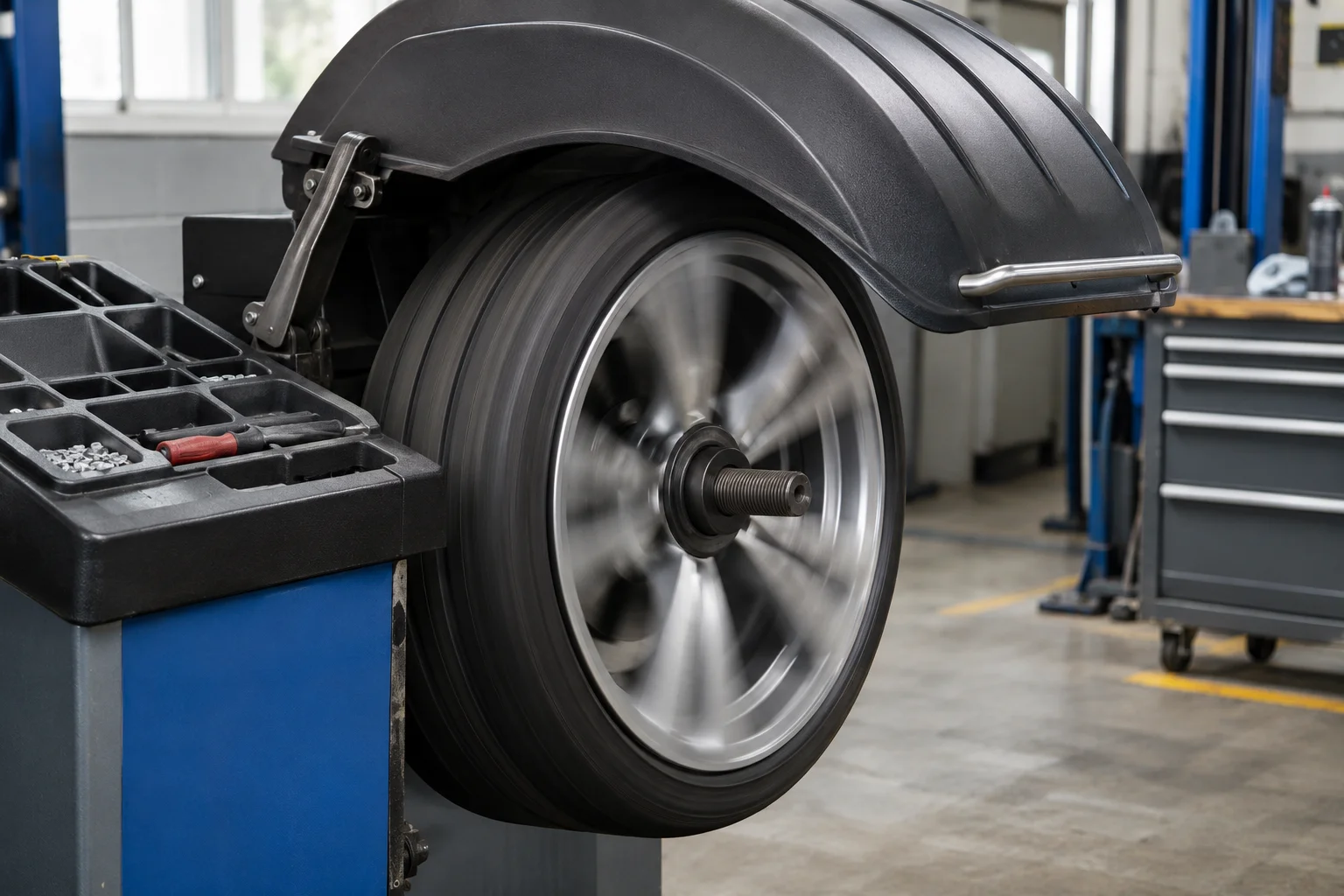
Which faults can cause BMW vibration
Sudden severe vibration, changed steering or braking, a visibly damaged tyre, smoke, a fuel smell or a flashing engine warning needs prompt attention. Follow the exact vehicle warning and handbook instructions. Do not continue a journey to test whether it settles; discuss suitable assistance or recovery.
BMW vibration can come from a fault that creates uneven forces, such as an imbalanced wheel or uneven engine running. It can also come from a part that allows those forces into the cabin, such as a damaged mount or worn suspension bushing. Similar shaking can therefore need different repairs.
To compare shaking at idle, under braking or at a particular road speed, use our BMW vibration diagnosis by driving condition. Here the focus is on the component findings that should support a repair.
| Component group | What should support the repair |
|---|---|
| Wheel and tyre assembly | An imbalance, damaged tyre, distorted wheel, mounting fault or relevant shape or force measurement. |
| Brake disc and hub | Measurements and inspection of the fitted disc, hub and related brake parts that explain the judder. |
| Engine or gearbox mount | Physical condition and suitable checks of how the mount supports and isolates the powertrain. |
| Combustion engine | Running-quality evidence followed by checks of the relevant ignition, fuel, air or mechanical system. |
| Driveline and suspension | Identified play, damage, movement or another finding in the relevant shaft, joint, bearing or bushing. |
Use observations already made during normal driving. Photograph warnings only while safely parked, and retain any scan report. Owners should not loosen wheels, work under an unsupported car, run the drivetrain on stands or attempt high-voltage checks.
Wheels and tyres need more than a balance check
Imbalance and poor mounting
Balancing compensates for uneven weight distribution in the wheel-and-tyre assembly. The technician needs to mount the assembly correctly on the machine, measure it and check the result after adjustment. A missing weight can matter, but a visible weight is not proof that the assembly is balanced.
The wheel also needs to seat correctly on the vehicle. Hub contact surfaces, centring and any aftermarket spacers or fittings can change the checks. A vibration that began immediately after wheel work is useful history; it does not establish which fitting or adjustment is wrong.
Tyre damage and a distorted assembly
A tyre can be damaged or wear irregularly, and a wheel can be bent. Adding balance weights cannot restore damaged structure or make a distorted assembly round. Where appropriate, the assessment may include runout, which is how far the rotating assembly departs from true, or road-force testing, which evaluates variation as the tyre is loaded.
Ask whether the finding concerns the tyre, the wheel, their mounting or their combination. A replacement recommendation should identify the affected assembly and the evidence. See our BMW tyre replacement information when tyre condition or fitment requires replacement.
Where alignment fits
Alignment sets wheel angles; balancing addresses weight distribution. A car can be aligned correctly and still have a wheel imbalance. Misalignment can contribute to uneven wear, but correcting the angles does not reverse an established wear pattern or repair a damaged tyre.
Michelin explains the difference between alignment and balancing. If measurements support wheel alignment, ask what is out of specification and whether worn components need attention first.
Brake judder needs measurements before a disc decision
Vibration associated with braking can involve the disc, hub, caliper or supporting suspension components. Calling every case a warped rotor skips the checks needed to decide which work will help. Surface appearance alone cannot quantify the fault.
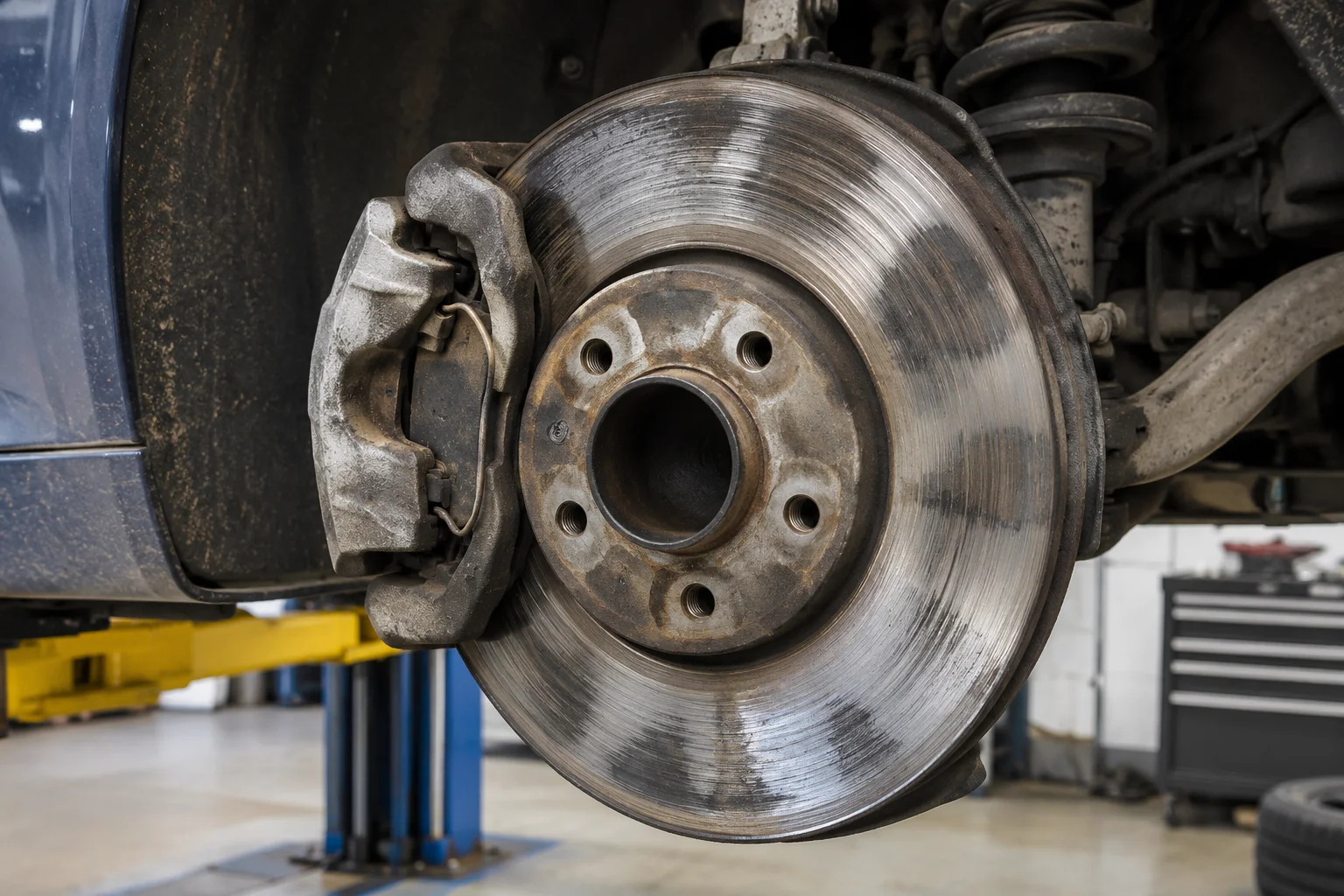
Disc-thickness variation means the disc is not equally thick around its braking surface. Lateral runout describes side-to-side deviation as it rotates. They are different measurements. Hub condition and how the disc is mounted can also influence the result.
BMW's SI B34 01 14 brake-vibration bulletin describes thickness variation and a diagnostic route for standard non-drilled, non-ceramic discs. Its resurfacing procedure is not permission to machine every BMW brake disc. The fitted brake type, applicable repair instructions and thickness requirements must be checked.
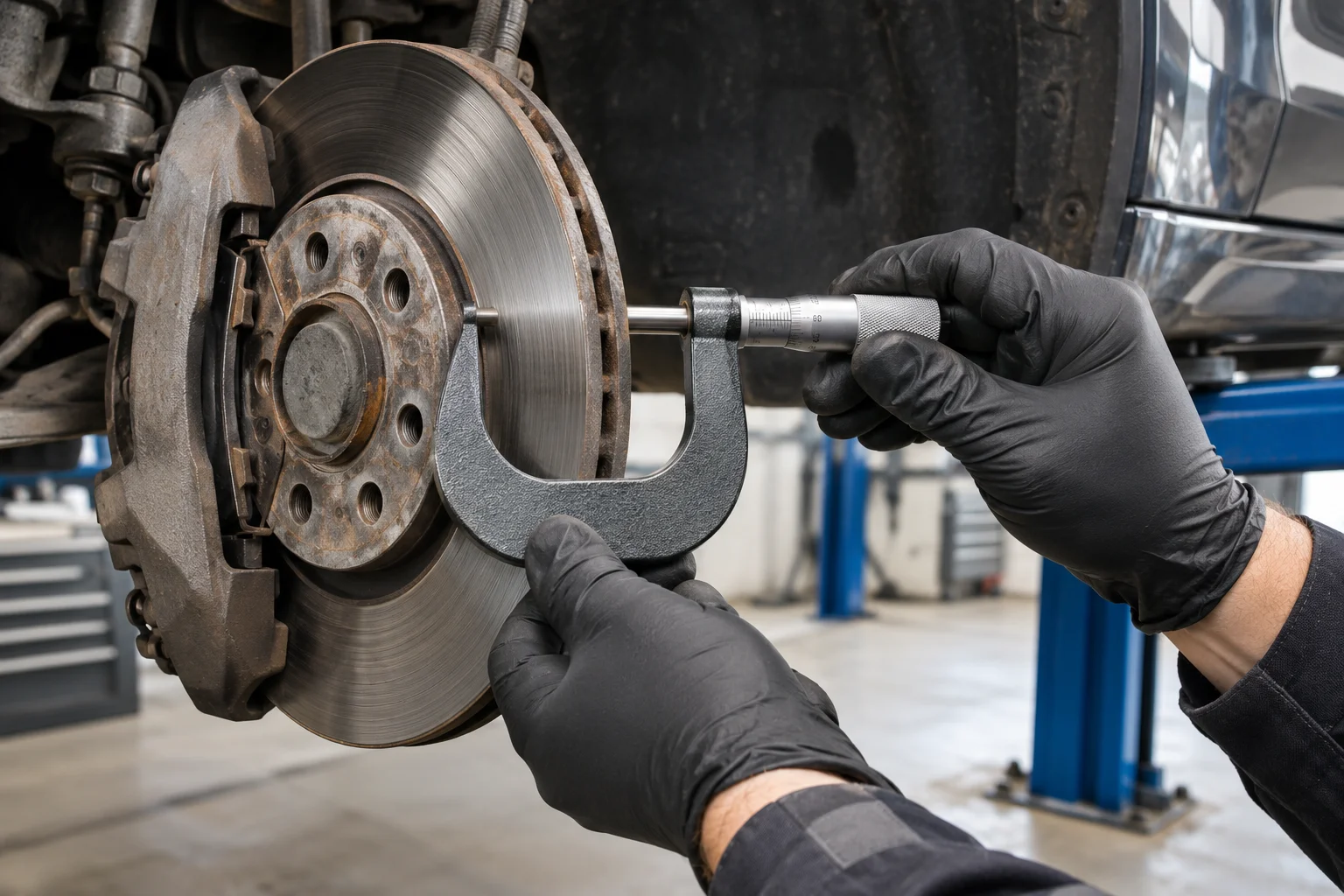
A useful recommendation should say what was measured, whether the disc remains suitable for service and why resurfacing or replacement is appropriate. Pads and related brake parts also need assessment. The Bilstein group's brake-judder guidance explains why hub preparation, runout and correct assembly matter to preventing a repeat problem.
Where the findings support brake work, our BMW brake repair page covers the service scope. A new disc should not be the end of the investigation if the reason for the original judder remains unexplained.
A worn mount and a rough engine need different repairs
Engine and gearbox mounts support the powertrain and help isolate movement from the body. Depending on the design, damage, deterioration or loss of the mount's intended function can transmit more vibration into the cabin. The mount type and its installation matter.
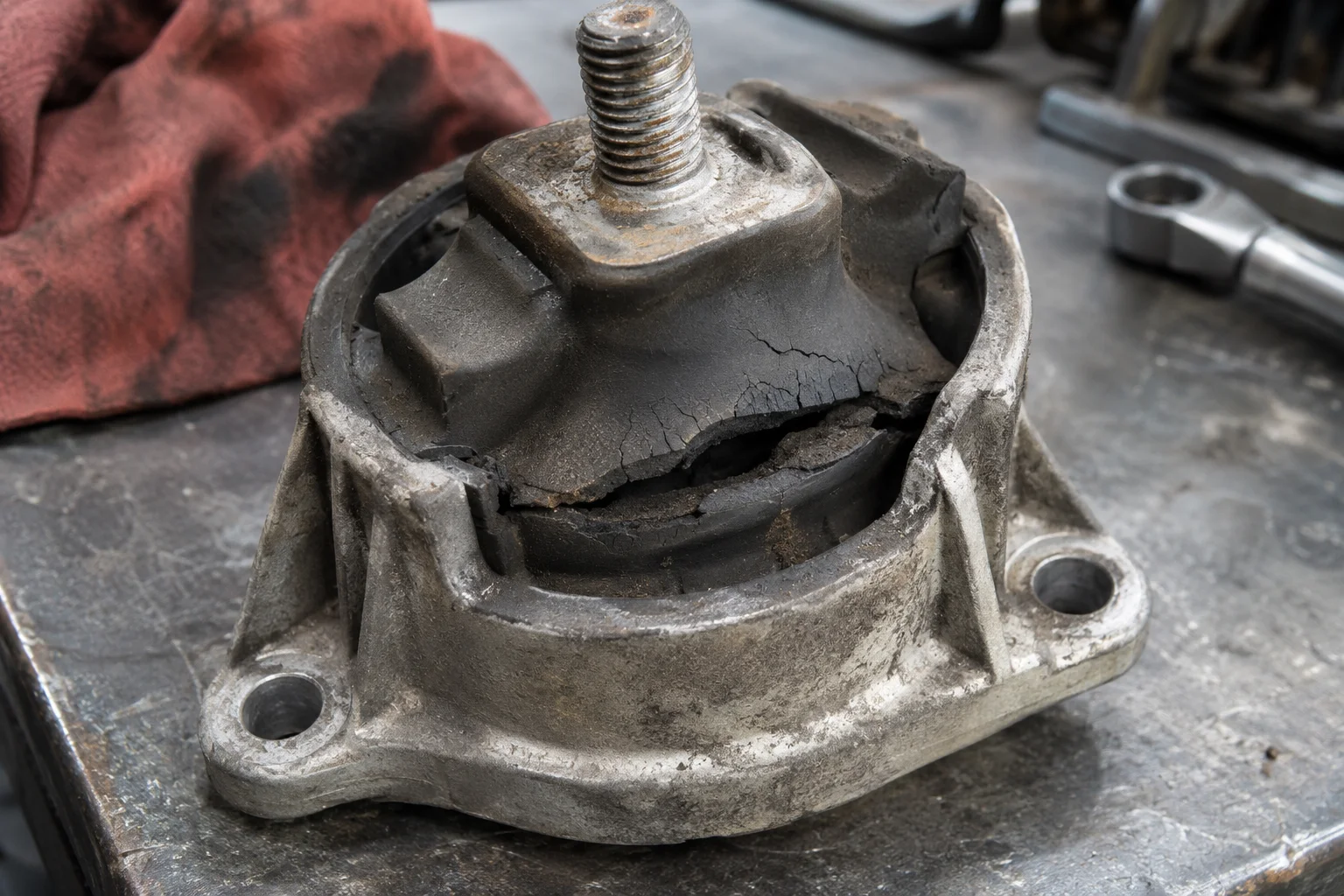
The workshop should distinguish increased vibration transmission from an engine that is itself running unevenly. A mount may need inspection for physical damage or leakage where applicable, along with suitable checks of its support and control system. The gearbox mount and nearby contact points can matter too.
A diagnostic scanner can help assess engine running or a supported electronically controlled system. It cannot, by itself, prove that a rubber mount has torn or that a hydraulic mount has collapsed. A physical finding and the relevant test are needed to connect the complaint to engine mount replacement.
Ask whether rough running was assessed before the mount was blamed. Replacing a mount will not repair a combustion fault, while correcting an engine fault may not restore a separately damaged mount. The explanation should make clear whether one or both problems have been found.
Misfires fuel delivery and engine condition
Uneven combustion can create a shake rather than simply transmit one. On a petrol engine, possible branches include ignition coils and spark plugs, fuel delivery, intake air and mechanical condition. The stored information and running-quality checks determine which branch needs testing.
A cylinder-specific fault helps locate the uneven running; it is not a parts order. The technician may need to assess the ignition system, relevant fuel information or mechanical condition before recommending work. If evidence supports an ignition fault, ignition coil replacement is a separate, defined repair.
Likewise, a fuel-related symptom does not automatically establish that an injector is dirty. Electrical control, delivery pressure, leakage or other findings can change the repair. Cleaning should not be presented as routine treatment for every injector design or every vibration.
Diesel engines do not use petrol-style ignition coils and spark plugs to ignite their fuel. Fully electric BMWs have no combustion engine to tune. Plug-in hybrids have more than one propulsion system, so the workshop needs to know which was operating when the symptom occurred. High-voltage work belongs with appropriately trained personnel.
If a propulsion warning accompanies the shake, keep its complete wording and the fault history. Our BMW drivetrain warning guide explains why the message itself does not identify a failed gearbox, shaft or engine part.
Shafts joints bearings and suspension movement
Propshaft and axle findings
The propshaft, its supports and the axle joints carry rotating loads. Damage, play or a support problem can require inspection when the complaint points towards the driveline. Which joints and supports are fitted depends on the vehicle; a generic U-joint explanation does not describe every BMW shaft.
A repair proposal should identify the affected joint, support or assembly, what was found and whether component repair or assembly replacement is appropriate for that design. A vibration during acceleration is useful history, but does not prove a CV joint or propshaft has failed.
Suspension and wheel bearings
Bushings, control arms and steering joints constrain wheel movement. Wear can allow movement that changes how forces reach the steering or body. Wheel-bearing concerns also require appropriate inspection; a noise or a shake alone is not enough to select the affected bearing.
Ask whether the finding is in the bushing, joint, complete arm or another component. The need for alignment depends on the work and the vehicle procedure. Our BMW suspension repair information covers that service area.
xDrive and transmission shudder
Some complaints need assessment of the transfer case or transmission rather than another wheel adjustment. Compatible tyres and the relevant control-system information may matter, but a shake does not automatically justify a transfer-case replacement, gearbox rebuild or fluid service. The proposed work should follow tests matched to the fitted system.
Do not attempt to isolate a driven-wheel fault by running the car on stands or disconnecting components. The workshop should choose a safe test method, explain any additional diagnostic scope and avoid a road test where the vehicle is unsafe.
Maintenance must match the fitted parts
Tyre pressure and condition checks, the correct vehicle service schedule and attention to new symptoms can help catch problems. They do not prevent every vibration. Avoid adding services simply because they appear on a generic prevention list.
Tyre rotation is conditional. Staggered front and rear sizes may prevent a front-to-rear swap, and directional tyres have restrictions. Check the fitted sizes, tread direction and vehicle instructions before choosing a rotation pattern. Michelin's rotation guidance explains these fitment limits.
Do not assume every suspension joint needs periodic greasing. Some components are sealed, while others have a specified service procedure. Brake servicing, spark-plug replacement and other maintenance should follow the relevant powertrain and component requirements.
In Dubai, note the conditions already observed, such as a hot restart or a long period in traffic, and tell the workshop about recent tyre, brake or suspension work. Those details can help an assessment. Heat, the road surface or fuel quality should not be named as the cause without supporting evidence.
What should support the repair quotation
A useful explanation makes the finding understandable before asking you to approve parts. Ask for the initial assessment scope and charge, then agree any additional dismantling, electrical investigation or specialist testing separately.
- The confirmed findingWhich assembly has a measured or inspected defect, and how does it explain the complaint?
- The proposed workWhy is adjustment, component repair or replacement appropriate, and what alternatives remain?
- The complete quotationWhat parts, labour, fluids, programming and testing are included, and what is excluded?
- The verification planHow will the original symptom be checked safely, and what happens if it cannot be reproduced?
For current budget considerations and the enquiry scope, see our BMW vibration assessment and repair service in Dubai. The price should follow the work required, not a list of possible causes.
If the vehicle may have warranty coverage, check the actual terms and approval process before authorising related paid work. Keep service records. Ask the warranty provider which approvals, records and repair conditions apply to the proposed work.
At handover, retain the findings and invoice. Ask what changed after repair, what relevant checks were completed and whether anything remains unresolved. If the shake returns, report the conditions and recent work so the workshop can compare the new event with the earlier record.
Questions before choosing a vibration repair
Does balancing fix every wheel vibration
No. Balancing addresses weight distribution. Tyre damage, distorted wheels, mounting faults and other findings can need different work. Ask what was checked if the vibration remains after balancing.
Can an engine scanner confirm a failed mount
A scan can support engine or relevant control-system diagnosis, but mechanical mount condition needs suitable inspection and testing. A fault code alone does not establish a torn or collapsed mount.
Should brake discs always be resurfaced for judder
No. The disc type, measurements, thickness requirements and applicable repair instructions determine suitability. The hub, pads and related parts may also need attention.
Can all BMW tyres be rotated in the same way
No. Wheel and tyre sizes, directional tread and the vehicle's instructions affect whether and how rotation is permitted. A standard four-tyre pattern must not be assumed.
Does a drivetrain warning prove the driveshaft is faulty
No. The warning and the physical vibration both need assessment. The full message, stored information and relevant tests determine which systems are involved.
What if the vibration returns after a repair
Keep the original findings and invoice, note the conditions already experienced and contact the workshop. A return symptom needs comparison with the earlier evidence; it should not trigger another list of parts without explanation.
Independent BMW workshop in Al Quoz
Discuss the findings behind your BMW vibration
Tell us the model and year, when the shake occurs, where you feel it, recent wheel or repair work and any warnings. Ask about the assessment scope and charge. If the car is unsafe to drive, discuss suitable recovery first.
Independent BMW specialist. Not affiliated with BMW AG.