
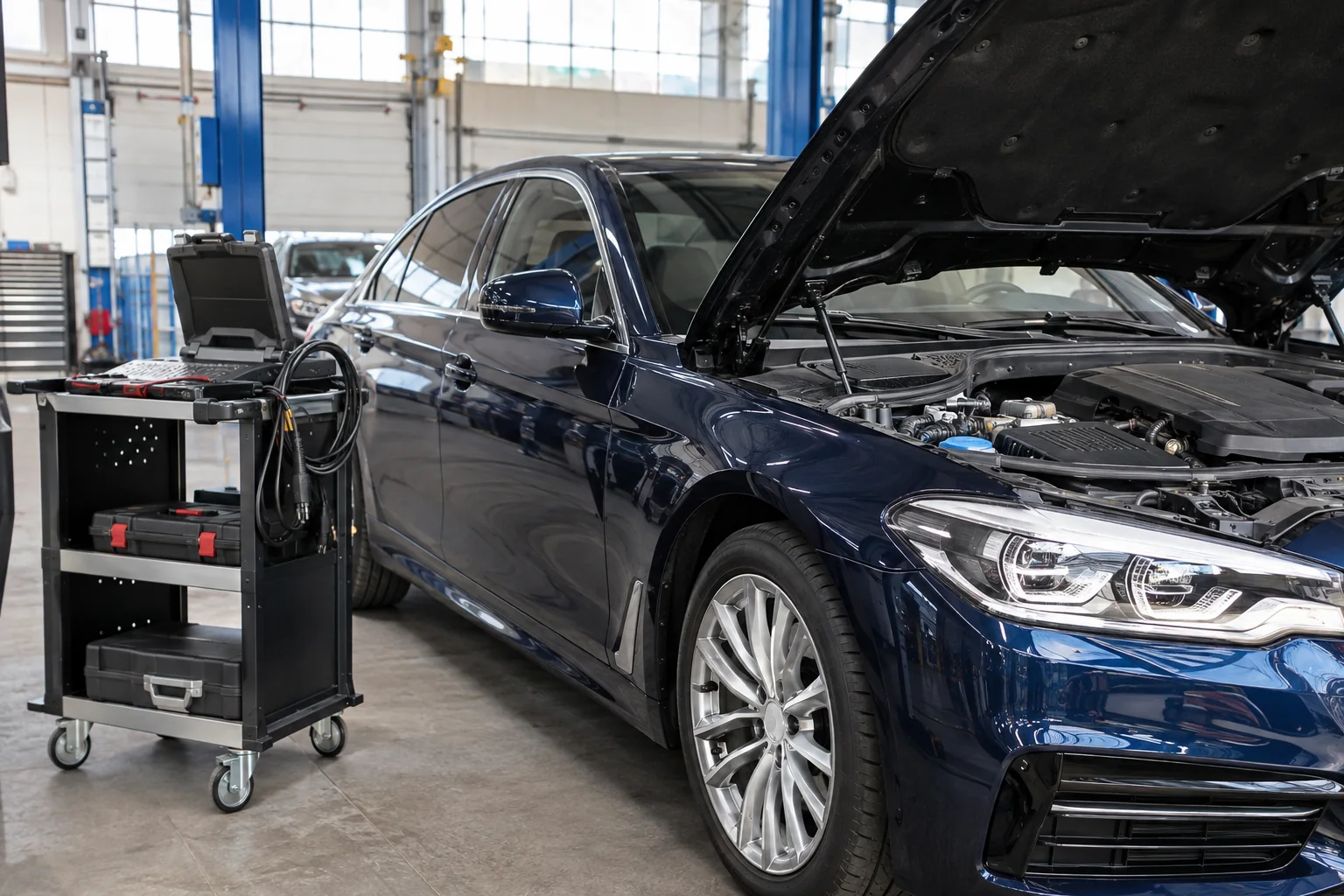
Check the warning and urgency first
A small stain, a dashboard message and a change in vehicle control are different complaints. Follow any instruction to stop. If braking, steering or stability changes, or the engine stalls repeatedly, stop safely and discuss suitable assistance. Do not drive again just to demonstrate the symptom or assume an amber indication permits a fixed distance.
| What you notice | What matters now | Sensible next step |
|---|---|---|
| Stop instruction or changed braking or steering | Vehicle control or a critical system may be affected | Stop safely and arrange appropriate assistance before further troubleshooting |
| Overheating, oil-pressure warning or suspected fuel leak | Continuing to operate or investigating carelessly can add risk or damage | Follow the message and handbook; do not open a hot cooling system or attempt fuel-system work |
| New noise, seepage or comfort-system complaint | The symptom still needs context and assessment | Record it safely, check the handbook and seek advice on urgency before deciding how to move the car |
Steam or a high-temperature message is not an invitation to remove the coolant cap. Leave a hot cooling system closed. A fuel smell or visible fuel leak also needs prompt professional advice, without starting the car to find the source. For recovery from a Dubai basement, describe access height, location and whether steering, brakes or wheel movement are affected so suitable equipment can be arranged.
Match the advice to your BMW
This is an overview of possible concerns, not a failure ranking or a prediction that every BMW will develop them. Model, year, engine, powertrain and equipment change the checks. Engine-oil, fuel, turbo and exhaust sections apply to relevant combustion-engine vehicles, including applicable hybrids; they are not an electric-BMW maintenance list.
Hydraulic steering, electric steering, conventional springs and air suspension require different work. Give the workshop your vehicle details and use the matching handbook. BMW's Driver's Guide explanation describes model-specific information accessed through the VIN. Do not publish your VIN in a public comment or follow a procedure for a different model.
15 BMW problems and what the signs can mean
Choose the observation closest to yours. Each section separates a possible fault from the finding needed to support a repair.
01 Engine oil leaks
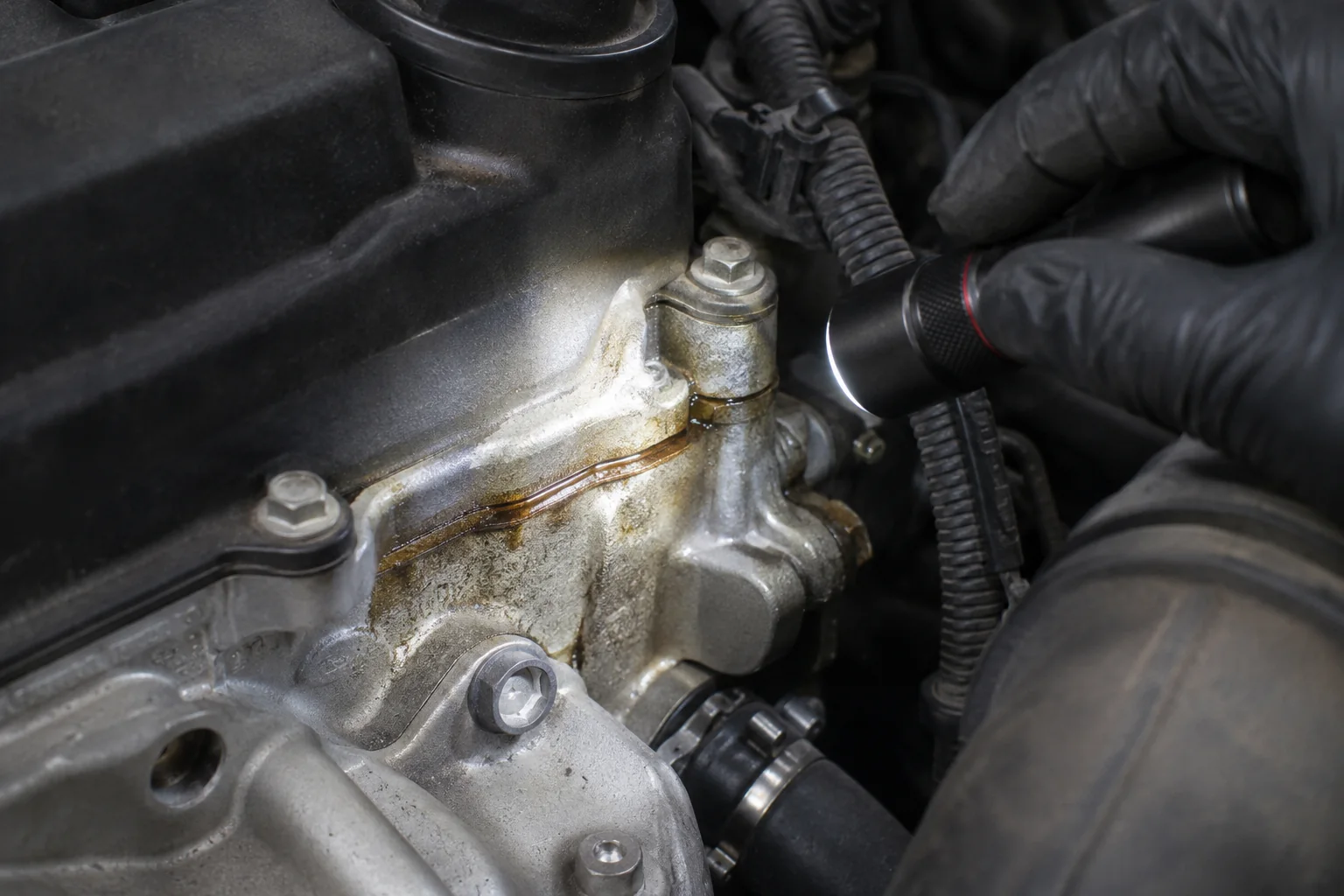
Fresh oil marks, a burnt-oil smell or repeated oil-level changes may justify inspection. On applicable engines, gasket joints, housings or connected lines are possible sources. Oil can travel across covers and undertrays, so the lowest wet point is not necessarily the origin. A stain alone does not identify a valve-cover gasket or oil-filter housing.
Record where and when you notice it without going underneath. An oil-pressure warning is a different urgency decision from a minor external seep. A workshop can trace the source and assess the loss before discussing oil-leak repair. Cleaning and rechecking may help locate a leak, rather than replacing several seals by guesswork.
02 Coolant loss and overheating
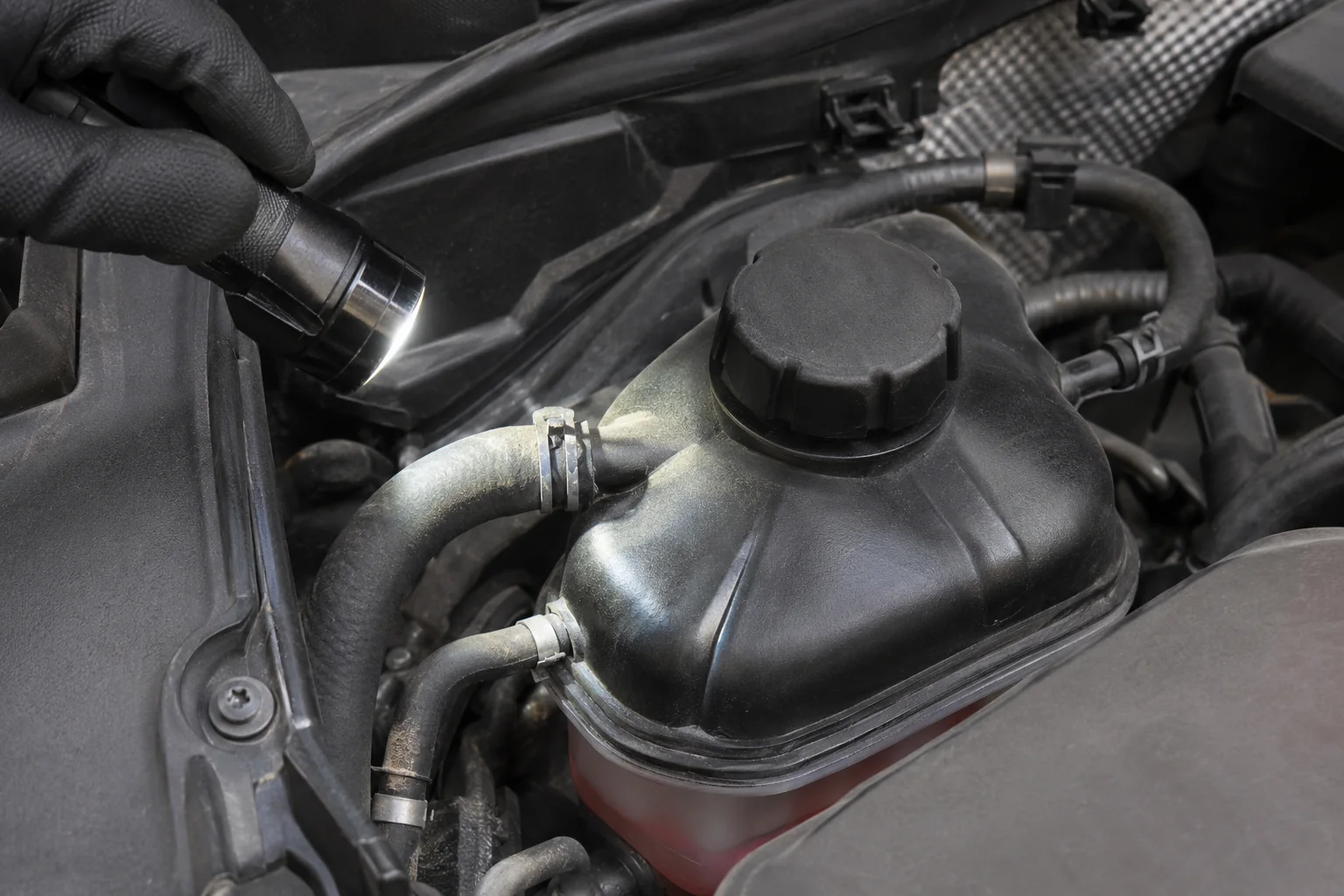
A low-coolant message, dried residue, damp connections or a temperature warning need different questions. Hoses, the expansion tank, radiator, pump or thermostat may be involved, depending on the system. A fan running loudly does not by itself prove which part failed.
Leave the system closed while hot and follow the warning instructions. Workshop checks may include an appropriate leak or pressure test and assessment of circulation, temperature control and fan operation. HELLA's cooling-system diagnostic guidance explains this broader investigation. Use the radiator service when findings actually support radiator work, rather than treating every coolant complaint as the same repair.
03 Electrical warnings and intermittent operation
A blank infotainment display, a weak start and a safety-system message are not equivalent electrical faults. Note which functions changed together and whether the concern followed battery work, water exposure or a period parked. Supply, connections, communication and the affected component may need checking.
A disappearing warning is not proof of repair. Keep the exact wording and avoid disconnecting the battery simply to clear the display. Where starting or charging history is relevant, the charging-warning guide explains that separate concern. A battery or module should be replaced for a supported finding, not because several messages appeared at once.
04 Harsh shifting or delayed engagement
Record whether a shift concern happens cold, after warming, while selecting a gear or during a particular change. A warning, leak, loss of drive or unusual noise changes the investigation. A jolt alone does not establish low fluid, a failed gearbox or the need for a software update.
Proper checks account for the fitted transmission, fault records, operating conditions, fluid condition or level where indicated, and related mount or driveline concerns. Fluid checking follows the correct procedure rather than an improvised top-up. The transmission repair service should explain the evidence and scope before proposing repair or replacement.
05 Poor starting and fuel-supply concerns
Long cranking, rough running or reduced power can involve fuel supply, but can also arise from ignition, air, mechanical or electrical concerns. Low-pressure supply and high-pressure injection equipment are not interchangeable. The relevant arrangement depends on the engine.
Do not loosen fuel lines or start the car to investigate a suspected leak. Report stalling, fuel smell and recent work. A workshop can evaluate suitable records, supply and pressure information before condemning a pump. The fuel-pump service is appropriate for supported pump work; the symptoms alone do not prove one is needed.
06 Suspension noises and changes in ride height
A knock over bumps, vibration, uneven tyre wear and a corner sitting low can lead to different checks. Bushes, control arms, joints, dampers, tyres and wheels should not be treated as one fault. Air springs and their supply system are another path only on vehicles equipped with them.
Report a visible stance change or loss of control before deciding to drive. Do not crawl under a car supported only by a jack. A suspension assessment can distinguish wear or damage from an air-system concern. Replacing a bush is not the same job as repairing air suspension.
07 Timing-related rattles and engine noises
Describe when a noise occurs, how long it lasts and whether it comes with rough running or a warning. Belt-drive components, exhaust parts and other engine concerns can resemble a timing-area noise. A recording made safely while parked may help, but repeatedly starting an engine to demonstrate a serious noise is unwise.
The engine and test findings govern whether timing-chain work is justified. A broad model reputation is not a diagnosis. Following the correct oil and maintenance guidance matters, but does not guarantee that a chain, guide or other component cannot fail.
08 Brake noise vibration or changed stopping behaviour
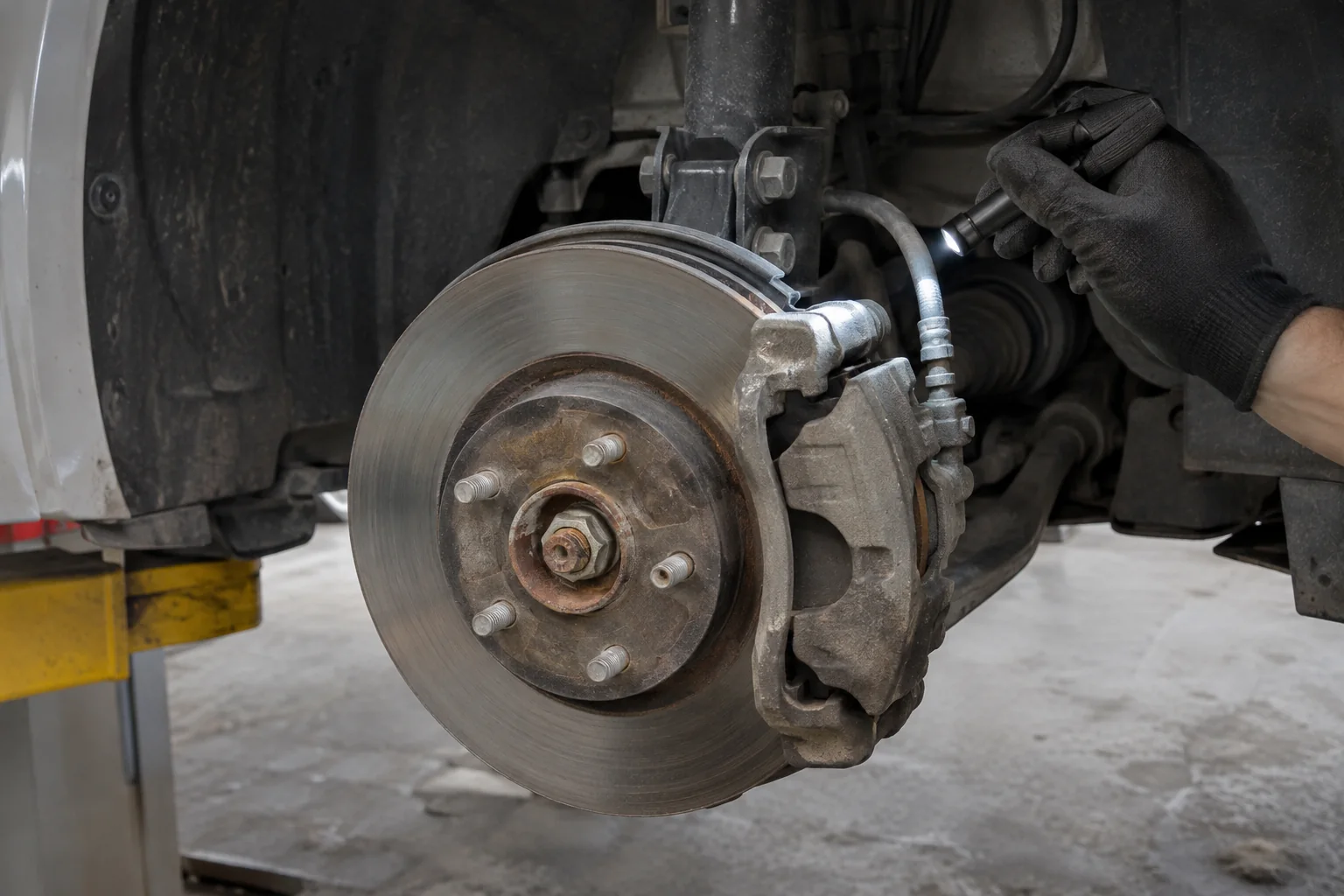
Squeal, grinding, pedal vibration, pulling and increased stopping distance should not all be reduced to worn pads. The friction surfaces, calipers, hydraulic system, tyres and related components may need different checks. Changed braking or a stop instruction calls for safe stopping and assistance.
Ask what the inspection found and which measurement or physical condition supports replacement. A brake inspection can separate pad wear from other faults. Do not test the brakes with repeated hard stops on a public road. Service history and an actual inspection are more useful than assuming BMW brakes wear quickly as a brand-wide rule.
09 Power loss smoke or suspected turbo trouble
On a turbocharged engine, reduced power, noise or smoke can involve the turbo or another system. Air and charge pipes, fuel delivery, exhaust restrictions, lubrication and crankcase ventilation may affect the symptom. A turbo fault should not be diagnosed from a sound or exhaust colour alone.
Garrett's turbo diagnostic guidance recommends a broader investigation before replacement. If damage is found, ask about its cause as well as the failed part. A replacement turbo will not address an unresolved supporting-system fault.
10 Air conditioning that cools poorly or works intermittently
Separate weak airflow from airflow that is strong but warm. Note whether the complaint changes with fan setting, time parked, traffic or the selected temperature. Blower, air-distribution, control, heat-rejection and refrigerant-circuit concerns require different tests.
A low refrigerant charge needs an explanation rather than automatic repeat top-ups. Noise is another clue, not proof of a failed compressor. The AC assessment should connect the symptom to findings before service or replacement. Dubai heat makes poor cooling noticeable; it does not identify the component responsible.
11 Heavier steering whining or steering warnings
Establish whether the car has hydraulic or electric assistance. Fluid, pump and hose advice applies to fitted hydraulic equipment. Electric power steering does not have a hydraulic steering-fluid service to perform. A system warning or sudden change in effort also needs assessment of the actual vehicle and message.
Do not assume topping up fluid is a cure or force the steering repeatedly to reproduce a noise. Tell the workshop when the change occurs and whether a leak or recent work is involved. The steering-malfunction service is a broader assessment route than sending every steering concern to a hydraulic-leak repair.
12 Exhaust rattles leaks and emissions warnings
A rattle, blowing noise, smell or engine warning may involve separate concerns. Loose shields or supports, a leak and an emissions-control fault are not the same repair. A check-engine message alone cannot establish that a catalytic converter needs replacement.
Report exhaust fumes entering the cabin or changed running promptly and ask about suitable assistance if safe use is in doubt. Do not inspect a hot exhaust or go beneath an unsupported car. The exhaust-rattle guide covers that particular symptom, while the actual vehicle and findings determine the repair.
13 Symptoms that raise a head-gasket question
Overheating, unexplained coolant loss, persistent exhaust vapour or misfire may justify investigation, but none alone confirms a failed head gasket. Brief condensation and a serious internal engine concern should not be treated as identical. External coolant leaks and other engine faults must also be considered.
Professional checks may include suitable cooling-system, combustion-gas, compression or leakage tests where indicated. Ask how the findings support the conclusion and what damage remains uncertain. The head-gasket repair service belongs after that assessment, not as the default outcome for every white exhaust plume.
14 Crankcase ventilation and oil-use concerns
Crankcase ventilation, also called CCV or positive crankcase ventilation (PCV), manages gases and pressure within the engine. On the relevant design, a breather fault can contribute to oil use, leaks or poor running. The valve or regulating equipment may be integrated into another assembly, so the correct engine layout matters.
There is no universal oil-cap suction test that establishes every breather fault. Describe oil top-up history and running changes, and ask what pressure or related checks are appropriate. Do not replace a cover or dismantle hoses merely because crankcase ventilation appears on a common-problems list.
15 Rust corrosion and hidden previous repairs
Surface corrosion on exposed metal differs from damage affecting a structural area or mounting point. Age, storage, environment and previous body repairs can change the risk. A photograph of bubbling paint cannot establish how far damage extends beneath it.
Record accessible areas without removing protective material or getting underneath. Have suspicious corrosion assessed before covering it with treatment. For a used BMW, include repair history and underbody condition in an agreed inspection scope. Cosmetic treatment alone cannot establish that a structurally important area is sound.
Bring useful observations to the inspection
Once safely parked, keep the exact warning wording and describe the first change you noticed. Include model, year, powertrain, recent work and whether the symptom occurs cold, warm, intermittently or alongside another warning.
- Keep warning photographs and existing diagnostic reports without clearing them just to tidy the display.
- Note accessible stains, odours, noises or ride-height changes without reaching behind wheels, opening hot systems or touching high-voltage equipment.
- Bring repair invoices, fluid top-up history and the circumstances of a breakdown or water-exposure event when relevant.
- Explain a braking, steering or stalling concern before arranging transport or agreeing to a road test.
An accurate complaint can narrow the investigation. It does not replace inspection or turn a video into a confirmed component diagnosis.
Ask how the findings support the repair
- Identify the vehicle and the complaint
- The fitted equipment, warning sequence and actual symptom determine the diagnostic path.
- Preserve records and check the relevant systems
- Appropriate diagnostic access, physical inspection and supply checks help separate a current cause from a historical or secondary record.
- Corroborate the suspected fault
- Measurements, leak tracing, component checks or mechanical findings should explain why the proposed repair addresses the complaint.
- Agree the repair and confirmation
- Ask what was found, what remains uncertain and how the original symptom will be reassessed after the work.
A fault code naming a sensor or module does not prove that part failed. Wiring, supply or another system may explain the record. Equally, an intermittent symptom that is absent at the appointment is not automatically resolved. Agree the next evidence to collect rather than approving a speculative parts list.
Separate assessment cost from the repair quote
There is no single price for a common BMW problem. The same symptom may lead to a connection repair, a worn component or more extensive work. Confirm the assessment scope and charge before the visit, then request a quote tied to the finding.
The quote should identify parts and specification, labour, fitting items, any applicable calibration or programming and the total fitted amount. Ask what further work requires approval and what written cover applies. Comparing a small repair with a complete assembly replacement without those details is misleading.
The BMW inspection service explains the commercial assessment route. For a used-car check, confirm the checklist, access limits and report you will receive. An inspection can document what was checked; it cannot promise a fault-free future or reveal every hidden condition.
Questions about common BMW problems
Does this list mean my BMW will develop all 15 faults
No. It describes possible concerns across relevant systems. Model, engine, age, powertrain, equipment and history change what applies. A common-problems list is not a diagnosis or a prediction for an individual vehicle.
Can I drive to the workshop if the car still starts
Starting does not establish that driving is safe. Follow the exact warning and handbook. Stop safely if instructed or if braking, steering or stability changes. Explain overheating, stalling, fuel-leak or other serious concerns before deciding how to move the car.
Should I replace the part named in a fault code
Not from the code alone. The record needs to be interpreted with the complaint, relevant circuit or mechanical checks and supporting findings. Ask why the proposed part is responsible rather than assuming its name proves failure.
Does regular maintenance prevent every BMW problem
No. Correct maintenance supports the vehicle and can help reveal developing concerns, but does not guarantee that a component, electrical system or hidden defect cannot fail. New symptoms still need appropriate assessment.
What if the symptom disappears before the appointment
Keep the warning photographs, timing, conditions and repair history. Do not repeatedly recreate a risky event or erase useful records. The workshop should explain what was checked and agree further observation or testing if the concern cannot be reproduced.
Do these checks apply to electric and hybrid BMWs
Only where the system is fitted. Combustion-engine oil, fuel and exhaust advice is not an electric-vehicle checklist. Hybrids combine systems and require the correct procedures. Leave high-voltage equipment and inaccessible components to suitably equipped personnel.
Published by BMW Repair Dubai. Manufacturer references support the selected principles they describe. Vehicle-specific instructions and actual findings determine the applicable checks; this overview does not establish a recall entitlement or a diagnosis.
Independent BMW workshop in Al Quoz
Discuss the symptom before arranging a visit
Share your model, year and powertrain, the exact warning, when the concern appears and recent work. Describe any braking, steering, overheating or stalling issue first. Our workshop at Al Quoz, Dubai can discuss the assessment scope and charge and whether suitable recovery should be arranged.
Independent BMW specialist. Not affiliated with BMW AG.