
Oil line or joint repair
AED 600 to 1,800A confirmed accessible feed or return connection repair, required line or seals, fitting, cleaning and a leak recheck. Difficult access can increase the total.
Oil feed lines, return lines, seals and coolant pipes
Oil around a BMW turbo can come from a leaking feed line, a tired return line, worn turbo seals or another leak higher up the engine that simply lands on the turbo. We trace the exact source first, then replace only the part that is leaking, so you do not pay for a turbo that is still healthy.
Budget for the confirmed repair
A leaking joint, a damaged line and a worn turbo are different jobs. These planning estimates help compare the likely scope; inspection establishes the repair your BMW needs.
A confirmed accessible feed or return connection repair, required line or seals, fitting, cleaning and a leak recheck. Difficult access can increase the total.
A selected repairable unit, removal and refitting, agreed specialist repair and final checks. Suitability depends on inspection; this is not an external rubber-seal replacement.
A compatible replacement on selected single-turbo applications, installation and checks. Multi-turbo engines, genuine assemblies and extensive access can exceed this range.
These estimates are informed by published Dubai repair prices, not fixed BMW Repair Dubai offers. They exclude initial diagnosis, recovery and unrelated engine work. Required oil-line work, oil and filter, coolant and intake cleaning are identified in the written quote. Turbo coolant-line repairs are quoted separately after locating the leak.
We confirm the assessment fee before booking. Your quotation states parts, labor, necessary fluids, testing and additional recommended work. Tell us your model and symptoms to start; we identify the engine and suitable parts.
Check safety before arranging a visit
A small visible leak does not establish that driving is safe. Oil can collect on undertrays or reach hot exhaust components. Follow the exact dashboard warning and call for advice about inspection or recovery.
Stop safely and switch off. Do not restart or continue merely because oil has been added. Arrange recovery and diagnosis.
Stop safely, switch off and keep clear of hot components. If there are flames or immediate danger, move people away and contact emergency services.
Do not run the engine to see whether the problem clears. Arrange suitable recovery and assessment before further driving.
An oil-level message is different from an oil-pressure warning. Follow the vehicle’s level-check instructions, avoid overfilling and arrange assessment of unexplained loss. Topping up does not repair a leak or establish that driving is safe. Stop for overheating warnings and never open a hot cooling system.
Six places the oil can come from
A turbo needs a steady supply of engine oil to lubricate and cool its shaft, and that oil has to drain back to the sump just as freely. Every joint along that path is a possible leak.
A small pressurised pipe from the engine to the top of the turbo. Its sealing rings and crimped ends harden with heat.
A larger pipe that carries oil back down to the sump. Its gasket and rubber section are common leak points.
Inside the turbo itself. When they wear, oil escapes into the intake or exhaust rather than onto the outside.
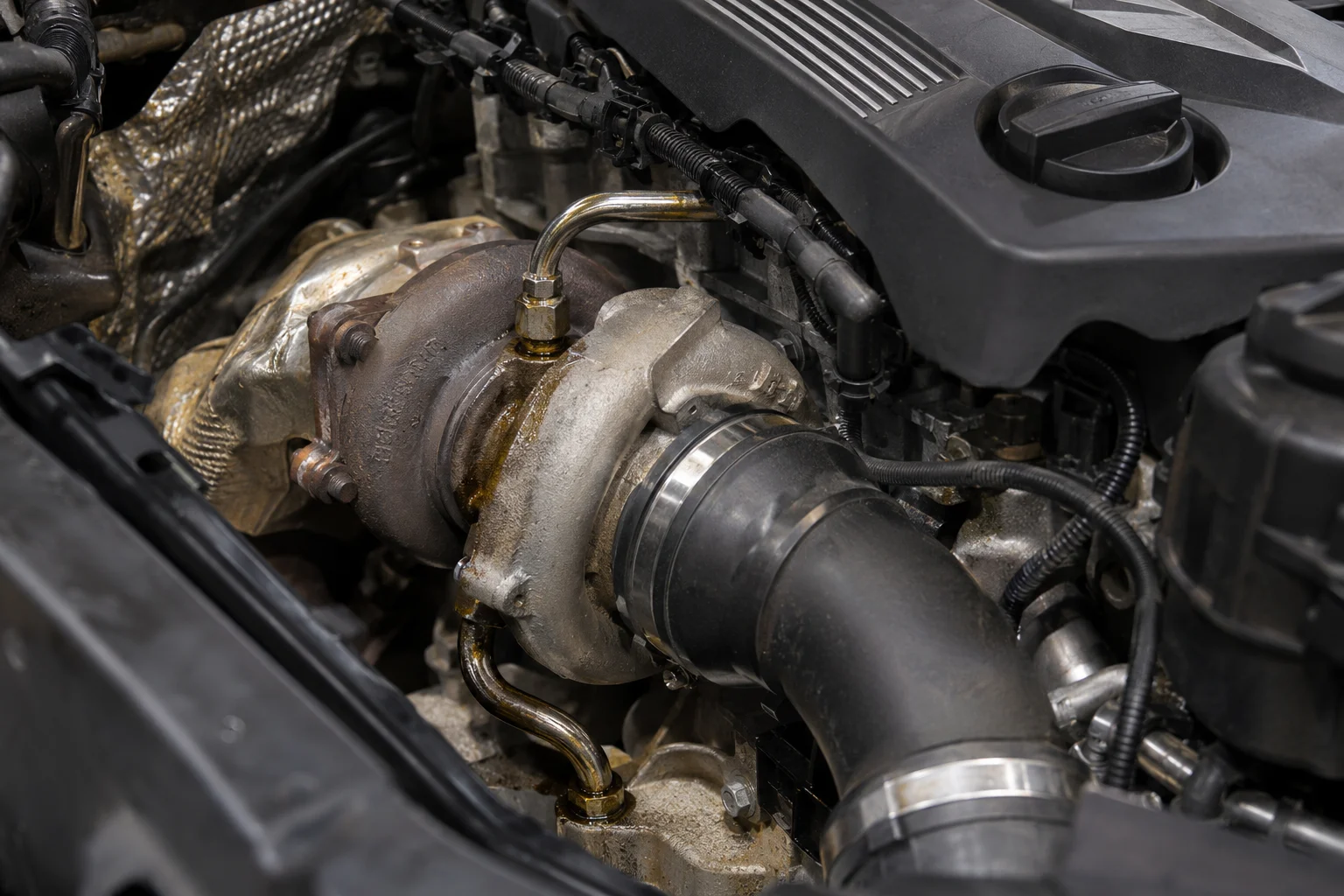
Most modern BMW turbos are water cooled, with coolant pipes that can weep at their seals.
Oil mist from the crankcase ventilation can seep from intake pipe joints and look like a turbo leak.
A valve cover or oil filter housing gasket can drip down onto the turbo and fool even experienced eyes.
On most BMW six cylinder engines the turbo sits low on the exhaust side, so oil from anywhere above it runs down and collects there. Air flowing under the car then spreads it further back. A turbo that looks soaked in oil may only be the place where a leak ends up, not where it begins, which is why our inspection always starts at the top of the engine. Leaks at the valve cover gasket are one of the most common culprits.
What have you noticed
Smoke, smells and wet pipework help guide the inspection. None proves that the turbo needs replacing.
Oil may be reaching hot exhaust parts from a line, gasket or another leak above the turbo.
Oil entering the intake or exhaust needs diagnosis. Feed-line checks depend on the fitted engine.
Turbo condition, oil drainage and crankcase ventilation are checked together.
Oil may be burning or collecting on the undertray even when there is no puddle.
We trace line connections and leaks higher up the engine before recommending parts.
Turbo coolant pipes are one possible source. The cooling system needs a separate leak check.
A light internal film differs from pooled oil or leaking joints. The amount and source matter.
The return line and other engine seals are checked. The drip location alone does not identify the fault.
Stop safely and switch off. A small visible leak does not establish that driving is safe.
Check when to arrange recoveryFind the cause before choosing parts
External oil, tailpipe smoke and oil in intake pipes guide the inspection, but none proves worn turbo seals on its own. A healthy turbo can leak internally when drainage or pressure conditions are wrong.
Check feed and return connections, damaged lines and oil traveling from a valve cover or another component above. The wettest point may not be the source.
Assess the quantity, symptoms, oil level, return path and crankcase ventilation. Internal wear is one possibility rather than the automatic conclusion.
Inspect wheel contact, damage and shaft movement against the relevant specifications. Shaft play alone, without the correct context and limits, does not decide the repair.
Turbo sealing depends on lubrication, drainage and pressure conditions as well as component condition. A restricted return line or abnormal crankcase ventilation can contribute to leakage. Those causes must be addressed with any confirmed turbo repair.
Not every oily pipe is a problem
The crankcase ventilation on a turbo BMW feeds a little oil vapour into the intake, so a light film inside the charge pipes is normal on many cars. Pooled oil, oil dripping from pipe joints or oil collecting in the bottom of the intercooler is not.
Excessive oil accumulation needs assessment because it can affect engine operation. Hose condition and connections are checked alongside the source of the oil. Required intake cleaning is identified in the quote once the source is confirmed. Residual oil can confuse the post-repair assessment. Cleaning is selected according to contamination and the applicable procedure; continuing smoke needs reassessment rather than being dismissed for a fixed period.
Light oil mist inside the pipes from crankcase ventilation.
Seeping couplings or a failing ventilation valve.
Often worn turbo seals or very high crankcase pressure.
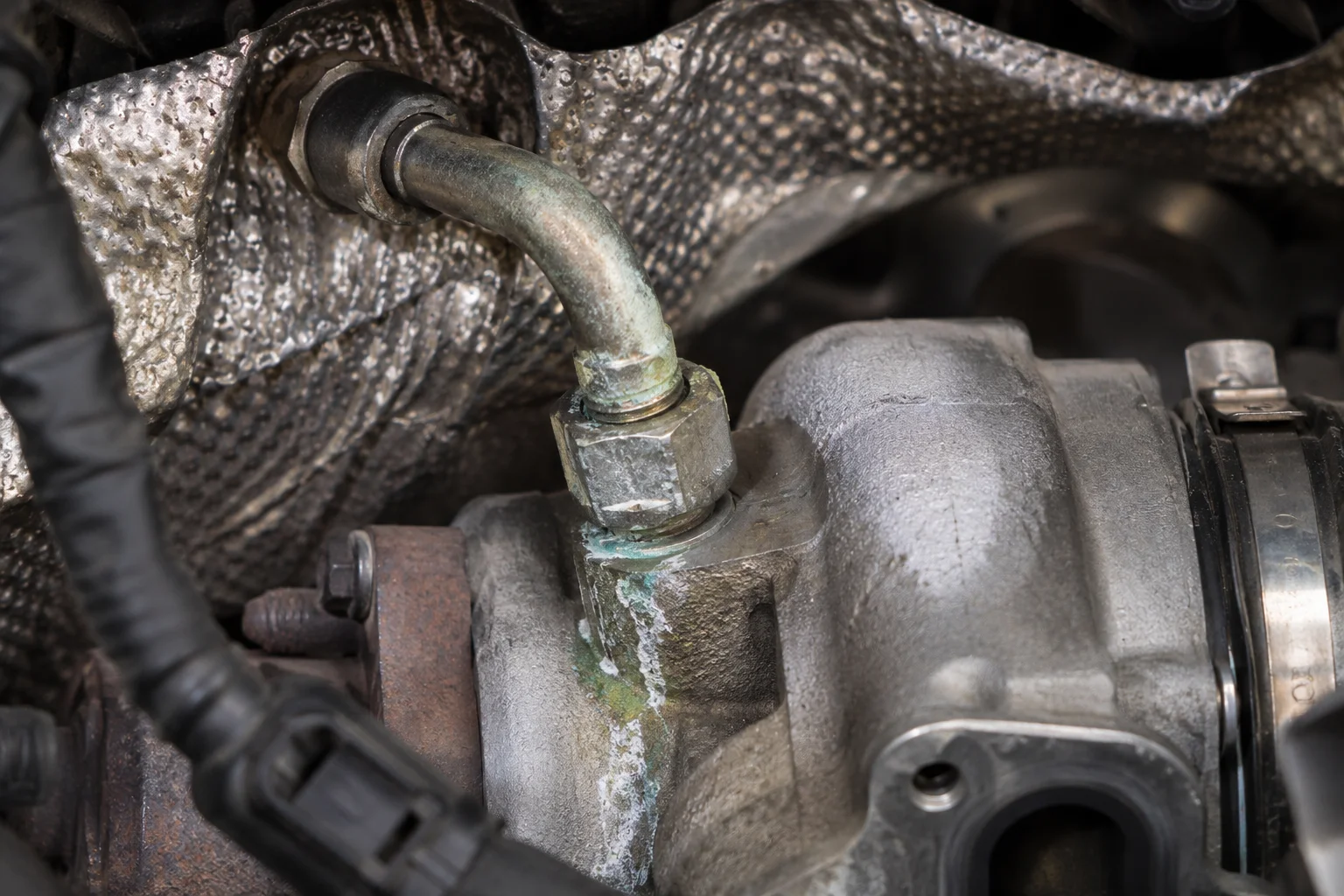
The other fluid at the turbo
On the N20, N55, N63, B48 and B58 engines, the turbo bearing housing is cooled by engine coolant as well as oil. The coolant pipes have their own seals, and when they weep they may leave residue around the connection. Color and smell vary and do not establish the source.
Coolant leakage is distinct from oil entering the intake or exhaust, although visible vapor can be misleading. Coolant loss can lead to overheating. We pressure test the cooling system to confirm it. Our coolant leak repair page covers leaks elsewhere in the system.
What we see on each engine
Every turbo BMW has its own weak spots. Knowing the engine tells us where to look first.
Two turbos, each with its own feed and return line. The lines weep at their sealing rings and the turbos sit low on the engine, so oil is easy to miss until it smells.
The oil feed line sealing rings are a common leak point. The oil filter housing gasket above can also drip down and look like a turbo leak.
BMW guidance addresses a specific cold-start smoke condition on applicable N20 and N26 vehicles using an updated oil-feed line with a check valve. We check applicability and current parts information; blue smoke alone does not justify this repair.
The turbos sit in the hot valley between the cylinder banks. Feed lines leak from their crimped ends, and heat ages every seal faster.
Feed connections, return paths, ventilation and coolant lines are checked according to the engine version and observed symptoms.
Oil feed pipes and oily intercooler hoses are common, and crankcase pressure plays a large part on high mileage engines.
Heat cycles, age, contamination and previous repairs can affect lines and seals. Local conditions alone do not prove the cause. Correct oil specification and maintenance matter; suspected oil-supply restrictions require inspection. Our BMW oil change service supports scheduled maintenance but does not repair an active turbo leak.
Trace it, then fix it
A turbo covered in oil is not proof the turbo is the problem. These checks find the real source.
The area is cleaned and inspected. Running checks are performed only after oil supply, fluid loss and fire risks have been assessed as safe.
Valve cover, oil filter housing and vacuum pump are checked so a leak from above is not missed.
Appropriate smoke testing and engine-specific ventilation checks help investigate intake leaks and abnormal crankcase pressure.
Where appropriate, accessible turbo components are checked for damage, oil accumulation and shaft movement against the applicable specification.
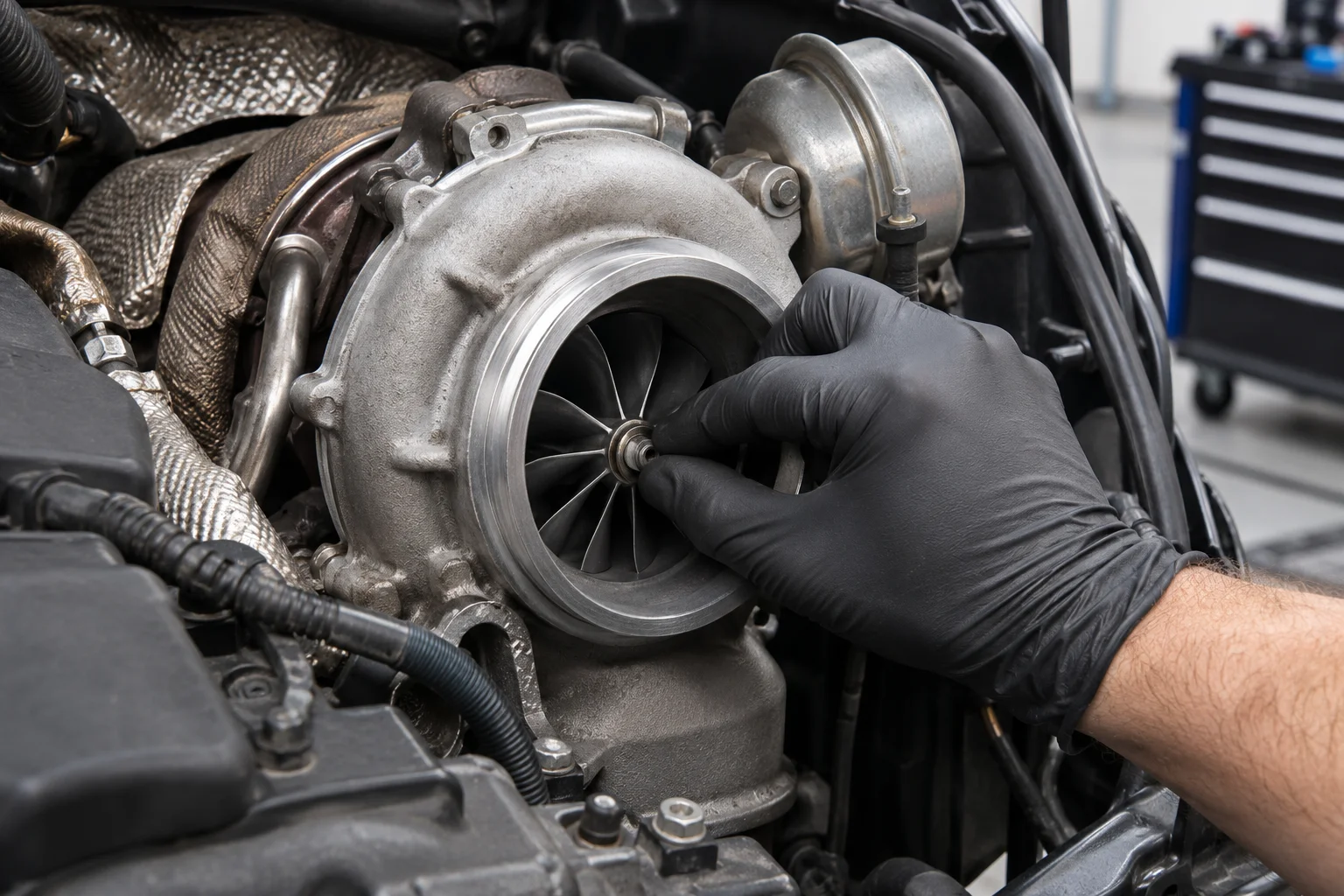
Only once the source is confirmed do we recommend a repair. If the turbo is healthy and a line is leaking, the line and its seals are replaced. If the seals inside the turbo are worn, we explain the options on our turbo replacement page and quote them separately. For leaks that turn out to be elsewhere on the engine, our oil leak repair page covers the next steps.
How the job is done
Leak traced, faults read, crankcase pressure and coolant system checked.
Photos of the leak, the cause, part options and the full cost before work.
New lines with new sealing rings, gaskets and copper washers where fitted.
Required cleaning is completed as quoted; remaining contamination or smoke is assessed.
Levels set correctly, cooling system bled where it was opened.
Appropriate running or road checks are completed only when safe, followed by a leak reinspection.
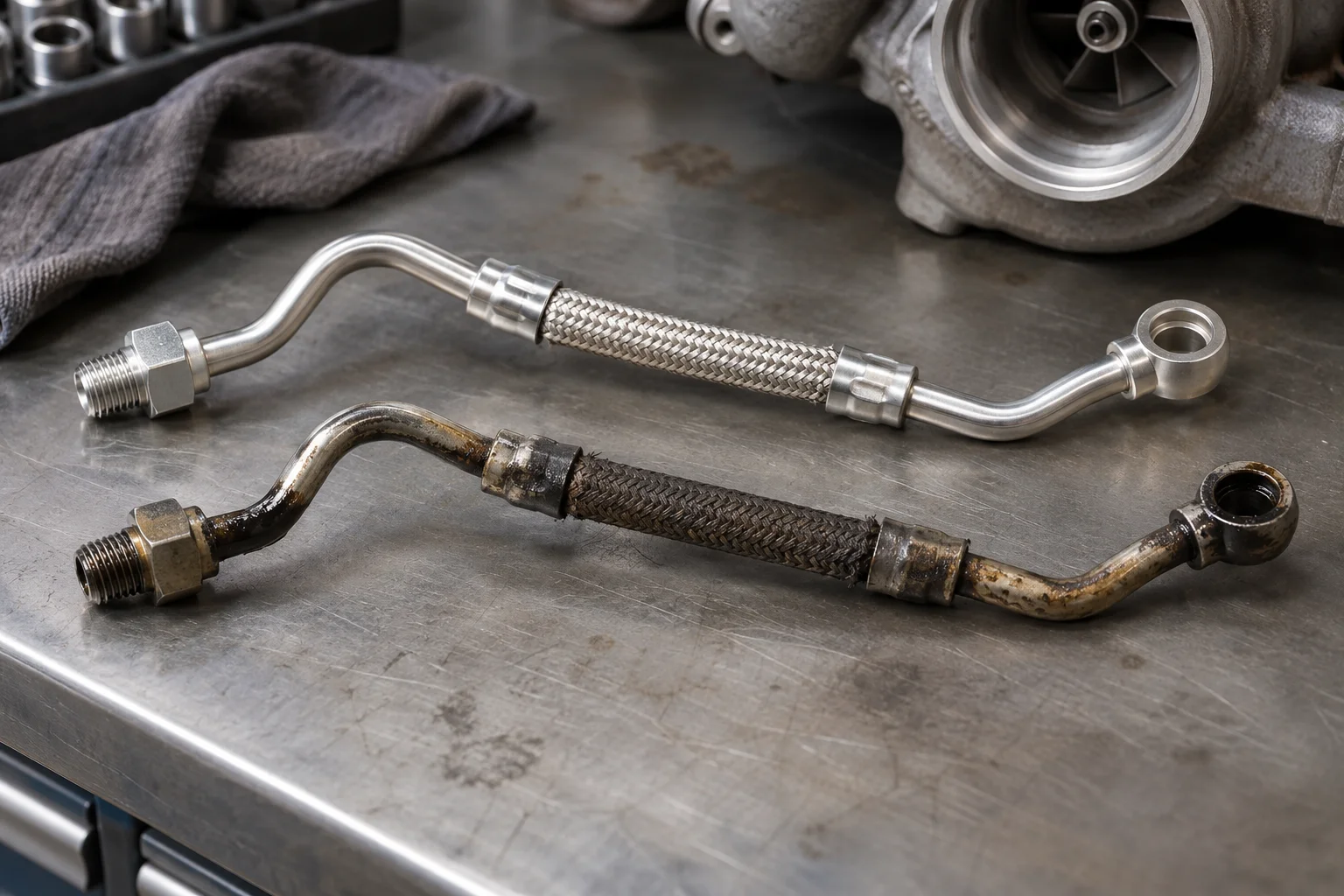
Old sealing rings and gaskets are never reused, because a turbo line that has been undone once rarely seals well on its old rings. If anything else is found while the area is apart, we send photos and price it separately, and nothing extra is done without your approval. Heat shields and brackets that were removed for access go back with new fixings where the old ones have corroded, so nothing rattles or touches the hot turbo afterwards.
Compare repair scopes
These example budgets are examples, not completed customer jobs or fixed workshop offers. Each assumes the stated engine and a confirmed repair need. Initial assessment and recovery are excluded unless your own quote includes them.
A new compatible oil-feed line, required connection seals, installation, cleaning and leak checks. Assumes the turbo is serviceable and the line fault is confirmed. Diagnosis, unrelated leaks and full oil service are separate.
Removal, an agreed specialist repair of a suitable unit, refitting and final checks. The repair is conditional on assessment of the assembly; additional oil lines, fluids or actuator work must be separately itemized.
A new compatible replacement unit, required mounting seals, installation and final checks on a selected application. Required feed-line work, oil service or coolant work is priced in the actual quote; this is not an all-inclusive offer for every 320i.
The written quotation identifies the actual part brand, new or rebuilt condition where relevant, labor, required additional parts, fluids and testing. We explain any change to the scope before asking you to approve extra work.
From inspection to handover
Understand the fault, the agreed cost and the checks completed before you collect your BMW.
Additional repairs are explained and priced separately before you decide.
Inspection photographs and an explanation of the leak source, with related work distinguished from the main repair.
The chosen parts, new or rebuilt condition where relevant, labor, required fluids and testing. Availability and the expected workshop schedule are confirmed once the repair is known.
The invoice, completed-work details and written warranty terms. Ask which final leak checks were performed and whether follow-up is needed.
Fresh leakage, recurring smoke or a warning after repair needs reassessment. Contact us if a symptom returns.
Before you arrange the repair
Do not assume a light visible weep is safe. Stop safely and switch off for oil-pressure warnings, smoke, a strong burning smell, rapid oil loss or power loss with smoke. Call for suitable inspection or recovery. Topping up does not make an unknown leak safe.
No. Follow the vehicle’s oil-level instructions for a level message. An oil-pressure warning requires stopping safely and switching off; do not continue driving simply after adding oil.
No. Lines, joints and components above the turbo can leak onto it. Internal leakage can involve drainage or crankcase pressure rather than worn turbo parts. We assess the relevant oil path before recommending repair or replacement.
Planning ranges are AED 600 to 1,800 for selected oil-line or joint repairs, AED 2,800 to 4,200 for repairable turbo work and AED 5,000 to 9,000 for selected replacement jobs. Initial diagnosis is excluded. Engine access, parts and additional work affect the written total.
We locate the fluid source and assess relevant oil lines, ventilation, intake contamination and turbo condition. Cooling-system checks are added when needed. We confirm the assessment charge and explain additional access or testing before proceeding.
Possible causes include oil entering through the turbo, ventilation system or engine components. BMW guidance describes an updated oil-feed line for a specific condition on applicable N20 and N26 vehicles. We verify symptoms and applicability rather than fit that line to every smoking BMW.
A light film can occur on many turbo engines. Pooled oil, unexplained consumption or smoke needs assessment. The amount and symptoms matter; an oily pipe alone does not prove turbo failure.
Abnormal crankcase pressure can interfere with turbo oil drainage and contribute to leakage. The applicable ventilation checks depend on the engine, and the cause should be addressed with related repairs.
A sound line with a serviceable leaking connection may need specified seals. A cracked, damaged or leaking crimped line generally needs replacement. Internal turbo sealing is a different repair requiring specialist assessment.
Some units are suitable for specialist repair; others require replacement because of damage, design or parts availability. Your quote identifies the proposed unit or repair, testing and supporting oil-line work.
Access, diagnosis and parts availability determine the schedule. An accessible line repair differs from turbo removal or specialist work. We confirm the expected completion time after the fault and scope are known.
We inspect lines and connections and use appropriate cooling-system testing. Residue color or smell alone is insufficient. Follow overheating warnings and never open a hot cooling system.
Contact the workshop for reassessment. Residual oil, a second leak or an unresolved underlying fault may require different action. Keep the invoice and findings; do not assume persistent smoke will clear with more driving.
Genuine BMW or suitable supplier parts can be quoted where available. Replacement and rebuilt units are distinguished. Confirm the written warranty, duration and exclusions for the selected parts and workmanship.
Free pickup is available in Dubai for driveable vehicles. For an unsafe leak or warning, request suitable recovery instead. We confirm arrangements and any recovery charge before dispatch.

Oil smell, smoke or a wet turbo?
Tell us your model and what you have noticed. We collect the car for free anywhere in Dubai, trace the leak and send you the full cost before any work starts.