
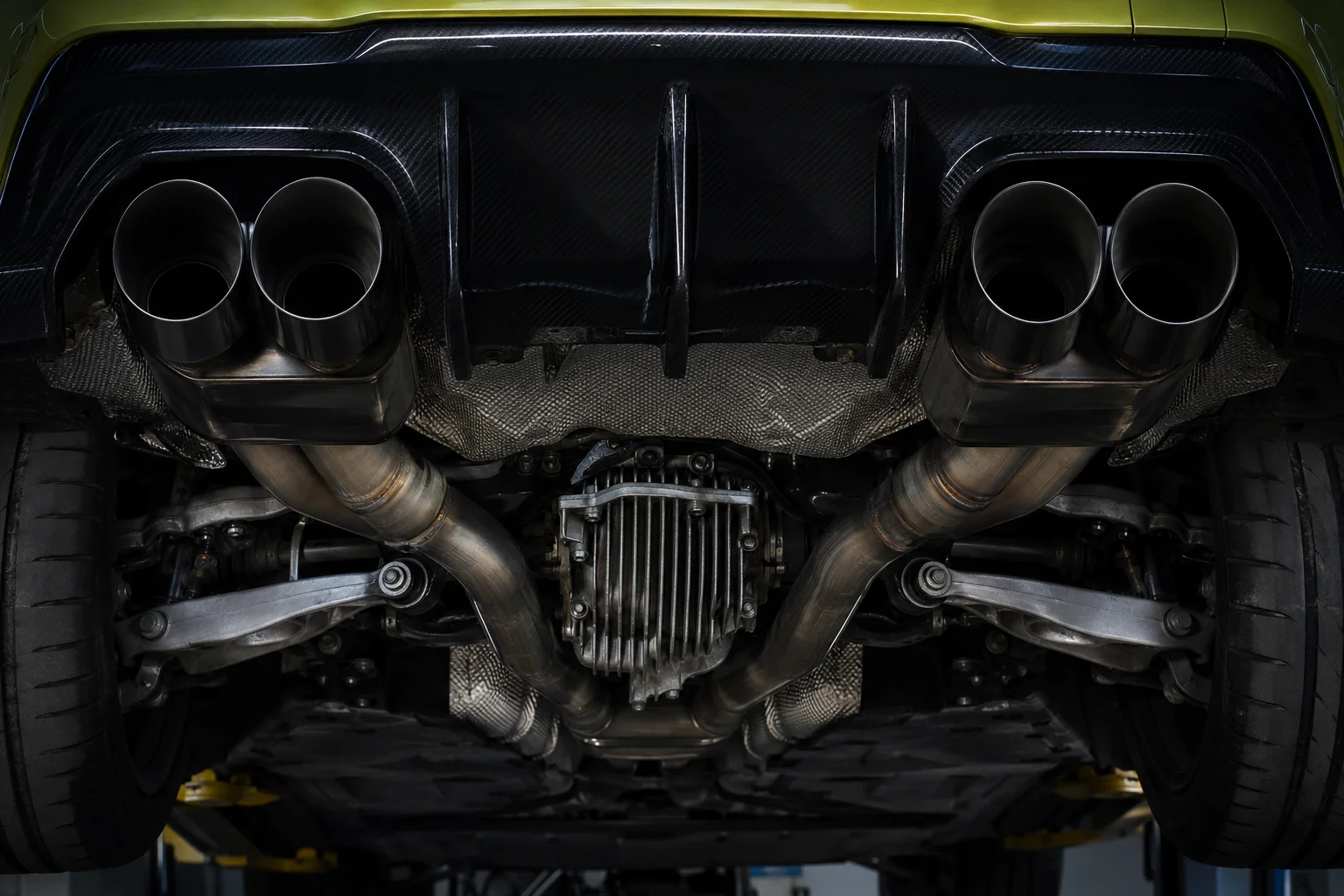
How the noise changes matters more than its name
Whining, humming and clunking are useful descriptions, but none proves that the differential is the source. Note the road speed, whether you are accelerating or coasting, and whether the noise appears while cornering. A sound that changes with vehicle speed needs a different investigation from one that follows engine speed while the car is stationary.
| What you notice | What it can suggest | What needs confirming |
|---|---|---|
| Whine or howl under acceleration | Gear contact or internal wear, among other possible sources | Whether the sound is localised to the final drive and changes with load |
| Whirring while coasting | Pinion-bearing or gear-related concerns | The operating pattern, lubricant condition and relevant bearing or gear findings |
| Hum or rumble that rises with road speed | A differential bearing, wheel bearing or tyre concern | Which assembly produces the sound and whether the road surface changes it |
| Clunk when taking up or releasing drive | Movement or clearance in mounts, joints or driveline components | The location of the movement rather than assuming internal gear failure |
| Groan, judder or binding in slow turns | A locking-differential concern or another driveline fault | The fitted system, tyres and vehicle-specific diagnostic procedure |
Use these patterns to describe the complaint, not to order parts. SKF's differential-noise technical guidance distinguishes acceleration, deceleration and cornering symptoms and identifies alternative driveline sources. The relevant BMW procedure is still needed for a particular vehicle.
When to stop driving and arrange assessment
Grinding or banging, strong new vibration, binding, a burning smell, a substantial fluid leak or a change in vehicle control needs prompt assessment. Do not keep driving to find out whether the sound gets louder. Arrange suitable recovery if the car cannot be driven safely.
A quieter, stable whine still deserves investigation, but a description alone cannot establish a safe driving distance. Tell the workshop whether the noise is new, worsening or accompanied by a leak or warning. Follow any instruction in the vehicle's handbook or Check Control message.
Do not perform sharp turns, abrupt throttle changes or high-speed runs to reproduce a sound. A workshop can decide whether a controlled road test is appropriate after checking the vehicle. Keep observations to normal journeys already made and stop if the condition changes.
If your BMW is stranded in a Dubai car park, provide the bay location, entry height and access restrictions when requesting recovery. Mention a locked wheel, inability to select neutral or a suspected driveline restriction. The operator needs this information to choose a suitable recovery method for the actual drivetrain.
Identify the differential fitted to your BMW
A differential transmits torque to driven wheels while allowing them to rotate at different speeds in a corner. The final-drive assembly contains gears and bearings, and its seals retain the specified lubricant. Mounts and surrounding shafts also affect how movement and noise reach the body.
The arrangement depends on the drivetrain and generation. Rear-wheel-drive, front-wheel-drive and all-wheel-drive BMWs do not all share the same component locations. Identify the vehicle and fitted assembly rather than assuming every BMW has the same rear unit or that every xDrive installation is identical.
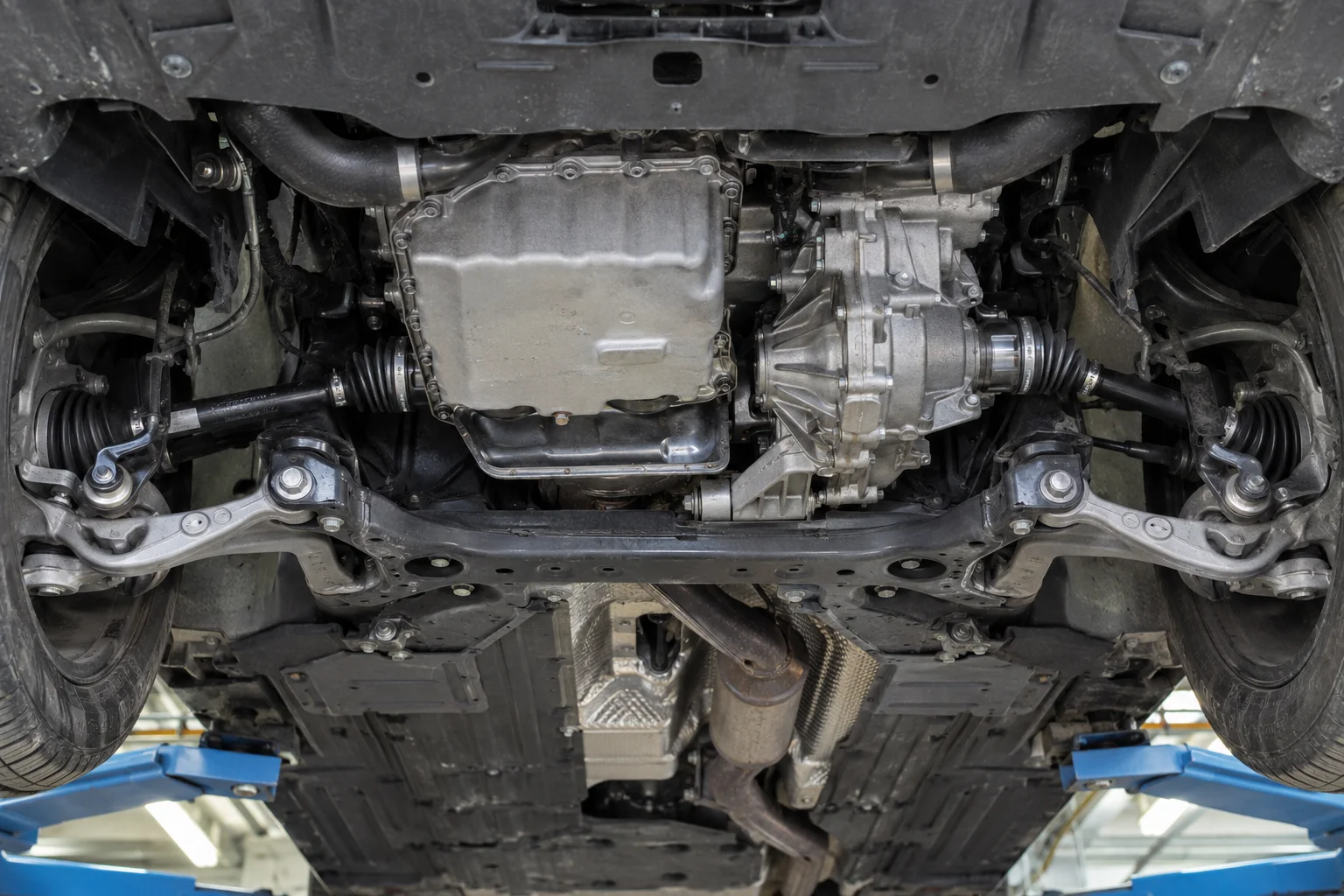
A conventional open differential and a limited-slip or electronically controlled unit also require different considerations. Some complaints involve gears or bearings; others involve the operation of a locking mechanism. An M badge or a driving-mode setting alone does not establish the exact hardware and service requirements.
Give the workshop the model, year and vehicle identification number when asking about parts or lubricant. Front and rear assemblies, final-drive ratios and locking functions need correct identification. A part advertised for the same model name is not necessarily suitable for every engine, production date or option combination.
Rule out wheel bearings tyres and other driveline sources
Noise travels through the body, so a sound that seems to come from the rear seat area may not originate directly beneath it. A wheel bearing, uneven tyre wear or another rotating component can be mistaken for differential noise. Replacing the final drive without localising the complaint can leave the original sound unchanged.

Wheel bearings and tyres
A wheel-bearing concern can cause a speed-related rumble. Tyre tread condition, pressure and the road surface can also influence what you hear. These observations guide inspection; they are not reliable reasons to identify a particular side by sound alone. Our wheel-bearing noise guide explains that related symptom without treating it as an internal differential failure.
Mounts shafts and joints
A clunk as drive is taken up can involve a mount, shaft joint or clearance elsewhere in the driveline. The workshop should identify where movement occurs and whether it is abnormal for the fitted system. The existence of a clunk does not establish that a gear tooth is broken.
Transfer-case and wider acceleration complaints
On applicable all-wheel-drive vehicles, the transfer case is a separate assembly from an axle differential. Turning judder or load-related vibration needs a diagnosis of the relevant system. For a sound that has not yet been localised, the guide to other noises during acceleration helps describe the wider complaint.
Check the tyre specification against the vehicle's approved fitment rather than assuming identical front and rear sizes are always required. Approved staggered arrangements exist. Pressure, wear and replacement history should be considered alongside the fitted drivetrain when investigating a noise or judder.
What a leak or oil change can tell you
Loss of lubricant can affect the operation and condition of a final drive, but oil on the outside of a housing does not identify the leak source by itself. Residue may have travelled from another location or remained after previous work. The source and extent need checking before a seal is condemned.
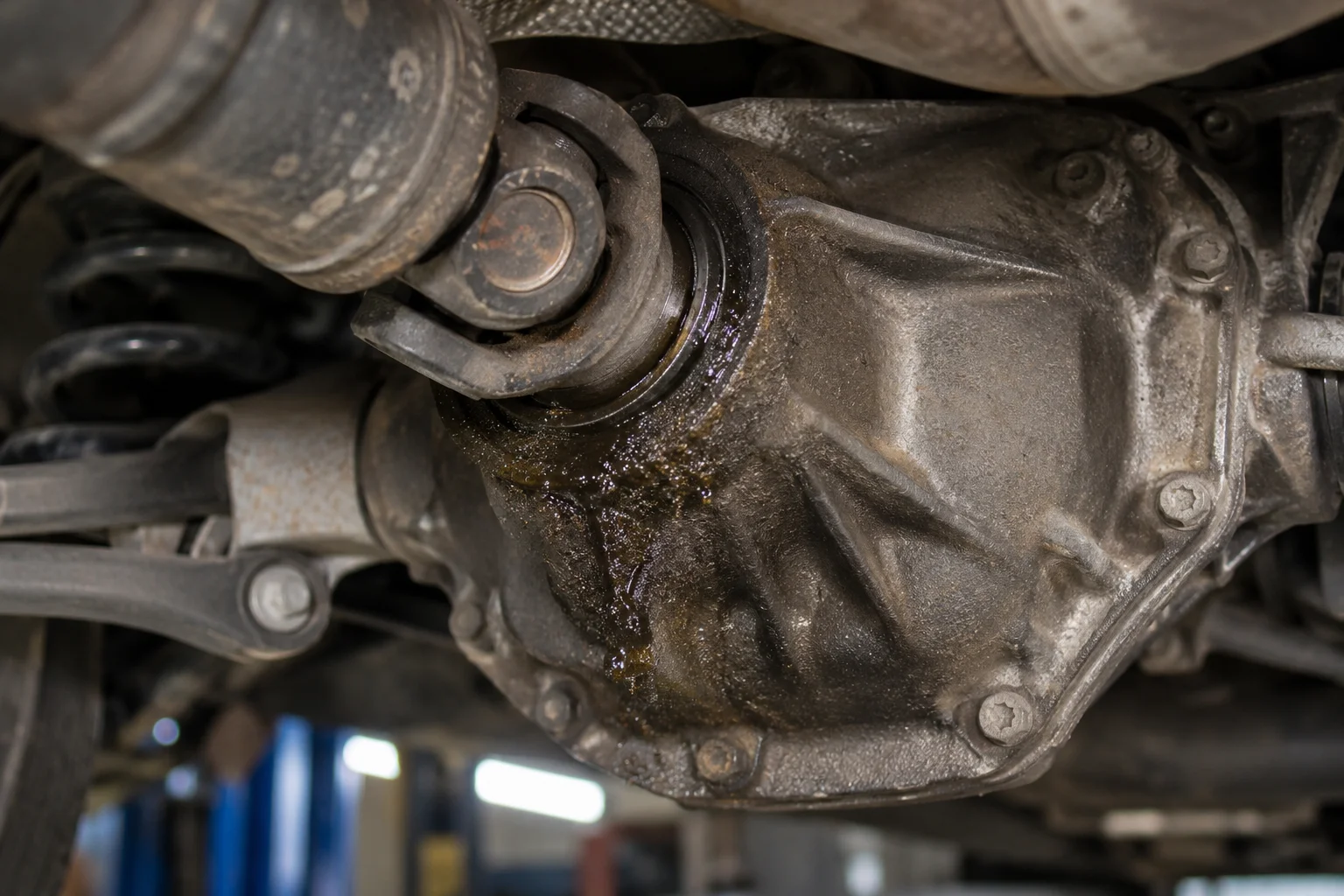
Inspection may involve the input area, output seals, housing joints and other applicable locations. The technician should establish the oil level and specification using the procedure for that unit, then assess whether the leak has accompanied noise or internal damage. Cleaning and rechecking may be needed to distinguish an active leak from old residue.
An oil service may address an identified lubricant-related concern. It cannot be assumed to reverse worn bearings or damaged gear surfaces. If the sound remains after an oil change, investigate the remaining evidence rather than repeatedly changing fluids or adding an unspecified treatment.
Use the approved lubricant and applicable service instructions for the exact assembly. Do not substitute a product solely because its viscosity looks similar, and do not add a friction modifier unless the unit's guidance calls for it. There is no single oil specification or universal service interval for every BMW differential.
Checking or changing differential oil is workshop work when it requires safe access beneath the car, correct vehicle positioning and a specific fill procedure. Never get beneath a vehicle supported only by a jack. Owners can record an accessible parked leak from outside without loosening plugs or touching hot components.
What testing should establish before a rebuild
A useful assessment connects the symptom to a finding. It should explain why the differential is suspected and what has ruled out the main alternatives. A generic engine-code scan cannot establish the condition of mechanical gears and bearings, and the absence of a fault code does not clear a noisy assembly.
- Confirm the pattern and whether testing is safe
- Record when the sound occurs, inspect for obvious concerns and decide whether a controlled road test is appropriate. Compare the original conditions rather than testing at an unrelated speed or load.
- Localise the source
- Inspect tyres, wheel ends, mounts and relevant shafts or joints. Suitable listening or vibration equipment may help distinguish neighbouring assemblies when the sound is transmitted through the vehicle.
- Inspect the identified final drive
- Check applicable leak points, lubricant level and condition, mounting condition and evidence of abnormal play. Interpret any wear debris alongside the symptom and the assembly's condition.
- Establish the required internal or control-system work
- If the findings justify further investigation, assess the relevant bearings, gears or locking system. Use the applicable mechanical measurements or diagnostic tests for that unit.
Backlash is the clearance between meshing gears. Bearing preload and the gear contact pattern are other important setup considerations in an appropriate rebuild. These are not owner adjustments to silence a whine. The workshop needs the right procedure, measurements and parts for the assembly rather than tightening a component until the noise changes.
Ask whether dismantling is needed to confirm the extent of damage and whether that work is included in the diagnostic charge. If further damage may only become visible after opening the unit, agree how the workshop will explain the findings and obtain approval before expanding the repair.
Why M and locking-differential complaints need specific checks
A groan or judder in a slow turn should not automatically be labelled a worn gear set. The fitted locking mechanism, lubricant, control system and other driveline components may need assessment. Identify the unit and the exact operating condition before transferring a solution from another BMW model.
For example, BMW's SIB 33 01 20 on low-speed rear-axle shudder describes certain G14, G15 and G16 vehicles with the S-02T4 M Sport differential. It calls for confirming the source and addresses a defined clutch-control concern through software calibration. That is an example of a configuration-specific diagnostic path, not an update prescribed for every noisy differential.
Ask the workshop to check current technical information for your vehicle. A historic bulletin found online does not establish that a software change, oil service or replacement is appropriate for a different unit. If the complaint includes warning messages, preserve their exact wording so relevant control-system checks can be included.
Choose the repair supported by the findings
A seal leak, mount fault, bearing problem and damaged gear set do not all require the same work. If the gears and housing remain serviceable, a supported repair may avoid a complete replacement. If important surfaces or the housing are damaged, a replacement assembly may be the more appropriate option.
| Confirmed finding | Possible work | Question to ask |
|---|---|---|
| Seal leak with no supported internal fault | Applicable seal or connection repair and correct lubricant service | Has the leak source been confirmed and the surrounding condition checked? |
| Abnormal mount or joint movement | Repair of the identified external component | Was the sound reproduced at that component? |
| Internal bearing or gear damage | Supported rebuild or suitable replacement, depending on condition and availability | What findings determine whether the existing assembly can be retained? |
| Applicable locking-system or control concern | The vehicle-specific remedy established by diagnosis | Which hardware, lubricant or software finding supports this work? |
A rebuild involves more than fitting a bearing and clearing a noise complaint. Relevant measurements, component condition, setup and final verification need to support the job. A replacement assembly must also match the vehicle; a used unit with an unknown history should not be described as equivalent to a new or properly assessed remanufactured unit.
Our differential inspection and repair service covers arranging an assessment and discussing the available work. This guide explains the symptoms and decisions so you can understand a recommendation before approving it.
Compare the quote and confirm the result
There is no single repair price for BMW differential noise. Cost depends on the identified assembly, access, the confirmed fault, parts availability and whether an external repair, rebuild or replacement is justified. Ask for the assessment charge and the limits of the initial inspection first.
- Parts and identity — Request the part description, side or axle, part number and supplier. Clarify new, remanufactured or used condition where relevant.
- Work included — Confirm removal and refitting, lubricant, seals, any applicable setup and the agreed verification.
- Charges and exclusions — Establish recovery, further diagnostic work and any additional approval stage.
- Warranty and timing — Get applicable terms in writing and distinguish actual working time from parts lead time or observation.
After the work, compare the same noise pattern under suitable conditions. Ask which symptom was resolved, which measurements or checks were repeated and whether anything remains. A different noise discovered later should be assessed separately rather than automatically attributed to the repaired unit.
For intermittent symptoms, agree how the workshop will reproduce them. A fault that occurs after a long journey or only when cold may not appear during a short check. If it cannot be demonstrated, ask what the evidence supports and what remains uncertain before authorising speculative replacement.
Maintenance that addresses the actual risk
Use the service guidance appropriate to the vehicle and its fitted differential. Report new leakage, a changed sound or a warning, and retain records of lubricant and repair work. If the vehicle has a specific running-in or follow-up requirement after work, ask for it in writing rather than assuming it applies to every BMW.
Maintain approved tyre fitment and pressures, and keep within the vehicle's loading and towing instructions. Tell the workshop about tyre changes, modifications or an impact when they coincide with the complaint. These details help investigation; they do not establish that a modification or road impact caused an internal fault.
Brake-pad replacement and radiator care are important for their own systems, but they are not a specific preventive treatment for differential whine. A performance upgrade is also not a default cure for an unidentified sound. Keep the response focused on the diagnosed fault and the vehicle's intended use.
If you cannot identify whether the sound is from a wheel, axle or another assembly, ask about noise assessment when the source is uncertain. A good starting point is a clear symptom record, not a list of parts to replace.
BMW differential noise questions
Can a wheel bearing sound like a differential
Yes. A speed-related rumble can have more than one source, including a wheel bearing or tyre. Sound location inside the cabin can be misleading. The workshop should localise the complaint and inspect the relevant components before recommending differential work.
Will changing the differential oil stop the whine
Only an appropriate diagnosis can establish whether an oil service is relevant. Correct lubricant cannot be assumed to reverse bearing or gear wear. Check the specification, level, leak history and mechanical findings rather than treating every noise with another fluid change.
Can I drive with a noisy differential
A safe distance cannot be determined from a sound description. Stop safely if there is grinding, banging, binding, major vibration, a substantial leak or a change in control. Otherwise describe the symptoms to the workshop promptly and follow its assessment of the affected vehicle.
Does noise from the front mean a front differential fault
No. Wheel bearings, tyres, joints and other components can transmit noise through the front of the car. The drivetrain layout also varies. Confirm which components are fitted and where the sound originates before assigning it to a front differential.
Why is a clunk still present after differential work
It may be the original symptom that was not fully resolved or a separate source such as a mount or joint. Compare the conditions before and after the job and ask the workshop to demonstrate the finding. Do not assume another internal replacement is needed without evidence.
Do all BMW differentials use the same oil
No. The fitted assembly and its requirements matter, including any locking function. Use the approved specification and vehicle-specific procedure. A product described as premium or suitable for differentials is not sufficient evidence of compatibility.
Published by BMW Repair Dubai. The linked SKF guidance supports general noise distinctions; the BMW bulletin provides a limited model-specific example. Actual repair decisions require the affected vehicle's identification, inspection and applicable technical information.
Independent BMW workshop in Al Quoz
Get the differential noise assessed
Share your model and year, where the sound seems to come from, and whether it happens on acceleration, coasting or turns. Mention any leak, warning or recent work. Our workshop at 39 Al Quoz 4, Dubai can discuss the assessment scope and charge; describe any severe symptoms before deciding how to bring the car in.
Independent BMW specialist. Not affiliated with BMW AG.