
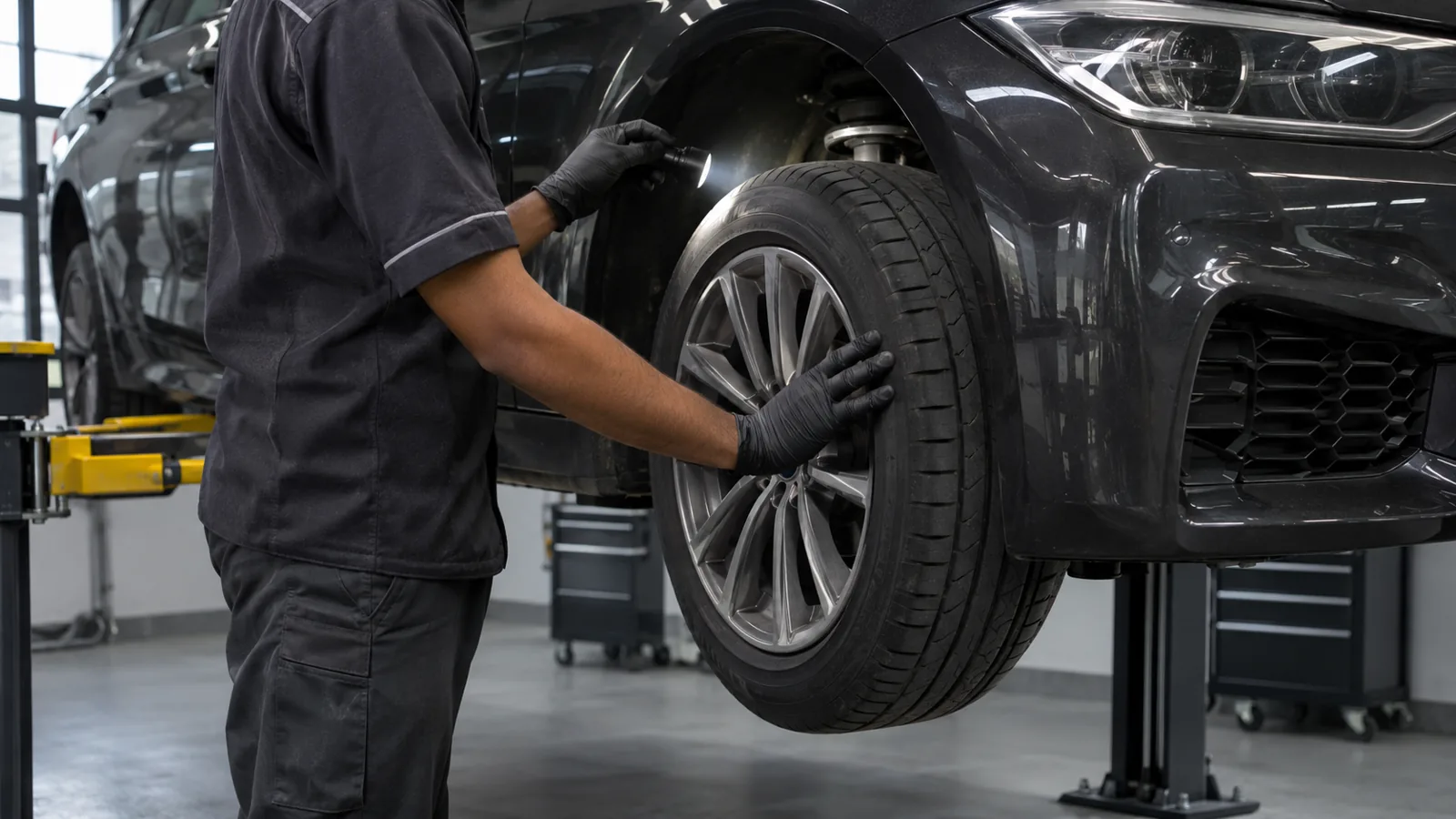
Decide whether further driving is appropriate
A new wheel-area sound deserves assessment, but a noise description cannot establish the failed part or a safe remaining distance. The first decision is whether the car can be assessed normally or whether concerning symptoms mean you should stop and discuss assistance.
If a wheel appears loose, the car feels unstable, severe grinding develops, or there is smoke or a marked braking or control change, stop as soon as it is safe. Follow any warning instruction and arrange suitable help. Do not continue a test drive to identify the corner.
For a new hum without these signs, explain the symptoms to the workshop before arranging the visit. Do not swerve, make repeated high-speed turns, jack up the car to investigate, or touch a wheel, hub or brake to compare temperatures. Hot parts can burn, and heat can have causes other than a bearing fault. Lifting and mechanical testing require suitable equipment and precautions.
Compare the condition rather than the sound alone
Road speed is how fast the car is travelling. Engine speed is RPM. A wheel-end hum usually needs to be assessed against vehicle speed, while an engine-related sound may follow RPM differently. Pressing the accelerator changes several conditions at once, so noticing the noise during acceleration does not identify the system.
| What you noticed | Possibilities to separate | Useful workshop checks |
|---|---|---|
| Hum or growl rising with road speed | Bearing, tyre tread or final-drive noise. | Compare operating conditions, inspect tyres and localise the sound at the wheel ends and driveline. |
| Noise changes with the road surface | Tyre pattern or wear may contribute; this does not clear the bearings. | Assess tread condition and the relationship between surface, speed and noise. |
| Sound changes while cornering | A load-sensitive wheel-end or another tyre/chassis issue. | Corroborate the apparent location and inspect relevant components rather than applying a side rule alone. |
| Noise coincides with braking or a hot-wheel concern | Brake drag, contact or another wheel-end fault. | Assess brake operation and wheel-end condition using safe professional methods. |
| Clunk over bumps or looseness | Suspension, fastening or wheel-end movement. | Identify the source of play or contact before naming a bearing. |
| Whine changes mainly with throttle load | Final drive or other drivetrain possibilities alongside wheel noise. | Compare load and road-speed effects and inspect the relevant system. |
Timken's wheel-hub symptom guide describes several overlapping noise and vibration sources. The practical lesson is to combine findings. A hum, a steering vibration or a change during a turn is not sufficient evidence for a particular bearing replacement.
Tyres brakes and suspension can imitate a bearing fault
Uneven tread wear can create a repeating road noise, and a change after tyre or wheel work is useful history. The workshop should examine the tread and fitted arrangement before attributing the sound to a bearing. A quieter surface or a different apparent cabin location does not settle the diagnosis.
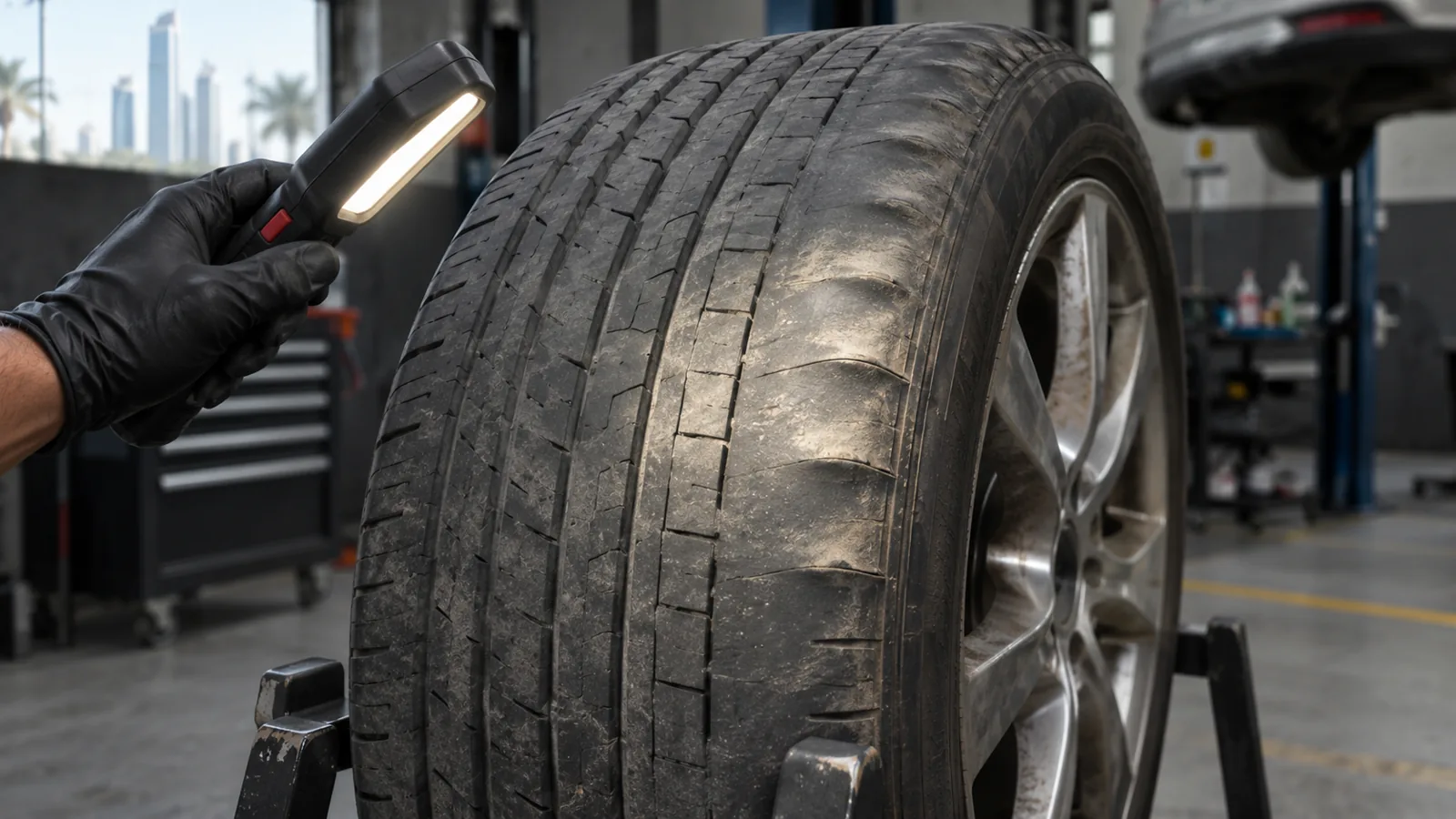
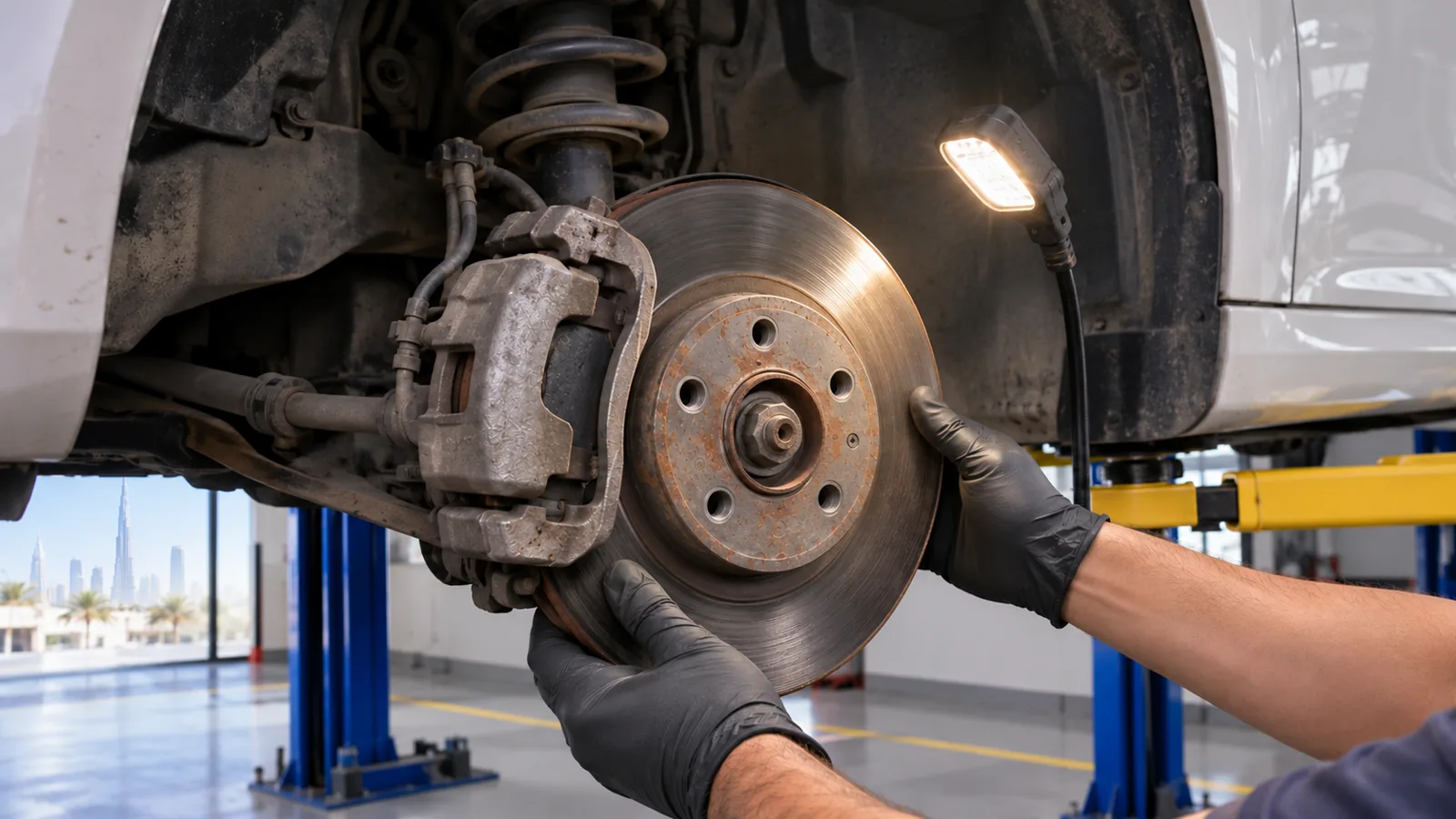
Brake contact or drag needs a different repair from bearing wear. Likewise, movement from a suspension joint or a wheel-fastening issue can complicate a wheel-end assessment. The useful finding identifies the actual source, not just the component nearest the loudest point.
The BMW brake-noise guide covers brake-related sounds. For a knock mainly over uneven roads, the BMW suspension-noise guide follows a different diagnostic route. The BMW differential-noise guide discusses final-drive alternatives. Keep these possibilities separate until checks establish the source.
Details you can provide without mechanical tests
You do not need to identify the faulty wheel before contacting the workshop. Describe the sound and the circumstances you have already observed. Sound travels through the body, and the position where you hear it is not necessarily where it originates.
- Vehicle and recent workShare model, year, mileage and any recent tyre, brake, bearing, wheel or suspension work. Mention an impact or a new wheel/tyre setup.
- Operating conditionSay whether the noise follows road speed, changes during an ordinary turn, appears while braking or becomes noticeable under throttle.
- Onset and changesExplain when it began, whether it is intermittent and whether its severity or character has changed.
- Associated symptomsReport vibration, control changes, warnings, smoke or a suspected heat issue without touching components or assuming one common cause.
Share an existing recording only if it was obtained safely. Do not hold a phone while driving, put it near a moving wheel or ask someone to stand beside a moving car to record the sound. If you cannot record it safely, a clear description is still useful.
Why turning and free-spin checks have limits
A turning response does not prove the side
A change in sound during cornering can help the investigation because the load changes. It does not reliably establish that a particular front bearing is faulty without corroboration. Front and rear sounds can be difficult to separate inside the cabin, and other components can respond to the same manoeuvre.
Do not deliberately weave in traffic to test a left-versus-right rule. Tell the workshop what happened during normal driving and let it decide whether a controlled assessment is appropriate after considering the symptoms. There is no need to decide the replacement side yourself.
A quiet lifted wheel does not complete diagnosis
A hand-spin or play check examines one condition. It does not recreate every load or speed that produced the original complaint. MOOG's wheel-end diagnostic bulletin notes that a noise may be noticeable only while driving and that apparent location can be misleading.
Conversely, visible movement needs its source established. The bearing, suspension and fastening arrangement require appropriate checks. A workshop should explain how the measured or observed condition supports the diagnosis rather than relying only on a quick wheel shake.
What a useful workshop assessment should establish
Agree the initial assessment scope and charge before work. The outcome may be a supported defect finding or a clear next diagnostic step. An intermittent noise that cannot be reproduced should be recorded as such rather than automatically reported as normal.
- Review the complaint and urgency
- Confirm the vehicle, recent work, operating condition and any handling or braking concern before deciding which tests are appropriate.
- Compare the candidate sources
- Assess tyres, brakes, wheel ends and relevant chassis/drivetrain components. A road test is a workshop decision where safe, not a mandatory first step for every complaint.
- Inspect and measure
- Use suitable support, applicable procedures and relevant measurements to investigate roughness, movement, contact or damage. Record access limits and distinguish observation from inference.
- Check relevant warning information
- Where a wheel-speed warning is involved, combine fault information and appropriate signal checks with inspection. An electrical fault entry does not by itself confirm a failed bearing.
- Explain the finding
- Identify which component or interface is affected, which repair fits the vehicle and what remains uncertain. Seek approval before additional tracing or dismantling.
Some wheel-end designs have an encoder or related features used for wheel-speed sensing. A warning can involve the sensor, wiring, connector or associated hub/bearing arrangement. The fitted design and supporting evidence matter; do not assume that an ABS warning means either the bearing or ABS control unit must be replaced.
Sealed bearings do not need routine regreasing
Modern sealed or unitized wheel-end bearings should not be treated like every older serviceable bearing. The required work depends on the actual design. Applying grease externally does not repair damaged internal surfaces or establish why a wheel is noisy.
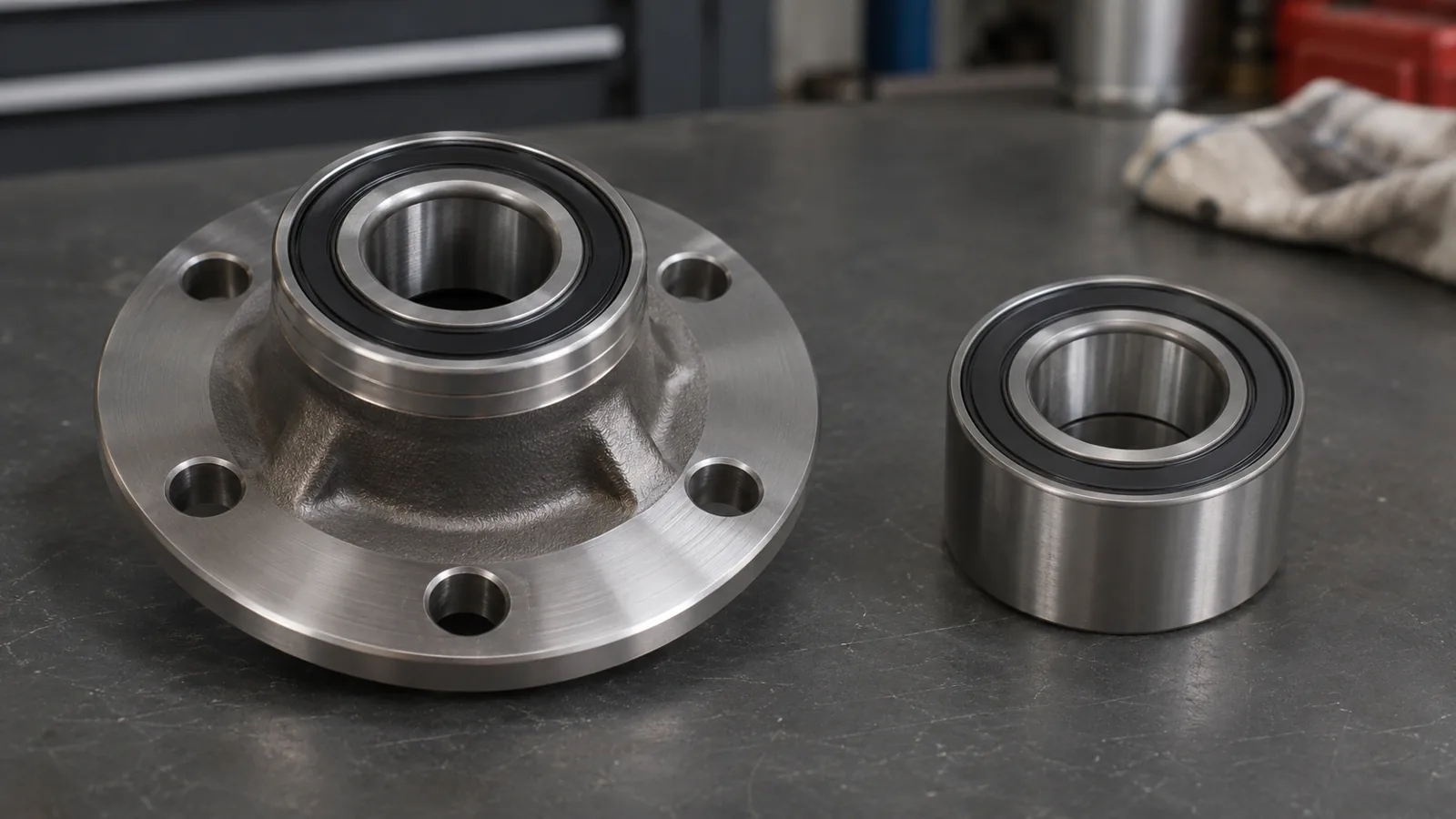
The Timken-authored hub-assembly FAQ describes unitized hubs as pre-set, pre-greased and sealed, without periodic regreasing or adjustment. This is design guidance, not a reason to assume every BMW uses the same assembly. An older serviceable arrangement must follow its own vehicle instructions.
A bearing and a hub are not always the same purchase
Some vehicles use an integrated hub unit. Others have a separate bearing fitted into a carrier, with the hub assessed for reuse or replacement according to its condition and the applicable procedure. A quote should identify whether it covers the bearing, a hub unit or additional damaged components.
Correct fitment and professional installation matter. The required tools, handling, press support where applicable, fastening sequence and specified torque must match the actual vehicle. Disturbed or damaged parts and any required replacement hardware belong in the scope. There is no universal DIY tightening value or assembly choice for every BMW.
Choose the repair from the confirmed finding
Replacing a confirmed damaged bearing can resolve its noise, but another fault needs its own repair. Do not approve a wheel-bearing assembly solely because the car hums, a wheel feels warm or a sound appears to come from one side.
| Confirmed finding | Possible next step | What the quote should clarify |
|---|---|---|
| Bearing damage in an integrated hub | Replace the applicable hub unit. | Part fitment, required hardware, related checks and verification. |
| Separate bearing fault | Use the applicable bearing procedure and assess the hub/carrier. | Whether associated damage or access work changes the scope. |
| Tyre or brake source | Repair the confirmed tyre, brake or contact issue. | Why bearing replacement is not supported by the current findings. |
| Wheel-end interface or fastening concern | Follow current applicable technical information. | The affected interface, condition and required parts rather than a generic bearing assumption. |
| Source remains uncertain | Agree the purpose of the next test. | Its charge, access requirements and approval before further work. |
Noise near a bearing is not always internal race wear
BMW SI B31 01 12 from August 2016 addresses low-speed front-axle clicking on listed vehicles, including E70/E71 X5/X6 and F10 5 Series applications. It identifies movement at bearing-to-knuckle mating surfaces and describes an applicable surface-treatment procedure.
This historical BMW North America example is not a diagnosis for every wheel hum, a universal repair, a recall or proof of UAE warranty coverage. It shows why the actual mechanism must be established. Current vehicle-specific instructions determine the repair, parts and hardware.
The BMW wheel-bearing replacement service explains professional fitting options and budgeting. Ask for parts, labour, exclusions, additional diagnosis or access work, and the checks included. Confirm any warranty terms in writing. Completion time depends on the fitted design, access, condition and parts availability.
Confirm the original complaint after repair
The result should be checked against the condition that brought you in. A quiet wheel during a static inspection is not the same as reassessing a road-speed hum. The workshop should choose safe appropriate confirmation and state any condition it could not reproduce.
- Return to the original descriptionCompare the same noise character, speed/load condition and location as far as it can be assessed safely.
- Record the mechanical checksConfirm the fitted arrangement and relevant condition after the work, following the applicable procedure.
- Reassess relevant warningsWhere signal-related work was involved, explain the supporting checks rather than relying only on clearing a fault entry.
- Keep remaining uncertainty visibleSeparate a verified defect repair from an unconfirmed explanation for every sound.
Keep the findings and invoice details. If a noise returns, say whether it is the same sound under the same conditions or a new complaint. Do not assume that repeating the same replacement is the next step. Follow the vehicle's maintenance and load guidance, address impact or tyre issues appropriately, and avoid treating a sealed bearing as a routine grease point.
BMW wheel-bearing noise questions
Can I keep driving with a noisy wheel bearing
A description cannot establish a safe remaining distance. Arrange advice promptly. With severe grinding, a loose wheel, instability, smoke or marked braking/control changes, stop as soon as safe and discuss suitable assistance rather than continuing to test the car.
Does louder noise on a left turn prove the right bearing is faulty
No. Cornering response is a clue, and sound can travel through the body. The workshop should corroborate the location and mechanism before choosing a side or assuming the noise is from a front bearing.
Can a quiet hand-spin rule out a bearing problem
No. An unloaded check does not reproduce every driving condition. Its result should be considered with the complaint, other observations and appropriate professional checks. Do not lift the car yourself to obtain a diagnosis.
Will adding grease stop the noise
Not as a general repair. Sealed or unitized hubs are not routine regreasing points, and added grease does not repair internal damage. A genuinely serviceable older arrangement must follow its own instructions after the cause is established.
Should both wheel bearings be replaced together
Not automatically. Replacement scope should follow the confirmed condition of each side and the applicable procedure. Ask what finding supports each recommended part rather than using mileage or one noisy side as the only reason.
Can a wheel-speed warning confirm a bad bearing
No. On applicable designs the hub or bearing arrangement can affect sensing, but the sensor, wiring and connectors can also need attention. Fault information, relevant signal checks and physical findings should support the repair decision.
Independent BMW workshop in Al Quoz
Discuss your wheel-noise symptoms
Share your model, year, mileage, where the noise seems to come from, its relationship to road speed and turns, and any recent tyre or wheel work. Include warnings and handling changes. Confirm the assessment scope and charge; discuss suitable assistance first if there are concerning symptoms.
Independent BMW specialist. Not affiliated with BMW AG.