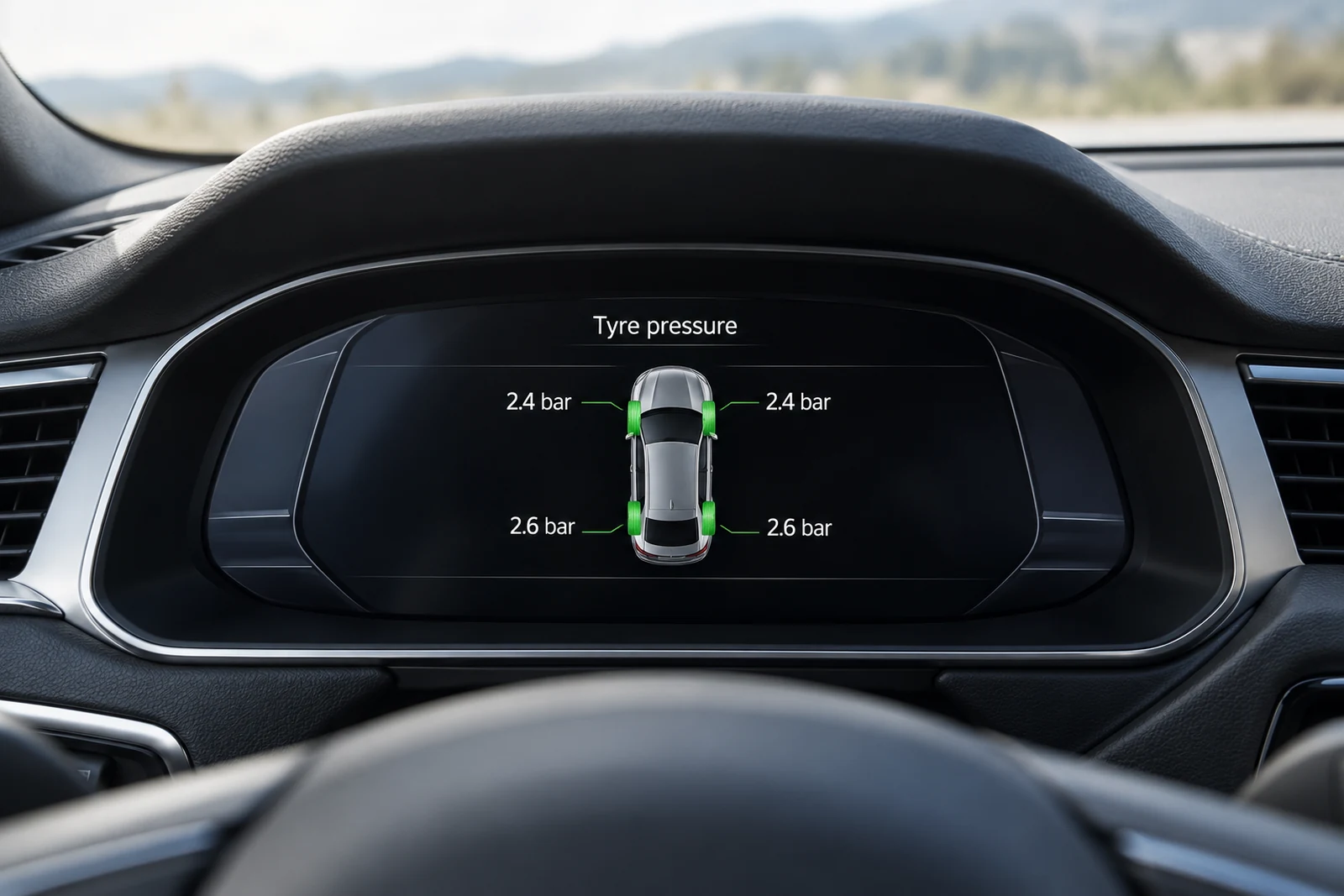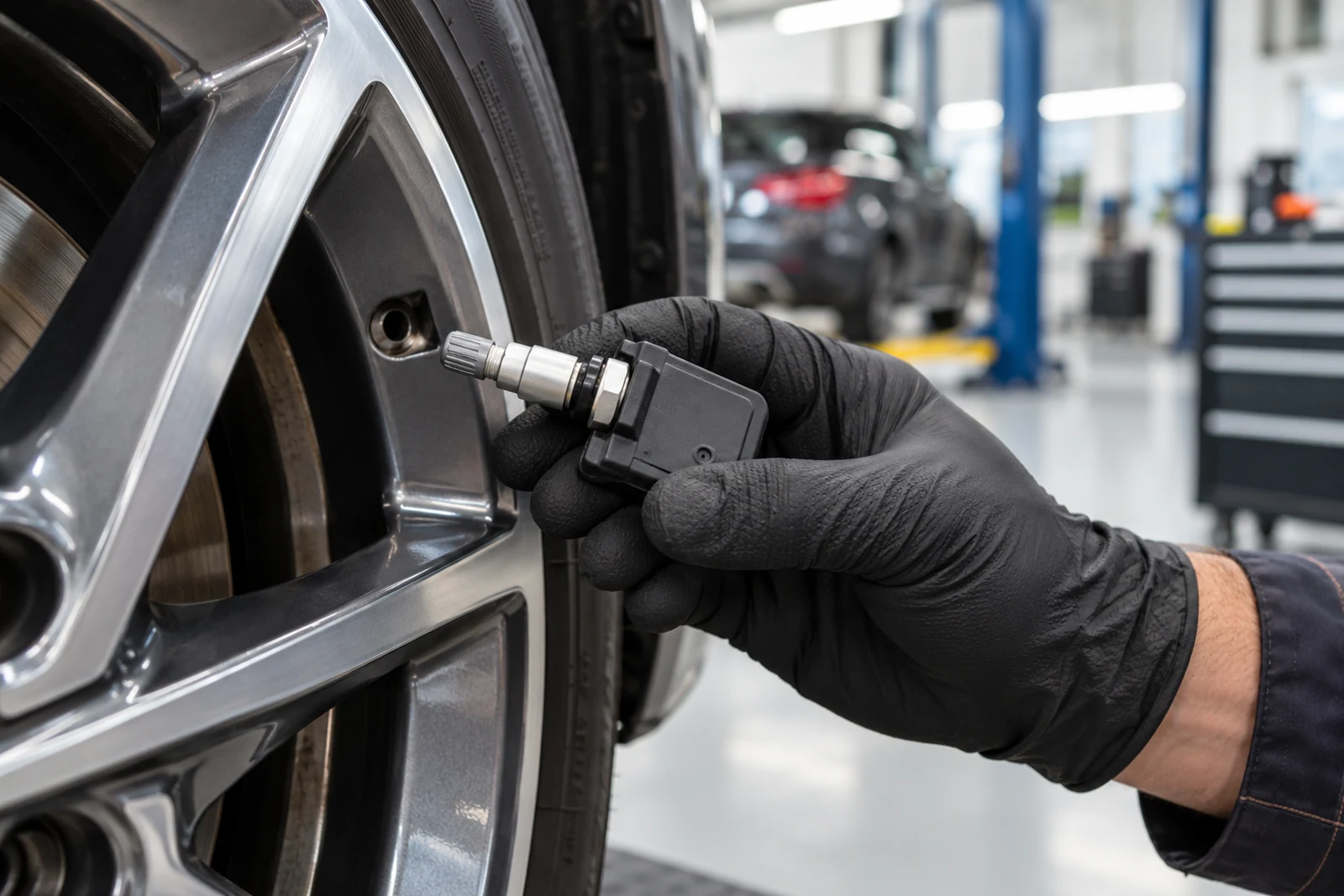
Tyre pressure sensors and warnings
BMW TPMS Sensor Replacement in Dubai
BMW tyre pressure warning or a missing wheel reading? We check the pressures, identify the monitoring system and test the wheel sensors before recommending replacement. Get the findings explained and a fitted quote before work starts.
Indicative fitted sensor budget AED 250 to 650 per wheel See inclusions and estimates
- All four wheels scanned
- Sensor matched to your model
- Free pickup in Dubai
Plan the repair
BMW TPMS prices and fitted quote inclusions
These are market-informed budgeting estimates, not confirmed BMW Repair Dubai tariffs. The allowances below are for planning. We confirm the sensor specification, work and final payable total before you approve a repair.
Per wheel, allowing for a compatible aftermarket sensor, standard tyre access, the required valve service components, balancing where needed and programming or relearning.
BMW-boxed sensors, unusual wheel specifications and difficult run-flat access may exceed this range.Planning allowance for four wheels with the same standard scope. This is four times the per-wheel range, not a promised package discount or a recommendation to replace healthy sensors.
Compare individual scan results and parts options before choosing one sensor or a set.Budget for an initial TPMS assessment or a straightforward valve service with a working sensor retained. These are different jobs; the quote will state which work is included.
Combined work, extensive electrical diagnosis, wheel repair and tyre replacement are quoted separately.One clear fitted total
Your quotation should identify the sensor brand and part, quantity, tyre removal and refitting, valve kit, balancing, setup, assessment charge. It should also state any extra work, expected completion and applicable parts or labor warranty.
Approve the findings first
A sensor price alone is not a fitted repair price. If testing identifies a puncture, valve leak or vehicle-side fault, we explain that work before ordering sensors. Confirm whether any assessment fee is credited against the approved repair.
Two different systems
How BMW Tyre Pressure Monitoring Works
Not every BMW has sensors in its wheels. Depending on the model, year and market, BMW uses one of two systems, and only the direct system uses pressure sensors inside the wheels.
Sensors inside each wheel
A small sensor on the back of each valve measures the real pressure and temperature, then sends it to the car by radio. The dashboard can show the pressure of each tyre.
- Fitment checked against the vehicle specification
- Each sensor has its own sealed battery
- Shows which tyre is low
Wheel speed comparison
No sensors in the wheels. The car compares how fast each wheel turns using the ABS sensors. A soft tyre turns slightly faster, which triggers the warning.
- Found on many older and some European models
- Must be reset after inflating or changing tyres
- System faults need ABS and DSC diagnosis where indicated
Not sure which one you have? Individual pressure readings indicate direct measurement. A status-only display does not reliably identify the system. We check the vehicle specification and fitted equipment; you do not need to identify it before contacting us. Direct monitoring may be called RDC or RDCi, while indirect monitoring may be called FTM or RPA.
Read the message first
Low Pressure Message or Sensor Fault?
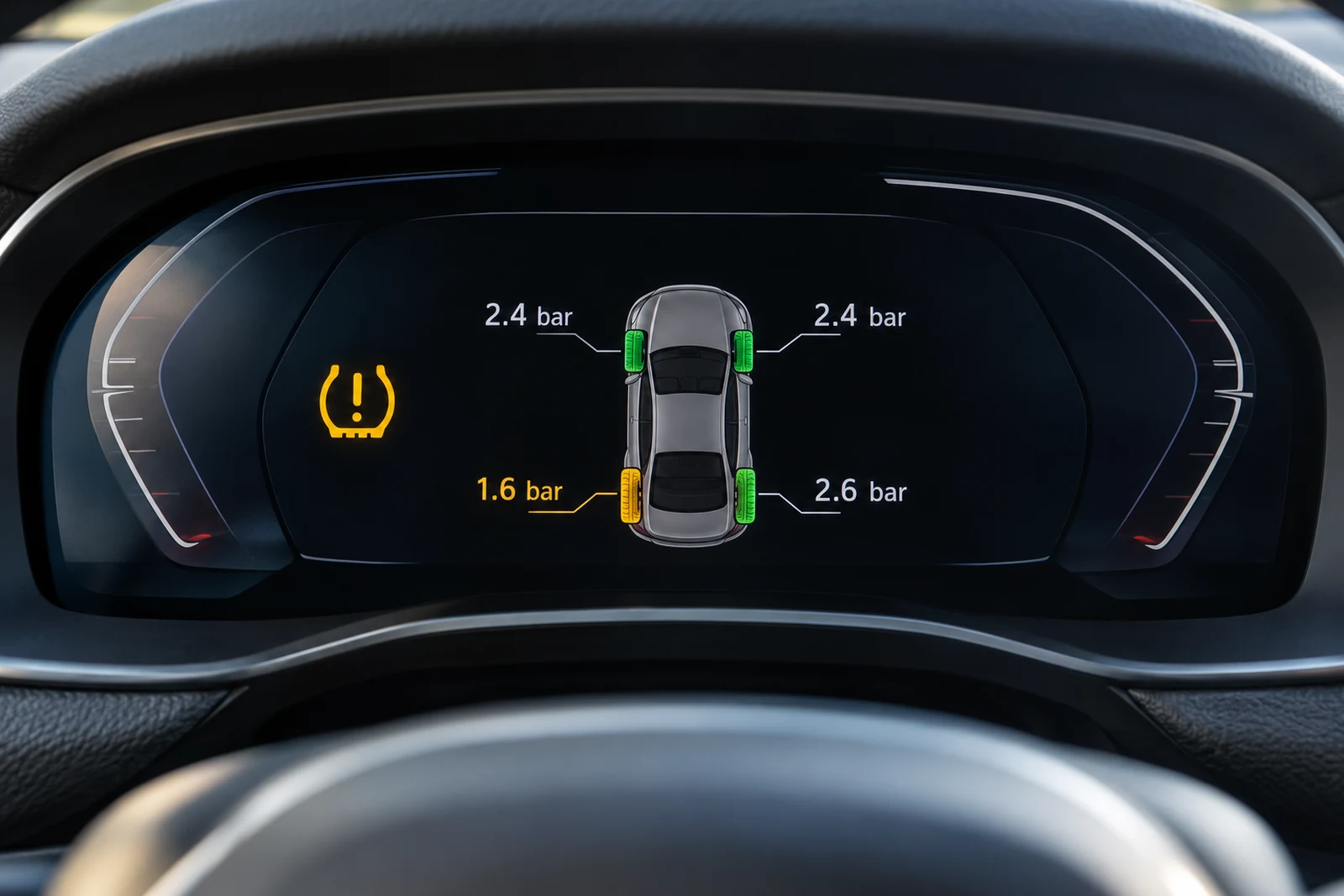
BMW shows different messages for a tyre that has lost air and for a system that has stopped working. The message helps decide what to test, but it does not identify the failed component by itself.
Possible pressure loss, a leak, temperature change or an incorrect reference setting. Measure the pressure before deciding.
Check and inflate the tyre cold. If it drops again, have it checked for a puncture.
A sudden large loss of pressure in one or more tyres.
Slow down and stop where you can. Run flat tyres have a limited range, so call us or roadside help.
Monitoring is unavailable. Possible causes include wheel electronics, initialization, interference or a vehicle-side fault.
Check pressures by hand, then book a sensor scan.
Sensors missing, damaged during fitting or not yet registered.
Check pressures and tyre condition first. Complete the specified initialization only when safe to drive; persistent faults need testing.
An intermittent sensor response, interference, connection fault or changing pressure.
Note which wheel and when, then book a scan.
Failure signs
Signs Your BMW TPMS Needs Checking
A warning or missing reading is a reason to check the system, not proof that a new sensor is needed. These signs help us choose the first tests.
Warning stays on with correct pressures
All four tyres are right, yet the message will not clear.
One tyre shows dashes
The display shows no reading for one wheel instead of a number.
Sensor is many years old
Sealed batteries usually last around five to ten years.
Valve stem leaks or is corroded
The metal valve and nut corrode, and the tyre slowly loses air.
Warning started after tyre fitting
Sensors can be cracked or bent when a tyre is changed.
Readings jump around
A tyre shows odd or changing figures that do not match a gauge.
Before buying a sensor
When the Warning Is Not the Sensor
Plenty of tyre pressure warnings have nothing to do with a failed sensor. We rule these out first, because a new sensor will not fix any of them and the warning would simply come back.
A slow puncture
A nail or screw in the tread lets air out over days. The sensor is doing its job by warning you, so the tyre needs a repair or replacement instead.
A leaking valve core
The small core inside the valve can loosen or get sand in it and leak slowly. Leak testing determines whether the correct core, seal or valve service kit can restore the seal while retaining a working sensor.
A bent or corroded rim
Air can escape where the tyre bead meets a damaged rim edge. Inspect the tyre bead and wheel for damage or corrosion. The findings determine whether repair or replacement is appropriate.
Pressures set when hot
Setting pressures in the afternoon heat leaves the tyres low once they cool down, so the warning appears the next morning.
An ABS sensor fault
On cars with the indirect system, a faulty wheel speed sensor or wiring stops the pressure monitor working. The ABS or DSC light often comes on as well.
Receiver or software fault
Less often, the part of the car that receives the sensor signals has a fault or needs a software update. Fault codes guide the checks; supply, wiring, receiver operation and applicable software information may need further investigation.
Small part, several jobs
Inside a BMW Tyre Pressure Sensor
A direct-system sensor contains sealed electronics behind the valve inside the rim. Valve design and mounting arrangement vary. These are the pieces that matter when it fails, and the reason a dead sensor is replaced as a whole unit rather than repaired.
Pressure and temperature cell
Measures pressure and temperature; reporting behaviour depends on the sensor and operating conditions.
Radio transmitter
Sends each reading to the car with a unique sensor ID.
Sealed battery
Built into the housing on BMW sensors, so the whole sensor is replaced when it runs down.
Valve stem, nut and seal
Renew the specified service-kit components during tyre removal. Use compatible cores and seals, the specified tightening torque and a final leak test.
Choosing the sensor
Genuine, OEM or Programmable Sensors
Compare three replacement options after compatibility is confirmed. Availability, part specification and the supported setup procedure matter more than the label on the box.
- What it is
- The sensor sold through BMW parts with the BMW part number.
- Setup
- Follow the BMW reset or relearn procedure for the fitted system.
- Right for
- Owners who want the original part, and newer models.
- What it is
- An application-specific replacement from an original-equipment supplier. Verify the exact part and specification; the supplier name alone does not prove equivalence.
- Setup
- Check whether the part is preconfigured and follow the applicable vehicle relearn.
- Right for
- Owners comparing a compatible supplier replacement with a BMW-boxed part.
- What it is
- A universal sensor loaded with the correct BMW protocol using a TPMS tool.
- Setup
- Programmed or cloned to the car before fitting.
- Right for
- Supported applications where a compatible programmable sensor offers a suitable alternative.
Compare the work involved
Three example TPMS quotations
These examples show how a quote can be structured. They are not completed customer jobs or fixed offers. Totals are for planning and assume compatible parts, standard wheel access and no additional faults.
2017 BMW 320i with direct TPMS
Example cost AED 350
One compatible aftermarket sensor, valve service kit, standard removal and refitting, wheel balance and required setup. Assumes one sensor has failed and the other three pass the relevant checks.
One sensor replaced2019 BMW X3 with direct TPMS
Example cost AED 1,400
Four compatible aftermarket sensors, four service kits, standard fitting, balancing and relearn. This example assumes test findings and the owner’s choice support a complete set, rather than replacing four by default.
Four-wheel example2016 BMW 520i with direct TPMS
Example cost AED 200
One serviceable valve assembly repaired with the appropriate kit, tyre access, refitting and final leak check, with balancing if required. Assumes the sensor body responds correctly and no rim or tyre damage needs repair.
Working sensor retainedThe actual quotation follows the vehicle specification and inspection. BMW-boxed parts, specialist tyre access, recovery and additional electrical or wheel repairs are outside these example totals.
How the job runs
How We Replace a BMW TPMS Sensor
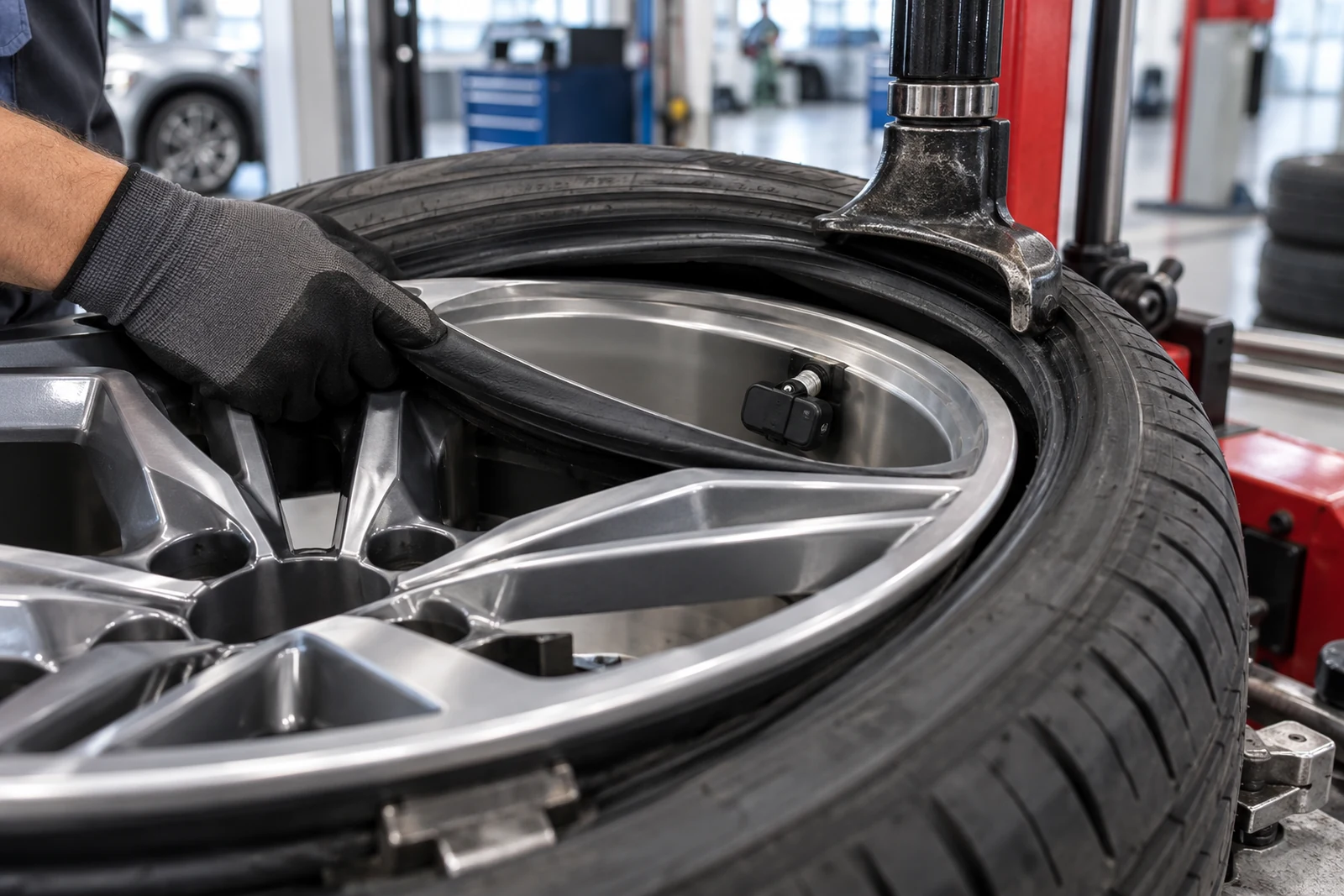
Access normally requires wheel removal and releasing the tyre bead. The amount of tyre dismounting depends on the equipment and wheel. We protect the valve and sensor, check the seal and complete the required setup.
Measure pressures and test each sensor response. Battery status is checked where supported; a scan cannot predict exact remaining life.
We check the system type and sensor part from your chassis number and quote before ordering.
The tyre is broken from the rim on the sensor side, keeping the bead tool clear of the sensor.
Fit the compatible sensor and specified valve service components using the correct torque, then leak-test the assembly.
Refit the tyre, set pressures for the correct tyre and load specification, and balance the wheel as required after the work.
Complete the specified relearn or reset and verify system operation. Numerical readings are checked where the display supports them.
Common situations
New Rims, Second Wheel Sets and Run Flats
A lot of TPMS warnings start right after other wheel work. The checks below help distinguish fitment problems from a failed sensor.
Aftermarket or new rims
Do not assume replacement rims include compatible sensors. Your old sensors can often be moved across if they are in good condition, or new ones fitted and registered to the car.
Move or replaceA second set of wheels
On a direct-monitoring car, each fitted set needs compatible wheel sensors. Follow the specified reset or relearn after changing sets. Sensor programming and vehicle relearning are separate tasks.
For direct-monitoring vehiclesRun flat tyres
Run-flat tyres can make pressure loss less obvious, but they do not make every puncture safe to drive on. Follow the vehicle and tyre instructions; damage, load and operating conditions affect any permitted continued travel.
Keep sensors workingLocal conditions
Why Dubai Heat Affects Tyre Pressure Readings
Air expands as it warms, so tyre pressure changes through the day here more than in cooler places. A warning that disappears as tyres warm still deserves a cold-pressure check. Do not dismiss it as a false alarm or assume temperature explains a recurring leak.
Check after the car has stood long enough for the tyres to be cold. Use the vehicle instructions for the fitted tyres and load.
Hot roads and sun push pressures up. Letting air out at this point leaves the tyres soft at night.
Cooler nights in winter can bring up a low pressure warning first thing in the morning.
Age and operating conditions affect sensor life. Replacement should follow test findings, not the weather alone.
Three different operations
Programming relearning and resetting explained
Programming
A programmable sensor is configured for a supported vehicle application. A compatible tool writes the required protocol and sensor identity. Preconfigured replacement sensors may not need this step.
Relearning
The vehicle recognizes the installed sensor IDs and wheel positions where supported. Follow the application-specific procedure after fitting a new ID or changing wheels; copying an ID is not permission to skip required checks.
Reset or initialization
The vehicle accepts settings or reference pressures when its procedure requires it. This does not repair a puncture, restore a dead battery or make an incompatible sensor communicate.
We verify the final system status and pressure readings where supported. A display without numerical values is checked using the applicable diagnostic and operating-status information.
Clearing the warning yourself
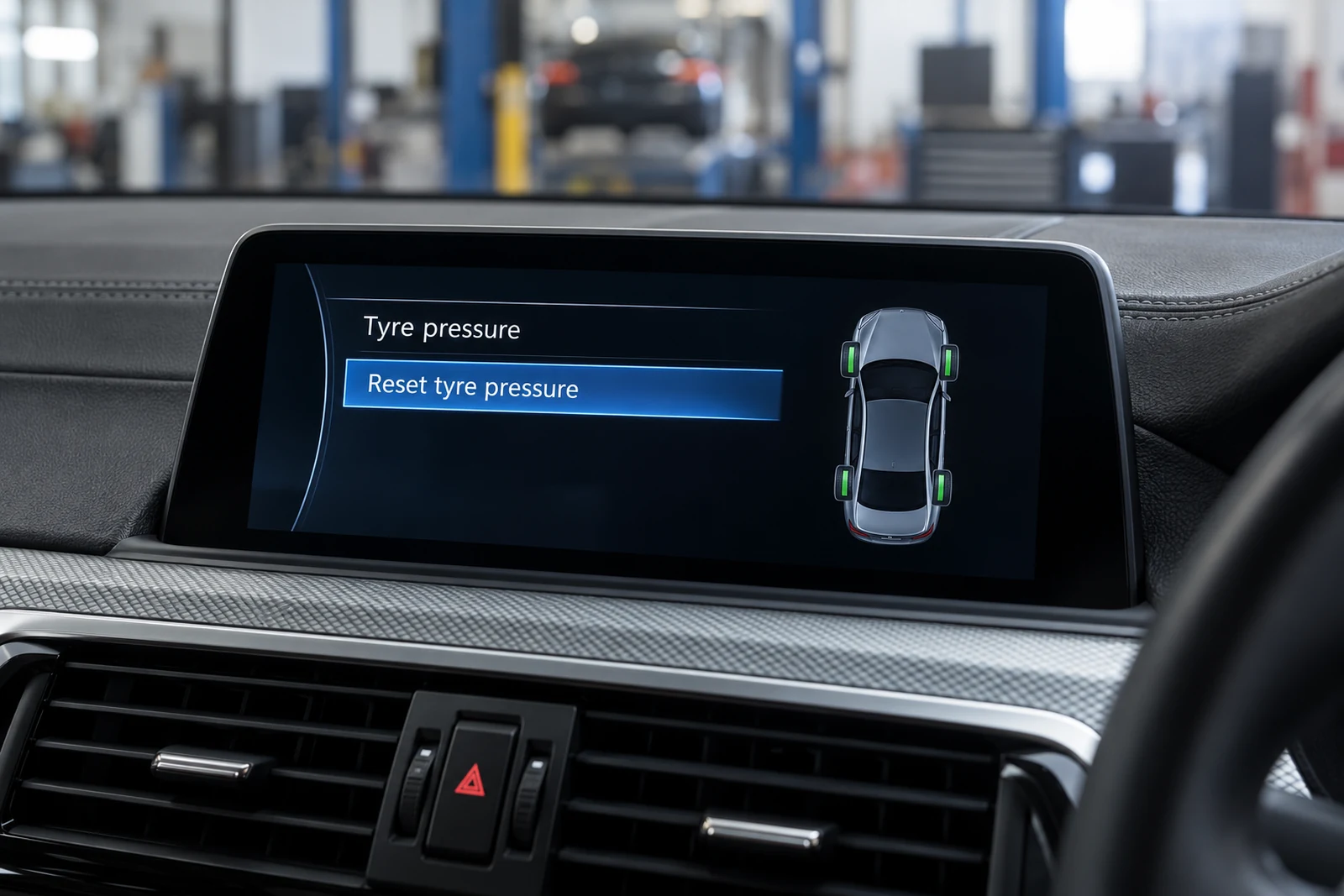
Resetting the Tyre Pressure Monitor on a BMW
Reset requirements differ by BMW model, equipment and operating system. Some newer systems use tyre settings and temperature-adjusted target pressures. Use the integrated handbook or vehicle-specific instructions rather than a universal reset sequence.
- Check tyre condition and set the correct pressures using the vehicle instructions, tyre specification and load setting.
- Park safely and select the ignition or drive-ready state specified for your vehicle.
- Open the relevant tyre-pressure menu or use the control described in the handbook. Check tyre settings where provided.
- Select reset or confirmation only when required. Begin the learning drive only if the tyres and vehicle are safe.
- Allow the specified learning conditions to be met and check the final status. Time and driving requirements vary.
A returning warning or missing reading needs pressure, leak, sensor-response and system checks. Do not repeatedly reset the monitor to hide an unresolved fault.
Match the fitted equipment
TPMS compatibility across BMW models
We assess 3, 4, 5 and 7 Series cars, X models and M cars by their fitted equipment. A chassis code such as E90, F10, F30, G20 or G05 does not establish the monitoring system or replacement part on its own.
Build date and original market
Imported and locally supplied cars may have different equipment. The VIN and build information help confirm direct RDC or RDCi monitoring versus indirect FTM or RPA. These details can be checked after your first enquiry.
Part number and protocol
Match the replacement to the vehicle application, supported radio frequency and communication protocol. A similar-looking sensor or matching frequency alone does not establish compatibility.
Valve and rim fit
Check valve design, mounting, service-kit compatibility and clearance in the wheel. For aftermarket rims, confirm the sensor fits safely and can be serviced without damaging the tyre or valve.
Related repairs
Tyre and Wheel Work We Also Handle
TPMS work often happens alongside these jobs, and a fault in one of them can look like a sensor problem.
Your Al Quoz workshop
Clear findings before a replacement
Understand what the checks found, why a repair is recommended and what you receive when the work is complete.
See what was checked
Ask for the measured tyre pressures, which sensors responded and the relevant diagnostic findings. A replacement recommendation should connect those findings to the proposed work.
Understand battery results
Battery status is useful where the sensor supports it. It is not an exact remaining-life forecast and should be considered alongside the other test results.
Keep a clear handover record
The handover should explain parts fitted, leaks found, required setup and any remaining issue. Retain the itemized invoice and applicable warranty terms for the selected parts and work.
We may request the VIN later to match parts. Confirm the assessment charge, stock and expected completion before booking. Turnaround depends on the fault and available parts.
FAQ
BMW TPMS Questions Owners Ask
Clear answers about BMW tyre pressure sensors, warnings and replacement.
Ask us on WhatsAppWhy is my BMW tyre pressure warning on when the tyres are fine?
Correct pressures do not prove a sensor has failed. Incorrect settings, an incomplete initialization, sensor response, interference or a vehicle-side fault may be involved. We compare pressure measurements, sensor tests and relevant fault codes.
How much does BMW TPMS sensor replacement cost in Dubai?
Allow an indicative AED 250 to 650 per wheel for a compatible aftermarket sensor with standard fitting, service components, balancing where required and setup. This is a budgeting estimate, not a confirmed tariff. BMW-boxed parts, difficult tyre access or vehicle-side faults can cost more. We confirm the complete quote after assessment.
Can the battery in a BMW TPMS sensor be replaced?
No. The battery is sealed inside the sensor housing, so the whole sensor is replaced when it runs down.
How long do BMW tyre pressure sensors last?
Most last around five to ten years, depending on how much the car is driven and how hot it gets.
Do I need to replace all four sensors?
Not always. One failed sensor can be replaced when the others test satisfactorily. Compare age, condition, supported battery-status results and repeat fitting costs before choosing a set. Similar age alone does not prove all four have failed.
Does a new sensor need programming?
Programmable sensors need configuration for the supported application. Preconfigured sensors may not need that step, but the vehicle still needs the specified reset or relearn when a new ID is introduced. We confirm the procedure for your BMW.
Does my BMW have TPMS sensors in the wheels?
Individual numerical pressure readings indicate direct monitoring, but a status-only display is not a reliable identification test. We confirm the fitted system from the vehicle specification and diagnostics. Indirect monitoring uses wheel-speed information rather than pressure sensors inside the tyres.
Can I move my sensors to new rims?
Yes, if they are in good condition and the rims accept them. We check them before moving them across.
How long does TPMS sensor replacement take?
Time depends on diagnosis, parts availability, tyre access and the required learning drive. A set takes more fitting work than one sensor. We confirm an expected completion time after identifying the work; same-day completion is not guaranteed.
Do you collect the car?
Yes. We offer free pickup in Dubai, and the work is done at our Al Quoz workshop, open Monday to Saturday, 9am to 7pm.
Clear the warning properly
Get Your BMW TPMS Checked Properly
Tell us your BMW model and the warning you see. We will explain the assessment, quote before work starts and recommend the repair supported by the checks. A warning photo is optional; do not take one while driving.