
Planning allowance for an agreed inspection and diagnostic work. The scope may include history, leak and ventilation checks, scan findings or a borescope where indicated. Extended consumption testing, dismantling and further mechanical tests are quoted separately.
Engine oil burning and blue smoke
BMW Valve Stem Seal Replacement in Dubai
Blue exhaust smoke or frequent oil top-ups? We investigate the cause, explain whether valve stem seals need replacing and quote the repair before work starts. Engine-specific seal replacement and oil-consumption checks at our Al Quoz workshop, with free pickup in Dubai.
Oil above the sealStem sealValve stem
Confirm firstOil use and engine checks
Clear repair scopeSeal quantities and access explained
Free pickupAnywhere in Dubai
Plan your repair budget
BMW valve stem seal replacement prices in Dubai
These are broad market planning estimates, not fixed BMW Repair Dubai offers. Diagnosis, the engine version and the access method determine your written quotation. The repair ranges allow for suitable seals, replacement labour and basic post-repair checks on selected head-on applications. They are not prices for every BMW.
Planning range for a compatible seal set, access labour and running checks on suitable applications such as selected N20 engines. Additional gaskets, fasteners and fluids must be listed in the written total. Head removal and machining are excluded.
Planning range for an engine-specific seal replacement using a suitable head-on method. Turbocharged variants, access and additional worn components can increase the cost. Engine removal, head removal, guide repairs and machining are not included in this range.
One clear total before approval
Your quotation should name the engine, repair method, seal brand and quantity, labour, disturbed gaskets, required fasteners, oil and filter where applicable, testing and VAT. It should also identify any assessment fee and whether it is separate. We explain additional findings before extending the work. A small parts-kit price is not the cost of the complete repair.
Request a repair quoteSmall part, big job
What valve stem seals do in a BMW engine
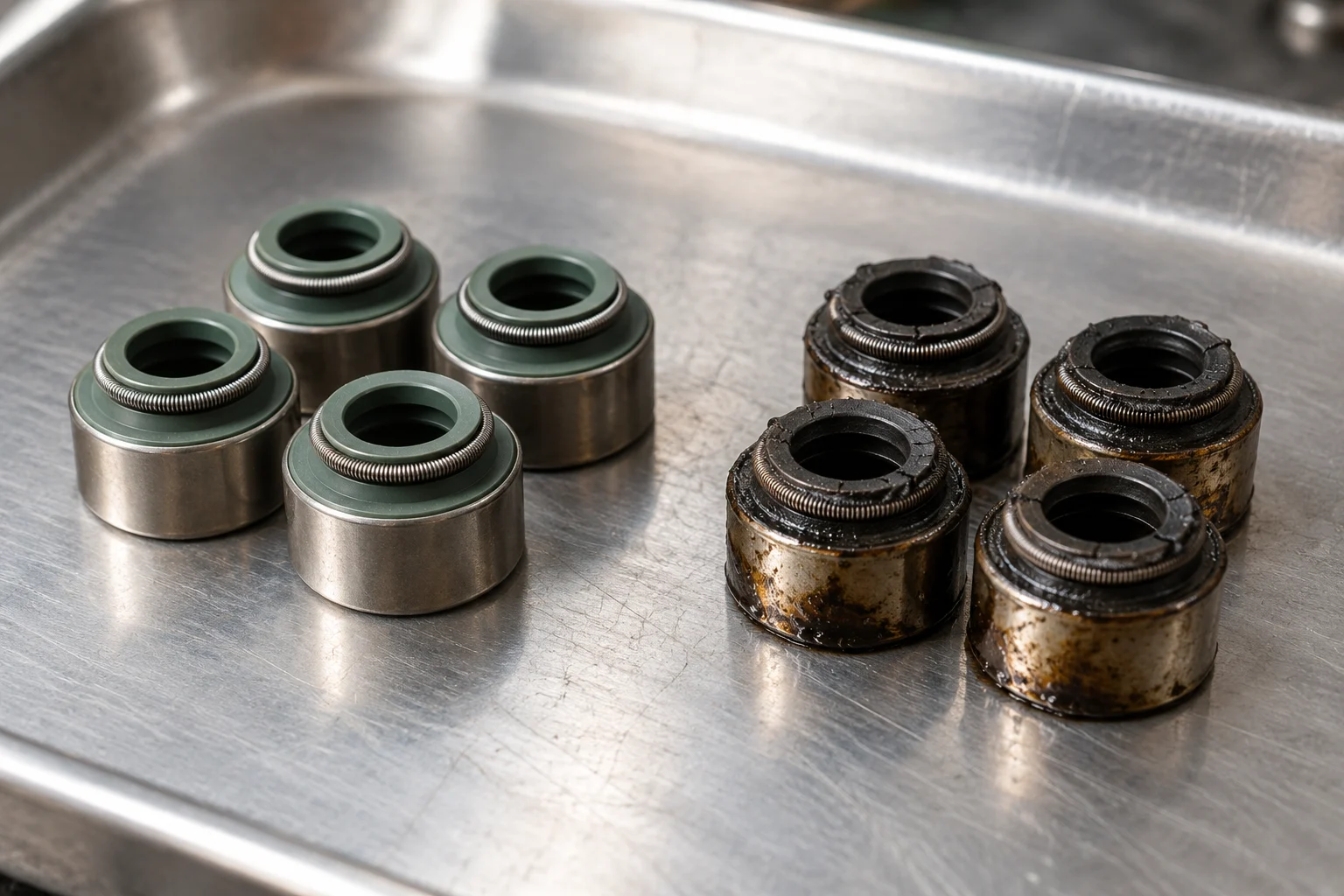
Each valve slides up and down in a guide in the cylinder head. A small rubber seal sits on top of that guide and lets through only a thin film of oil to lubricate the stem. When the rubber hardens, too much oil runs down the stem and burns in the cylinder, which is where the smoke comes from.
Engine specificSeals per engine
Many four-valve engines have 16 seals in a four cylinder, 24 in an inline six and 32 in a V8. We confirm the actual engine and kit quantities.
Heat cyclesOne ageing factor
Age, heat exposure, material condition and guide wear can affect sealing. Mileage alone does not establish the cause.
BlueThe tell tale smoke
Burning oil gives a bluish grey smoke with a sharp oily smell.
SlowThe way it gets worse
Oil use can increase gradually or change suddenly. A new warning or rapid increase needs assessment rather than an assumption about ageing seals.
Warning signs
Signs of Worn Valve Stem Seals
The pattern matters more than any single symptom. Worn stem seals have a typical way of showing themselves that helps separate them from other oil burning faults. Noting when the smoke appears is the most useful thing you can tell us.
- Smoke after idlingA cloud of blue smoke when you pull away from a long red light or out of a drive through.
- Smoke on a cold startA short puff when the car starts after sitting overnight, which clears in seconds.
- Oil level droppingTopping up between services with no drips under the car.
- Oily spark plugsWet or fouled plugs found at a service, sometimes with a misfire on one cylinder.
- Low oil warningA level message can appear between services. Read the exact warning and distinguish low level from an oil-pressure fault.

Before blaming the seals
Stem Seals or Something Else Burning Oil?
Several faults make a BMW use oil, and some cost far less to fix. We investigate other causes before recommending stem seals, because the seal job involves substantial labour.
| Possible cause | Typical sign | How it differs |
|---|---|---|
| Valve stem seals | Smoke after idling or a cold start | Smoke pattern is a clue, not a standalone diagnosis |
| Crankcase ventilation valve | Oil use, whistling, rough idle | Check crankcase pressure and oil separation before major engine work |
| Turbo oil seals | Smoke at idle or under load, possible oil in intake or exhaust | Check ventilation and oil supply and return as well as turbo condition |
| Piston rings | Oil use under varying conditions, sometimes abnormal cylinder sealing | Compression and leak-down findings do not exclude every oil-control ring fault |
| External oil leak | Burning smell, smoke from the engine bay | Oil drips on the exhaust, not through the engine |
If the cause turns out to be elsewhere, our ventilation valve, turbo oil leak and valve cover gasket pages cover those repairs.
Find the cause
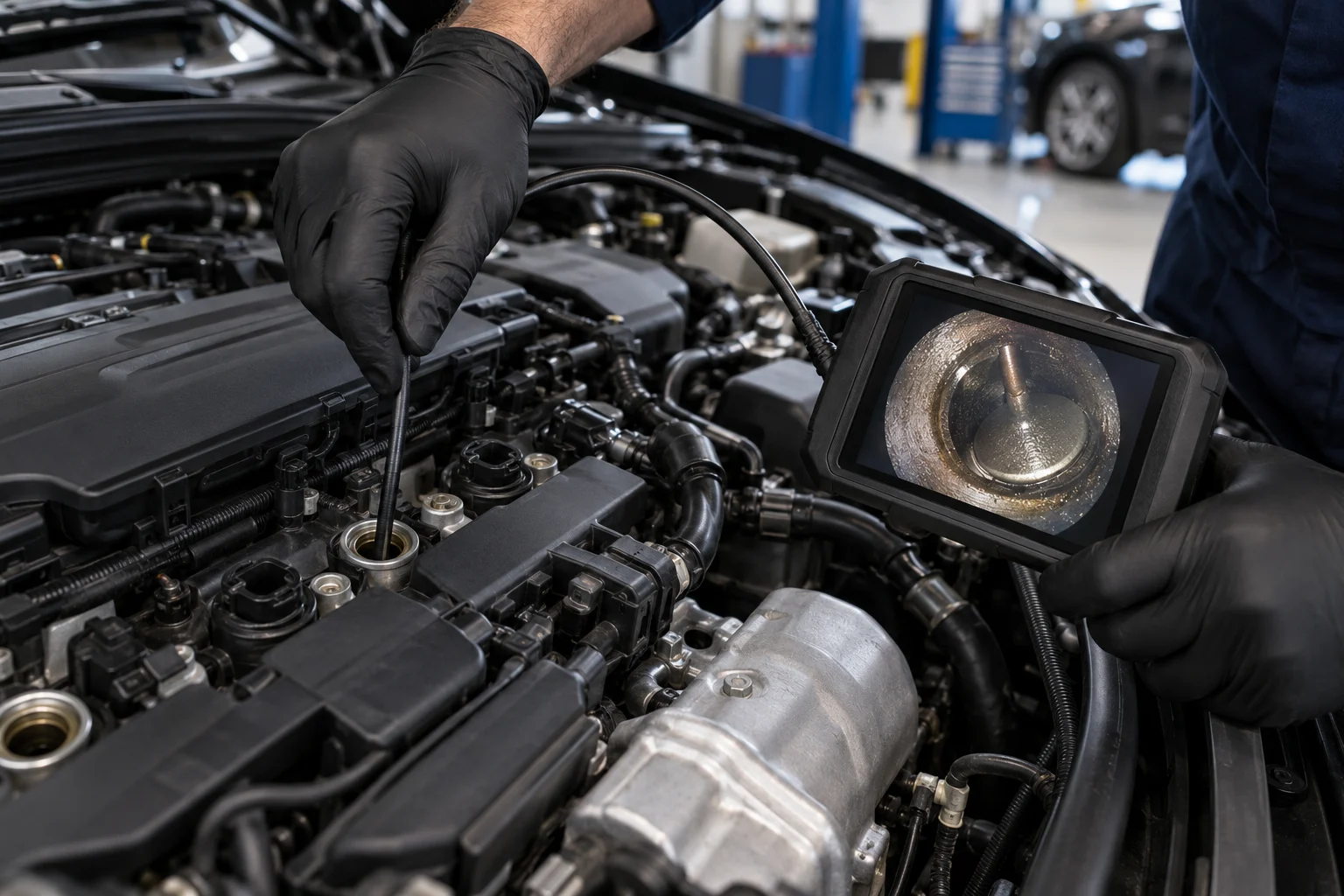
Checking an Engine for Worn Stem Seals
A stem seal job is too big to do on a hunch. These checks build a clear picture of where the oil is going before any quote is given. If they point somewhere else, such as the ventilation valve or a turbo, we tell you and quote that repair instead.
1
Oil use and history
Record oil level, distance and top-ups under consistent conditions. Check external leaks and use the applicable oil-consumption test before major repair.
2
Idle and cold start test
We idle the engine and watch the exhaust on pull away and from cold.
3
Ventilation and turbo check
Check crankcase ventilation and oil separation. On turbo engines, assess oil supply and drainage as well as intake and exhaust evidence.
4
Plugs and borescope
Plug deposits and cylinder views provide supporting clues. A borescope does not directly prove that a stem seal is leaking.
5
Cylinder sealing checks
Compression and leak-down testing, where indicated, assess cylinder sealing. Normal readings do not rule out every oil-control problem.
By engine
BMW Engines Known for Stem Seal Wear
Any engine can wear its seals with age, but some BMW engines are well known for it. The engine code, more than the model name, decides how big the job is. Two cars with the same badge can have very different engines under the bonnet, so we always check the code first.
N62V8, around 2002 to 2010
Relevant to selected E53 and E70 X5, E60 550i, E63 650i and E65 750i applications. Head-on repair methods exist; guide condition and access determine the appropriate work.
N63Twin turbo V8, from 2008
X5 and X6 50i, 550i and 750i. Oil consumption is a known issue, with stem seals among the causes we check.
N52 and N54Inline six
Selected E90, E60 and X5 applications use these engines. Check ventilation, leaks and, on the N54, turbo-related causes alongside seal condition.
N46 and N20Four cylinder
Older 320i and 520i cars can wear seals with age. Oil use is also linked to the ventilation system.
N55 and B58Turbo inline six
Smoke or oil consumption needs a full assessment of ventilation, turbochargers where fitted, leaks and cylinder condition. Do not choose a repair from the engine name alone.
Not sure?Start with your BMW model
Tell us the model and symptom to start. We identify the engine and may ask for the VIN later if needed to match parts.
Driving and maintenance
Looking after a BMW that uses oil in Dubai
Hot weather, traffic and driving patterns matter to maintenance, but they cannot diagnose a failed seal. Base repair decisions on the vehicle’s condition and measured oil use.
01
Monitor the cooling system
Investigate overheating or coolant warnings promptly. Ambient heat alone does not establish how much a particular seal has aged.
02
Describe the smoke pattern
Tell us if smoke appears after idling, overnight parking or under load. These observations help choose checks; they do not prove which part has failed.
03
Use the specified oil
Follow the BMW approval and service guidance for the actual engine. Correct maintenance helps engine health but does not repair a damaged seal or worn guide.
04
Record top-ups consistently
Use the vehicle’s correct level-check procedure and note distance and quantity added. Avoid overfilling or changing oil grade simply to hide consumption.
Two ways to do it
Head On or Head Off Seal Replacement
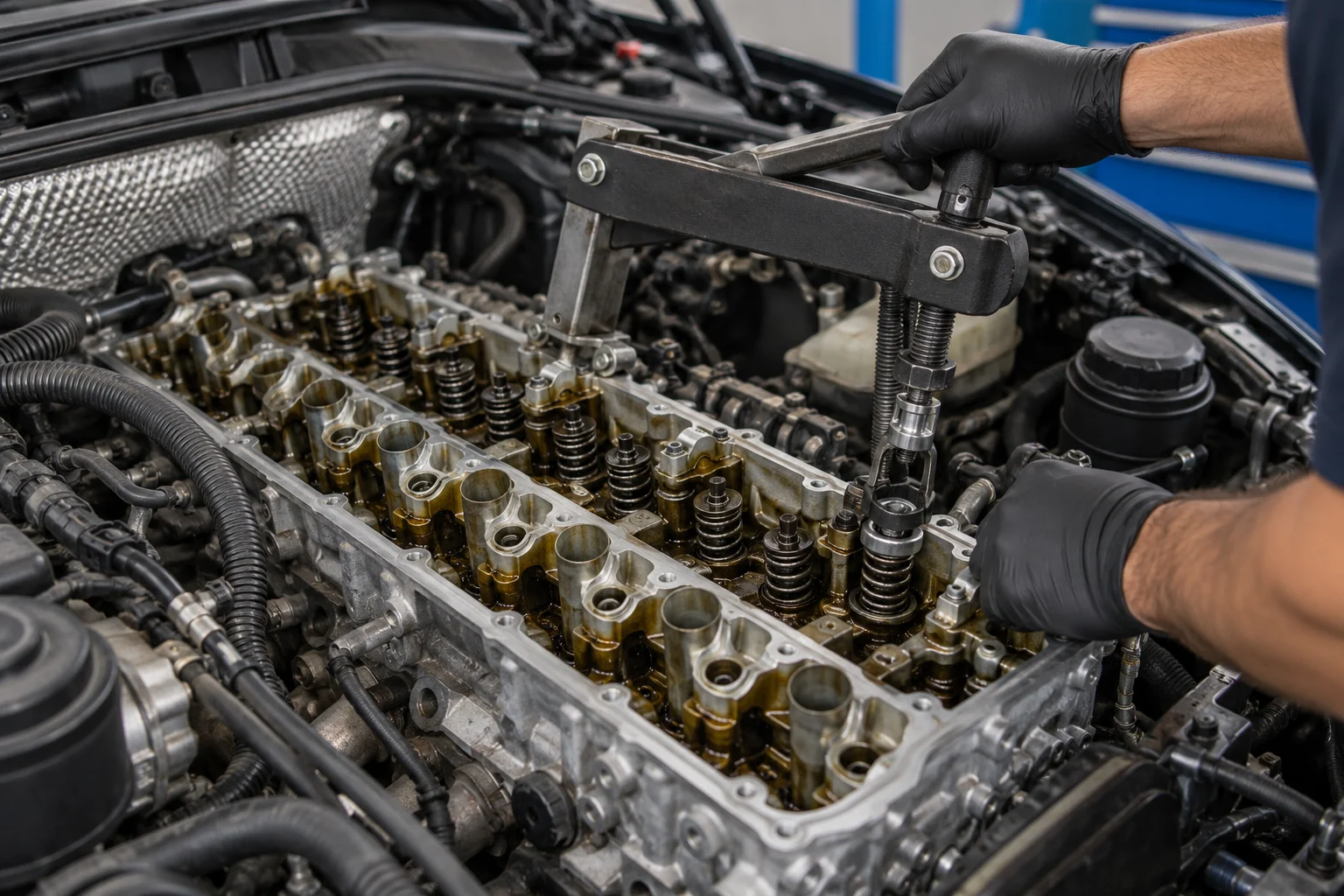
Valve stem seals can be changed with the cylinder head still on the engine, or with the head removed. Which one fits your car depends on the engine and on what the checks find. We explain the method we plan to use and why before you agree to the work.
Head on
Seals changed in the car
The approved access method and suitable tooling allow seals to be renewed while the head remains fitted. Valve support, spring compression and component removal vary by engine. Some methods retain the camshafts.
- Available for suitable inline and V8 applications
- Used when the guides and valves are healthy
- Timing work only where the chosen procedure requires it
Head off
Heads removed from the engine
Head removal may be appropriate when guide, valve or seat work is required, other damage is present, or the applicable repair method requires it. Machining is based on measurements and manufacturer limits, not automatic.
- V8 configuration alone does not require head removal
- Guide wear assessed against the engine specification
- New head gaskets and bolts fitted
How the job runs
Our BMW Valve Stem Seal Process
From the first check to the final oil level reading, this is how a stem seal job is handled. Every part that comes off is kept in order and checked, so everything goes back together in its original position.
Diagnose
Assess measured oil use and supporting tests. Explain what the findings support and any remaining uncertainty.
Quote
You get the method, the parts list and a clear price before any work starts.
Strip down
Remove the components required by the chosen engine-specific method. Protect the engine from contamination and keep reusable parts in order.
Renew seals
Replace the agreed intake and exhaust seal set with compatible parts. Renew disturbed gaskets and single-use fasteners as specified.
Reassemble
Reassemble to the applicable procedure and torque specifications. Check valve timing if it was disturbed.
Test
Check for leaks, assess running and smoke when safe, then record the oil level and agree a consumption follow-up.
Understand the quotation
Three example valve stem seal repair budgets
These are illustrative quotations, not completed customer jobs or current fixed offers. Each assumes faulty seals have been identified and a suitable head-on method is available. The example totals include the stated parts, labour and checks plus 5% VAT. Additional faults, head removal, machining and separate diagnosis are excluded.
2014 BMW 320i with N20
AED 4,200 totalAED 4,000 before VAT plus AED 200 VAT. Example scope includes the compatible intake and exhaust seal set, required access gaskets and specified fasteners, replacement labour, oil and filter where required by the procedure, leak checks and running checks. Actual engine and parts are confirmed before ordering.
2008 BMW X5 4.8i with N62
AED 7,350 totalAED 7,000 before VAT plus AED 350 VAT. Example scope includes the compatible seal set for both banks, required cover gaskets and fasteners, head-on replacement labour, applicable oil and filter service and final checks. Guide or valve damage would require a revised quotation.
2012 BMW 550i with N63
AED 9,450 totalAED 9,000 before VAT plus AED 450 VAT. Example scope includes engine-matched intake and exhaust seals, disturbed gaskets and required single-use parts, replacement labour, oil and filter, applicable timing checks and handover checks. Turbocharger replacement is not included.
These examples show how scope and VAT fit together. They are not promises of availability, turnaround or a guaranteed outcome for every vehicle with the same badge.
Is it urgent?
What Happens If You Keep Burning Oil
Oil burning deserves prompt assessment. An oil-pressure warning, overheating, severe misfire or sudden heavy smoke needs immediate attention. Stop safely, switch off where the vehicle instructs you to, and contact us to discuss recovery. Do not keep driving to reproduce a symptom.
Catalytic converters
Continued oil burning can contaminate catalytic converters and reduce their effectiveness. Assess any related fault codes separately.
Spark plugs and misfires
Oil-fouled plugs can contribute to misfires. A misfire still needs diagnosis rather than automatic coil replacement.
Low oil level
An engine that runs low on oil wears its bearings and timing parts faster.
Carbon build up
Oil leaves hard deposits on the valves and pistons over time.
Once the work is done
Looking After the Engine After New Seals
Replacing faulty seals addresses that identified source of oil entry. Other faults can coexist, so the result should be checked through recorded oil use as well as running checks.
Check the oil level
Follow the agreed monitoring interval and the vehicle’s level-check procedure. Record distance and any top-ups; do not wait for a warning if oil use was high.
Keep to oil intervals
Change the oil on time, or sooner if the car does a lot of short trips or long idling in summer.
Use the right oil
Use an oil that meets the BMW approval for your engine, as listed in the owner manual.
Watch the exhaust
Report recurring smoke or warnings. A clean pull-away is useful evidence, but follow-up oil-consumption records provide a better check of the repair outcome.
Know what has been done
Your quotation and repair handover
A clear record helps you understand the repair and judge the result. Discuss these details when approving the job and collecting your BMW.
The reason for the repair
The findings should explain why seals were recommended and whether ventilation, turbo, guide or cylinder concerns remain. Photographs or test readings are useful where available.
The fitted parts and method
Your itemised invoice should identify the agreed work, parts and access method. Genuine BMW and alternative parts must be described accurately, with compatibility checked for your engine.
Checks and follow-up
Record the handover oil level, mileage and relevant checks. Agree how to report top-ups or returning smoke, using comparable measurements rather than an assumed zero-consumption promise.
Terms for your repair
Ask for any applicable parts and labour warranty in writing, including duration and exclusions. Do not assume an example price establishes warranty coverage or a guaranteed completion date.
A common mix up
Engine Valve Stems or Tyre Valve Stems?
The term valve stem is used for two very different parts. This page is about the engine. If the issue is a tyre losing air, it is the small tyre valve you need. If you are not sure which one applies, describe the problem and we will tell you.
Engine valve stem seals
Inside the cylinder head. Worn seals cause oil burning and blue smoke.
Tyre valve stems
On the wheel rim. A leaking or corroded valve lets a tyre lose air slowly, and on cars with direct TPMS it may attach to a pressure sensor. Some BMWs use indirect pressure monitoring.
For tyre valves and pressure sensors, see our TPMS sensor replacement and tyre replacement pages.
Related repairs
Engine Work Linked to Oil Burning
These pages cover the other causes of oil use and the jobs that often go alongside stem seals, such as the valve cover gasket and the ignition coils.
Your questions answered
BMW valve stem seal replacement questions
How do I know if my BMW valve stem seals are worn?
Blue smoke, frequent top-ups and oily plugs can support suspicion, but they also occur with other faults. We assess measured oil use, leaks, crankcase ventilation and relevant engine checks. Compression or borescope findings alone do not conclusively identify a leaking stem seal.
How much does BMW valve stem seal replacement cost in Dubai?
Broad planning estimates are AED 3,500 to 5,000 before VAT for selected four-cylinder head-on repairs and AED 6,000 to 10,000 before VAT for selected V8 head-on repairs. With 5% VAT these become AED 3,675 to 5,250 and AED 6,300 to 10,500. Exact scope, access and additional parts determine the written quote; diagnosis and head work may be extra.
Can valve stem seals be replaced without removing the head?
Yes, on suitable engines using the appropriate method and tooling. This can include N62 and N63 V8 applications. Head removal may still be required for guide or valve repairs, other damage or the applicable procedure. A V8 badge alone does not decide the method.
Which BMW engines can need valve stem seals?
N62 and certain N63 applications are relevant examples, while older inline engines can also develop seal-related oil use. The engine version, condition and test results matter more than the model badge. Petrol hybrids can have engine faults too; purely electric BMWs do not have combustion-engine valve stem seals.
Is blue smoke always caused by valve stem seals?
No. Crankcase ventilation, turbo oil leakage, oil-control rings and other engine faults can cause oil burning. Smoke timing provides clues but does not reliably separate every cause. More than one fault can be present.
Can I drive while my BMW is burning oil?
Follow the exact warning shown by the vehicle. Oil pressure warnings, severe misfires, overheating or sudden heavy smoke require stopping safely and discussing recovery. An oil-level warning is different from an oil-pressure warning. Do not assume topping up makes continued driving safe in every case.
Will an additive repair worn valve stem seals?
Do not treat an additive as a substitute for diagnosis or a mechanical repair. It cannot correct worn valve guides or other damaged components. Tell us what has already been added and use products only where compatible with the engine manufacturer’s requirements.
How long will the repair take?
This is normally a multi-stage workshop repair. We confirm expected downtime after identifying the engine, access method, parts availability and any additional work. A head-on method and a repair involving machining have different schedules; there is no guaranteed one-day completion for every BMW.
What if the engine still uses oil after new seals?
Record the distance and quantity of top-ups using the agreed checking procedure and contact us. Other sources of oil consumption may coexist. Follow-up assessment should compare consumption with the baseline rather than judging the repair only from one smoke-free start.
Is this the same as a tyre valve stem?
No. This service concerns seals around engine valve stems inside the cylinder head. A wheel valve leak belongs to tyre or TPMS assessment. Describe whether you are losing engine oil or tyre pressure and we will help direct the enquiry.
What do I need to request an inspection?
Your BMW model and a short description of the symptom are enough to start. The VIN, engine code, mileage, top-up record or a video can be useful later but are not required for an initial enquiry. We explain the assessment scope and charges before proceeding.
Do you collect the car?
Free pickup in Dubai is available by arrangement. Our workshop is in Al Quoz, open Monday to Saturday from 9am to 7pm. Tell us about warnings or unsafe running so the collection arrangements suit the car’s condition.
Book an oil burning check
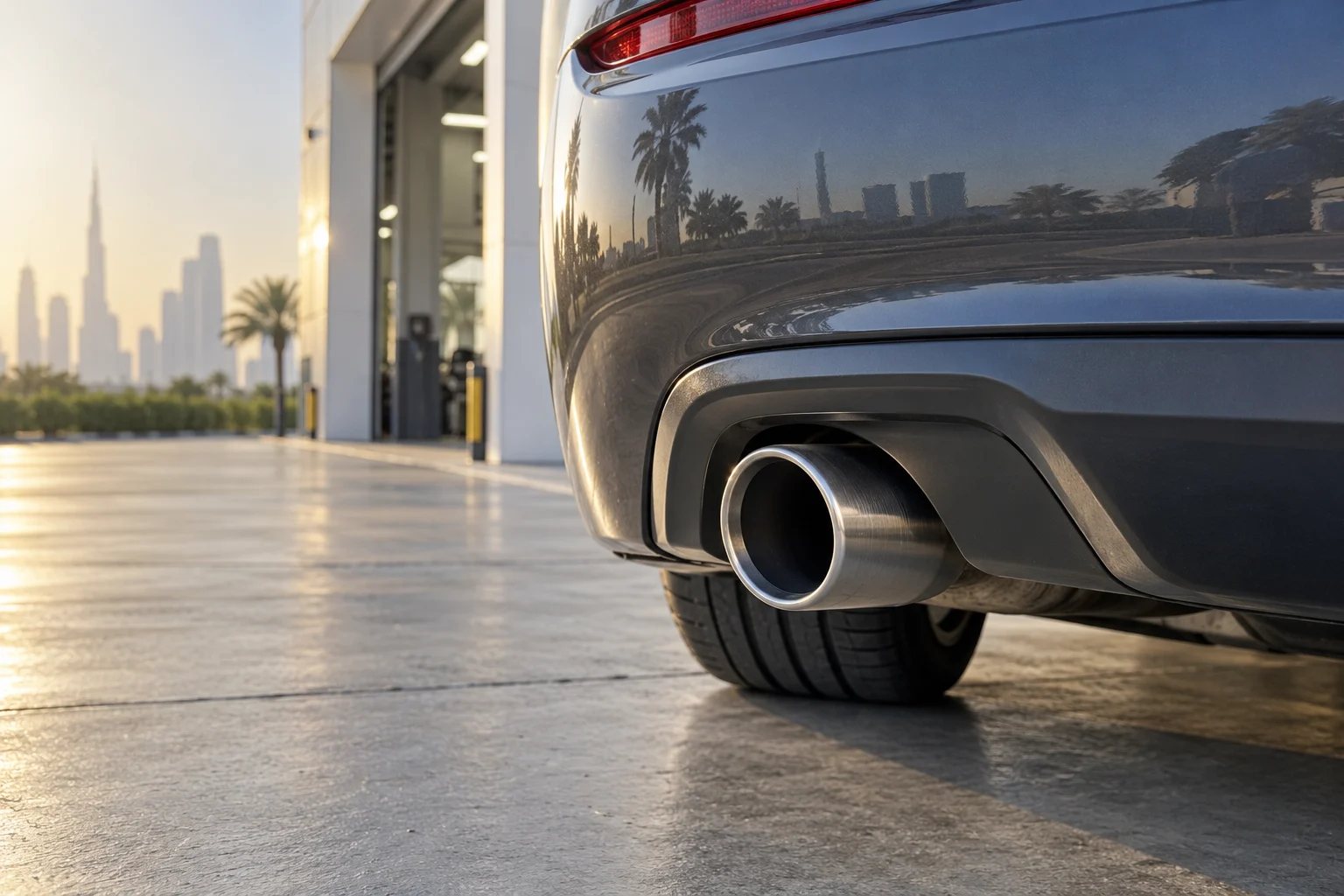
Arrange an oil-burning inspection in Al Quoz
Tell us your BMW model and whether you have noticed smoke, oil top-ups or both. We explain the next checks and agree any assessment charges before proceeding. Oil-use records, the VIN and a smoke video are optional follow-up details. Free Dubai pickup is available by arrangement; tell us if the car is unsafe to drive.
Free pickup in DubaiAl Quoz workshopMonday to Saturday, 9am to 7pm